Authentic Spaghetti Carbonara (No Cream, Traditional Method)
The real Roman carbonara: silky, golden pasta coated in a luscious sauce made from eggs, Pecorino Romano cheese, guanciale, and black pepper. No cream, no garlic, no compromise—just pure Italian perfection.
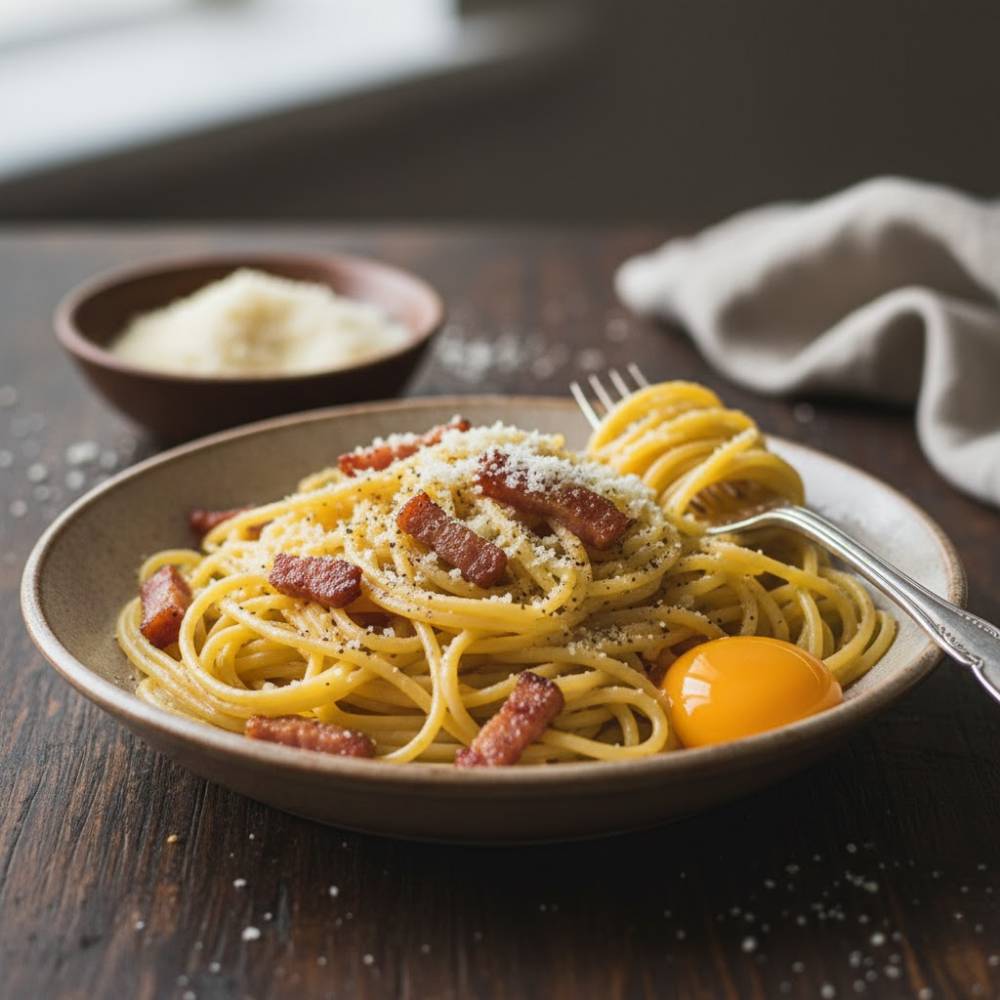
What is this dish?
Authentic spaghetti carbonara is Rome's most iconic pasta — a deceptively simple dish of spaghetti, cured pork jowl (guanciale), eggs, Pecorino Romano cheese, and black pepper, with no cream, no garlic, and no onion. The silky, golden sauce is created entirely through the emulsion of egg yolks, grated cheese, rendered pork fat, and starchy pasta water. Its genius lies in precise technique: the eggs must be cooked gently by the pasta's residual heat into a sauce rather than scrambled eggs.
Why you'll love it
Carbonara is one of the most deeply satisfying pasta dishes in the world, delivering extraordinary richness from just four core ingredients. When done correctly, the sauce is glossy, creamy, and clinging — each strand of spaghetti perfectly coated in silky egg and cheese with crispy, savory pieces of guanciale. The technique is a fundamental cooking skill that, once mastered, produces results that rival any Roman trattoria.
When to serve
Carbonara is perfect for an intimate dinner for two when you want something impressive without spending hours in the kitchen. It must be made and eaten immediately — it does not hold well or reheat. This makes it ideal for a special weeknight meal or a romantic dinner, served as the centerpiece alongside a simple salad and the same white wine used in the dish.
Quick tips
Remove the pan from heat completely before adding the egg mixture to prevent scrambling. Grate cheese on the finest setting for a smooth, lump-free sauce. Add pasta water generously while tossing — it is the key emulsifier. Never add cream — the silkiness comes entirely from proper technique.
Guanciale (Cured Pork Jowl)
The traditional and essential cured pork for Roman carbonara. Guanciale has more fat and a more delicate, less smoky flavor than pancetta or bacon. The rendered fat becomes the cooking medium and emulsifier for the sauce. It is the ingredient most worth sourcing from an Italian deli for authentic results.
Pecorino Romano
The authentic cheese of Roman carbonara — salty, sharp, and pungent, made from sheep's milk. It melts beautifully into the egg emulsion. Some recipes use half Pecorino and half Parmigiano-Reggiano for a milder, nuttier version. Grate it on the finest possible setting for a smooth sauce.
Egg Yolks
The sauce itself — egg yolks emulsify with the rendered pork fat and pasta water to create the creamy golden coating. The ratio of yolks to whole eggs affects richness and stability. More yolks create a richer, more stable sauce. The key is gentle, controlled cooking by the pasta's residual heat.
Coarsely Ground Black Pepper
Not just seasoning — freshly and coarsely ground black pepper is a central flavor element of carbonara that provides warmth and a slightly sharp bite. Use a generous amount, grinding it fresh and coarsely rather than using pre-ground. Some recipes toast the pepper briefly in the fat for extra intensity.
Substitution Options
Pancetta is the most accepted substitute for guanciale — use the same quantity. Thick-cut, unsmoked bacon can be used in a pinch, though the smoked flavor changes the character. Parmigiano-Reggiano can replace up to half the Pecorino for a milder version. Rigatoni, bucatini, or fettuccine can replace spaghetti — choose a pasta with good sauce-holding ability. For a no-pork version, thinly sliced mushrooms sautéed until crispy in olive oil can provide the savory, textural element, though the flavor will be entirely different.
Cook the pasta
Bring a large pot of water to a rolling boil. Add a generous amount of salt (the water should taste like the sea). Add 12 oz of spaghetti or rigatoni and cook according to package directions until al dente (usually 8-10 minutes). Before draining, use a heatproof measuring cup to reserve at least 1 cup of starchy pasta cooking water. Drain the pasta but do not rinse it.
💡 Pro Tips:
- •The starchy pasta water is crucial for creating a creamy sauce.
- •Cook pasta 1 minute less than package directions if you want it perfectly al dente.
Crisp the guanciale
While the pasta cooks, place 5 oz of guanciale or pancetta strips in a large, cold skillet. Turn the heat to medium and cook for 6-8 minutes, stirring occasionally, until the fat renders and the guanciale becomes golden and crispy. The fat will pool in the pan—this is what you want. Remove from heat and set aside. Do not drain the fat.
💡 Pro Tips:
- •Starting with a cold pan prevents the guanciale from burning.
- •If using pancetta instead of guanciale, the flavor will be slightly less rich but still delicious.
Prepare the egg mixture
In a medium bowl, whisk together 3 egg yolks, 1 whole egg, 1 cup finely grated Pecorino Romano cheese, and 1 teaspoon freshly ground black pepper until smooth and well combined. The mixture should be thick and creamy. Set aside.
💡 Pro Tips:
- •Use room temperature eggs if possible—they combine more smoothly.
- •Grate the cheese finely so it melts easily into the sauce.
Combine pasta and guanciale
Add the drained hot pasta directly to the skillet with the guanciale and its rendered fat. Toss well over low heat (or off the heat) for 1 minute to coat the pasta in the fat. The pan should be warm but not scorching hot—you don't want to scramble the eggs in the next step.
💡 Pro Tips:
- •If the pan is too hot, let it cool for 30 seconds before proceeding.
- •Toss vigorously to ensure every strand of pasta is coated in the flavorful fat.
Create the carbonara sauce
Remove the skillet from the heat completely. Pour the egg and cheese mixture over the pasta. Immediately begin tossing vigorously and continuously with tongs or a pasta fork, lifting and turning the pasta to coat every strand. Add 2-3 tablespoons of reserved pasta water, a little at a time, while tossing. The residual heat from the pasta and the starchy water will gently cook the eggs, creating a silky, creamy sauce that clings to the noodles. If the sauce is too thick, add more pasta water, one tablespoon at a time. If it's too thin, continue tossing—the sauce will thicken as it cools slightly.
💡 Pro Tips:
- •The key is constant movement—never stop tossing or the eggs may scramble.
- •The sauce should be glossy, creamy, and coat the pasta like silk, not be watery or clumpy.
Serve immediately
Divide the carbonara among serving plates or bowls. Finish with extra grated Pecorino Romano and a generous grinding of black pepper on top. Serve immediately while hot—carbonara waits for no one.
💡 Pro Tips:
- •Carbonara is best enjoyed the moment it's made.
- •Warm your serving bowls beforehand to keep the pasta hot longer.
Techniques that separate good from great
Remove the pan completely from heat before adding the egg mixture
This is the single most important technique in carbonara. Even low burner heat will scramble the eggs too quickly. Remove the pan from heat entirely, let it cool for 30 seconds, then pour the egg-cheese mixture over the pasta. The residual heat from the pasta itself is what gently and perfectly cooks the eggs.
Reserve 1 full cup of pasta water — use it generously
Most recipes say to reserve pasta water, but home cooks rarely use enough of it. The starchy water is the emulsifier that prevents the egg sauce from becoming scrambled eggs. Add it 2-3 tablespoons at a time while tossing constantly, using as much as needed to achieve a glossy, flowing consistency.
Grate the Pecorino on the finest holes of your grater
Coarsely grated cheese creates unmelted clumps in the sauce. Using the fine side of a box grater or a Microplane creates powder-fine cheese that dissolves instantly into the emulsion. The resulting sauce is perfectly smooth and silky rather than lumpy.
Cook guanciale over medium heat until the fat is fully rendered
Guanciale (or pancetta) should be cooked slowly over medium heat until the fat becomes completely translucent and the meat is crispy. The rendered fat is the cooking medium for carbonara — it emulsifies with the eggs and cheese. Rushing this step on high heat burns the exterior before the fat renders.
- Large pot (for pasta)
- Large skillet
- Tongs or pasta fork
- Medium bowl
- Whisk
- Measuring cup (for pasta water)
- Grater
- Colander
- 💡Guanciale (cured pork jowl) is traditional, but pancetta is an acceptable substitute. Avoid bacon as it's smoked and will change the flavor profile.
- 💡Pecorino Romano is the authentic cheese for carbonara. Parmigiano-Reggiano can be used in a pinch or mixed 50/50 with Pecorino for a milder flavor.
- 💡The 'cream' in carbonara comes from the emulsion of eggs, cheese, pasta water, and rendered fat—not dairy cream.
Different ways to make this dish your own
Rigatoni alla Carbonara
Use rigatoni instead of spaghetti for a more substantial, tubular pasta that traps sauce inside each piece. The chewier texture stands up well to the creamy egg sauce and is favored by many Roman cooks.
Carbonara with Peas (Carbonara Primavera)
Stir in 1/2 cup of blanched fresh or frozen peas at the end. The sweetness and color of the peas provide a fresh counterpoint to the rich egg and pork sauce. A spring variation that remains popular despite being non-traditional.
Bucatini Carbonara
Replace spaghetti with thick, hollow bucatini — the fat tube-like pasta slurps satisfyingly and holds the sauce both inside and outside each noodle.
Carbonara with Artichokes
Add fried artichoke hearts (quartered, floured, and deep-fried until crispy) alongside the guanciale. The bitter, crispy artichoke is a classic Roman pairing with both carbonara and eggs, giving the dish an extra layer of flavor.
Perfect pairings to complete the meal
Warmed Bowls for Serving
Carbonara cools and thickens very quickly. Warm your serving bowls with hot water for 1-2 minutes before plating, then dry and plate immediately. The warm bowl keeps the pasta hotter longer and prevents the sauce from seizing.
Crisp White Wine (Frascati or Pinot Grigio)
A dry, crisp Italian white wine with good acidity is the natural pairing for carbonara's richness. Frascati from the Castelli Romani hills around Rome is the traditional local choice. A well-chilled Pinot Grigio or Soave also works beautifully.
Simple Bitter Greens Salad
A light salad of radicchio, endive, or arugula dressed simply with lemon and olive oil after the pasta provides a cleansing, bitter counterpoint to the fatty richness of carbonara.
Extra Pecorino and Black Pepper at the Table
Pass grated Pecorino Romano and a pepper mill at the table so each diner can customize to their preference. Extra cheese adds even more richness, and more pepper adds warmth that cuts through the egg-butter sauce.
Keep it fresh and plan ahead
Refrigerator
Carbonara can be stored for up to 2 days, but the texture changes significantly — the sauce sets and the pasta absorbs the egg coating. It will not reheat to the original silky consistency.
Freezer
Not recommended. Eggs-based sauces separate and become grainy after freezing. The pasta texture also suffers. Carbonara is exclusively a make-and-eat-immediately dish.
Make-Ahead
Nothing can be prepared ahead for carbonara except rendering the guanciale (which can be done an hour before). The pasta must be freshly cooked and the egg mixture must be added immediately. Carbonara cannot be made ahead under any circumstances.
Reheating
If you must reheat leftovers, add 2-3 tablespoons of water to the pasta in a pan over very low heat, tossing constantly. The sauce will not return to its original silky state but can become acceptable. Never use the microwave as it scrambles the egg sauce.
Be the first to review this recipe!
Got Leftovers?
Turn what you already have in your fridge into delicious meals. Our AI-powered generator creates personalized recipes from your ingredients.
You Might Also Like
Discover more delicious recipes similar to what you're cooking