Classic Kunafeh
A golden, crispy Middle Eastern dessert with a gooey, warm cheese filling, all soaked in a fragrant sweet syrup. This delightful treat is perfect for two people.
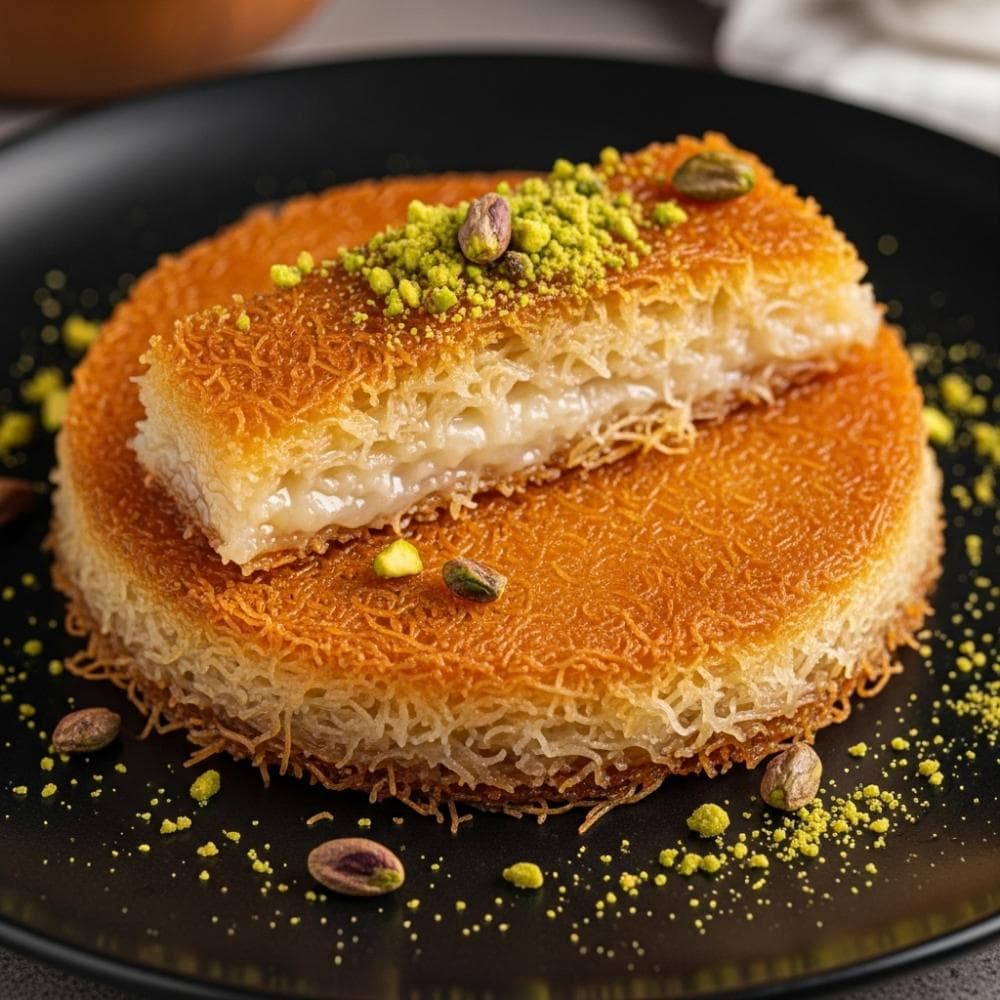
What is this dish?
Kunafeh (also spelled knafeh or kanafeh) is a beloved Middle Eastern dessert, especially popular in Palestine, Jordan, Lebanon, and Syria. It consists of shredded kataifi pastry layered around a soft, melted cheese filling, baked until golden and crispy, then immediately soaked in cold orange blossom or rose water syrup. The contrast of crunchy pastry, gooey warm cheese, and fragrant sweet syrup is utterly distinctive.
Why you'll love it
Kunafeh delivers one of the most unique textural experiences in all of dessert cookery — the crunch of buttery golden pastry against warm, molten cheese, drenched in delicately floral syrup. It's simultaneously crispy, gooey, sweet, and fragrant. Made at home, it rivals anything from a professional pastry shop.
When to serve
Kunafeh is quintessential celebratory food — served at Eid, Ramadan iftars, weddings, and special family gatherings throughout the Middle East. It's also a dramatic dessert to conclude a Middle Eastern dinner spread. Serve it immediately after flipping — kunafeh is at its best in the first 10 minutes.
Quick tips
Always pour cold syrup over hot kunafeh — never the reverse. Coat every kataifi strand fully in melted butter for even crispiness. Don't overfill with cheese or it will spill out during baking. Serve immediately after unmolding.
Kataifi Pastry
The shredded phyllo dough that forms the crispy shell. Available frozen at Middle Eastern grocery stores. The fine, noodle-like strands must be fully separated and coated in melted butter for even browning and the signature crunch.
Nabulsi or Mozzarella Cheese
Traditional Nabulsi or Akkawi cheese must be desalted by soaking in water. Mozzarella is the most accessible substitute — low-moisture mozzarella melts into a beautifully gooey, stringy filling without needing any preparation.
Simple Syrup with Orange Blossom Water
The aromatic, floral syrup poured over the hot kunafeh is essential. Orange blossom water or rose water gives it the distinctive Middle Eastern perfume that defines the dessert. The syrup must be cold when it hits the hot pastry for the correct texture.
Unsalted Butter
Melted butter coats every strand of kataifi and is solely responsible for the signature golden, crispy exterior. Use generous amounts — kunafeh is not a dessert where restraint pays off.
Substitution Options
Mozzarella (low-moisture) is the best substitute for traditional Nabulsi or Akkawi cheese — use it directly without desalting. A half-and-half mix of mozzarella and ricotta creates a creamier, less stringy filling. Rose water can substitute for orange blossom water. Ghee can replace unsalted butter for a more authentic, richer flavor. Add a teaspoon of mastic resin powder to the cheese for a traditional Levantine aromatic note.
Step-by-Step Instructions
Make the sweet syrup
In a small saucepan, combine 1 cup granulated sugar and 1/2 cup water. Heat over medium heat, stirring gently until the sugar dissolves. Bring the mixture to a boil, then reduce the heat to low and let it simmer (cook gently just below boiling, with small bubbles) for 5-7 minutes without stirring. This will make a thin syrup. Take it off the heat and stir in 1 teaspoon lemon juice and 1/2 teaspoon orange blossom water or rose water. Let the syrup cool completely to room temperature. The syrup should be cold when it is poured over the hot kunafeh.
Pro Tips:
- •Simmer means to cook gently just below boiling, with small bubbles.
- •Letting the syrup cool completely prevents the kunafeh from becoming soggy.
Prepare the cheese
If using a salty cheese like traditional Nabulsi or Akkawi, cut it into thin slices or small pieces and soak it in cold water for at least 30 minutes, changing the water every 10 minutes, to remove excess salt. Squeeze the cheese very dry to remove all water. If using mozzarella, simply shred it. Mix the shredded or crumbled cheese with 1 tablespoon semolina flour. The semolina helps absorb extra moisture from the cheese during baking.
Pro Tips:
- •Desalting (removing salt) the cheese is important for balancing the sweetness of the syrup.
- •Squeezing cheese very dry prevents a watery filling.
Prepare the kataifi pastry
If your kataifi pastry is frozen, thaw it completely. Place 6 ounces kataifi pastry in a large bowl. Use your hands to pull the strands apart, separating them into smaller pieces until the dough is finely shredded. Pour 1/2 cup melted unsalted butter over the shredded kataifi. If using, mix 1/4 teaspoon orange food coloring with 1 teaspoon melted butter and add it to the kataifi as well. Use your hands to rub the butter into the pastry until all the strands are evenly coated. This step is crucial for crispiness and color.
Pro Tips:
- •Thoroughly coating the pastry with butter is essential for a golden, crispy crust.
- •The food coloring gives it the classic vibrant orange hue.
Assemble the kunafeh
Generously grease a small (about 8-inch round) oven-safe pan or skillet with extra melted butter. Spread half of the buttered kataifi pastry evenly over the bottom of the pan, pressing it down firmly to form a compact layer. Spread the prepared cheese mixture over the kataifi, leaving about a 1/2-inch border around the edges. This helps prevent the cheese from burning or sticking to the pan sides. Cover the cheese with the remaining kataifi pastry, gently pressing it down to create a top layer.
Pro Tips:
- •Pressing firmly creates a solid base and top crust.
- •Leaving a border helps contain the melting cheese.
Bake the kunafeh
Preheat your oven to 375°F (190°C). Bake the kunafeh in the preheated oven for 25-30 minutes, or until the top and sides are golden brown and crispy. The cheese should be melted and gooey. For extra crispiness and color on top, you can broil (cook under a top heating element) for the last 1-2 minutes, watching very closely to prevent burning.
Pro Tips:
- •Baking until deeply golden ensures a crispy exterior.
- •Watch carefully if broiling, as it browns very quickly.
Flip and serve
Once baked, immediately take the kunafeh out of the oven. Place a serving platter upside down over the top of the pan. Holding the pan and platter firmly together, carefully and quickly flip them over to unmold the kunafeh onto the platter. Gently lift the pan away. Immediately pour the cooled sweet syrup evenly over the hot kunafeh. You will hear a sizzle as it soaks in. Garnish with 2 tablespoons crushed pistachios. Cut into wedges and serve warm.
Pro Tips:
- •Flipping immediately ensures the kunafeh releases cleanly and evenly.
- •Pouring cold syrup over hot kunafeh is essential for texture.
Chef's Tips
Techniques that separate good from great
Always pour cold syrup over hot kunafeh — temperature contrast is critical
The heat of the just-baked kunafeh combined with the cold syrup creates a unique steam effect that drives the syrup deep into the kataifi strands rather than sitting on the surface. Hot syrup on hot pastry creates a soggy result. Always make the syrup first and let it cool completely before baking the kunafeh.
Coat every single kataifi strand thoroughly in butter
Underbuttered kataifi produces pale, dry, and chewy spots rather than uniformly golden crunch. Use your hands to rub the melted butter into every strand, separating any clumps as you go. The kataifi should feel moist and slightly shiny throughout — if you see dry white strands, add more butter.
Start on the stovetop, then finish in the oven for the crispiest base
For the crispiest base crust, place the filled pan directly on the stovetop over medium heat for 3-5 minutes before transferring to the oven. This pre-heats the base and gives the bottom kataifi a head start on browning that the oven alone cannot match.
Have your serving platter ready before you open the oven
Kunafeh must be flipped and served immediately — the window for perfect texture is short. Have a platter slightly larger than the pan on the counter before you open the oven. The flip should happen within 60 seconds of removing from the oven. Then pour syrup, add pistachios, and bring immediately to the table.
Nutrition Facts
Equipment Needed
- Small saucepan (for syrup)
- Large bowl (for kataifi)
- Medium bowl (for cheese)
- Fine-mesh sieve (for cheese)
- 8-inch round oven-safe pan or skillet
- Serving platter
- Measuring cups
- Measuring spoons
- Knife and cutting board
Quick Tips
- Traditional cheeses like Nabulsi or Akkawi cheese are ideal if you can find them; they provide a unique salty balance. If not available, low-moisture mozzarella or a mix of mozzarella and ricotta works well.
- The syrup can be made a few days ahead and stored in the refrigerator.
- Kunafeh is best eaten warm and fresh; leftovers can be gently reheated in the oven or microwave.
Recipe Variations
Different ways to make this dish your own
Nabulsi-Style Kunafeh
Use traditional Nabulsi cheese (desalted by soaking in water), which gives a firmer, chewier filling than mozzarella. It is the classic Palestinian version and delivers a more distinctive, authentic flavor and texture experience.
Semolina-Base Kunafeh
Replace the kataifi with a fine semolina pastry dough for a denser, bread-like crust version commonly found in Nablus city. The texture is completely different from the kataifi version but equally beloved.
Kunafeh with Cream Filling (Ashta)
Replace the cheese entirely with a thick sweet cream (ashta or clotted cream) for a lighter, more delicate version popular in Lebanon. The cream filling is richer and less stringy than the cheese version.
Chocolate Kunafeh
Add a layer of Nutella or melted dark chocolate between the cheese and the top kataifi layer for a fusion version that has become popular in contemporary Middle Eastern pastry shops.
What to Serve With
Perfect pairings to complete the meal
As a Celebratory Dessert After a Middle Eastern Meal
Kunafeh is the natural finale to a mezze-style spread of hummus, fattoush, grilled meats, and rice dishes. Its sweetness and dramatic presentation signal celebration. Serve it at the table in the pan, flip it tableside for maximum theater, drench in syrup, and present with strong Arabic coffee or mint tea.
With Strong Arabic Coffee (Qahwa)
Bitter, cardamom-scented Arabic coffee (qahwa) is the traditional partner for kunafeh and all sweet Middle Eastern pastries. The unsweetened, intensely aromatic coffee cuts directly through the sugar and butter, providing a perfect palate reset between bites.
As a Ramadan Iftar Sweet
Kunafeh is one of the most beloved sweets for breaking the Ramadan fast. Its rich combination of cheese, pastry, and syrup provides immediate energy and satisfaction after a day of fasting. Make it the centerpiece of the iftar dessert table.
At Room Temperature as Part of a Pastry Spread
Kunafeh can be served alongside baklava, ma'amoul, and other Middle Eastern pastries on a dessert platter. At room temperature it loses some crunch but the flavor remains excellent. Add a sprinkle of additional crushed pistachios before presenting.
Storage & Make-Ahead
Keep it fresh and plan ahead
Refrigerator
Store leftover kunafeh covered in the refrigerator for up to 2 days. The syrup-soaked kataifi softens significantly after the first hour, losing its crispy texture, but the flavor remains excellent.
Freezer
Kunafeh does not freeze well — the kataifi pastry becomes unpleasantly soggy upon thawing and loses its characteristic crunch completely. Best made and eaten fresh on the day of baking.
Make-Ahead
The syrup can be made up to 5 days ahead and refrigerated. The kataifi can be coated in butter and pressed into the pan several hours ahead, covered, and refrigerated. Bake fresh on the day of serving for the best result.
Reheating
Reheat in a 375°F (190°C) oven for 8-10 minutes to restore some crispiness to the kataifi. Microwave reheating warms through but produces a softer, less crispy result. A brief spell under the broiler (2 minutes, watching carefully) can revive surface crunch.
Got Leftovers?
Turn what you already have in your fridge into delicious meals. Our AI-powered generator creates personalized recipes from your ingredients.
Browse more like this: