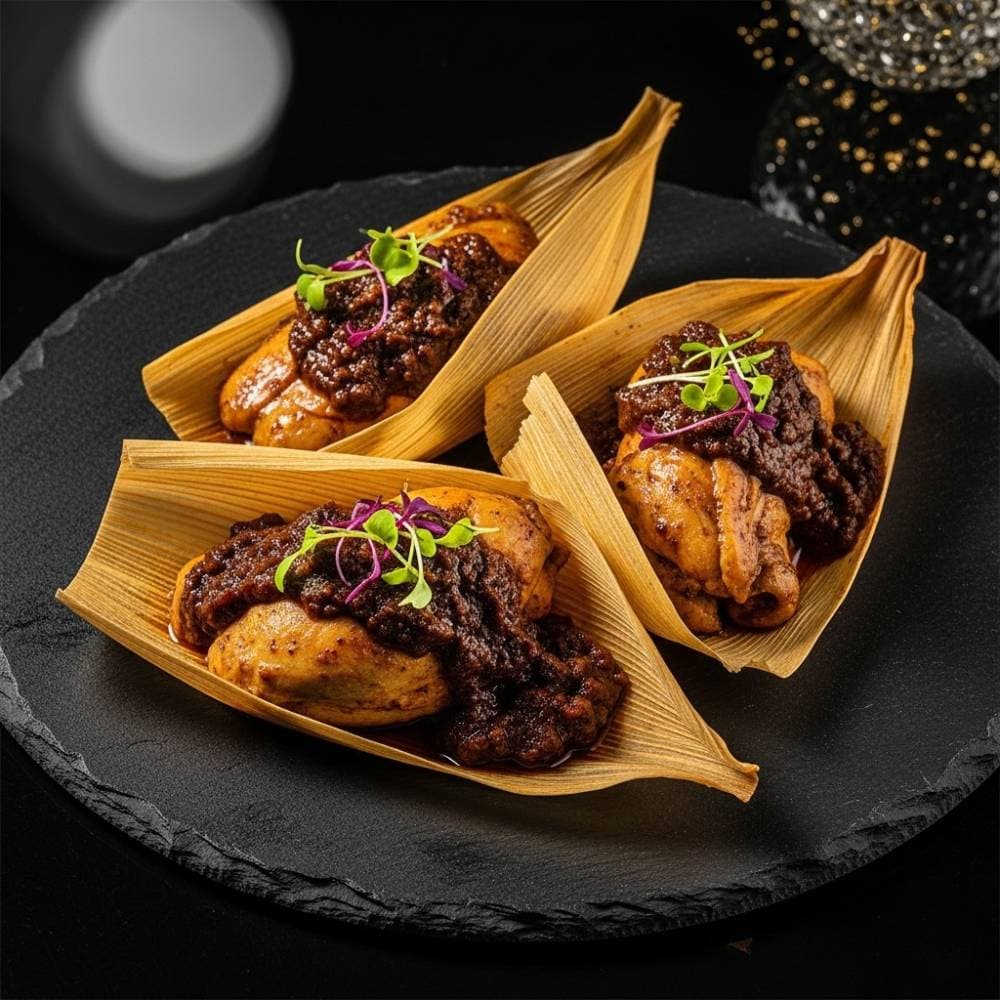
Molé Chicken Tamales
Tender masa dough filled with savory shredded chicken in a rich, complex molé sauce, all steamed in corn husks to perfection. A traditional and flavorful Mexican meal for two.
About This Recipe
What is this dish?
Tamales are one of Mexico's most ancient and ceremonial foods, with a history spanning over 8,000 years to Mesoamerican civilizations. Masa (nixtamalized corn dough) is spread on soaked corn husks, filled with seasoned meat or vegetables, then wrapped and steamed. Mole — the complex Mexican sauce made from dried chilies, chocolate, and spices — turns chicken tamales into an extraordinary celebration dish. Tamales are traditionally made communally in family gatherings called tamaladas.
Why you'll love it
Mole chicken tamales deliver layers of flavor that few other foods can match. The masa is silky and slightly sweet, the chicken is moist and deeply seasoned, and the mole provides a complex backdrop of dried chili, chocolate, cinnamon, and roasted spices. They take time to make but reward patience generously — and the reward of biting into a perfectly steamed tamale is one of the great food experiences.
When to serve
Tamales are a traditional Christmas Eve (Nochebuena) and New Year's food in Mexico. Serve for holiday celebrations, special family dinners, or as part of a traditional Mexican feast. They reheat beautifully and are also excellent as leftovers.
Quick tips
Beat lard or butter into the masa until a small piece floats in water — this is the test for properly aerated masa. Spread masa thinly and evenly on the soaked husks. Steam with the open end up. Never lift the lid in the first 30 minutes of steaming.
Ingredient Highlights
Masa Harina
The essential base for tamales. Masa harina is dried, ground nixtamalized corn — corn treated with lime (calcium hydroxide) to improve its nutrition and flavor. Maseca is the most widely available brand. Fresh masa from tortillerias is even better if available. Do not substitute corn meal or polenta — they are completely different products.
Lard (or Shortening)
Traditional tamale masa uses lard for its superior flavor and the specific texture it creates. Lard has a higher melting point than butter, which allows it to be beaten into masa without immediately melting, creating the characteristic light, slightly chewy texture. Vegetable shortening is a functional substitute; butter works but creates a slightly different texture.
Mole Sauce
Mole is one of Mexico's most complex culinary preparations — a sauce of multiple dried chilies, toasted nuts and seeds, dried spices, and dark chocolate. Even store-bought mole paste (Doña María or similar brands) produces excellent results. Homemade mole requires hours but the depth is unmatched.
Corn Husks
The traditional wrapper for Mexican tamales. Dried corn husks must be soaked in hot water until completely pliable before use — at least 30 minutes, up to several hours. They don't add flavor but create the perfect steam chamber. Banana leaves are used in Oaxacan and other regional tamales for a different aromatic character.
Substitution Options
Lard can be replaced with vegetable shortening (same amount) or butter (reduce by 25%) for different dietary preferences. Store-bought mole paste (Doña María brand) dissolved in chicken broth is an excellent shortcut that saves hours. Chicken can be replaced with pork carnitas, black beans and cheese, or roasted vegetables for different fillings. Dried corn husks can be replaced with banana leaves for a different regional style.
Step-by-Step Instructions
Prepare corn husks and chicken filling
Soak 8-10 dried corn husks in a large bowl of very hot water for at least 30 minutes, or until they are very flexible and soft. This makes them pliable (flexible and easy to bend) for wrapping. While husks soak, in a small saucepan, combine 1 cup cooked shredded chicken, 1/2 cup ready-made mole sauce (a complex chili sauce, often with nuts, seeds, and chocolate), and 1/4 cup chicken broth. Bring to a gentle simmer (cook gently just below boiling, with small bubbles) over low heat. Cook for 5-7 minutes, stirring occasionally, until the sauce slightly thickens and coats the chicken. Remove from heat and set aside.
Pro Tips:
- •Soaking husks well prevents them from cracking.
- •Simmer means to cook gently just below boiling, with small bubbles.
- •Mole is a complex chili sauce.
Make the masa dough
In a medium bowl, whisk together 1 1/2 cups masa harina (corn flour specially prepared for tortillas and tamales), 1 teaspoon baking powder, and 1/2 teaspoon salt. In a separate bowl, cream 1/4 cup vegetable shortening or lard until light and fluffy. Gradually add the masa harina mixture to the shortening, alternating with 1 1/4 cups warm chicken broth (or water), mixing until a soft, uniform dough forms. The dough should be light and fluffy. To test, drop a small piece of dough into a glass of cold water; if it floats, it is ready. If it sinks, beat in a little more broth or water, 1 tablespoon at a time, until it floats.
Pro Tips:
- •Masa harina is a special corn flour for tamales.
- •The float test ensures the masa is light and airy.
Assemble the tamales
Drain the softened corn husks and pat them dry. Choose the widest, unbroken husks. Lay one husk flat with the wider end at the top. Spread about 2-3 tablespoons of the prepared masa dough evenly over the wider half of the husk, leaving a 1-inch border at the top and sides. Spoon 1-2 tablespoons of the chicken mole filling down the center of the masa. Fold the sides of the corn husk over the filling, then fold the narrow bottom end up. Leave the top open. Repeat with remaining husks, masa, and filling. You should get 4-6 tamales.
Pro Tips:
- •Do not overfill the tamales, or they will be difficult to fold.
- •Folding neatly ensures even steaming.
Steam the tamales
Set up a steamer pot: fill the bottom with water (do not let it touch the steamer basket) and bring to a boil. Arrange the tamales upright in the steamer basket, with the open end facing up. Do not pack them too tightly, allowing steam to circulate. Cover the steamer and steam for 45-60 minutes, or until the masa separates easily from the corn husk. This means the tamales are cooked through. If water levels get low during steaming, carefully add more boiling water to the pot.
Pro Tips:
- •Steaming cooks the tamales gently and thoroughly.
- •The tamale is done when the masa separates cleanly from the husk.
Serve
Carefully remove the cooked tamales from the steamer. Let them cool for a few minutes before unwrapping and serving. Garnish with fresh cilantro, sliced red onion, or a dollop of Mexican crema (ensure dairy-free alternative if needed) if desired.
Pro Tips:
- •Letting tamales rest briefly helps them firm up.
- •They are best enjoyed warm.
Chef's Tips
Techniques that separate good from great
Beat the masa until a small ball floats in water — this is the test for proper aeration
Properly beaten masa should be light enough that a teaspoon-sized ball dropped into a cup of water floats to the surface. This means enough air and fat have been incorporated. Under-beaten masa produces dense, gummy tamales. Beat the masa vigorously for 5+ minutes with an electric mixer or by hand.
Spread masa very thin and leave a 1-inch border at the edges
Too-thick masa results in heavy tamales where the corn overwhelms the filling. Spread it to about 1/4-inch thickness across the husk, leaving at least 1 inch at the top and bottom edges for folding, and a small strip on one side for the overlap flap. Thin masa steams more evenly and creates a better filling-to-masa ratio.
Never lift the steamer lid in the first 30-40 minutes of cooking
The first phase of steaming is when the masa sets and firms up. Opening the lid releases the steam suddenly and drops the temperature dramatically, which can cause the delicate masa to collapse or cook unevenly. Resist the urge to check until at least 40 minutes have passed.
Stand tamales upright, open end up, in the steamer
Tamales steamed standing upright with the open (folded) end facing up cook more evenly and prevent the filling from leaking out during the long steam. Pack them snugly so they support each other. Place a layer of extra corn husks over the top before covering with the lid to direct condensation away from the tamales.
Nutrition Facts
Per serving
* Percent Daily Values are based on a 2,000 calorie diet.
Equipment Needed
- Large bowl (for soaking husks)
- Medium bowl (for chicken filling)
- Medium bowl (for masa dough)
- Steamer pot with basket
- Spatula or spoon
- Measuring cups
- Measuring spoons
- Knife and cutting board
Quick Tips
- Authentic mole sauce can be very complex to make from scratch, so using a high-quality ready-made mole paste or sauce simplifies this recipe greatly.
- For extra flavor, you can simmer the chicken in a little chicken broth with an onion and garlic clove, then shred it for the filling.
- Tamales can be frozen after steaming. To reheat, steam them again from frozen until heated through.
Recipe Variations
Different ways to make this dish your own
Tamales Verdes (Green Tomatillo Chicken)
Replace the mole filling with chicken simmered in salsa verde (tomatillo, serrano, cilantro, garlic). The bright, tangy green sauce contrasts beautifully with the rich masa.
Rajas con Queso (Cheese and Pepper)
Fill with strips of roasted poblano peppers (rajas) and Oaxacan cheese or Monterey Jack for a beloved vegetarian tamale that is incredibly popular and satisfying.
Sweet Tamales
Use masa sweetened with sugar, cinnamon, and raisins, filled with dried fruit or left plain. Sweet tamales (tamales dulces) are a traditional Mexican Christmas treat.
Oaxacan Tamales in Banana Leaves
Wrap masa and filling in soaked banana leaves instead of corn husks for the distinctive Oaxacan-style tamales. Banana leaves add a faint herbal, grassy note to the masa during steaming.
What to Serve With
Perfect pairings to complete the meal
With Warm Salsa Roja and Crema
The most traditional accompaniment. Peel back the corn husk at the table and drizzle warm salsa roja (red tomatillo or dried chili salsa) and Mexican crema over the exposed tamale. Eat directly from the husk.
As Part of a Tamalada Spread
Serve multiple varieties of tamales alongside pozole, atole (a warm corn-based drink), and Mexican hot chocolate for a traditional tamalada feast. The communal presentation is central to the tamale tradition.
With Beans and Rice
Serve with refried beans and Mexican rice for a complete, hearty Mexican meal. The beans and rice provide a simple, satisfying backdrop for the complex mole-filled tamales.
With Champurrado (Mexican Hot Chocolate)
Thick, chocolate-infused champurrado (a warm corn masa and chocolate drink) is the traditional beverage accompaniment to tamales. The sweetness and warmth of the drink perfectly complements the savory, spiced tamale.
Storage & Make-Ahead
Keep it fresh and plan ahead
Refrigerator
Steamed tamales keep refrigerated for up to 1 week in an airtight container or wrapped tightly in the corn husks. The flavor actually improves after a day as the masa absorbs the filling's moisture.
Freezer
Tamales are one of the best foods for freezing. Cool completely, then freeze in a single layer before transferring to bags. Freeze for up to 3 months. Steam from frozen for 25-30 minutes.
Make-Ahead
Tamales can be assembled uncooked and refrigerated for up to 24 hours before steaming, or frozen for up to 3 months. The mole filling can be made 3 days ahead.
Reheating
Steam refrigerated tamales for 10-15 minutes. Alternatively, microwave in a damp paper towel for 1-2 minutes. Avoid oven reheating as it dries out the masa significantly.
Got Leftovers?
Turn what you already have in your fridge into delicious meals. Our AI-powered generator creates personalized recipes from your ingredients.
Browse more like this: