Spaghetti Squash Pad Thai
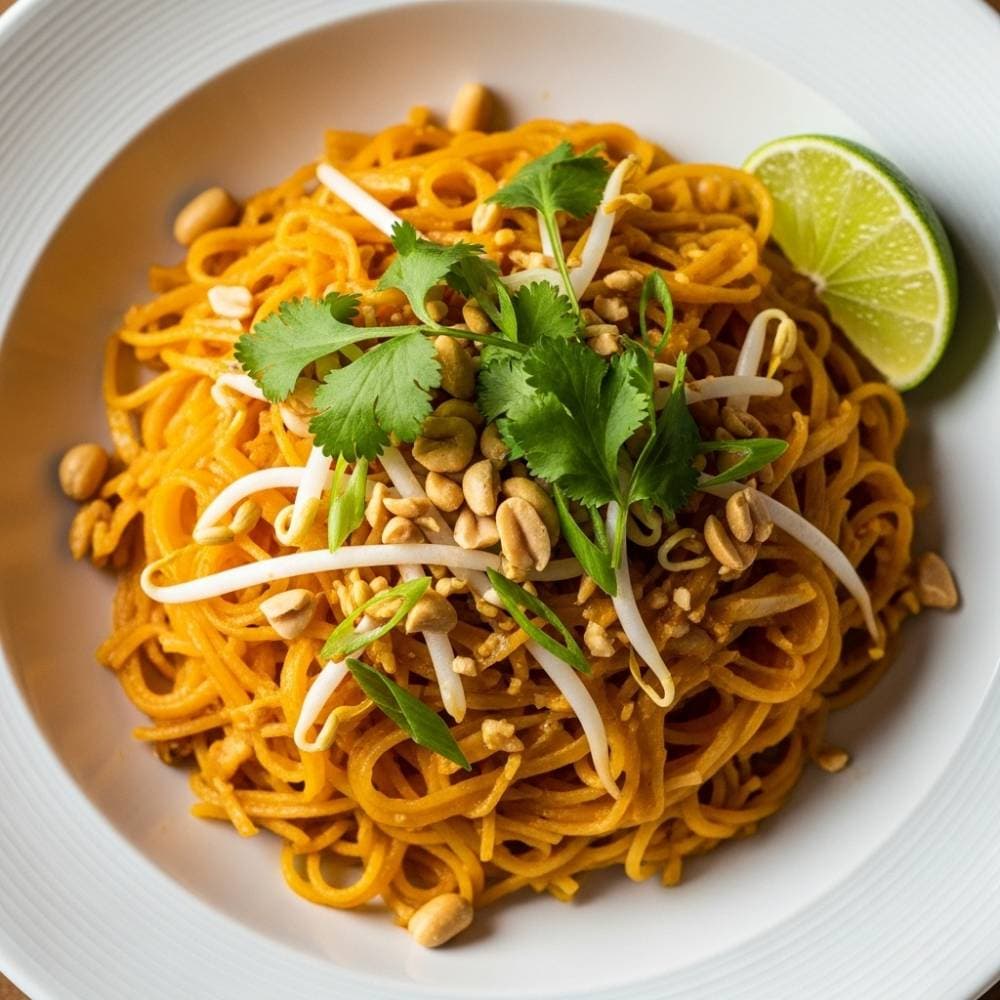
A low-carb and flavorful twist on the classic Thai noodle dish, using spaghetti squash strands instead of noodles, tossed with tender tofu, crisp vegetables, and a tangy peanut-lime sauce. A healthy and satisfying meal for two.
About This Recipe
What is this dish?
Spaghetti Squash Pad Thai is a clever low-carb take on the beloved Thai noodle dish, using roasted spaghetti squash strands in place of rice noodles, tossed in an authentic tamarind-based pad Thai sauce with tofu and crunchy vegetables.
Why you'll love it
You get all the bold, tangy-sweet-savory flavors of real pad Thai with fewer carbs and extra nutrition. The squash strands have a satisfying chew, and the sauce is absolutely addictive.
When to serve
A great weeknight dinner when you want something exciting but lighter. Also wonderful for anyone following a gluten-free or low-carb lifestyle who misses pad Thai.
Quick tips
Roast the spaghetti squash until the strands are tender but still have a slight bite — overcooked squash becomes mushy. The tamarind sauce can be made ahead and stored for the week.
Ingredient Highlights
Spaghetti Squash
When roasted and scraped with a fork, the flesh separates into noodle-like strands with a mild, slightly sweet flavor.
Tamarind Paste
The essential souring agent in authentic pad Thai — it provides the characteristic tangy-sweet depth that defines the sauce.
Fish Sauce
Adds umami and saltiness. Use a vegan fish sauce or coconut aminos for a plant-based version.
Extra-Firm Tofu
Pressed and pan-fried until golden, it absorbs the sauce beautifully and provides satisfying protein.
Substitution Options
No tamarind? Use 2 tablespoons lime juice plus 1 teaspoon brown sugar as a substitute. No tofu? Use shrimp, chicken, or tempeh. For vegan, use coconut aminos instead of fish sauce.
Step-by-Step Instructions
Roast the spaghetti squash
Preheat your oven to 400°F (200°C). Carefully cut 1 medium spaghetti squash in half lengthwise. Scoop out and discard the seeds. Drizzle the cut sides with 1 tablespoon olive oil, 1/4 teaspoon salt, and 1/8 teaspoon black pepper. Place the squash halves cut-side down on a baking sheet. Roast for 30-40 minutes, or until the flesh is tender when pierced with a fork. Once cooked, let it cool slightly, then use a fork to scrape the flesh into spaghetti-like strands. Spaghetti squash is a gourd whose flesh forms spaghetti-like strands when cooked.
Pro Tips:
- •Roasting cut-side down helps steam the squash and makes it easier to scrape.
- •Ensure the squash is tender for easy scraping.
Cook the tofu
While the squash roasts, press 8 ounces extra-firm tofu for at least 20 minutes to remove excess water. Cut the pressed tofu into 1/2-inch cubes. Heat 1 tablespoon vegetable oil in a large skillet or wok over medium-high heat. Add the tofu cubes and cook for 8-10 minutes, turning occasionally, until golden brown and crispy on all sides. Remove the cooked tofu from the skillet and set it aside.
Pro Tips:
- •Pressing tofu is crucial for a firm, crispy texture.
- •Browning tofu adds flavor and texture.
Make the Pad Thai sauce
In a medium bowl, whisk together 1/4 cup smooth peanut butter (use almond butter for paleo), 2 tablespoons tamari (gluten-free soy sauce), 1 tablespoon fresh lime juice, 1 tablespoon rice vinegar, 1 tablespoon erythritol or maple syrup, 1 teaspoon chili garlic sauce, 1 teaspoon grated fresh ginger, 1 clove minced garlic, and 1/2 teaspoon vegan fish sauce (or 1/2 teaspoon more tamari). Whisk until smooth. Gradually whisk in 2-3 tablespoons warm water, 1 tablespoon at a time, until the sauce reaches your desired creamy, pourable consistency. Tamari is gluten-free soy sauce. Erythritol is a sugar alcohol used as a low-calorie sweetener. Pad Thai is a classic Thai noodle dish.
Pro Tips:
- •Adjust sweetness to your preference.
- •Adding water gradually helps control sauce thickness.
Stir-fry vegetables and combine
In the same skillet or wok used for tofu, add 1 medium julienned carrot (cut into long, thin strips) and 1/2 thinly sliced red bell pepper. Stir-fry for 3-5 minutes until tender-crisp (cooked but still a little firm). Add the cooked spaghetti squash strands, cooked tofu, 1/4 cup green onions, and 1 cup fresh bean sprouts. Pour the Pad Thai sauce over the ingredients in the skillet. Toss everything vigorously with tongs to coat evenly and heat through, for 2-3 minutes. Tender-crisp means cooked but still a little firm.
Pro Tips:
- •Tossing vigorously ensures all ingredients are well-coated in sauce.
- •Do not overcook the vegetables; keep them tender-crisp.
Serve
Divide the Spaghetti Squash Pad Thai evenly between two serving bowls. Garnish with 2 tablespoons chopped roasted peanuts, 2 tablespoons chopped fresh cilantro, 1 lime cut into wedges for squeezing, and 1/4 teaspoon red pepper flakes. Serve immediately.
Pro Tips:
- •Roasted peanuts and cilantro add crunch and fresh flavor.
- •Lime juice brightens the overall taste.
Chef's Tips
Techniques that separate good from great
Roast squash face down
Placing the cut side down on the baking sheet traps steam and ensures even, thorough cooking.
Press tofu well
Use a tofu press or wrap in paper towels with a heavy pan on top for 15 minutes — this removes moisture so the tofu crisps up properly.
Add sauce last
Toss the squash strands in the pad Thai sauce off the heat to prevent the sauce from burning and the squash from becoming too soft.
Nutrition Facts
Per serving
* Percent Daily Values are based on a 2,000 calorie diet.
Equipment Needed
- Baking sheet
- Large skillet or wok
- Medium bowl (for sauce)
- Serving bowls
- Whisk
- Tongs
- Knife and cutting board
- Measuring cups
- Measuring spoons
Quick Tips
- For a stricter keto version, ensure all sweeteners are low-carb (like erythritol) and check all packaged ingredients for hidden sugars.
- If you prefer a meat protein, you can substitute tofu with 8 ounces cooked shrimp or sliced chicken.
- You can add an egg to the stir-fry by pushing the ingredients to one side, pouring beaten egg into the empty space, scrambling it, then mixing it in.
Recipe Variations
Different ways to make this dish your own
Shrimp Pad Thai Squash
Replace tofu with peeled shrimp for a classic seafood version that cooks in minutes.
Extra Veggie Version
Add broccoli florets, snap peas, or bok choy for an even more nutritious bowl.
Peanut Sauce Version
Swap the tamarind sauce for a peanut butter-based sauce for a richer, nuttier flavor profile.
What to Serve With
Perfect pairings to complete the meal
Bean Sprouts
Add a handful of fresh bean sprouts for authentic crunch and a classic pad Thai texture.
Crushed Peanuts
Scatter chopped roasted peanuts on top for the essential nutty crunch.
Lime Wedges and Chili Flakes
Serve with fresh lime and dried chili flakes on the side so guests can adjust to their taste.
Storage & Make-Ahead
Keep it fresh and plan ahead
Refrigerator
Store leftovers in an airtight container for up to 3 days. The squash may release more water as it sits.
Freezer
Not recommended — spaghetti squash becomes watery after freezing.
Make-Ahead
Roast the squash and make the sauce up to 3 days ahead. Combine and stir-fry everything just before serving.
Reheating
Reheat in a hot skillet over medium-high heat to evaporate excess water and restore the texture.
Got Leftovers?
Turn what you already have in your fridge into delicious meals. Our AI-powered generator creates personalized recipes from your ingredients.
Browse more like this: