Lemon-Basil Chicken Piccata
Tender chicken cutlets pan-fried to a golden crisp, then served with a bright and zesty sauce made from lemon, capers, fresh basil, and savory broth. A quick and flavorful meal for two.
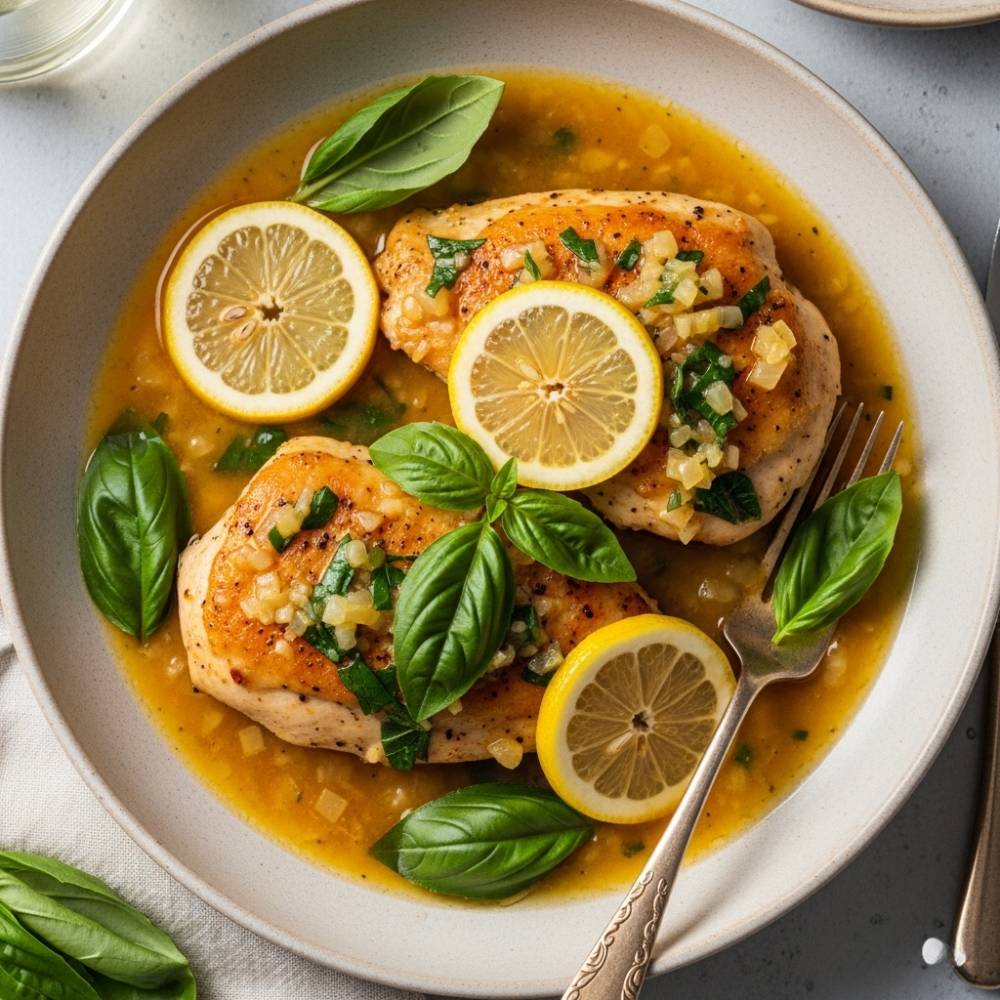
What is this dish?
Chicken piccata is a classic Italian-American dish of thin chicken cutlets dredged in flour, pan-fried until golden, and served with a bright lemon-caper sauce. The word piccata refers to the cooking method (meat pounded thin and sautéed) and the sharp, tangy sauce style. This version adds fresh basil to the classic lemon-caper combination for a brighter, more herbaceous finish.
Why you'll love it
Chicken piccata is one of the fastest, most impressive weeknight dinners in Italian-American cooking — on the table in under 30 minutes, with a restaurant-quality pan sauce built directly from the cooking fond. The contrast of golden, crispy chicken with the bright, lemony, briny piccata sauce is completely satisfying.
When to serve
Chicken piccata is the ideal quick weeknight dinner when you want something special without spending more than 30 minutes in the kitchen. It's also excellent for casual dinner parties — quick to execute, visually appealing, and universally loved. Serve it immediately since the sauce is best within minutes of finishing.
Quick tips
Pound the chicken breasts to even thickness before slicing into cutlets. Shake off excess flour before frying — thick coating gets gummy. Use only fresh-squeezed lemon juice. Don't crowd the pan or the chicken steams rather than sears. Reserve the hot pan after searing to build the sauce from the fond.
Chicken Breast Cutlets
Sliced horizontally and ideally pounded to an even 1/4-inch thickness so they cook quickly and evenly without the outside drying while the interior finishes. Thin, even cutlets are the key to achieving golden-brown piccata rather than steamed, pale chicken.
Fresh Lemon Juice
The defining flavor of piccata. Must be fresh-squeezed — bottled lemon juice has a cooked, slightly bitter taste that doesn't work in this bright, fresh sauce. One large lemon is typically enough for two servings. The lemon both flavors and slightly tenderizes the sauce.
Capers
Small, briny, pickled flower buds that add a salty, peppery punch to the sauce. Drain them well before using. Their brininess balances the acid of the lemon and the richness of any butter in the sauce, providing the characteristic piccata flavor.
Chicken Broth
Provides the body and savory depth of the sauce. When combined with lemon juice and the fond from the pan, it creates a balanced, complex sauce in just minutes. Use a good-quality broth — it's one of only 4 sauce ingredients and makes a difference.
Substitution Options
Veal cutlets are the traditional Italian alternative to chicken and use the exact same technique. Pork cutlets (paillards) also work beautifully. White wine can replace half the chicken broth for a more complex sauce with greater depth of flavor. Flat-leaf parsley is the more traditional Italian garnish instead of basil — use whichever herb is freshest. Lemon zest can be added for more pronounced lemon flavor without additional acidity. For a butter version, add 2 tablespoons of cold unsalted butter to the finished sauce and swirl off the heat.
Prepare chicken cutlets
Pat the chicken breasts dry with paper towels. Slice each chicken breast horizontally to create two thinner cutlets, about 1/2-inch thick. Season both sides of each cutlet with 1/8 teaspoon salt and 1/16 teaspoon black pepper. Place 1/4 cup all-purpose flour on a shallow plate. Dredge (coat thoroughly) each chicken cutlet in the flour, shaking off any extra.
💡 Pro Tips:
- •Pounding chicken to an even thickness helps it cook uniformly.
- •Dredge means to coat thoroughly.
Cook chicken
Heat 1 tablespoon olive oil in a large skillet over medium-high heat. Place the floured chicken cutlets in the hot skillet. Cook for 3-5 minutes per side, until golden brown and cooked through. The internal temperature of the chicken should reach 165°F (74°C). Remove the cooked chicken from the skillet and set it aside on a plate.
💡 Pro Tips:
- •Do not overcrowd the skillet; cook in batches if needed.
- •Cooking chicken to a golden brown adds flavor and texture.
Make the piccata sauce
Add the remaining 1 tablespoon olive oil to the same skillet. Add the 1 clove minced garlic and cook for 30 seconds until it smells pleasant (fragrant). Pour in 1/2 cup chicken broth and 1/4 cup fresh lemon juice. Stir in 1 tablespoon drained capers. Bring the sauce to a gentle simmer (cook gently just below boiling, with small bubbles) and let it cook for 3-5 minutes, scraping up any browned bits from the bottom of the pan (this is called deglazing). The sauce should slightly reduce (cook down and become a bit thicker).
💡 Pro Tips:
- •Fragrant means it smells good and aromatic.
- •Simmer means to cook gently just below boiling, with small bubbles.
- •Deglazing adds rich flavor to the sauce.
- •Reduce means cooked down to be thicker and more flavorful.
Combine and serve
Return the cooked chicken cutlets to the skillet with the piccata sauce. Spoon the sauce over the chicken pieces to coat them. Cook for 1 minute to heat the chicken through. Garnish with 2 tablespoons chopped fresh basil. Serve immediately, often with pasta, rice, or steamed vegetables.
💡 Pro Tips:
- •Serving immediately ensures the chicken stays juicy and the sauce is warm.
- •Fresh basil adds a bright, aromatic finish.
Techniques that separate good from great
Pound cutlets to even 1/4-inch thickness for fast, perfectly even cooking
Uneven chicken cutlets cook unevenly — the thin end dries out while the thick end finishes. Slice the breast horizontally first, then pound each piece between sheets of plastic wrap using a meat mallet or the bottom of a heavy pan. Even, thin cutlets cook in 3-4 minutes total and stay uniformly juicy.
Shake off excess flour before frying — less is more
Heavy flour coating on chicken piccata becomes gummy and pasty in the sauce rather than providing a light, crispy exterior. Dredge the cutlets in flour, then hold each one over the plate and give it several firm shakes. You want a barely-there dusting, not a thick coating. The light flour provides just enough surface for browning and gives the sauce a very slight body.
Use only fresh-squeezed lemon juice — bottled ruins the sauce
Bottled lemon juice contains preservatives and has been pasteurized — both processes alter the flavor to something cooked and slightly bitter rather than bright and fresh. Piccata is essentially a lemon sauce, so the quality of the lemon flavor is everything. Squeeze fresh lemon directly into the pan and taste as you build the sauce.
Build the sauce in the same hot pan used for the chicken — the fond is the flavor
The golden-brown residue on the bottom of the pan after searing the chicken (called fond) is concentrated, caramelized chicken flavor. When you add the broth and lemon juice, the liquid deglazes the pan and incorporates all of that flavor into the sauce. Never wash the pan between cooking the chicken and making the sauce.
- Large skillet
- Shallow plate (for flour)
- Meat mallet (optional, for pounding)
- Tongs or spatula
- Measuring cups
- Measuring spoons
- Knife and cutting board
- 💡For a gluten-free version, use a gluten-free all-purpose flour blend for dredging.
- 💡For a richer sauce, you can use 1 tablespoon of unsalted butter instead of olive oil in the sauce, or a mix of both.
- 💡Ensure your capers are drained well to avoid excessive saltiness in the sauce.
- 💡This dish pairs wonderfully with a side of angel hair pasta or roasted asparagus.
Different ways to make this dish your own
Classic Chicken Piccata with Butter Sauce
Add 2 tablespoons of cold unsalted butter to the sauce at the very end, off the heat, and swirl until emulsified for a richer, more traditional version with a glossy, velvety sauce.
Shrimp Piccata
Replace chicken with large shrimp (peeled, deveined) cooked 2 minutes per side until pink and just set. The piccata sauce is identical — this becomes a 15-minute dinner that feels equally elegant.
Eggplant Piccata (Vegetarian)
Use thick slices of eggplant (salted, dried, floured, and pan-fried until golden) with the exact same piccata sauce for an excellent vegetarian version that captures the dish's essential character.
Piccata with Artichokes
Add jarred artichoke hearts (drained and halved) to the piccata sauce along with the capers for a more substantial, vegetable-forward sauce. The artichokes absorb the lemon-caper flavors beautifully.
Perfect pairings to complete the meal
Over Angel Hair Pasta with Extra Sauce
Angel hair (capellini) is the classic pairing for chicken piccata — the delicate, thin pasta doesn't compete with the light, bright sauce. Cook the pasta al dente, toss with a small amount of olive oil, and plate the chicken on top with extra piccata sauce spooned over everything.
Alongside Roasted Asparagus or Broccolini
Simply roasted asparagus or broccolini (tossed in olive oil, salt, and pepper, roasted at 425°F for 12-15 minutes) pairs perfectly with piccata. The slightly bitter vegetables complement the bright, lemony sauce and provide color contrast on the plate.
With Creamy Mashed Potatoes
The piccata sauce is extraordinary drizzled over creamy mashed potatoes. The bright lemon-caper flavors cut through the richness of the butter and cream in the potatoes for a perfect balance. Add a green vegetable on the side to complete the plate.
Paired with a Crisp Pinot Grigio
Pinot Grigio is the classic wine pairing for chicken piccata — its bright acidity and citrus notes echo the lemon in the sauce while its light body doesn't overwhelm the delicate chicken. A Vermentino or Soave also works beautifully.
Keep it fresh and plan ahead
Refrigerator
Store the chicken and sauce separately in airtight containers for up to 3 days. The piccata sauce can separate upon refrigeration — stir well when reheating to re-emulsify.
Freezer
The cooked chicken cutlets can be frozen for up to 2 months, though the texture softens somewhat. The piccata sauce does not freeze well — the lemon flavor becomes bitter and the emulsion breaks. Make sauce fresh when serving frozen chicken.
Make-Ahead
This dish is best made fresh. However, the chicken can be pounded and dredged in flour up to 30 minutes ahead and held at room temperature. Measure all sauce components in advance. The actual cooking takes only 15 minutes.
Reheating
Reheat the chicken in a skillet over medium heat with a splash of broth for 2-3 minutes per side. Reheat the sauce gently in a small pan — add a splash of broth if too thick and stir well to re-emulsify the lemon and oil components.
Got Leftovers?
Turn what you already have in your fridge into delicious meals. Our AI-powered generator creates personalized recipes from your ingredients.
Browse more like this:
You Might Also Like
Discover more delicious recipes similar to what you're cooking