Gazpacho (Cold Spanish Tomato Soup — No Cook Recipe)
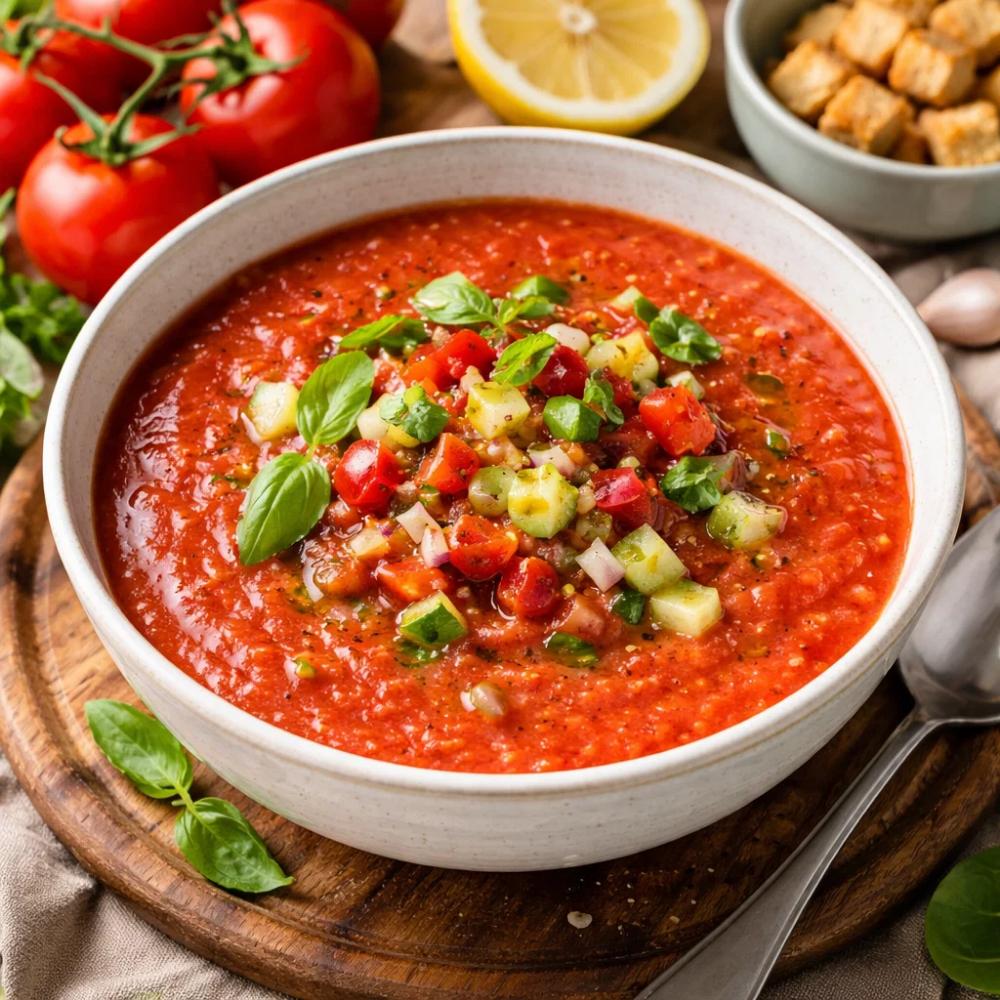
Spain's iconic cold tomato soup: a smooth, intensely flavoured blend of ripe tomatoes, cucumber, red pepper, garlic, olive oil, and vinegar. No cooking required — just blending, chilling, and serving. The perfect summer soup.
What is this dish?
Gazpacho (also spelled gaspacho) is Andalusia's most celebrated cold soup — a smooth, vibrant blend of raw ripe tomatoes, cucumber, red pepper, garlic, olive oil, and sherry vinegar that is chilled and served cold. It originated as a peasant dish in the hot south of Spain, where it served as both a refreshing liquid and a source of nutrients in the summer heat. Today it is one of the most refined and universally loved cold soups in world cuisine.
Why you'll love it
Gazpacho requires no cooking whatsoever — just blending, seasoning, and chilling. It is extraordinarily healthy, entirely vegan, and at only 140 calories per serving, one of the lightest satisfying soups available. When made with proper summer tomatoes, it is also one of the most flavourful — a raw tomato soup of remarkable intensity and freshness.
When to serve
Gazpacho is a summer recipe that belongs to the summer — when vine-ripe, intensely flavoured tomatoes are at their peak. Serve as a starter at a summer dinner party, a refreshing lunch on a hot day, or in small glasses as a cocktail-party canape. It is not a cold-weather soup.
Quick tips
Use only peak-season, very ripe tomatoes. Add olive oil while the blender runs for emulsification. Strain for maximum smoothness. Chill overnight for the best flavour. Season again just before serving — cold dulls flavour perception.
Very Ripe Tomatoes
The foundation and the most important ingredient — the entire flavour of gazpacho is the raw tomato. Only peak-summer, deeply red, vine-ripe tomatoes provide sufficient sweetness, acidity, and fragrance. This is not a year-round recipe.
Sherry Vinegar
The traditional vinegar of Andalusian cooking — slightly sweet, complex, and oxidative in character. It adds the critical acidity that brightens the tomato base. Red wine vinegar is an acceptable substitute. Both are essential — without acid, gazpacho tastes flat and one-dimensional.
Extra Virgin Olive Oil
Added while blending to emulsify into the tomato water, creating a slightly creamy body. Spanish olive oil — fruity, grassy, slightly peppery — is the ideal choice for an authentic flavour. Use the best olive oil you own.
Smoked Paprika (Pimentón de la Vera)
A small amount of Spanish smoked paprika adds an authentic, faintly smoky background note that is characteristic of Andalusian cooking. It is subtle but immediately noticeable when present.
Substitution Options
Red wine vinegar replaces sherry vinegar with a slightly sharper result. Green pepper can replace half the red pepper for a more traditional, slightly bitter note (some Spanish recipes use only green pepper). A splash of lemon juice can supplement or replace the vinegar. The soaked bread can be omitted for a lighter, thinner soup (though body and creaminess are reduced).
Step-by-Step Instructions
Prepare the vegetables
Roughly chop the tomatoes, cucumber, red pepper, and onion into chunks — they will be blended, so precision is not required. Remove the bread crusts if using the bread, soak in cold water for 2 minutes, and squeeze dry — this adds body and a silky creaminess to the soup. Peel the garlic.
Pro Tips:
- •Use the ripest, most flavourful tomatoes you can find — gazpacho is raw and every ingredient is fully perceptible. Out-of-season tomatoes will produce a flat, disappointing soup.
- •The bread is optional but traditional in many Spanish recipes — it adds natural emulsification and body without changing the flavour.
Blend until smooth
Place the tomatoes, cucumber, red pepper, onion, and garlic in a blender (work in batches if necessary). Add the soaked bread, olive oil, vinegar, salt, pepper, and smoked paprika. Blend on maximum power for 2–3 minutes until completely smooth. Add the cold water gradually through the top of the blender while running, stopping when the desired pourable consistency is reached.
Pro Tips:
- •The longer and more powerfully you blend, the smoother the result. A countertop blender produces a far better result than a stick blender for gazpacho.
- •Add olive oil while blending (with the blender running) for the best emulsification — the oil will be evenly distributed rather than sitting on the surface.
Strain and season
For the smoothest, most elegant result, pass the blended soup through a fine-mesh sieve, pressing with the back of a spoon to extract as much liquid as possible. Discard the remaining pulp. Taste and adjust seasoning with salt, vinegar, or a pinch more smoked paprika. The soup should taste bright, fresh, intensely tomatoey, with a pleasant acidity from the vinegar and a faintly grassy bitterness from the olive oil.
Pro Tips:
- •Straining is optional for a rustic texture but produces a significantly more refined, velvety consistency.
- •Taste after straining and season generously — the soup will be served cold, and cold temperatures reduce the perception of flavour.
Chill and serve
Transfer to a covered container or jug and refrigerate for at least 2 hours (overnight is better). The flavour develops and deepens significantly with chilling time as the ingredients continue to infuse. Serve in chilled bowls or glasses. Garnish with the finely diced cucumber, tomato, red pepper, and a drizzle of extra virgin olive oil. Optionally serve with crusty bread.
Pro Tips:
- •The soup must be properly cold to taste its best — warm gazpacho tastes flat and underdeveloped.
- •Season again just before serving — chilling dulls flavour perception and the soup often needs a touch more salt and vinegar when served cold.
Chef's Tips
Techniques that separate good from great
Use peak-season tomatoes only
Gazpacho is a raw soup with no cooking to mask or improve inferior ingredients. Every component is fully perceptible in the final bowl. Supermarket tomatoes purchased in autumn or winter are watery, acidic, and flavourless — using them produces a flat, disappointing soup regardless of technique. Gazpacho is a summer recipe that belongs exclusively to summer when vine-ripe, intensely flavoured tomatoes are available at their peak.
Add olive oil while the blender is running
Adding olive oil to gazpacho while the blender is running at full speed causes the oil to emulsify into the tomato and vegetable water, creating a smooth, unified mixture rather than oil floating separately on the surface. This emulsification gives gazpacho its characteristic slightly creamy, velvety body. Pouring the oil in all at once to a static blender prevents this emulsification.
Chill overnight, not just for 2 hours
Freshly blended gazpacho is already good, but overnight chilling transforms it. As the soup rests in the refrigerator, the different flavour compounds from the tomatoes, cucumber, vinegar, and garlic continue to interact and meld, producing a more unified, complex, rounded flavour. A bowl of gazpacho made the day before tastes noticeably more developed than one chilled for 2 hours.
Season twice — once before chilling, once before serving
Cold temperature significantly reduces the human perception of salt and acidity. A gazpacho that is correctly seasoned at room temperature will taste flat, undersalted, and slightly bland when served chilled. Always taste again immediately before serving and adjust with extra salt, an extra splash of vinegar, and potentially a pinch more smoked paprika. The final seasoning adjustment is what makes a gazpacho taste vibrant rather than muted.
Nutrition Facts
Equipment Needed
- High-powered countertop blender
- Fine-mesh sieve (for smooth result)
- Large bowl or jug with lid
- Knife and cutting board
- Measuring cups
Quick Tips
- Gazpacho must be made with the ripest possible tomatoes — it is a raw soup and the tomato quality is directly perceptible in every spoonful. Reserve this recipe for peak summer tomato season.
- Cold dulls flavour perception — always taste and season again after chilling, just before serving. Gazpacho almost always needs more salt when cold than it did when freshly blended.
- Overnight chilling dramatically improves gazpacho — the flavours meld and the soup develops a more unified, complex character. Make it the day before for the best result.
Recipe Variations
Different ways to make this dish your own
Salmorejo (Thick Córdoban Tomato Soup)
Use 800g of tomatoes and 80g of soaked bread (no cucumber or pepper). Blend very smooth, strain, and chill. Serve topped with diced Serrano ham and chopped hard-boiled egg. Thicker, creamier, and richer than gazpacho — the Córdoban version.
White Gazpacho (Ajo Blanco)
A Málaga speciality — blend 100g of blanched almonds, 2 cloves of garlic, 100ml of olive oil, 2 tablespoons of sherry vinegar, and 200ml of cold water until very smooth. Season and chill. Serve with Muscat grapes. Completely different — almond-pale and intensely savoury.
Watermelon Gazpacho
Replace 400g of tomatoes with 400g of seedless watermelon flesh. Add a pinch of chilli flakes and fresh mint instead of smoked paprika. The sweet-salty-acidic combination is surprisingly elegant for a summer starter.
Chunky Gazpacho Andaluz (Traditional Version)
Do not strain the soup — serve it slightly textured with visible small pieces. Top with diced croutons fried in olive oil, diced cucumber, tomato, green pepper, and a drizzle of olive oil. The more rustic, traditional Andalusian presentation.
What to Serve With
Perfect pairings to complete the meal
Chilled Shot Glasses as Canapés
Serve small chilled glasses of gazpacho topped with a single crouton and a drop of olive oil as an elegant cocktail party canapé.
Crusty White Bread
Good bread alongside is traditional — gazpacho is often drunk from a glass in Andalusia with bread on the side for dipping.
Classic Garnish (Diced Cucumber, Tomato, Red Pepper)
The traditional garnish — small dice of the same vegetables used in the soup, scattered over the bowl, adds texture contrast to the smooth soup.
Serrano Ham and Boiled Egg (for a Salmorejo-Style Service)
Thin slices of Serrano ham and quartered hard-boiled eggs placed on top of the gazpacho adds protein and a beautiful presentation for a more substantial course.
Storage & Make-Ahead
Keep it fresh and plan ahead
Refrigerator
Store in a sealed container for up to 3 days. The flavour continues to develop on day 2. Stir well and re-season before serving as the ingredients can separate on standing.
Freezer
Not recommended — the tomato and cucumber texture deteriorates significantly on thawing, and the fresh, vibrant flavour is mostly lost.
Make-Ahead
Ideal for making the day before — overnight chilling produces a noticeably more developed, complex flavour. Make up to 24 hours ahead for the best result.
Reheating
Not applicable — gazpacho is always served cold. If the soup has been left at room temperature, return it to the refrigerator and chill again before serving.
Be the first to review this recipe!
Got Leftovers?
Turn what you already have in your fridge into delicious meals. Our AI-powered generator creates personalized recipes from your ingredients.
Browse more like this:
You Might Also Like
Discover more delicious recipes similar to what you're cooking