Budget Lentil Dal (Cheap, Filling and Ready in 30 Minutes)
A quick, satisfying red lentil dal with warming spices, tempered in butter and curry leaves. One of the most nourishing meals you can make for under £1.50 per serving.
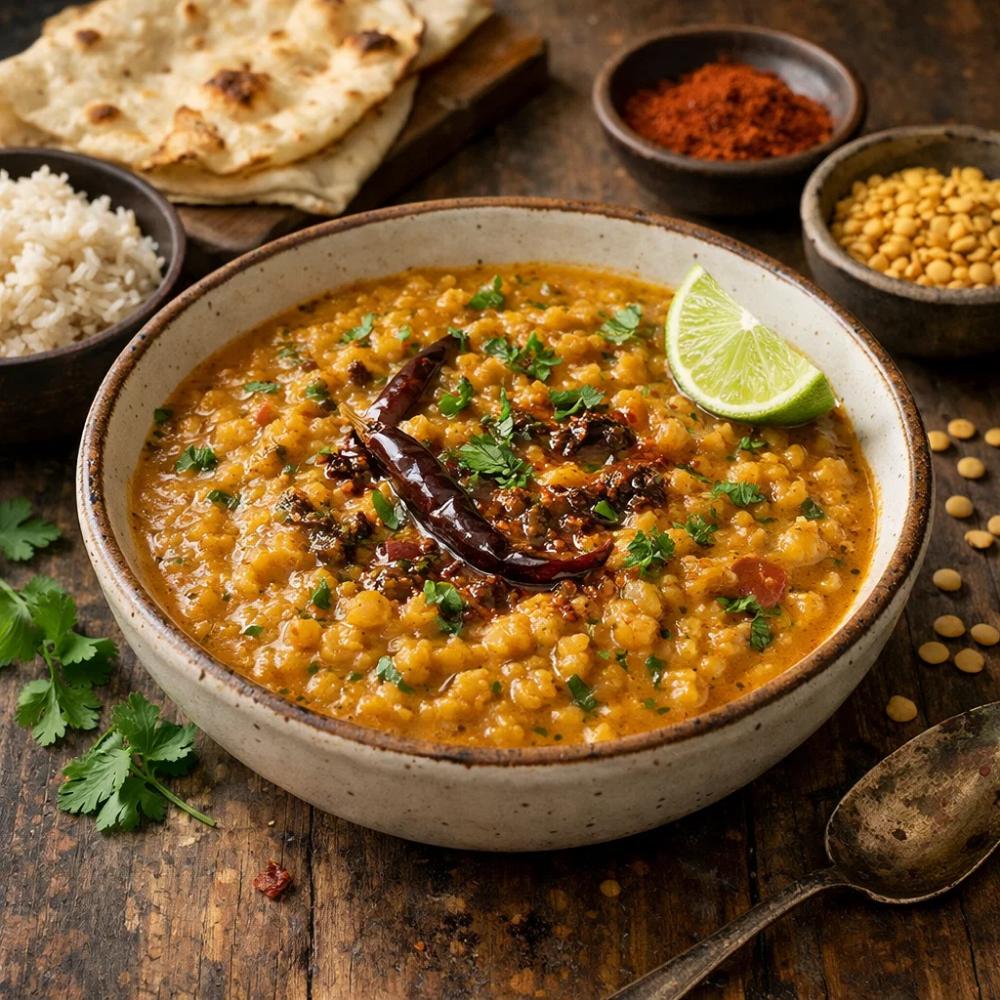
What is this dish?
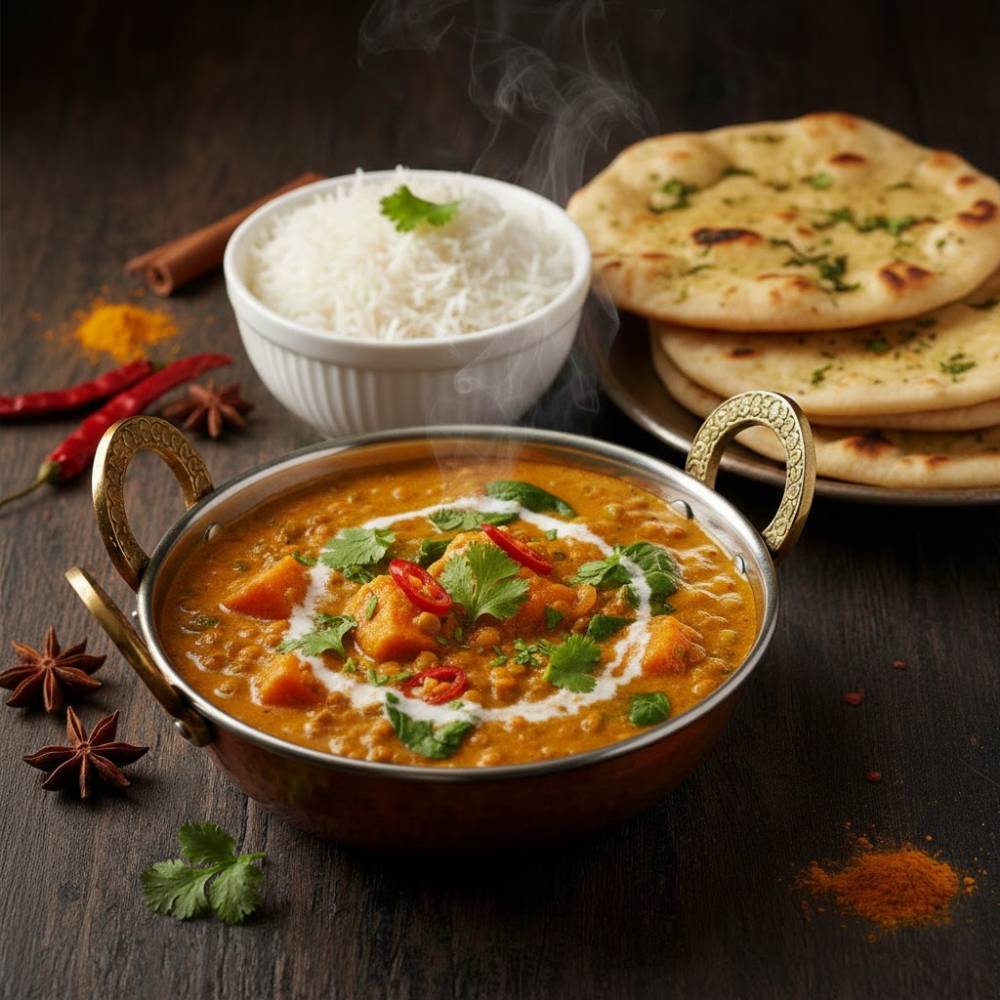
Dal (or dhal) is one of the most fundamental dishes across the Indian subcontinent — a spiced lentil preparation that has fed hundreds of millions of people for thousands of years. Red lentil dal specifically is one of the most accessible versions: the lentils cook in under 20 minutes without soaking, dissolving into a creamy, protein-rich base. The flavour comes from a spiced tomato-onion base and the final tarka — sizzling spices poured in hot oil over the finished dish.
Why you'll love it
Red lentil dal is possibly the best value meal in all of cooking. A batch serving four people costs around £3, takes 30 minutes, provides 19g of protein per serving, and delivers a depth and complexity of flavour that bears no relationship to its cost. It is infinitely better than any packaged convenience meal, freezes perfectly, and improves overnight.
When to serve
Dal works as a weeknight dinner over rice, a weekend lunch with flatbread, a side dish in an Indian feast, or a hearty bowl on its own. It is one of the best meal-prep dishes available — make a large batch and portion into the freezer for easy future meals.
Quick tips
Rinse lentils thoroughly. Cook the onion to genuine golden brown. Add garam masala off the heat. Make the tarka fresh and pour it on hot just before serving. Always finish with a squeeze of lemon.
Red Lentils (Masoor Dal)
The quickest-cooking lentil available — no soaking required, ready in 15–18 minutes, and they dissolve completely into a thick, creamy mass that is the body of the dal. Extremely high in plant-based protein and fibre.
Tarka (Cumin Seeds and Curry Leaves in Hot Oil)
The technique that defines the dish — whole spices and aromatics sizzled briefly in very hot oil and poured directly over the finished dal. The flash-frying in hot fat extracts aromatic compounds in a way that no other cooking method achieves, adding a fragrant, smoky top note.
Ground Turmeric
Gives dal its characteristic yellow-orange colour and adds a mild earthiness and anti-inflammatory properties. Small amounts do not add significant flavour on their own but contribute to the overall spice balance.
Garam Masala
A warm finishing spice blend — typically cinnamon, cardamom, cloves, and black pepper — added off the heat at the very end. It adds the aromatic warmth that distinguishes Indian dal from other lentil soups.
Substitution Options
Vegetable stock can be replaced by water with a stock cube for an even more budget-friendly version. Ghee can replace vegetable oil in the tarka for a richer, more traditional flavour. Canned tomatoes can be replaced by 3 fresh tomatoes, diced. If curry leaves are unavailable, omit them — the dal remains excellent. A pinch of asafoetida (hing) added to the tarka is traditional and adds a pungent, onion-like depth.
Step-by-Step Instructions
Cook the lentils
Rinse the red lentils thoroughly until the water runs clear. Add them to a medium saucepan with 800ml of water or stock. Bring to a boil, then reduce to a steady simmer. Skim off any foam that rises to the surface in the first few minutes. Cook for 15–18 minutes, stirring occasionally, until the lentils have completely broken down and collapsed into a smooth, thick porridge-like consistency.
Pro Tips:
- •Red lentils do not need soaking and cook quickly — they break down almost completely, giving dal its characteristic creamy texture.
- •Skim the foam that forms in the first few minutes for a cleaner-tasting dal.
Build the tarka base
While the lentils cook, heat 2 tablespoons of oil in a large frying pan over medium heat. Add the diced onion and cook for 7–8 minutes, stirring occasionally, until soft and deep golden. Add the garlic and ginger and cook for 1 minute. Add the ground cumin, ground coriander, turmeric, and chilli powder. Stir and cook for 60 seconds until fragrant. Pour in the canned tomatoes and cook for 5 minutes, stirring, until the tomatoes reduce and the oil begins to separate at the edges.
Pro Tips:
- •Cook the onion until genuinely golden brown — this caramelisation is the flavour foundation and should not be rushed.
- •The oil separating from the tomato-spice paste is called 'bhunao' — a sign the sauce is properly cooked and concentrated.
Combine and simmer
Pour the cooked lentils into the spiced tomato base (or vice versa — pour the base into the lentil pot). Stir well to combine. Add 1 teaspoon of salt. Simmer together for 5 minutes, adjusting the consistency with a splash of water if it is too thick. Stir in the garam masala and squeeze of lemon juice off the heat.
Pro Tips:
- •Adjust the thickness to your preference — traditional dal ranges from thick and porridge-like to more soup-like and pourable.
- •Adding garam masala off the heat preserves its delicate aromatic compounds.
Make the tarka (tempered spice oil)
In a small pan, heat 1 tablespoon of oil over medium-high heat. Add the cumin seeds and curry leaves (stand back — they splatter). Cook for 30–45 seconds until the cumin seeds are sizzling and the curry leaves are crisp. Pour the entire contents of the small pan directly over the dal. Stir in partially or leave floating on top for a dramatic presentation.
Pro Tips:
- •The tarka is poured over at the very end for maximum aromatic impact — the sizzling oil releases compounds in the spices that are invisible in other cooking methods.
- •Cover the pan immediately after adding curry leaves to contain the splattering oil.
Serve
Ladle into bowls over steamed basmati rice or alongside warm naan. Scatter fresh coriander on top. Serve with a wedge of lemon for squeezing.
Pro Tips:
- •A squeeze of fresh lemon over the finished dal brightens all the flavours dramatically.
- •Dal thickens as it stands — add a splash of water and stir if it becomes too thick before serving.
Chef's Tips
Techniques that separate good from great
Make the tarka last and pour it on hot
The tarka — cumin seeds and curry leaves sizzling in very hot oil poured directly onto the cooked dal — is not decoration. The 200°C oil causes rapid extraction of fat-soluble aromatic compounds from the spices in a way that gentle simmering cannot replicate. The difference between dal with and without a fresh tarka is immediately obvious. Do it last, pour it hot, and serve immediately.
Cook the onion to deep golden brown, not just soft
The single most common reason homemade dal tastes flat compared to restaurant versions is undercooked onions. The Maillard reaction and caramelisation that occur as onions reach deep golden colour create dozens of new flavour compounds. A pale, softened onion that took 3 minutes to cook cannot substitute for an onion that took 8–10 minutes to reach proper caramelisation.
Add garam masala off the heat
Garam masala is a blend of already-roasted spices with volatile aromatic compounds that evaporate quickly at cooking temperatures. Adding it while the pan is still on a hot burner wastes most of its fragrance. Stir it into the dal after removing from the heat so the residual warmth gently activates the spices without destroying them.
Rinse lentils until the water runs clear
Red lentils are heavily coated in surface starch and dust from processing. Rinsing until the water runs clear removes this excess starch, preventing a gluey, unpleasant texture in the finished dal and ensuring the broth remains clean and bright rather than muddy.
Nutrition Facts
Equipment Needed
- Medium saucepan (for lentils)
- Large frying pan
- Small saucepan or frying pan (for tarka)
- Wooden spoon
- Knife and cutting board
- Measuring cups and spoons
Quick Tips
- Red lentils break down completely when cooked and need no soaking — they are the fastest-cooking pulse available, making this one of the quickest substantial meals you can make.
- The tarka (tempered spices poured in hot oil over the finished dal) is the finishing technique that elevates dal from good to exceptional. Do not skip it.
- Dal thickens as it sits and cools. If reheating, add water progressively and stir over low heat until it reaches the desired consistency.
Recipe Variations
Different ways to make this dish your own
Dal with Spinach (Dal Palak)
Stir 2 large handfuls of fresh spinach or 100g of frozen spinach into the finished dal. Cook for 2–3 minutes until wilted. The spinach adds iron, colour, and a mild earthy flavour that complements the lentils beautifully.
Coconut Dal
Stir in 100ml of coconut milk at the end of cooking for a creamy, mildly sweet, South Indian-inspired version. Reduce the chilli slightly and add an extra squeeze of lime for balance.
Dal Tadka (Restaurant Style)
After making the tarka, add 1–2 dried whole red chillies to the oil before the cumin seeds, and add a pinch of asafoetida to the oil just as the cumin starts to splutter. This replicates the specific flavour profile of restaurant-style dal tadka.
Tomato-Free Dal (Mung Dal Style)
Omit the canned tomatoes entirely and increase the water to 1 litre. Add a squeeze of tamarind paste at the end instead. This produces a cleaner, lighter-flavoured dal more common in everyday South Indian home cooking.
What to Serve With
Perfect pairings to complete the meal
Basmati Rice
The classic pairing — plain steamed basmati rice provides a neutral base that absorbs the spiced dal and stretches the meal to feed more people.
Warm Naan or Roti
Tear flatbread and use it to scoop the thick dal. Excellent for ensuring no dal is left in the bowl.
Plain Yogurt or Raita
A spoonful of cold plain yogurt on top cools the heat and adds a creamy, tangy contrast to the warm, spiced lentils.
Mango Pickle (Achar)
A small spoonful of spicy mango or lime pickle on the side adds sharpness, heat, and complexity that contrasts brilliantly with the earthy dal.
Storage & Make-Ahead
Keep it fresh and plan ahead
Refrigerator
Store in an airtight container for up to 5 days. The flavour improves significantly by day two as the spices continue to develop.
Freezer
Freezes exceptionally well for up to 4 months. Portion into individual serving containers for easy weeknight meals. Thaw overnight and reheat gently.
Make-Ahead
Dal is an ideal make-ahead dish — make a large batch, cool, and refrigerate or freeze. It genuinely tastes better the following day.
Reheating
Reheat in a saucepan over medium-low heat, adding water or stock a splash at a time to restore the original consistency. Stir frequently as dal catches and burns easily if too dry in the pan.
Be the first to review this recipe!
Got Leftovers?
Turn what you already have in your fridge into delicious meals. Our AI-powered generator creates personalized recipes from your ingredients.
You Might Also Like
Discover more delicious recipes similar to what you're cooking