Lemon and Herb Roast Chicken (Classic Sunday Dinner Recipe)
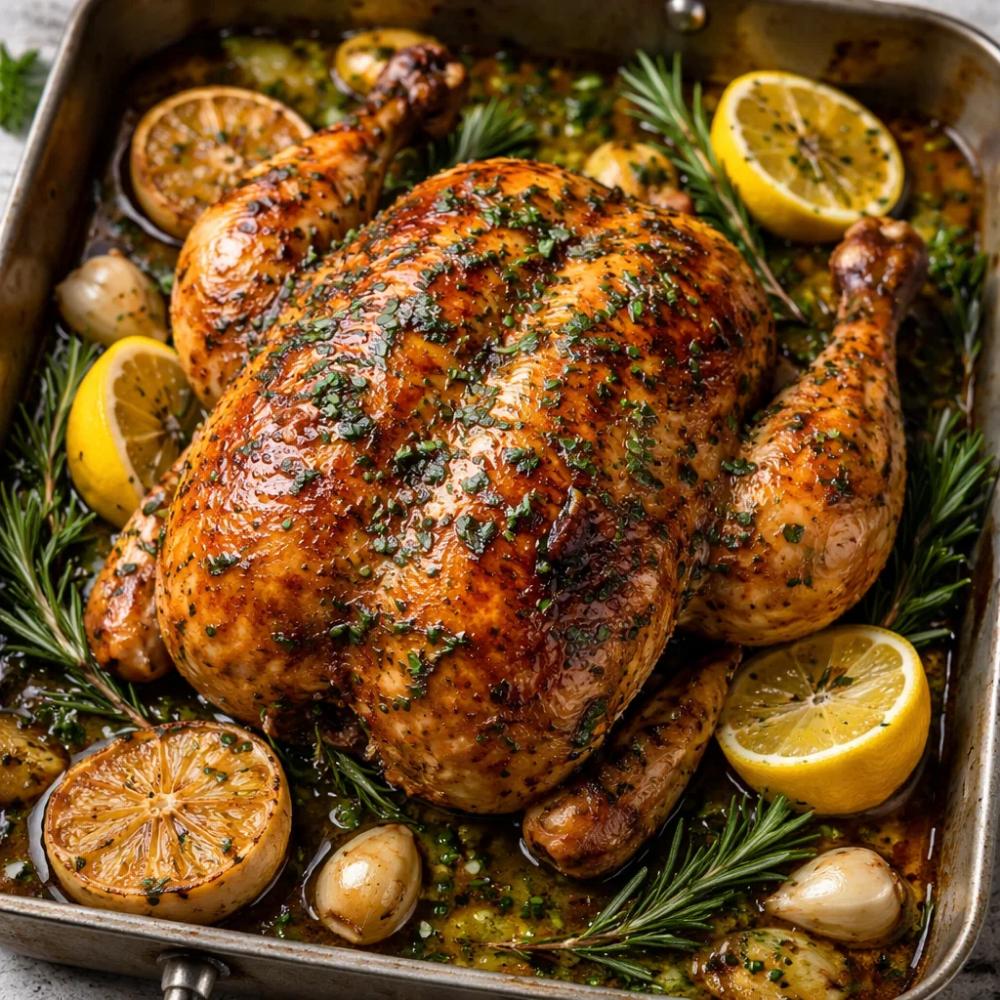
A whole chicken roasted with butter, lemon, garlic, and fresh herbs — golden, crispy skin with juicy, herb-scented meat. The definitive Sunday roast.
What is this dish?
A whole roasted chicken seasoned generously with a herb and lemon butter that is pushed under the skin and rubbed all over the outside. The result is golden, crispy skin, deeply flavoured meat, and fragrant pan juices.
Why you'll love it
It requires minimal active cooking time — most of the work is done in the oven. It feeds a family, produces leftovers for days, and the carcass makes the best chicken stock.
When to serve
Sunday lunch with roast vegetables and potatoes, a dinner party main course, or any occasion that deserves a centrepiece dish.
Quick tips
Dry skin = crispy skin. Get butter under the skin for flavour from within. Start at 220°C, reduce to 180°C. Always rest before carving.
Unsalted Butter
The fat that bastes the chicken from within when pushed under the skin. It carries the herb and lemon flavours into the meat and produces the golden, lacquered skin.
Lemon
The zest goes into the butter for concentrated citrus flavour. The halves stuffed in the cavity steam from inside the bird, adding fragrance to every bite.
Fresh Thyme and Rosemary
The classic herb pairing for roast chicken. Thyme is delicate and earthy; rosemary is assertive and aromatic. Together they produce the definitive roast chicken flavour.
Substitution Options
Use tarragon instead of thyme for a French-style version. Replace the lemon with orange zest and add 1 teaspoon of fennel seeds for a Provençal variation. For a dairy-free version, replace the butter with 4 tablespoons of good olive oil.
Step-by-Step Instructions
Make the herb butter
Preheat the oven to 220°C (fan 200°C). In a small bowl, mix together the softened butter, lemon zest, 2 minced garlic cloves, thyme, rosemary, parsley, salt, and pepper until fully combined.
Pro Tips:
- •Butter must be fully softened — not melted — or it won't spread under the skin.
- •Room temperature butter takes about 30 minutes out of the fridge.
Prepare the chicken
Pat the chicken completely dry with kitchen paper — this is the single most important step for crispy skin. Use your fingers to carefully loosen the skin over the breasts and thighs, creating a pocket without tearing. Push approximately two-thirds of the herb butter under the skin and spread it evenly. Rub the remaining butter all over the outside of the chicken.
Pro Tips:
- •Dry skin = crispy skin. Don't skip patting it dry.
- •Getting butter under the skin bastes the meat from the inside as it cooks.
Stuff and truss
Stuff the cavity with the lemon halves, whole garlic cloves, and a few extra sprigs of thyme and rosemary. Place the onion quarters in the base of the roasting tin — they act as a trivet and flavour the pan juices. Set the chicken on top, breast side up. Drizzle with olive oil and season with a little extra salt.
Pro Tips:
- •The onion trivet lifts the chicken off the tin base so heat circulates underneath.
- •Stuffing the cavity with aromatics rather than stuffing infuses the bird with flavour without affecting cooking times.
Roast
Roast at 220°C for 20 minutes to start — this blast of heat crisps the skin. Then reduce the oven to 180°C (fan 160°C) and continue roasting for 20 minutes per 500g of chicken weight. A 1.5kg bird takes approximately 1 hour total; a 2kg bird takes approximately 1 hour 20 minutes.
Pro Tips:
- •Calculate timing from total weight. A 1.8kg bird = 20 min at 220°C + 52 min at 180°C ≈ 1 hr 15 min total.
- •Do not open the oven door in the first 20 minutes.
Rest the chicken
The chicken is done when a skewer inserted into the thickest part of the thigh runs clear with no trace of pink, or a meat thermometer reads 75°C at the thigh. Remove from the oven, tent loosely with foil, and rest for 15–20 minutes before carving. This is not optional.
Pro Tips:
- •Resting allows the juices to redistribute back into the meat — cutting too early loses all the juices.
- •The internal temperature will continue to rise 3–5°C during resting.
Chef's Tips
Techniques that separate good from great
Dry brine the chicken overnight
The evening before, salt the chicken generously all over (including inside the cavity) and leave uncovered in the fridge overnight. This draws out moisture, then reabsorbs it back into the meat, seasoning it deeply and drying the skin for maximum crispiness the next day.
Make a pan sauce from the roasting juices
After resting the chicken, pour the tin juices into a saucepan. Skim off most of the fat. Add 200ml of chicken stock and a splash of white wine. Simmer for 5 minutes until reduced and slightly thickened. Taste and season. This is better than any store-bought gravy.
Nutrition Facts
Equipment Needed
- Roasting tin
- Small bowl
- Kitchen paper
- Meat thermometer (recommended)
- Foil
Quick Tips
- Dry skin is crispy skin — pat the chicken thoroughly dry with kitchen paper before applying butter.
- Rest the chicken for at least 15 minutes after roasting. This is the step most people skip and the reason their roast chicken is dry.
- Start at high heat (220°C) for 20 minutes to crisp the skin, then reduce to 180°C to cook through without drying out.
Recipe Variations
Different ways to make this dish your own
Garlic Butter Roast Chicken
Double the garlic in the butter (4 minced cloves) and add 1 tablespoon of Dijon mustard. Omit the lemon for a richer, more intensely savoury bird.
Spatchcock Roast Chicken
Remove the backbone with scissors to flatten the chicken. Roast at 220°C for 45–55 minutes. The flat shape cooks faster, more evenly, and produces crispier skin all over.
Provençal Roast Chicken
Use herbes de Provence instead of individual herbs. Add 1 teaspoon of fennel seeds to the cavity with the lemon. Serve with roasted tomatoes and olives.
Lemon and Tarragon Roast Chicken
Replace the thyme and rosemary with 3 tablespoons of fresh tarragon for a French bistro-style roast chicken. Add 1 teaspoon of Dijon mustard to the butter.
What to Serve With
Perfect pairings to complete the meal
Roast Potatoes
Essential. Par-boil, then roast in the residual fat from the chicken tin. They absorb the herb and lemon-flavoured fat for the best roast potatoes.
Roasted Root Vegetables
Carrots, parsnips, and beetroot roasted alongside or separately. They absorb the chicken fat and develop sweet, caramelised edges.
Simple Green Salad
A lighter option — sharp, dressed leaves cut through the richness of the chicken and butter perfectly.
Pan Gravy
Pour the roasting juices into a saucepan, add 200ml chicken stock, simmer 5 minutes. Better than any packet gravy.
Storage & Make-Ahead
Keep it fresh and plan ahead
Refrigerator
Carved leftover chicken keeps in an airtight container for up to 3 days.
Freezer
Freezes well for up to 3 months. Strip the meat from the carcass and freeze in portions.
Make-Ahead
Make the herb butter up to 3 days ahead and keep refrigerated. Apply to the chicken and cook fresh.
Reheating
Reheat carved chicken in a 180°C oven covered with foil for 15–20 minutes, or slice cold and use in sandwiches, salads, and pasta.
Be the first to review this recipe!
Got Leftovers?
Turn what you already have in your fridge into delicious meals. Our AI-powered generator creates personalized recipes from your ingredients.
Browse more like this:
You Might Also Like
Discover more delicious recipes similar to what you're cooking