Minestrone Soup (Hearty Italian Vegetable Soup)
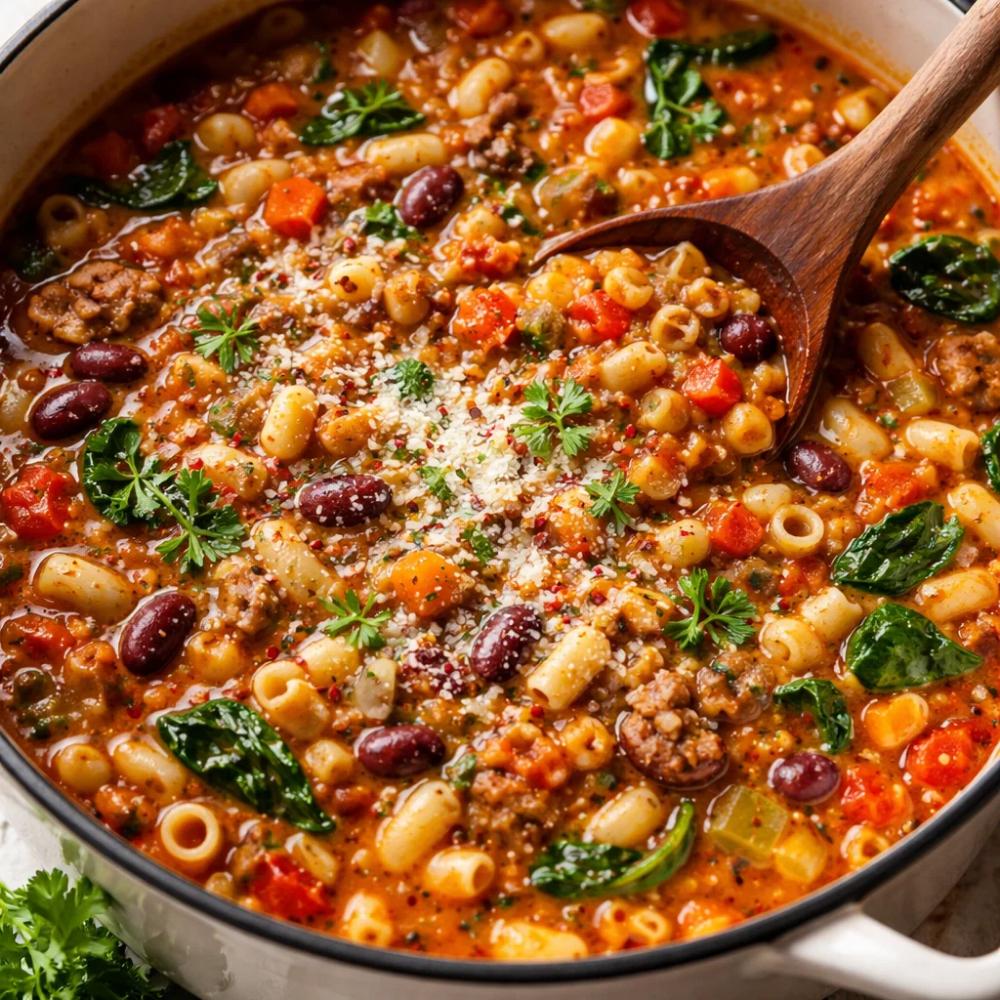
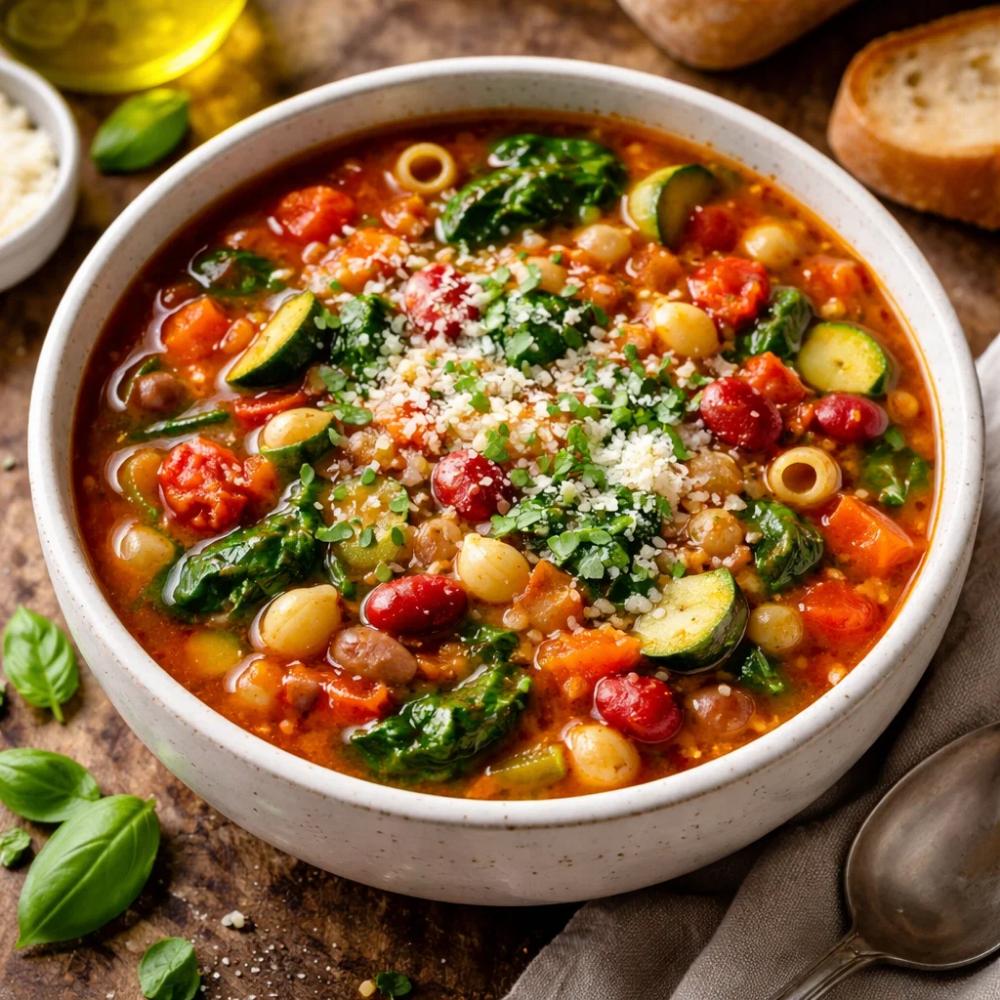
A substantial, deeply flavourful Italian vegetable soup packed with seasonal vegetables, cannellini beans, pasta, and a rich tomato base. A complete, satisfying one-bowl meal from the Italian cucina povera tradition.
What is this dish?
Minestrone (from the Italian 'minestra', meaning soup) is Italy's great seasonal vegetable soup — a hearty, sustaining, completely flexible one-pot meal that changes with whatever is fresh. It has been made in Italy for at least two thousand years and remains a staple of Italian home cooking precisely because it accommodates any combination of vegetables with consistent results.
Why you'll love it
Minestrone is one of the most satisfying and nourishing soups you can make — rich in fibre, protein from the beans, vitamins from the vegetables, and deep flavour from the soffritto base and Parmesan rind. It costs very little, uses up whatever vegetables need cooking, and improves significantly overnight.
When to serve
Minestrone works as a complete one-bowl meal with crusty bread, a hearty starter at an Italian dinner, meal-prep lunch throughout the week, or a way to use up vegetables that need cooking. Particularly good in autumn and winter.
Quick tips
Build a proper soffritto — take 10 minutes to cook it properly. Add a Parmesan rind to the broth. Cook pasta directly in the soup. Add greens only in the last 5 minutes. Finish with raw olive oil.
Soffritto (Onion, Celery, Carrot)
The flavour base of all Italian cooking — three vegetables slowly cooked in olive oil until sweet and golden. Taking the full 10 minutes to build a proper soffritto is the most important step.
Cannellini Beans
Provide plant-based protein, fibre, and a creamy, slightly earthy flavour. Some recipes mash a few beans for additional body.
Cavolo Nero
The dark, iron-rich Tuscan kale that is the traditional green for Tuscan minestrone. Its slightly bitter, mineral flavour and firm texture hold up better in a long-simmered soup than regular spinach.
Parmesan Rind
The transformative secret ingredient — added to the simmering broth, it slowly releases glutamates and dairy richness over 15–20 minutes. The cheapest and most impactful improvement to homemade minestrone.
Substitution Options
Any seasonal vegetables can replace courgette and green beans. Borlotti or kidney beans can replace cannellini. Spinach or savoy cabbage replaces cavolo nero. Any small pasta shape works. For gluten-free, replace pasta with an extra can of beans or 100g of cooked brown rice added at the end.
Step-by-Step Instructions
Build the soffritto base
Heat the olive oil in a large, heavy-bottomed pot over medium heat. Add the diced onion, celery, and carrot. Cook for 8–10 minutes, stirring occasionally, until soft and lightly golden. Add the minced garlic and cook for 1 minute more until fragrant.
Pro Tips:
- •A well-cooked soffritto is the flavour foundation of minestrone. Do not rush this stage.
- •The soffritto should be genuinely golden, not just softened — the caramelisation adds sweetness and depth.
Add vegetables and tomatoes
Add the diced courgette and green beans. Stir and cook for 2 minutes. Add the canned chopped tomatoes, drained cannellini beans, vegetable stock, rosemary sprig, thyme sprigs, Parmesan rind if using, salt, and pepper. Bring to a boil, then reduce to a steady simmer.
Pro Tips:
- •The Parmesan rind dropped into the broth slowly releases glutamates as it simmers, adding an extraordinary savoury depth.
- •Add firmer vegetables earlier and delicate greens (cabbage, cavolo nero) in the last 5–8 minutes.
Simmer until tender
Simmer for 15 minutes until all the vegetables are tender. Remove the rosemary and thyme sprigs and the Parmesan rind. Add the pasta directly to the pot and cook for 8–10 minutes, stirring occasionally, until just tender. Add the shredded cabbage or cavolo nero in the last 5 minutes.
Pro Tips:
- •Cooking the pasta in the soup means it absorbs the seasoned broth as it cooks, producing better flavour than pasta added separately.
- •Cabbage and cavolo nero need only 4–5 minutes to cook — add them last.
Finish and serve
Taste and adjust seasoning. Ladle into warm bowls. Finish each bowl with a generous drizzle of raw extra virgin olive oil and a crack of black pepper. Pass grated Parmesan at the table.
Pro Tips:
- •The finishing olive oil is not optional — raw extra virgin olive oil drizzled into a hot bowl adds fresh, grassy fragrance that is the signature of Italian vegetable soups.
- •Minestrone improves considerably after resting for 10–15 minutes off the heat.
Chef's Tips
Techniques that separate good from great
Add a Parmesan rind to the simmering broth
A Parmesan rind dropped into the soup at the start of simmering slowly dissolves its outer layer into the broth over 15–20 minutes, releasing free glutamates (the compounds responsible for umami) that add an extraordinary savoury depth without changing the flavour character. It is the single most impactful addition to any Italian vegetable soup.
Cook the pasta directly in the soup
Pasta cooked directly in the seasoned broth absorbs the soup's flavours as it cooks, releasing surface starch that thickens the broth slightly and creates a cohesive, unified dish. The difference in flavour integration compared to pasta cooked separately and added is immediately perceptible.
Build a genuine soffritto — don't rush the first 10 minutes
The soffritto stage is where the foundational flavour of minestrone is built. The vegetables need 8–10 minutes at medium heat to soften completely and develop their sweetness through caramelisation. Adding tomatoes and stock to a barely softened soffritto produces a thin, flat-tasting soup regardless of everything that follows.
Add the greens in the final 5 minutes
Cabbage and cavolo nero need only 4–6 minutes to cook to tender-but-not-mushy texture. Adding them at the start produces grey, flavourless, overcooked greens. Added in the last 5 minutes, they remain bright green and just tender.
Nutrition Facts
Equipment Needed
- Large pot or Dutch oven (at least 5-litre)
- Wooden spoon
- Knife and cutting board
- Ladle
- Measuring cups
Quick Tips
- The Parmesan rind is the single biggest upgrade you can make to homemade minestrone — save rinds in the freezer and use them in any Italian bean or vegetable soup.
- Minestrone is a seasonal, flexible soup — use whatever vegetables are available and in season. The recipe is a template, not a prescription.
- The pasta absorbs broth as it sits — if making ahead, cook the pasta separately and add it to individual bowls when serving to prevent it from swelling.
Recipe Variations
Different ways to make this dish your own
Ribollita (Tuscan Bread Soup)
Add 2–3 thick slices of day-old bread (torn roughly) to the finished minestrone and simmer for 10 more minutes until the bread dissolves into the soup, thickening it dramatically. 'Ribollita' means 're-boiled' and refers to reheating leftover minestrone with added bread the next day.
Genovese Minestrone with Pesto
Stir 2 tablespoons of good-quality basil pesto into the finished soup off the heat. Adds a burst of fresh, aromatic flavour and a characteristic Ligurian character.
Minestrone with Pancetta
Fry 80g of diced pancetta until crispy in the pot before adding the soffritto vegetables. The rendered pork fat and salty, savoury pancetta transform the soup from vegan to deeply satisfying.
Spring Minestrone
Replace courgette and green beans with asparagus tips, peas, broad beans, and baby spinach. A lighter, brighter, green-coloured version for spring cooking.
What to Serve With
Perfect pairings to complete the meal
Crusty Ciabatta or Sourdough
Essential for a complete meal — crusty Italian bread for dunking and mopping up the flavourful broth.
Grated Parmesan or Pecorino
A generous grating of aged cheese over the hot soup adds salty, umami richness that elevates every element.
Drizzle of Extra Virgin Olive Oil
Raw olive oil poured over each bowl just before serving adds fresh, fruity flavour that cooked oil cannot provide.
Basil Pesto
A teaspoon of pesto stirred into the bowl provides a burst of fresh herb, garlic, and nut flavour that is outstanding with vegetable soup.
Storage & Make-Ahead
Keep it fresh and plan ahead
Refrigerator
Store in an airtight container for up to 5 days. Minestrone improves significantly overnight. The pasta absorbs broth — add water when reheating.
Freezer
Freeze without pasta for up to 3 months. Add freshly cooked pasta when reheating. The vegetable and bean base freezes perfectly.
Make-Ahead
Ideal for making 1–2 days ahead. For maximum pasta quality, store the pasta separately and add to individual bowls when serving.
Reheating
Reheat gently in a saucepan over medium heat with a splash of water or stock, stirring regularly. Add liquid gradually as the soup thickens considerably overnight.
Be the first to review this recipe!
Got Leftovers?
Turn what you already have in your fridge into delicious meals. Our AI-powered generator creates personalized recipes from your ingredients.
Browse more like this:
You Might Also Like
Discover more delicious recipes similar to what you're cooking