Home/The Culinary Library/Flavor Mapping
The Culinary Library
Mastery Guide13 min readUpdated March 2026

The Global Pantry: Mastering the DNA of International Flavours

You don't need 100 spices to cook the world. You need the "Aromatic Base" and the "Primary Acid" for each region. Every great cuisine is built on a flavour scaffold — a specific combination of aromatics cooked in a regional fat — and a handful of high-impact pantry items that do 80% of the work. This guide provides the Capsule Pantry framework to master 7 major cuisines with minimal inventory and maximum coherence.

TL;DR — Key Takeaways

  • 1Every cuisine starts with a specific aromatic trinity in a regional fat — master French mirepoix (butter), Chinese ginger-garlic-scallion (oil), and Indian whole spice tempering (ghee) and you unlock 80% of global cooking.
  • 2The primary acid is the most powerful single variable in cross-cultural cooking — switching from lemon (Mediterranean) to lime (SE Asian/Mexican) to rice vinegar (East Asian) repositions the entire dish.
  • 3Buy whole spices, not ground — they last 2+ years versus 3 months — and bloom them in hot oil before use to reactivate dormant essential oils.

1The Aromatic Trinity Framework

The European Bases — Mirepoix, Soffritto & Holy Trinity

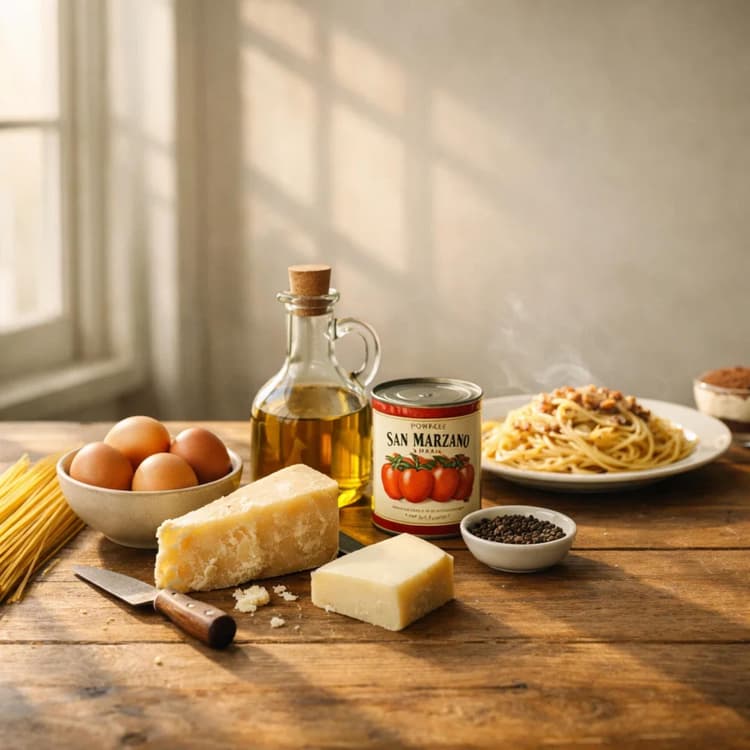
The French mirepoix is a 2:1:1 ratio of onion, carrot, and celery sweated low and slow in butter until soft and translucent — never browned. It is the foundational base for French stocks, braises, soups, and sauces. The Italian soffritto uses the same three vegetables in olive oil, sometimes adding fennel or leek, identically for risotto, pasta sauces, and slow braises. The Cajun "Holy Trinity" swaps carrot for green bell pepper — onion, celery, and green pepper in equal parts, cooked in oil or lard — which is the starting point for gumbo, étouffée, and jambalaya. The Iberian sofrito adds tomato to onion, garlic, and pepper and cooks it long enough to become thick and jammy, creating the sweet-caramelised depth that defines paella, romesco, and fideuà. The technique — sweat in fat, low heat, patience — is identical across all four; the fat and the fourth ingredient define the regional character.

The Asian Trinities — Chinese, Japanese & Korean

The Chinese aromatic trinity — ginger, garlic, and scallion — is bloomed in hot oil at the start of nearly every stir-fry and braise. Sequence matters: ginger goes in first (30 seconds), garlic second (20 seconds), scallion last (10 seconds) — each has a different burn threshold. Japanese cooking replaces this with a dashi base (kombu + bonito-simmered liquid) and builds on it with soy sauce, mirin, and sake as the tare — the "trinity" is liquid rather than aromatic. Korean cooking uses doenjang (fermented soybean paste), gochugaru (chilli flakes), and sesame oil as its flavour foundation — all three are fermented or fat-soluble, giving Korean food its characteristic rounded heat. Southeast Asian cooking (Thai, Vietnamese) blooms lemongrass, galangal, and kaffir lime leaf in coconut oil or a shrimp paste-fried base — the three elements together signal that instantly recognisable tropical-bright character within seconds.

The Latin Sofrito & The Indian Foundation

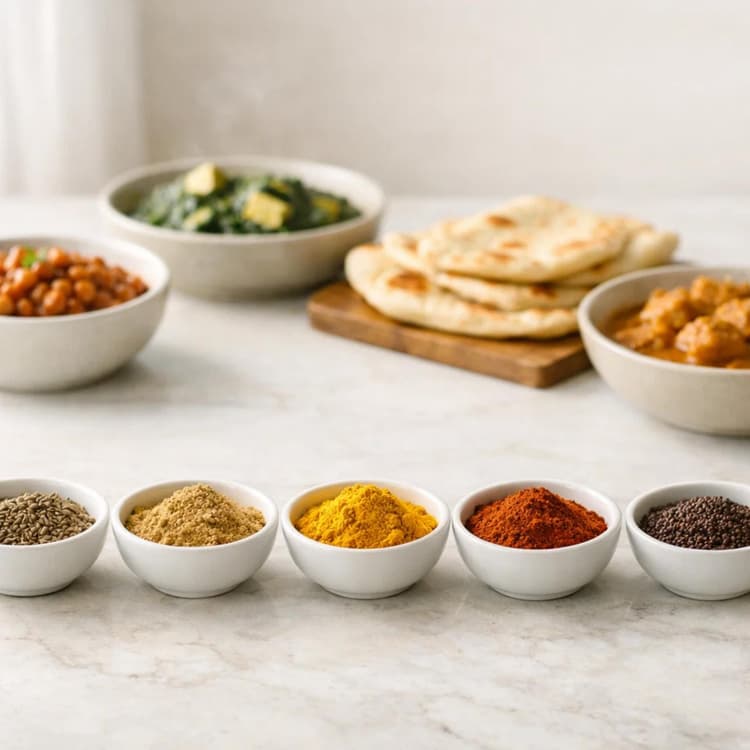
The Indian foundation is the most layered of the trinities: first, whole spices (cumin seeds or mustard seeds) tempered in ghee until they pop and release essential oils; then onion cooked until dark golden (15 to 20 minutes); then ginger-garlic paste added and fried until the raw smell disappears; then ground spices added last. This sequence builds three distinct flavour strata: the earthy smokiness of bloomed whole spices, the caramelised sweetness of slow-cooked onion, and the brightness of raw ginger-garlic. The Latin sofrito — garlic, onion, peppers, and tomato cooked together in olive oil — varies across Puerto Rico, Cuba, Colombia, and Spain, but the unifying technique is identical: cook long enough (8 to 12 minutes minimum) for the tomato to lose all rawness and the mixture to become thick, fragrant, and jammy. That jammy depth is the flavour signature of the entire Latin tradition.

Put This Guide to Work

AI Recipe Generator

Use the Global Pivot prompt: tell the AI Recipe Generator your current pantry and a target cuisine — it maps the spice architecture onto what you have and tells you exactly what to add, swap, or omit.

2The Capsule Pantry — The 80/20 Rule

The Regional Umami Accelerators

Each culinary region has a primary umami accelerator — a fermented or aged ingredient that delivers instant depth to quick meals. Fish sauce (Southeast Asia): one teaspoon in a stir-fry or dipping sauce delivers the glutamate depth that takes hours to build with meat stock. Miso (Japan): a tablespoon whisked into butter, dressing, or soup provides round, salty complexity that transforms a neutral base. Anchovy (Italy and France): dissolves completely in heat, invisible in the final dish but responsible for the "why does this taste so good" effect in pasta sauces, braises, and dressings. Harissa (North Africa): fermented chilli paste that adds simultaneous heat, smoke, and savoury depth. Gochujang (Korea): fermented, sweet-spicy, and deeply savoury. One or two of these accelerators in your pantry unlocks an entire cuisine's flavour vocabulary for quick weeknight meals.

The Acid Shift

The most dramatic flavour pivot in global cooking is switching the primary acid. The same base protein — a chicken breast, a handful of prawns, a tin of chickpeas — cooked with the same aromatics tastes distinctly different depending on which acid finishes the dish. Lemon signals Mediterranean (Greek, Italian, Spanish, Middle Eastern). Lime signals Southeast Asian or Mexican. Rice vinegar signals East Asian (Japanese, Korean, Chinese). Tamarind signals Indian or Thai. Pomegranate molasses signals Middle Eastern or North African. The acid is the single most powerful variable in cross-cultural cooking — it repositions the entire dish with one swap. For the full science behind why different acids produce different taste experiences — and which acids to cook with versus add raw — see the Acid — The Brightness Factor section of the Ingredient Bibles guide.
The Shelf-Life Hack

Building a capsule pantry for multiple cuisines means managing ingredients used infrequently. The solution: prioritise whole formats. Whole dried chillies (ancho, guajillo, kashmiri) last 1 to 2 years sealed; ground chilli powders go stale in 3 months. Whole spices (cumin seed, coriander seed, cardamom, star anise) last 2+ years; pre-ground degrade in 90 days. Fermented pastes (miso, gochujang, doubanjiang) last 12 to 18 months refrigerated. When whole spices have been sitting a while, bloom them in hot oil or ghee for 30 to 60 seconds before use — the heat reactivates dormant essential oils and recovers significant potency from spices that would otherwise taste flat. This single step is the difference between a dull weeknight curry and a vibrant one using identical ingredients.

3Flavour Mapping & Cross-Pollination

The Bridge Ingredient

Bridge ingredients are those present in multiple culinary traditions, making them the safest entry point into principled fusion. Cilantro (coriander leaf) appears in Mexican, Vietnamese, Indian, and Thai cooking — it bridges all four. Sesame (as oil or seeds) appears in Chinese, Japanese, Korean, Middle Eastern, and Indian cooking. Coconut milk appears in Thai, Indian, Caribbean, and West African cooking. Fish sauce bridges Southeast Asian and ancient Roman cooking via garum — it connects fermented umami traditions across cultures. Identifying the bridge ingredient between two cuisines you want to combine is the most structurally sound approach to fusion: it produces dishes with internal flavour logic rather than novelty for its own sake.

Building a Spice Capsule by "Vibe"

Organising your spice drawer alphabetically is a missed opportunity. Organising by flavour vibe — Earthy, Floral, Pungent, and Hot — makes cooking faster and substitution more intuitive. Earthy: cumin, coriander, caraway, smoked paprika, sumac. These provide depth and roundness. Floral: cardamom, fennel seed, star anise, saffron, dried rose petals. These provide top notes and complexity. Pungent: garlic powder, asafoetida (hing), black pepper, mustard seed, fenugreek. These provide sharpness and base notes. Hot: cayenne, gochugaru, kashmiri chilli, white pepper, urfa biber. Within any regional cuisine, you're selecting one or two spices from each vibe category — this framework helps you substitute intelligently and understand what a dish is missing.

Principled Fusion

Fusion works when it follows flavour logic, not novelty. Korean-Mexican works because gochujang's fermented heat occupies the same flavour position as chipotle — both are smoky, fermented, and moderately hot, making the combination internally consistent. Japanese-Peruvian (Nikkei) works because both cultures value umami, fresh acid, and precise presentation — soy and lime coexist naturally. French-Japanese fusion often works at the butter-miso interface. Fusion fails when foundational flavours actively conflict: heavy French cream and Japanese dashi taste simultaneously leaden and delicate, undermining each other. The diagnostic question before any combination: do the foundational flavour profiles occupy compatible positions — or are they pulling in opposite directions?

4Global Exploration with AI

The Global Pivot Prompt

The "Global Pivot" is a specific AI recipe generator use case: repositioning a standard dish's entire flavour profile to a different regional tradition using only your current pantry. The prompt structure: "Take this [dish] and pivot its flavour profile to [target cuisine] using only these pantry items: [list]. Tell me which to add, which to omit, and which technique to change." Example: "Take this roasted chicken recipe and pivot it to Moroccan using only my current pantry: olive oil, cumin, coriander, cinnamon, garlic, lemon, canned chickpeas, preserved lemon." The AI maps the spice architecture of the target cuisine onto available ingredients and identifies the closest achievable version — often producing genuinely excellent results that feel regionally coherent rather than improvised.

The Ingredient Translator

Every regional cuisine has anchor ingredients that are hard to find outside major cities. AI tools can identify each ingredient's flavour function and suggest accessible local substitutes. Tamarind: sour-sweet, fruity acid — substitute with lime juice + a small amount of brown sugar (3:1 ratio). Kaffir lime leaves: aromatic citrus brightness — substitute with lime zest strip + a small amount of lemongrass. Sumac: tart, fruity powder acid — substitute with dried lemon zest. Galangal: substitute with fresh ginger + a small amount of white pepper. These substitutions perform the same flavour function at an 80% accuracy level — sufficient for weeknight cooking, and far better than either omitting the ingredient or abandoning the recipe.

The Regional Remix

The deepest use of AI for global cooking is building entirely new dishes that follow the logic of a target cuisine without copying any specific recipe. The prompt structure: "Build me an original dish in the style of [cuisine], using [protein] and [vegetables], following the correct aromatic base, spice vocabulary, and finishing acid for that tradition." The AI draws on the internal logic of the cuisine — its trinity, its signature spice combinations, its typical serving format — rather than recycling an existing recipe. This produces dishes that feel authentic in spirit (because they follow the structural logic) while being genuinely novel. It is the closest equivalent to culinary improvisation that a home cook can access.

Practical Applications

All articles

Get 5 Delicious Recipes Every Week

Join our newsletter and discover new favorites delivered straight to your inbox. No spam, just tasty inspiration.