Home/The Culinary Library/Liquid Chemistry
The Culinary Library
Mastery Guide13 min readUpdated March 2026

The Modern Bar: Mastering the Chemistry of Mixology

Great drinks are built on chemistry, not just a list of spirits. Once you understand the Universal Ratio that governs every sour cocktail, the thermodynamics of ice and dilution, and the infusion science behind the zero-proof revolution, you can build world-class beverages at home from any bottle — or no bottle at all. This guide covers the science so the creativity follows naturally.

TL;DR — Key Takeaways

  • 1The 2:1:1 ratio (spirit : sour : sweet) governs every Daiquiri, Margarita, and Whiskey Sour — learn the formula once, then pivot the variables endlessly to create new drinks.
  • 2Dilution is an ingredient: shaking for 12–15 seconds adds 20–25% water, opening aromatics and integrating the drink. Without it, cocktails taste harsh and disconnected.
  • 3Clear ice is made by directional freezing — a small open cooler in the freezer, no lid. It melts 40–60% slower than standard ice and dramatically improves any spirit-forward serve.

1The Universal Ratio (2:1:1)

The Formula

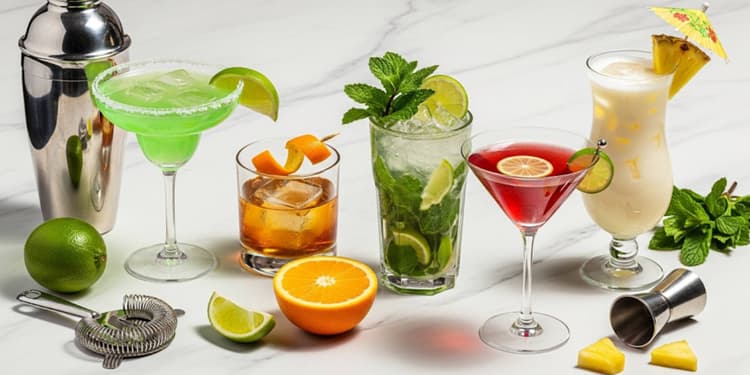
The 2:1:1 ratio is the mathematical skeleton beneath almost every classic cocktail in the sour family: 2 parts base spirit, 1 part sour (fresh citrus juice), 1 part sweet (syrup or liqueur). Applied: 2oz rum + 1oz fresh lime + 1oz simple syrup = Daiquiri. 2oz tequila + 1oz fresh lime + 1oz triple sec = Margarita. 2oz gin + 1oz fresh lemon + 1oz simple syrup = Tom Collins base. 2oz whiskey + 1oz fresh lemon + 1oz simple syrup = Whiskey Sour. The formula doesn't change — only the variables do. Learning to see a cocktail as a ratio rather than a recipe unlocks the ability to build any sour drink from any spirit without consulting a book. Use the ratio; choose your variables.

The Pivot

Once the 2:1:1 skeleton is internalised, you substitute within each category to create new drinks across different flavour profiles. Base pivots: rum → gin → pisco → mezcal → vodka → strong cold-brew (zero-proof). Sour pivots: lime → lemon → grapefruit → verjuice → shrub (vinegar-based). Sweet pivots: simple syrup → honey syrup → elderflower liqueur → triple sec → maraschino → orgeat (almond). Each swap shifts the drink's identity while maintaining structural balance. A Daiquiri with mezcal and grapefruit becomes a smoky, spirit-forward sour. A Margarita with elderflower in place of triple sec becomes a floral, aromatic drink. The ratio holds; the variables are yours to design.

Spirit-Forward Ratios

Not every cocktail is a sour. Spirit-forward drinks — Manhattans, Martinis, Negronis, Old Fashioneds — follow a different ratio logic and a different preparation method. The 3:1 template: 3 parts spirit, 1 part modifier (Manhattan: whiskey + sweet vermouth; Martini: gin + dry vermouth). The equal-parts template: Negroni (gin + Campari + sweet vermouth, 1:1:1); Last Word (gin + green Chartreuse + maraschino + lime, 1:1:1:1). Spirit-forward drinks are always stirred, not shaken — stirring provides gentle dilution (15 to 20% water over 30 to 40 seconds) and preserves the clarity and silky texture that define the category. Shaking a Negroni aerates it into an entirely different drink.

Put This Guide to Work

AI Recipe Generator

Use the Flavor Match prompt: tell the AI Recipe Generator which spirits you have, and it generates three 2:1:1-ratio cocktails across different flavour profiles — floral, bitter, tropical — without you needing to know a single recipe.

2The Thermodynamics of Ice

Dilution Science

A cocktail is not complete until it has reached its correct dilution level — typically 15 to 25% added water by volume. This dilution is not accidental: it opens aromatic compounds, softens alcohol's edges, and integrates the components into a unified flavour experience. Stirring a spirit-forward cocktail over ice for 30 to 40 seconds adds approximately 15 to 20% water while chilling to around 28°F (-2°C) — producing the silky, integrated texture that defines a well-made Martini. Shaking a sour for 12 to 15 seconds adds 20 to 25% water while chilling to approximately 23°F (-5°C) and aerating the drink, softening the acid with tiny bubbles. The dilution method is as important as the ratio itself.

Clear Ice Mastery

Standard freezer ice is cloudy because dissolved air and minerals are trapped as water freezes from all sides simultaneously toward the centre. Clear ice is produced by directional freezing — freezing from only one direction, which pushes impurities ahead of the freezing front until they concentrate in the remaining liquid. Home method: fill a small hard-sided cooler (20 to 40 litres) with water and place in the freezer without the lid. The insulated sides prevent freezing except from the top down. After 24 to 36 hours, the top 8 to 10 inches will have frozen clear; the remaining liquid (containing displaced impurities) can be discarded. Cut the clear block into 2-inch cubes with a serrated knife. Clear ice is denser (no air voids), melts 40 to 60% more slowly, and dramatically improves the visual quality of any rocks serve.

Ice Format & Application

Different ice formats serve different cocktail purposes. Large cubes (2-inch): standard for spirit-forward drinks on the rocks — slow dilution, high visual impact. Spheres: similar dilution rate to large cubes, often used for whisky pours and Old Fashioneds. Cracked or hand-chipped: for cobbler-style drinks — rapid surface chilling with moderate dilution. Crushed ice: maximum surface area, fastest chilling and dilution — essential for Swizzles, Mint Juleps, and Ti' Punch where the drink is designed around rapid cold. Collins ice (long cylinder): fits highball glasses, provides steady predictable dilution without blocking the straw. Matching ice format to drink format is a professional detail that immediately improves any serve.

3The Zero-Proof Revolution

Infusion Science

The zero-proof revolution is built on infusion — the extraction of aromatic and flavour compounds from botanicals, fruits, and spices into non-alcoholic carriers. The primary carriers: vegetable glycerin (creates a "body" similar to spirits; steep botanicals for 2 to 4 weeks), shrubs (fruit + sugar + vinegar, refrigerator-macerated for 3 to 5 days, producing a sweet-tart drinking vinegar concentrate), and kombucha or water kefir (live cultures that produce complex fermented flavour and natural fizz). A rose petal and cardamom shrub combined with sparkling water and a squeeze of lime is a complete, complex drink with no spirit required. The same citrus rind infusion logic that produces house cleaners and pantry bitters in the kitchen applies directly here — see the Infusion Logic section of the Zero-Waste Mastery guide for the full chemistry.
The Mouthfeel Factor

The reason most non-alcoholic spirits taste unconvincing is that they fail to replicate alcohol's physical properties: viscosity (the "weight" of the liquid), the warming sensation (a mild irritant response from ethanol on mucous membranes), and the lingering finish. These can be approximated. Viscosity: vegetable glycerin (1 to 2 teaspoons per serving) adds significant body and mouthfeel without sweetness. Warmth: a micro-amount of fresh chilli tincture, ginger juice, or Szechuan peppercorn creates a tingling, warming sensation that mimics the ethanol effect. Bitterness and finish: gentian root, wormwood, and citrus pith tinctures — the basis of most commercial zero-proof spirits — add the tannic dryness that makes a drink feel complete rather than flat.

The Non-Alcoholic Toolkit

A zero-proof bar follows the same structural logic as a spirits-based bar, with different ingredients in each position. Base: strong cold-brew tea, shrub concentrate, or a commercial zero-proof spirit (Seedlip, Monday, or Lyre's). Sour: fresh citrus, shrub vinegar, or verjuice. Sweet: simple syrup, honey syrup, or date syrup. Bitter: Bittered Sling Moondog or Lyre's bitters (fully zero-proof). Carbonation: sparkling water, fever-tree tonic, or kombucha. Assemble using the 2:1:1 ratio logic and you produce drinks with the structural coherence of a classic cocktail — the complexity comes from botanical chemistry rather than distillation.

4Bar Optimization with AI

The Flavor Match Prompt

The "Flavor Match" prompt is a specific AI recipe generator use case for the home bartender: input one or two spirits you have, and receive three balanced cocktail recipes using the 2:1:1 ratio across three different flavour profiles. The structure: "I have a bottle of [spirit or liqueur]. Give me 3 cocktails using the 2:1:1 ratio, each with a different flavour profile — Floral, Bitter, and Tropical." The AI finds the sour and sweet elements that best complement the base spirit in each flavour direction, drawing on flavour pairing logic rather than just returning the one recipe printed on the label. Repeat the prompt with a "zero-proof base" to get three non-alcoholic versions.

Batching Math

Batching cocktails for a group introduces variables that throw off a well-calibrated single-serve recipe. The primary challenges: pre-dilution (a batched drink needs its water content built in, since there's no shaking with ice at service time — typically 20 to 25% of total volume for shaken cocktails, 15 to 20% for stirred), citrus degradation (fresh juice oxidises and turns bitter within 4 to 6 hours of pressing — add as close to service as possible), and sugar settling. AI prompt: "Convert this single-serve cocktail into a 20-person batch that's shelf-stable for 4 hours. Account for pre-dilution at a ratio appropriate for serving over ice, and tell me when to add the fresh citrus." The AI calculates the dilution, scales proportionally, and flags last-minute additions.

The Zero-Proof Substitution

AI tools can generate complete zero-proof versions of any cocktail by identifying the flavour function of each ingredient and suggesting a non-alcoholic equivalent that performs the same role. The prompt: "Give me a zero-proof version of a Negroni that mimics the bitter-citrus-vermouth structure using commercially available ingredients." The AI understands that Campari's function is bitter red fruit; sweet vermouth's function is herbal sweetness and body; gin's function is botanical dryness. It substitutes accordingly: hibiscus tea + gentian bitters for Campari; white grape juice + rosemary syrup for sweet vermouth; Seedlip Spice for the botanical base. The equal-parts logic holds; the alcohol is absent.

Practical Applications

All articles

Get 5 Delicious Recipes Every Week

Join our newsletter and discover new favorites delivered straight to your inbox. No spam, just tasty inspiration.