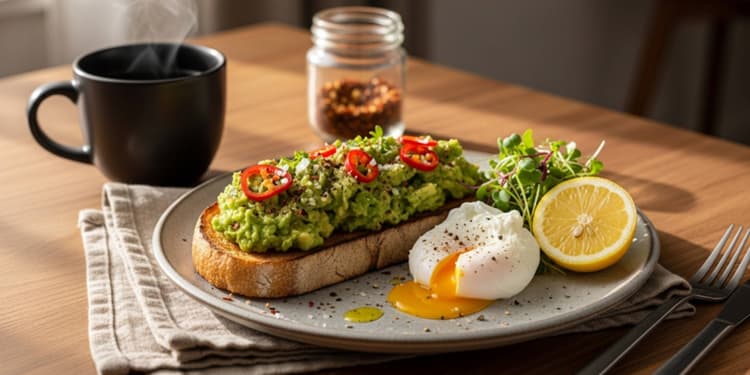
Trending Recipes
9 Popular Recipes Right Now That Everyone Is Making at Home
10/5/2024
8 min read
Discover the 9 most popular recipes that are trending right now. From viral social media sensations to classic comfort foods making a comeback.
The modern kitchen is becoming a data-driven environment. AI tools eliminate decision fatigue, digital inventory systems end duplicate grocery runs, and precision gadgets remove guesswork from every protein. This guide covers how to integrate these technologies practically — not as novelties, but as genuine cooking assets that save time and money every week.
TL;DR — Key Takeaways
Getting useful output from an AI recipe tool depends almost entirely on input specificity. "Make me dinner" produces generic results. "Generate a high-protein weeknight dinner using ground turkey, canned black beans, and chipotle peppers — one pan, under 30 minutes, no dairy" produces something you can actually cook. The effective formula: [protein or key ingredient] + [cuisine style or dietary goal] + [equipment constraint] + [time limit] + [serving count]. Each additional constraint filters out irrelevant results and moves the output closer to something genuinely useful. Treat the AI like a knowledgeable sous chef who needs a clear brief, not a magic button.
Paradoxically, the more constraints you give an AI recipe generator, the more creative and useful the output becomes. Unlimited choice paralyses both humans and AI systems — specificity forces creative problem-solving within a defined space. Try these constraint types: near-expiry ingredients ("I have wilting spinach and half a block of tofu"), equipment limits ("air fryer only, no stovetop"), nutritional targets ("under 500 calories, 35g protein"), and mood ("I want something comforting but not heavy"). The resulting recipe isn't random — it's a genuine solution to a real-world cooking problem.
Put This Guide to Work
Enter your fridge contents, dietary goals, and available equipment into the AI Recipe Generator — it bridges the gap between what you have and what you can actually cook tonight.
The most effective pantry inventory system combines one physical and one digital layer. Keep a whiteboard or sticky pad on the pantry door: update it the moment a staple runs low, not "later." Pair this with a shared digital list (AnyList, OurGroceries, or a shared Apple Notes note) that syncs across household members — no duplicate purchases, no "I thought you were getting it" moments. The key discipline is updating the list at the point of use: opened the last can of chickpeas? Add it now. This system works because it has near-zero friction — no weekly review needed.
Before every grocery shop, spend ten seconds photographing the contents of your fridge and pantry. This solves two persistent problems: buying duplicates of things you already have, and forgetting ingredients that need using. When you receive an AI-generated meal plan, cross-reference it against your photo — items you already have can be struck from the shopping list immediately. Some smart fridges auto-generate inventory lists from internal cameras, but the photo method achieves 80% of the same benefit with zero hardware investment.
Shared household shopping apps reduce duplicate purchases and coordinate grocery runs across multiple people. AnyList and OurGroceries both sync in real time across iOS and Android. More importantly, when you use an AI to generate a weekly meal plan, you can paste the ingredient list directly into the app, check off what you already have, and the remainder becomes your shopping list automatically. This collapses the gap between "AI generated this plan" and "I actually have the ingredients to cook it" — the step where most digital meal planning tools fail their users.
Smart probe thermometers (Meater, Typhur) connect to your phone via Bluetooth and eliminate all guesswork from oven cooking. Insert the probe before cooking, set your target temperature in the app, and walk away. The thermometer notifies you when the protein reaches the correct internal temperature and accounts for carryover cooking — the 3 to 8°F internal temperature rise that continues after the food leaves the oven. Without accounting for carryover, a perfect 130°F reading on the thermometer becomes a 137°F overdone result on the plate. This single piece of equipment produces more consistent results than any other kitchen upgrade under $100.
Pressure cookers work by raising the boiling point of water to 250°F (121°C), cooking proteins and legumes roughly 70% faster than conventional methods. Dried beans that take 90 minutes on the stovetop cook in 25 minutes at pressure. Beef stew that takes 3 hours braises in 45 minutes. Modern electric pressure cookers (Instant Pot, Breville Fast Slow Pro) add programmable keep-warm, delayed start, and sous vide modes to the base pressure functionality. For meal-prep purposes, the pressure cooker is the single piece of equipment that most dramatically compresses batch cooking time — always use at least 1 cup of liquid and natural-release for large cuts.
Sous vide holds food at a precise temperature in a water bath for an extended period — typically 1 to 4 hours for proteins. A chicken breast at 145°F (63°C) for 90 minutes is fully pasteurized and perfectly juicy. Steak at 130°F for 2 hours reaches medium-rare edge to edge, not just at the centre. Entry-level immersion circulators cost $80 to $150. Target temperatures to know: 130°F for medium-rare beef, 140°F for pork, 145°F for chicken, 183°F for custard-set eggs. Always finish every protein with a 60-second high-heat sear for crust and colour.
AI recipe generators make specific categories of errors that home cooks should know to watch for. Baking ratios are frequently incorrect — models trained on general recipe data sometimes output structurally wrong flour-to-leavening ratios that produce flat or dense results. Cooking times for large cuts of meat are often underestimated. Unusual flavor pairings occasionally appear that look plausible but don't taste coherent. None of these errors are dangerous, but they underscore the value of cross-referencing any AI-generated recipe against a professional source before attempting it for the first time with expensive ingredients.
The best use of AI recipe output is as a first draft, not a final authority. After receiving a recipe, run a quick sanity check: do the cooking times make sense for the protein size? Does the liquid ratio look right for the cooking method? Do the flavors share a coherent cultural or flavor logic? For baking specifically, compare the leavening ratios against a reliable published source (King Arthur Flour, Serious Eats) before committing. This takes 60 seconds and catches the most common AI errors before they become wasted ingredients. AI excels at generating novel combinations; humans excel at checking the physics.
The most effective relationship with AI cooking tools is collaborative, not delegative. Use AI to generate options and spark ideas, then apply your own culinary judgment to filter, refine, and personalize the output. The AI doesn't know that you dislike cilantro, that your oven runs 25°F hot, or that the "fresh ginger" in your fridge is three weeks old. These real-world details are yours. The AI provides a high-quality starting point; you make it yours. This is the same relationship a professional chef has with a cookbook — the recipe is a framework, not a script.
Take what you just learned to the stove. These free, step-by-step collections are the best place to start.
Discover the 9 most popular recipes that are trending right now. From viral social media sensations to classic comfort foods making a comeback.
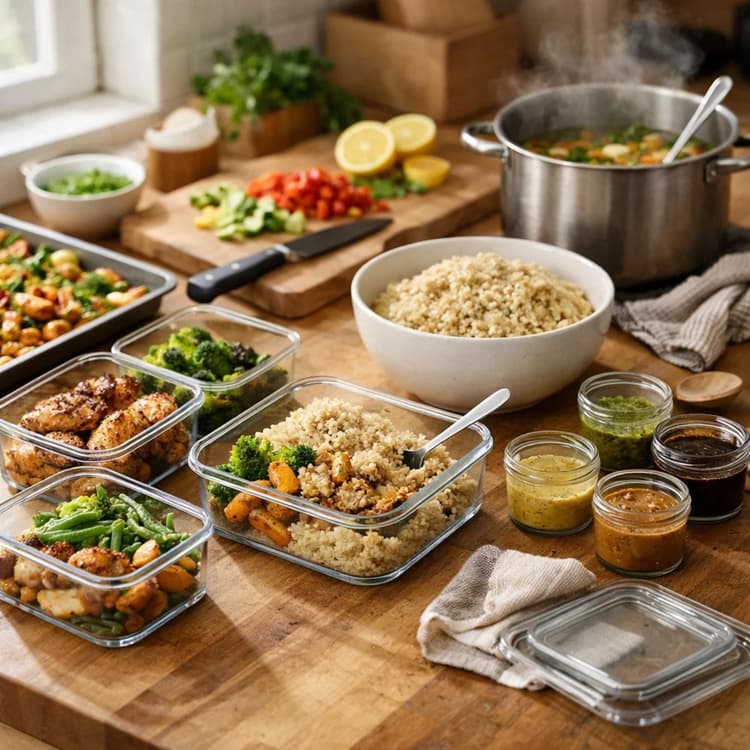
A random food generator turns "what should I eat?" into one click. Here's how removing choice beats decision paralysis - and breaks the dinner rut for good.
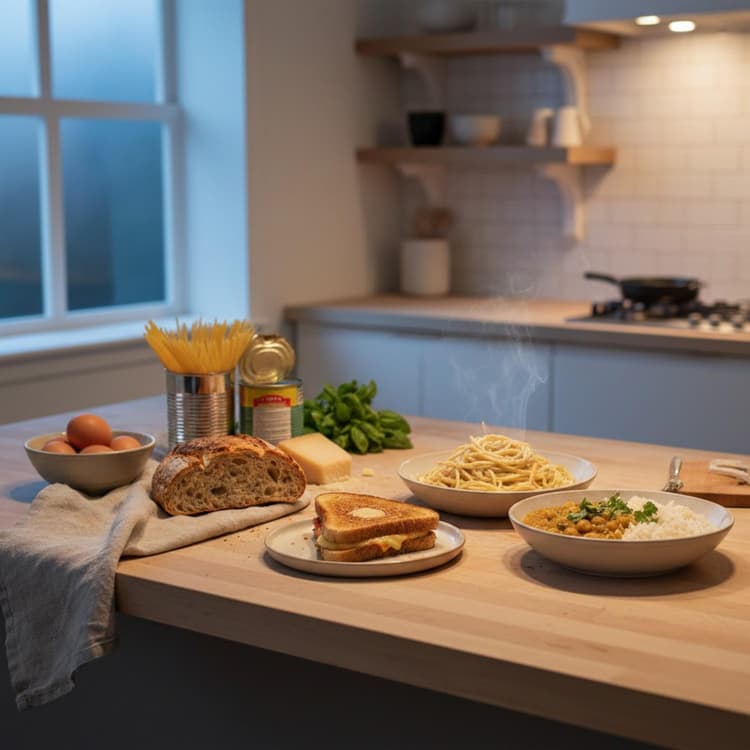
Can't decide what to have for dinner? That's decision paralysis. Here's the 60-second cure - and a free generator that answers "what's for dinner" in one click.
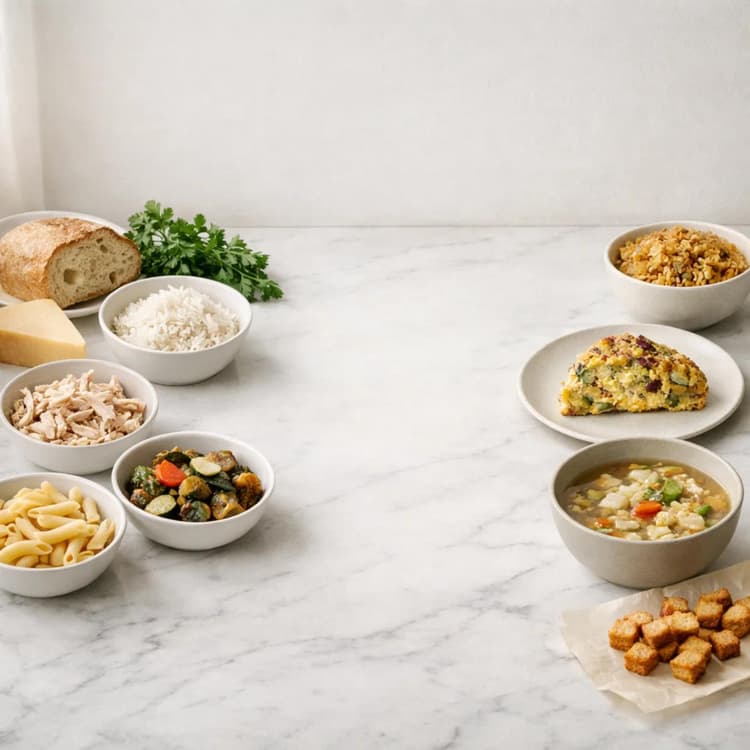
Type in three ingredients, get a full recipe. Here's how an AI recipe maker actually works - and how to get the sharpest results from whatever's in your pantry.
Join our newsletter and discover new favorites delivered straight to your inbox. No spam, just tasty inspiration.