Desserts & Baking
Easy Dessert Ideas: 7 Simple Desserts Anyone Can Make
11/12/2024
7 min read
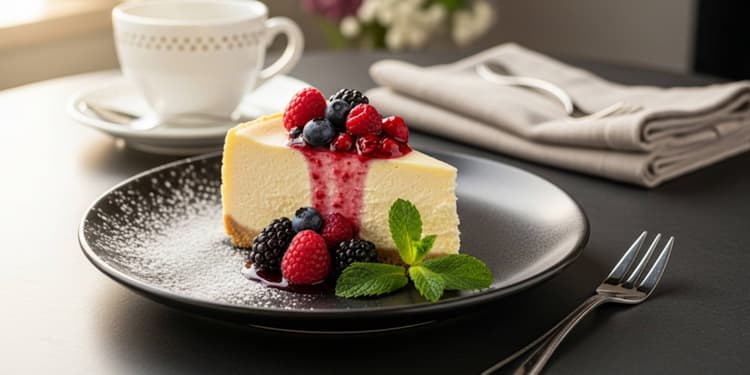
Satisfy your sweet tooth with these 7 easy dessert recipes. From quick no-bake options to simple baked treats, perfect for any skill level.
Cooking is the application of heat to ingredients using specific geometry. The difference between a confident cook and a hesitant one is not talent — it's a set of technical foundations that can be learned in an afternoon and applied for a lifetime. This guide covers the science of knife work, the Maillard reaction, emulsion physics, and how to use AI to diagnose and fix technical failures mid-cook.
TL;DR — Key Takeaways
The two foundational knife techniques are the claw grip and the rocking motion, and together they make fast, safe prep automatic. The claw: curl the fingertips inward so the flat face of the blade rests against the middle knuckles, not the fingertips. The knuckles guide the blade and set a physical limit on how far it can travel — making a slip mechanically impossible without significant force. The rock: keep the tip of the blade in contact with the cutting board and arc the heel up and down in a circular motion. This uses the blade's curve as a lever, reducing effort and increasing speed. Practise the claw on a cucumber at slow speed for ten minutes — it becomes automatic within a single session.
Slicing (drawing the blade toward you through food) and chopping (pressing straight down) are not interchangeable — they work through different physical mechanisms. Slicing creates a shearing force that severs cell walls cleanly, producing smooth, moist surfaces: ideal for proteins, fish, and delicate vegetables. Chopping applies compressive force and is faster for dense, hard vegetables (carrots, butternut squash, beets). Critically: always slice proteins against the grain — perpendicular to the direction of the muscle fibres. Cutting with the grain leaves long, chewy strands in every bite; cutting against it shortens them, producing tenderness even in tougher, cheaper cuts.
Honing and sharpening are fundamentally different processes that most home cooks conflate. Honing (using a honing steel or ceramic rod) realigns the microscopic edge of the blade without removing metal — a sharp edge bends microscopically with each cut, and honing straightens it back. Hone every two to three uses. Sharpening (using a whetstone or pull-through sharpener) removes metal to create a fresh edge — necessary only when honing no longer restores cutting performance. The correct angle for most kitchen knives is 15° to 20° per side: German-style knives at 20°, Japanese-style knives at 15°. Never put good knives in the dishwasher — heat warps the handle and tumbling destroys the edge geometry.
Put This Guide to Work
When a dish goes wrong mid-cook, describe the problem to the AI Recipe Generator — it diagnoses the root cause and gives you a technical fix using only what's already in your kitchen.
The most common home cooking mistake is crowding the pan. When cold food is added to a hot pan, it absorbs heat and drops the pan's surface temperature. A correctly sized batch — one layer, with space between pieces — allows the pan to recover within 30 to 60 seconds, producing browning. A crowded pan never recovers: the dropped temperature causes the food to release moisture, which creates steam, which holds the surface at 212°F (100°C) — permanently below the 280°F (138°C) threshold for the Maillard reaction. The food stews in its own juices instead of searing. The fix is simple: cook in smaller batches.
The Maillard reaction is a chemical reaction between amino acids (proteins) and reducing sugars (carbohydrates) that occurs above approximately 280°F (138°C). It produces hundreds of distinct flavour molecules — the brown crust on seared steak, the golden colour of roasted chicken, the complex aroma of toasted bread — that simply do not exist before cooking. Three conditions are required: high heat, a dry surface (moisture creates steam that locks the surface at 212°F, blocking browning), and sufficient contact time without moving the food. This is why patting proteins completely dry before searing is not a suggestion — it is a thermodynamic requirement for flavour.
A sauce "breaks" when its emulsion fails — the oil and water phases separate visibly. The causes: too much heat (denatures the protein emulsifier), insufficient mechanical energy, or too little emulsifier relative to the fat volume. The fixes are cause-specific: for a broken vinaigrette, add a small amount of mustard (a powerful emulsifier) and whisk vigorously. For a broken hollandaise or béarnaise, add the broken sauce very slowly to a fresh egg yolk while whisking — the yolk's lecithin re-emulsifies it. For a broken butter sauce (beurre blanc), whisk in a piece of cold butter off heat immediately — the cold fat re-stabilises the emulsion. Diagnosing the cause before reaching for a fix saves the sauce.
Resting cooked proteins is thermodynamic, not optional. While cooking, heat moves from the exterior toward the centre by conduction. When the protein comes off heat, this conduction continues — the internal temperature rises 3 to 8°F after removal, and moisture expelled from contracted muscle fibres redistributes as those fibres relax. A steak sliced immediately after cooking loses 40% more juice than one rested 5 to 8 minutes. Resting guidelines: steaks and pork chops (5 to 8 minutes on a wire rack), roast chicken (10 minutes), pork shoulder or lamb leg (15 to 20 minutes). Always rest on a wire rack, not a plate — the plate traps steam and softens the crust.
Every great pan sauce is built in a fixed sequence, and understanding it prevents the most common errors. Stage 1 — base: sweat aromatics (shallot, garlic) in fat until soft. Stage 2 — fond: this exists from the sear; don't clean the pan. Stage 3 — deglaze: add wine or stock and scrape all fond free. Stage 4 — reduce: evaporate by half to concentrate flavour and eliminate rawness. Stage 5 — finish: mount with cold butter off heat (1 to 2 tablespoons, whisked in one piece at a time) for gloss and richness. Skipping reduction leaves a watery, harsh sauce. Skipping the butter mount leaves a dull, thin one. The five stages apply to virtually every European pan sauce.
When a dish goes technically wrong mid-cook, an AI recipe generator can diagnose and fix it faster than any recipe site. The prompt structure: "My [dish] has gone wrong — it's [too thin / too thick / too salty / the sauce has broken / the meat is tough]. Give me a technical fix using only pantry staples." The AI identifies the root cause (thin sauce = insufficient reduction or absent starch; tough meat = insufficient cook time for collagen conversion; broken sauce = emulsion failure) and provides a specific stepwise corrective action. This is more targeted than a YouTube search because it accounts for the specific failure mode rather than the idealised recipe.
AI tools can distil long-form technique content — YouTube tutorials, professional cookbooks, culinary school curricula — into practical, hands-dirty checklists. Prompt: "Summarise the key steps for a perfect beurre blanc in 3 bullet points I can follow while cooking." Or: "Break down dry-brining into a checklist." The output reduces a 20-minute video or a 2,000-word article to three to five actionable steps that fit on a Post-it note. Used consistently, this habit builds a personal technical repertoire faster than passive reading or watching alone — because you're reading to execute, not to consume.
AI-assisted recipe debugging works best when the cook provides specific symptom information: the exact deviation from expected results, the ingredients used, and the technique applied. "I made a beef stew following this recipe. The meat is tough and the sauce is thin. I used chuck at 300°F for 90 minutes in a covered Dutch oven. What went wrong?" (Answer: chuck needs 3+ hours at 275°F to convert collagen to gelatin; the sauce needs uncovered reduction time.) This specificity-driven diagnostic use of AI mirrors how professional cooks troubleshoot — systematically, with root cause analysis rather than adding more seasoning and hoping.
Take what you just learned to the stove. These free, step-by-step collections are the best place to start.
Satisfy your sweet tooth with these 7 easy dessert recipes. From quick no-bake options to simple baked treats, perfect for any skill level.
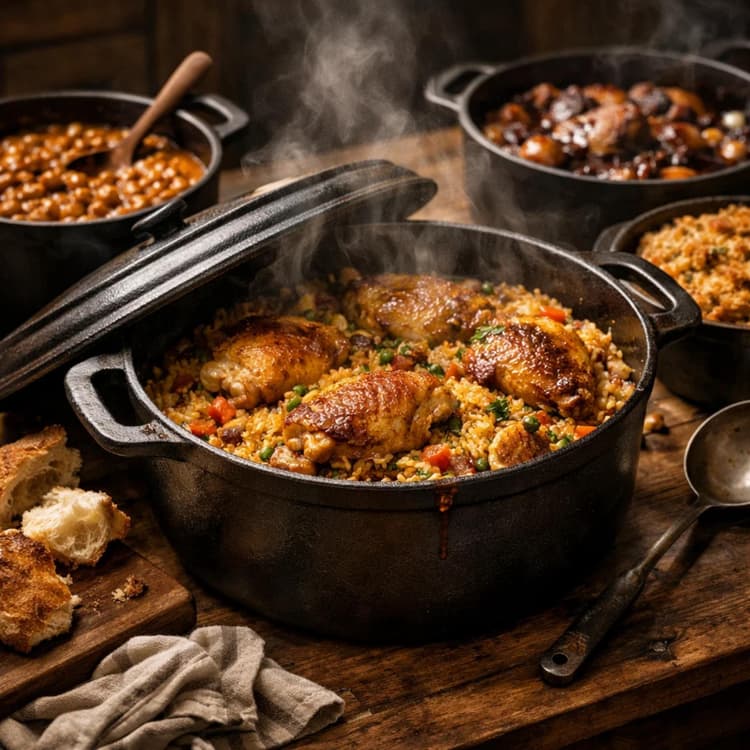
Bitter dashi comes from boiling kombu or overcooking bonito flakes. Learn the science of over-extraction and how to rescue and prevent a harsh batch.
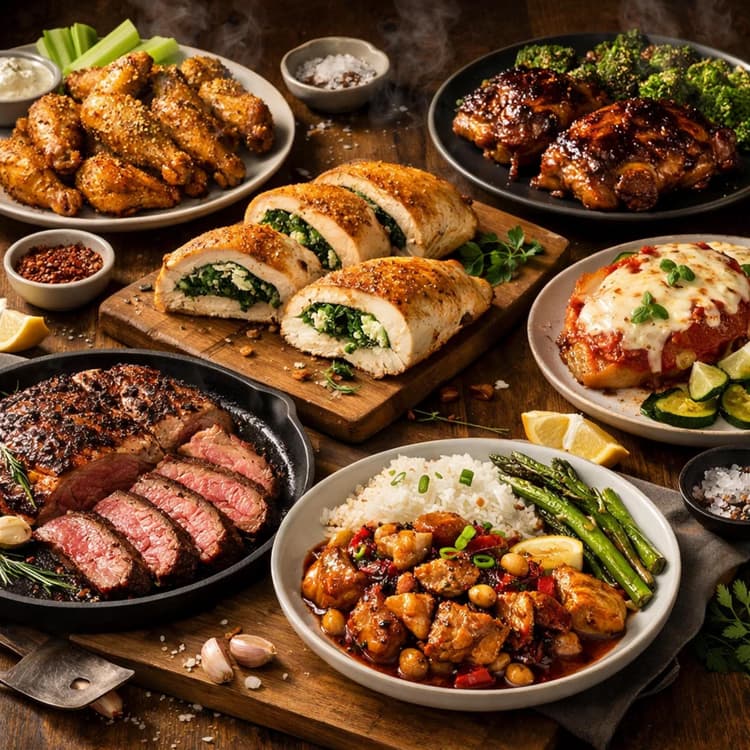
Silken tofu shreds in soup because its soft gel breaks under heat and stirring. Cut bigger cubes, add it last, simmer gently, and fold instead of stir.
The raw potato trick is a myth. Here's the real fix for over-salted broth: dilute, rebuild umami with kombu and bonito, then balance with acid and sweet.
Join our newsletter and discover new favorites delivered straight to your inbox. No spam, just tasty inspiration.