Cold Brew Coffee
A smooth, low-acid coffee, made by steeping coarse-ground coffee in cold water for an extended period. This single-serving recipe is naturally sweeter and less bitter than hot-brewed coffee.
Prep Time
5 min
ABV
0% ABV
Servings
Flavor Profile
The Quick Answer
Cold brew's character is set by extraction chemistry and grind mechanics over a long, cold steep. Knowing why a coarse grind protects both flavor and the strain, and why the same beans behave differently cold, lets you brew a clean, full cup instead of a weak or muddy one.
Why is my cold brew weak, muddy, or hard to strain?
Grind size controls both extraction and filtering. A coarse grind, like coarse cornmeal, gives the slow even extraction cold water needs and leaves large particles a fine-mesh sieve and paper filter can catch cleanly. Grind too fine and you get two problems at once: the small particles over-extract into something bitter and muddy, and they slip through the filter to leave grit and sediment in the cup. Weakness, on the other hand, usually means too short a steep, since cold extraction is gradual and cutting it below twelve hours leaves much of the flavor still locked in the grounds. Coarse grind plus a full overnight steep fixes both the strength and the strain in one move.
Does the type of coffee bean matter more for cold brew than for hot?
Because cold water extracts gently and selectively, the bean's underlying character shows through with little of the brightness or bitterness hot brewing adds. That makes cold brew unusually forgiving of cheaper beans, but it also rewards choosing ones whose natural notes you want amplified: chocolatey, nutty medium and dark roasts give the smooth, rounded cup cold brew is known for, while bright, fruity light roasts can taste oddly thin and sour because cold water never coaxes out their full sweetness. Freshness still counts, and a coarse, even grind matters as much as origin, since uneven grinding mixes over- and under-extracted particles. Within a coarse grind, the bean and roast you pick set the flavor ceiling for the finished cold brew.
Not sure what to cook next? Let the generator pick your next dish in one click.
Random Recipe GeneratorWhat is this drink?
Cold brew coffee is made by steeping coarsely ground coffee in cold water for 12-18 hours rather than brewing with heat. The result is a coffee with dramatically lower acidity, a naturally sweeter taste, and a smooth, mellow richness that hot-brewed coffee simply cannot achieve.
Why you'll love it
It's the smoothest, most approachable coffee you'll ever drink — without the acidity that bothers sensitive stomachs, cold brew delivers pure coffee flavor that's naturally sweet, rich, and endlessly drinkable.
When to serve
Perfect as a morning coffee replacement, an afternoon caffeine boost, a refreshing summer coffee drink, or the base for custom iced coffee creations with milk and syrups.
Pro tip
A coarse grind is non-negotiable — fine-ground coffee steeping in cold water produces a bitter, overly strong, muddy concentrate that no amount of dilution can rescue.
Coarsely Ground Coffee
The defining ingredient — the coarseness of the grind and the quality of the beans determine everything. Use freshly roasted, single-origin beans for the most complex cold brew.
Cold Filtered Water
The steeping medium — filtered water eliminates any chlorine or mineral off-notes that can interfere with the coffee's delicate flavor compounds.
Time (12-18 hours)
The unusual 'ingredient' — cold brew's extraordinary smoothness comes entirely from the slow, cold extraction process that no heating shortcut can replicate.
Swap Options
Add a vanilla bean or cinnamon stick during steeping for flavored cold brew. Nitrogen-infuse the finished cold brew for a creamy, Guinness-like 'nitro cold brew.' Dilute with oat milk instead of water for a creamier, naturally sweet serve. Use lighter roasts for more floral, fruity cold brew.
Directions
Step 1
Grind coffee beans coarsely
Grind 2 tablespoons (about 10-12 grams) of whole coffee beans to a coarse consistency, similar to coarse cornmeal. This is crucial for proper extraction and easy straining.
Pro Tip
- →If you don't have a grinder, ask your coffee shop to grind a small amount for a French press or cold brew.
- →Avoid fine grinds as they can lead to bitterness and sediment.
Step 2
Combine coffee and water
Add the coarsely ground coffee to a small jar or glass. Pour 0.75 cup (180 ml) of filtered cold water over the grounds. Stir gently to ensure all coffee grounds are fully saturated.
Pro Tip
- →Using filtered water improves the flavor of the cold brew. Ensure no dry spots remain in the coffee grounds.
Step 3
Steep the mixture
Cover the jar or glass with a lid or plastic wrap. Let the coffee steep at room temperature or in the refrigerator for 12 to 18 hours. A longer steep time will result in a stronger flavor.
Pro Tip
- →12-15 hours is a good starting point. Steeping too long (over 18 hours) can sometimes lead to slightly bitter notes.
Step 4
Strain the cold brew
Line a small fine-mesh sieve with a paper coffee filter or a piece of cheesecloth and place it over a clean glass. Slowly pour the steeped coffee mixture through the filter to separate the coffee from the grounds. Discard the spent coffee grounds.
Pro Tip
- →Do not squeeze the grounds in the filter, as this can force sediment and bitter flavors into your cold brew.
- →For a clearer brew, you can pass it through a second time if needed.
Step 5
Serve
Pour the strained cold brew into your serving glass. Serve over 1 serving of ice, if desired. You can enjoy it black or add a splash of milk or a touch of sweetener to taste.
Pro Tip
- →Adjust the amount of ice to your preference. For a richer taste, use less ice or no ice.
Different ways to make this drink your own
Vanilla Cold Brew
Add a split vanilla bean or a teaspoon of pure vanilla extract to the coffee grounds before steeping. The vanilla infuses gently during the 18-hour cold extraction, adding a subtle, sweet, floral depth that transforms the cold brew into something approaching a dessert drink without any added sugar.
Cinnamon Cold Brew
Add a cinnamon stick to the coffee grounds during steeping for a warming, gently spiced cold brew that works particularly well in autumn and winter. The cinnamon adds a subtle fragrant warmth without overpowering the coffee's inherent flavour.
Cold Brew Oat Latte
Dilute cold brew concentrate with equal parts barista oat milk instead of plain water for a naturally sweet, creamy cold latte with no added sugar. The oat milk's gentle sweetness and silky texture pair beautifully with cold brew's smooth, chocolatey character.
Tools that make this drink come together
Large Glass Jar or Cold Brew Jug
A wide-mouthed glass jar or dedicated cold brew jug holds the coffee and water during the 12–18 hour steeping process. Wide-mouthed jars make it easier to add grounds and to clean thoroughly after use. A 1 litre jar makes a convenient single batch.
Fine Mesh Strainer and Coffee Filter
Double-strain the finished cold brew through a fine mesh strainer lined with a coffee filter or a piece of muslin cloth. This removes fine coffee particles and produces an exceptionally clear, smooth concentrate without any grit or sediment.
Tall Glass
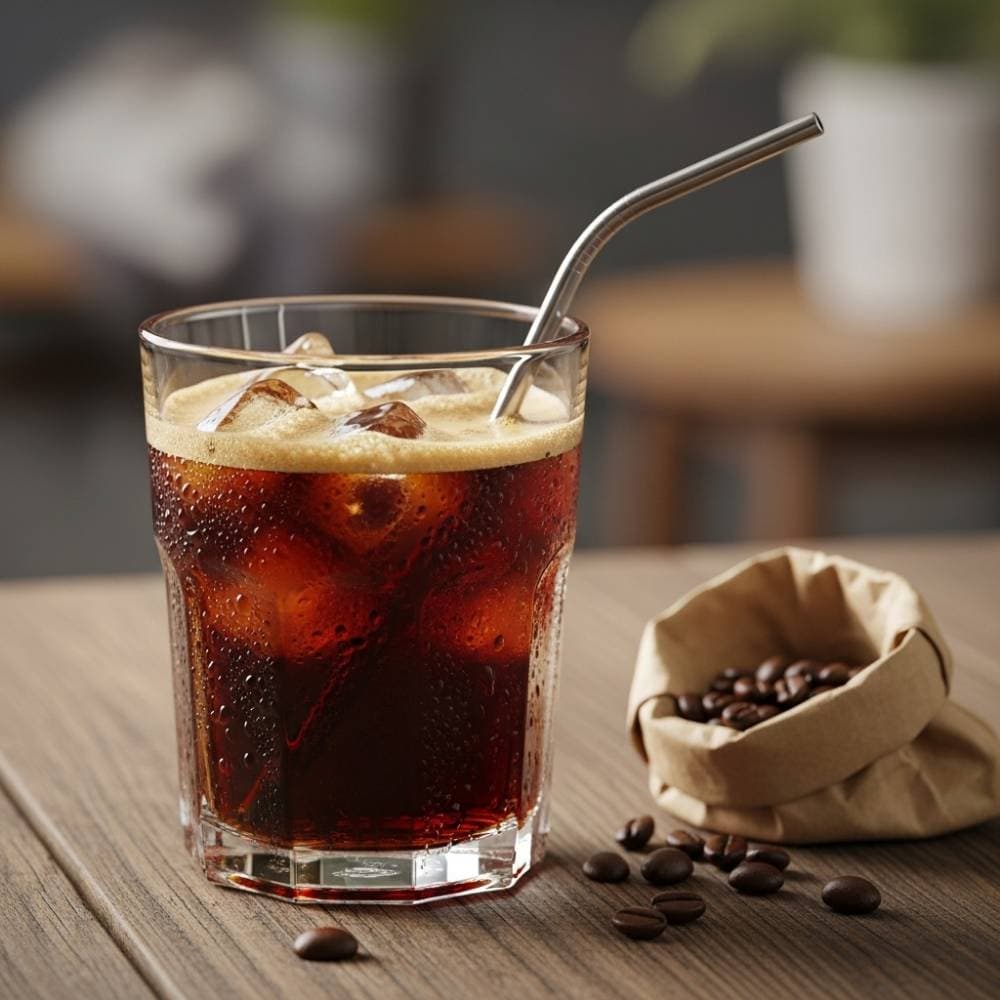
Cold brew is served in a tall glass over plenty of ice. A glass tumbler or highball glass shows off the deep brown colour of the concentrated cold brew against the ice and any milk added.
Can't Find These?
Any large container with a lid holds the cold brew during steeping. A regular kitchen sieve lined with kitchen paper strains it adequately. Any glass holds the finished drink. The only critical equipment is patience — 12–18 hours of steeping cannot be shortcut.
The right glass makes a real difference
Tall Glass or Glass Tumbler
Cold brew is served in a tall, transparent glass over ice — the transparency showcases the concentrate's beautiful deep mahogany colour as it mingles with ice and any added milk. A glass tumbler with a wide straw is the modern café standard for cold brew. The glass should be generously sized to accommodate the ice, concentrate, and any milk without feeling crowded.
Alternatives
A mason jar is enormously popular for cold brew — it can be used for both steeping and serving, and the wide mouth accepts ice easily. A highball glass is elegant and practical. Cold brew is also commonly sold and served in glass bottles for on-the-go consumption.
Perfect food pairings to complete the experience
Chocolate Brownie
A dense, fudgy chocolate brownie is the definitive companion for cold brew coffee — the deep chocolate and coffee notes reinforce each other magnificently in one of the most satisfying sweet pairings in existence.
Almond Croissant
A buttery, flaky almond croissant with frangipane filling is a morning favourite alongside cold brew. The nutty almond notes and the buttery pastry complement cold brew's smooth, low-acid character without any harshness.
Tiramisu
The espresso-soaked ladyfingers and mascarpone of a tiramisu are natural companions for cold brew — both celebrate coffee's deep, complex flavour. Serving cold brew alongside tiramisu creates a wonderfully cohesive coffee-themed experience.
Banana Bread with Walnut
Moist banana bread with toasted walnuts provides a naturally sweet, slightly nutty companion for cold brew. The banana's fruit sweetness and the walnut's richness contrast beautifully with the coffee's clean bitterness.
Prep in advance for effortless serving
Start Steeping the Night Before
The most practical approach — combine grounds and water before bed, refrigerate, and the cold brew is ready the following morning. An 18-hour steep gives a richer, more concentrated result than a 12-hour one. Start a new batch as soon as the previous one is finished to maintain a continuous supply.
Make a Two-Week Supply
A large batch of cold brew concentrate keeps refrigerated for up to two weeks in a sealed jar. Make a full litre batch at the weekend and enjoy perfectly smooth cold brew on demand every morning without any daily preparation whatsoever.
Label with the Brew Date
Write the brewing and straining date on a piece of masking tape on the jar. Cold brew past its best deteriorates subtly rather than dramatically — knowing when it was made prevents accidentally drinking a two-week-old batch that's past its optimum flavour.
Use the Right Grind Size
A coarse grind (similar to French press) is essential for cold brew — fine coffee grounds pass through even fine-mesh strainers and produce a gritty, over-extracted result. Most coffee shops will grind beans to coarse for cold brew on request, or use a burr grinder at home on the coarsest setting.
Common questions answered by our bartenders
Got Leftovers?
Turn what you already have in your fridge into delicious meals. Our AI-powered generator creates personalized recipes from your ingredients.
Browse more like this:
Please drink responsibly. All drink recipes are intended for those of legal drinking age in their country. TheRandomRecipe does not promote excessive alcohol consumption. Alcohol Responsibility Policy