Negroni
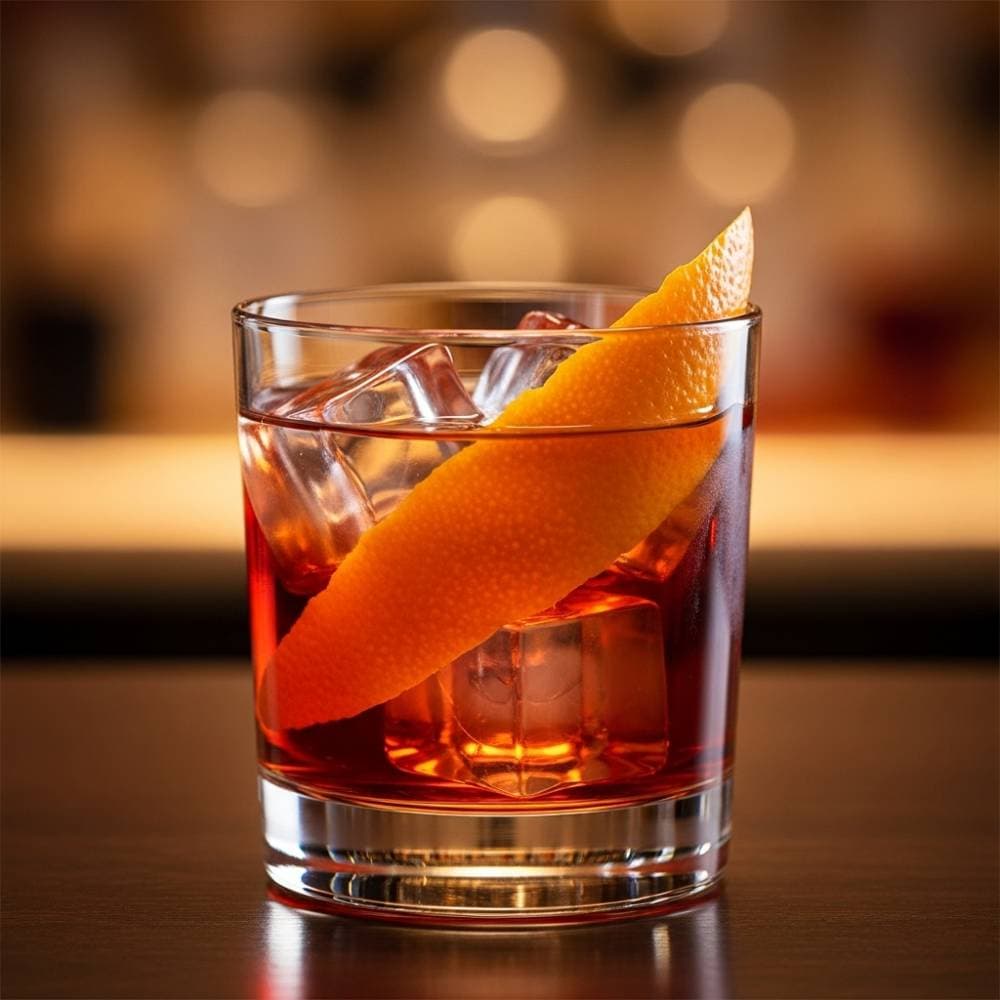
A perfectly balanced Italian cocktail, the Negroni is a bittersweet and aromatic blend of gin, Campari, and sweet vermouth, stirred and served over ice.
Prep Time
3 min
ABV
25-30% ABV (approx.)
Servings
Flavor Profile
The Quick Answer
A Negroni falls apart when it is shaken or under-stirred, leaving the Campari's bitterness either jagged or cloudy instead of integrated. Stir the equal parts of gin, Campari, and sweet vermouth over a large ice cube for 20-30 seconds so dilution rounds the bitter edge without washing the drink out.
Why does my Negroni taste harshly bitter instead of balanced?
Campari is intensely bitter, and at full strength that bitterness can dominate the gin and vermouth. Two levers tame it without changing the equal-parts recipe. First is dilution: stirring over ice melts in water that softens Campari's sharp edge, which is why an under-stirred Negroni tastes more aggressive. Second is the sweet vermouth, whose sugar and herbal richness sit opposite the bitterness on the palate, so a tired, oxidized bottle leaves the Campari exposed and rough. Stir the full 20-30 seconds and use fresh, refrigerated vermouth; if you still want it gentler, a touch more vermouth balances the bitter better than diluting it to death.
Why is a large ice cube better than small cubes in a Negroni?
Because the Negroni is served on the rock and keeps sitting in its glass, the ice keeps diluting the whole time you drink it. Small cubes have far more surface area for their volume, so they melt fast and quickly water the drink down past the point of balance. One large cube has much less exposed surface relative to its mass, so it chills the gin, Campari, and vermouth while melting slowly, holding the carefully stirred dilution roughly where you want it. That slow melt is why the drink stays bittersweet and full-bodied to the last sip instead of fading into pale, watery liquid.
Not sure what to cook next? Let the generator pick your next dish in one click.
Random Recipe GeneratorWhat is this drink?
The Negroni is one of the most perfectly constructed cocktails ever invented — an equal-parts Italian aperitivo made with gin, Campari, and sweet vermouth, stirred and served over a large ice cube with an orange peel. Born in Florence in 1919 when Count Negroni asked for his Americano to be strengthened with gin, it has become the benchmark by which bitter cocktails are judged worldwide.
Why you'll love it
It delivers a striking combination of bitter, sweet, and botanical in exact equilibrium. Campari's vivid bitterness is softened by the sweet vermouth; the gin's botanicals weave through both; and the orange peel aromatics tie it all together. It is complex enough to reward slow contemplation but simple enough to make in under two minutes.
When to serve
The Negroni is the quintessential aperitivo — serve it before dinner to stimulate the appetite and set a sophisticated tone for the meal. It is the signature drink of Italian aperitivo hour, pairs beautifully with charcuterie and aged cheeses, and is equally at home at a craft cocktail bar or a casual gathering with good food.
Pro tip
Use equal parts of each ingredient without exception — the balance of the Negroni is architectural, and adjusting one element throws off the entire structure. Stir over large ice for 20 to 30 seconds to achieve proper dilution and temperature. Use a large, clear ice cube in the serving glass to minimize ongoing dilution. The orange peel is essential — squeeze its oils over the surface before dropping it in.
Gin
The botanical backbone of the Negroni. A London Dry gin brings juniper, citrus, and herbal notes that counterbalance Campari's bitterness and vermouth's sweetness. The gin's character is prominent, so choose one you enjoy.
Campari
The defining ingredient of the Negroni — a vivid red Italian liqueur made from a secret blend of herbs, roots, and citrus peels. It delivers pronounced, pleasantly bitter flavor and the drink's signature crimson color.
Sweet Red Vermouth
The bridge between gin and Campari. Sweet vermouth adds wine-forward richness, herbal complexity, and the sweetness needed to round out Campari's bitterness. Quality vermouth like Carpano Antica or Cocchi Storico is worth seeking out.
Orange Peel
More than garnish — the expressed oils from a fresh orange peel add a burst of fragrant citrus aroma that perfumes every sip. It connects the botanicals of the gin with the orange notes in Campari.
Swap Options
Swap gin for bourbon or rye to make a Boulevardier — the whiskey variation is equally exceptional. Use mezcal instead of gin for a smoky Oaxacan Negroni. Try Aperol in place of Campari for a lighter, less bitter version with more orange character. Lillet Rouge or Punt e Mes can replace sweet vermouth for a more wine-forward or bitter-leaning profile.
Directions
Step 1
Combine ingredients
In an old fashioned glass (or rocks glass), combine 1 ounce (30 ml) gin, 1 ounce (30 ml) Campari, and 1 ounce (30 ml) sweet red vermouth. The equal parts are key to its balance.
Pro Tip
- →Use good quality ingredients, especially your gin and vermouth, as they are prominent flavors.
Step 2
Add ice
Fill the glass with 1 serving of large ice cubes. Large ice cubes are preferred as they melt slower, ensuring less dilution.
Pro Tip
- →Clear ice will make your Negroni look even more impressive.
Step 3
Stir the drink
Stir the mixture gently with a bar spoon for about 20-30 seconds until the drink is well-chilled and properly diluted. The aim is to chill the drink, not over-dilute it.
Pro Tip
- →Stirring maintains the silky texture and clarity of the spirit-forward cocktail.
Step 4
Garnish
Garnish with 1 orange slice or an expressed orange peel. To express an orange peel, gently twist it over the drink to release its aromatic oils, then drop it into the glass.
Pro Tip
- →The orange garnish complements the bitter and herbal notes of the Campari.
Different ways to make this drink your own
Boulevardier
Replace the gin with bourbon or rye whiskey for an equally exceptional cocktail. The whiskey's warmth and sweetness work beautifully with Campari's bitterness and sweet vermouth's richness, making this arguably the more complex of the two.
Oaxacan Negroni
Substitute mezcal for gin to create a smokier, earthier variation. The agave spirit's distinctive campfire quality contrasts dramatically with Campari's bitter orange notes, producing a cocktail that feels both exotic and completely harmonious.
Sbagliato
Replace the gin with Prosecco for a lighter, effervescent Negroni variation. The Italian name means 'mistaken' — allegedly born when a bartender accidentally reached for Prosecco instead of gin. The sparkling wine lifts the bittersweet flavours beautifully.
Tools that make this drink come together
Mixing Glass
A heavy mixing glass is the classic tool for a Negroni. The equal-parts recipe is stirred — not shaken — to achieve a silky, clear cocktail with a controlled amount of dilution from the ice.
Bar Spoon
Stir smoothly for 30 to 40 seconds, letting the ice glide around the inside of the mixing glass. The goal is a perfectly cold, well-diluted Negroni without introducing the cloudiness that comes from shaking.
Large Ice Cube Tray
A single large ice cube placed in the rocks glass chills the Negroni slowly without rapid dilution. The aesthetic of a perfectly clear cube in a deep red cocktail is also undeniably beautiful.
Can't Find These?
Stir in any large glass or jug using a long-handled spoon. Use regular ice cubes in the glass and accept slightly faster dilution. The drink will still taste excellent — technique matters more than specialist equipment.
The right glass makes a real difference
Rocks Glass (Old Fashioned Glass)
The Negroni is traditionally served in a short rocks glass over a large single ice cube. The wide, low shape concentrates the complex aromas — bitter orange, juniper, and herbal sweetness — allowing them to develop as the ice slowly melts. The glass is robust and unfussy, matching the cocktail's bold, confident character.
Alternatives
A coupe glass without ice works for an elegant, ice-free service — popular in upscale bars. A stemless wine glass also works well. Avoid tall glasses as they dilute the aromatic intensity that makes the Negroni so distinctive.
Perfect food pairings to complete the experience
Antipasto Platter
Cured meats, marinated olives, and aged cheeses are the quintessential Italian aperitivo companions to a Negroni. The salty, savoury bites complement Campari's bitter orange character and reset the palate between sips.
Charcuterie & Salumi
Sliced prosciutto, salami, and mortadella provide richness and saltiness that pair beautifully with the Negroni's bittersweet profile. The fat in the cured meats softens the perceived bitterness.
Dark Chocolate
70% dark chocolate shares bitter, fruity notes with Campari. A small piece between sips creates a luxurious tasting experience, with each element making the other taste more complex and rewarding.
Bruschetta
Toasted bread rubbed with garlic and topped with ripe tomatoes and basil echoes the Negroni's Italian roots. The acidity of the tomatoes plays nicely against the cocktail's bittersweet balance.
Prep in advance for effortless serving
Batch in a Bottle
Mix equal parts gin, Campari, and sweet vermouth in a bottle and refrigerate. Add 30ml of water per serving to pre-dilute. Pour over ice to order — batched Negronis actually improve slightly as the flavours integrate over 24 to 48 hours.
Freeze Large Ice Cubes
Prepare large, clear ice cubes the night before using filtered water. A single large cube in the rocks glass looks spectacular and melts slowly, keeping the drink strong and cold throughout.
Prepare Orange Garnishes
Cut orange rounds or half-moons and store in an airtight container in the fridge for up to 8 hours. They stay fresh and vibrant, ready to drop into the glass or perch on the rim for serving.
Chill Glasses
Store rocks glasses in the freezer an hour before guests arrive. The cold glass helps maintain temperature and adds a professional touch that is immediately noticeable when the drink is handed over.
Common questions answered by our bartenders
Got Leftovers?
Turn what you already have in your fridge into delicious meals. Our AI-powered generator creates personalized recipes from your ingredients.
Browse more like this:
Please drink responsibly. All drink recipes are intended for those of legal drinking age in their country. TheRandomRecipe does not promote excessive alcohol consumption. Alcohol Responsibility Policy