Authentic Dal Makhani (Creamy Indian Black Lentils)
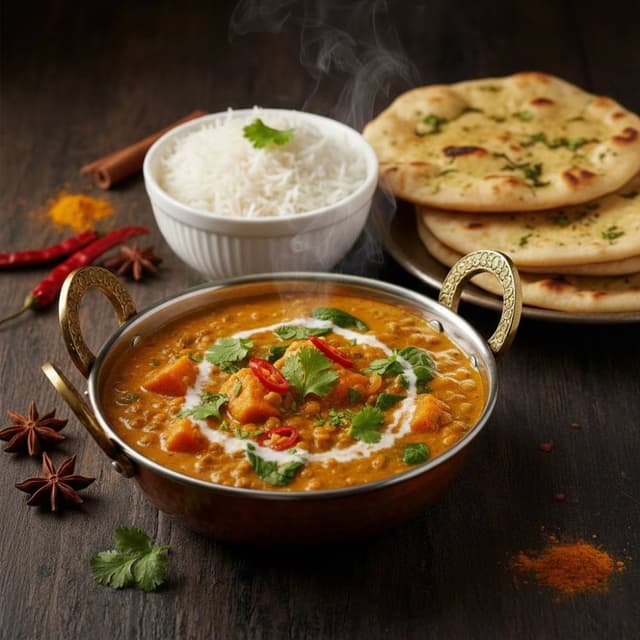
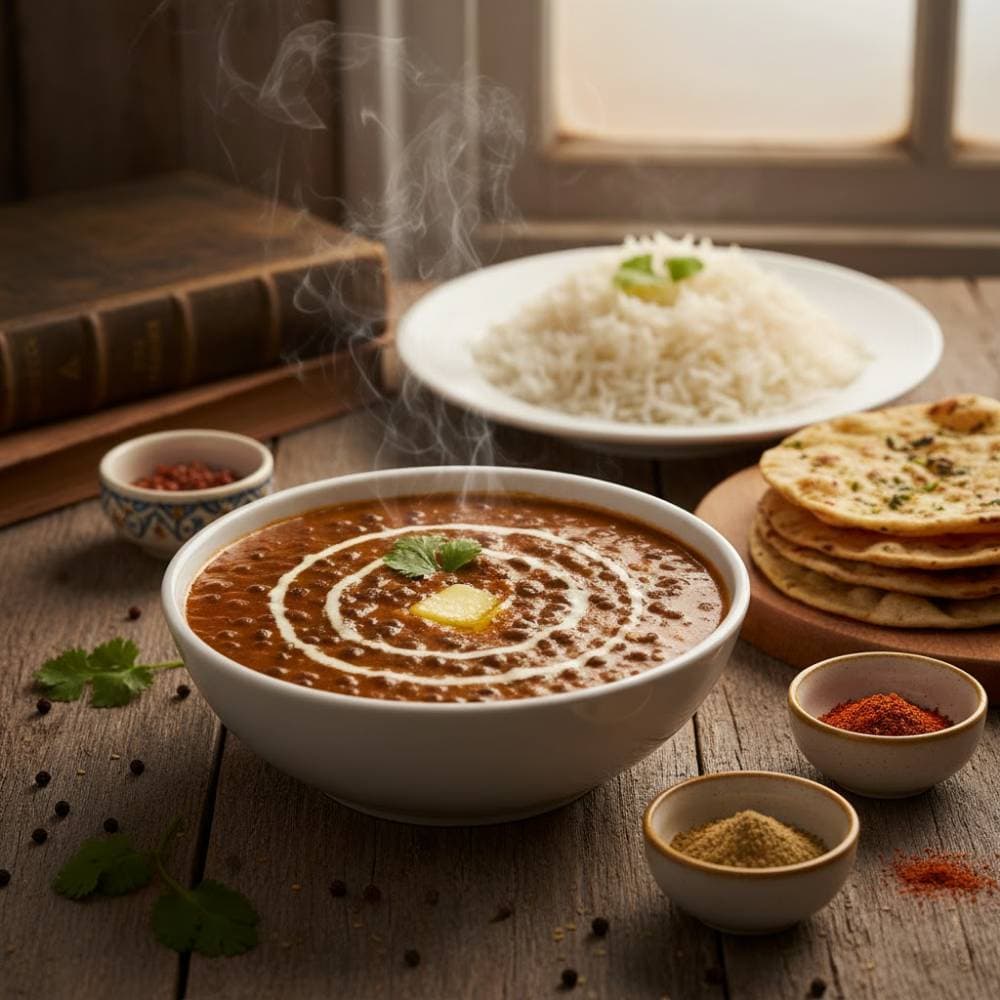
A rich and velvety North Indian classic made with black lentils and kidney beans slow-simmered in a buttery, spiced tomato-cream sauce. This hearty and comforting dal is perfect served over steamed basmati rice or with warm naan for two.
The Quick Answer
Dal makhani comes out thin and watery when the lentils are rushed or the beans are old, because the creaminess depends on starch slowly leaching from fully softened pulses. Cook the soaked urad and kidney beans until they collapse, keep their starchy cooking liquid as the sauce base, and add the cream only at the end so the texture is silky rather than soupy.
Why is my dal makhani watery instead of thick and silky?
The signature body of dal makhani comes from starch, not cream. As whole urad lentils and kidney beans cook past tender and start breaking down, they release amylose and amylopectin starch into the water, which thickens the liquid into something glossy and almost gravy-like. If you drain that cooking liquid, or pull the pulses off heat while still firm at the center, you lose the very starch that builds the texture and end up with cream floating on thin broth. That is why the recipe keeps the 3 cups of cooking water in the pot. Old, long-stored beans also refuse to soften and break down, so even hours of simmering leave them stubbornly intact and the dal thin.
Why are my kidney beans still hard after simmering?
Two things keep kidney beans tough: skipped soaking and early acid. Overnight soaking hydrates the bean interior so the 30-35 minute simmer can finish cooking it through evenly; an unsoaked bean stays chalky at the core. Acid is the bigger trap here. The crushed tomatoes are highly acidic, and acid reinforces the bean's pectin and cell walls, dramatically slowing softening. The recipe deliberately cooks the lentils and beans in plain water first and adds the tomato mixture only after they are tender. If you simmer the beans in the tomatoes from the start, they can stay firm for hours, so always get them soft before the acidic ingredients join.
Not sure what to cook next? Let the generator pick your next dish in one click.
Random Recipe GeneratorAbout This Recipe
What is this dish?
Dal makhani is a cornerstone of North Indian cuisine — a rich, velvety curry made from whole black lentils (urad dal) and red kidney beans slow-cooked with butter, cream, and a deeply spiced tomato sauce. Originally from Punjab and popularized by the legendary Moti Mahal restaurant in Delhi, authentic dal makhani is traditionally simmered for hours over low heat, which develops its signature thick, smoky, intensely flavored character.
Why you'll love it
This dal makhani delivers extraordinary depth of flavor from humble, inexpensive ingredients. The lentils become silky smooth through long simmering and gentle mashing, while the buttery tomato sauce wraps around each bean with warmth and richness. It improves dramatically overnight, making it one of the most rewarding make-ahead meals in Indian cooking.
When to serve
Dal makhani is ideal as a hearty vegetarian main course served with basmati rice and naan. It works beautifully as part of a larger Indian spread alongside chana masala, raita, and pickles. Make it on a Sunday and enjoy it all week — it genuinely gets better each day.
Quick tips
Soak the lentils and beans overnight — this step is non-negotiable for even cooking and proper texture. Mash a portion of the cooked lentils to thicken the dal naturally. Add butter and cream at the very end to preserve their richness. The longer you simmer after combining, the better it tastes.
Ingredient Highlights
Whole Black Lentils (Urad Dal)
The defining ingredient of dal makhani. Whole urad dal (not split) is essential — the outer skin holds the lentil together through long cooking while the interior softens and releases starch, creating the signature thick, earthy character. They must be soaked overnight for best results.
Red Kidney Beans (Rajma)
Added in a smaller quantity alongside the urad dal, kidney beans contribute body, a slightly different texture, and protein richness. They hold their shape better than the lentils and create textural variety throughout the thick sauce.
Unsalted Butter
Added at two stages — in the tadka (spice tempering) and stirred in at the end. Butter defines the character of dal makhani, rounding out the acidic tomato notes and giving the sauce its characteristic silky, luxurious finish. Use real butter rather than oil for the authentic result.
Heavy Cream
A relatively small amount of cream added at the end transforms the texturally rich dal into something truly indulgent. It softens the bold spices, lightens the color to a deep reddish-brown, and adds the finishing richness that distinguishes dal makhani from other lentil preparations.
Substitution Options
For a shortcut, use canned black lentils and kidney beans (rinsed and drained), reducing the initial cooking time to 10-15 minutes. Use vegan butter and coconut cream for a dairy-free version. Olive oil can replace vegetable oil in the tadka. If you cannot find whole black lentils, French green lentils (Puy lentils) can substitute, though the flavor and texture will differ. A pressure cooker or Instant Pot dramatically reduces cooking time — cook soaked lentils on high pressure for 15-20 minutes with natural release.
You'll likely need to buy
Likely in your pantry
Step-by-Step Instructions
Cook the lentils and beans
After soaking overnight, drain and rinse 3/4 cup whole black lentils and 1/4 cup red kidney beans. Place them in a large pot with 3 cups water. Bring to a boil over high heat, then reduce to a simmer (cook gently just below boiling, with small bubbles). Cover and cook for 30-35 minutes, stirring occasionally, until the lentils and beans are very tender and starting to break down. Skim off any foam that rises to the surface during cooking. Do not drain; the cooking liquid becomes part of the sauce.
Chef's Tips
- ›Soaking overnight significantly reduces cooking time and ensures even cooking.
- ›The lentils should be soft enough to mash easily between your fingers when done.
Prepare the tadka (tempering)
While the lentils cook, heat 1 tablespoon vegetable oil and 1 tablespoon unsalted butter in a medium skillet over medium heat. Add the finely diced small onion and cook for 5-7 minutes, stirring occasionally, until soft and golden brown. Add 3 cloves minced garlic and 1 tablespoon grated fresh ginger. Cook for 1 minute until fragrant (smells pleasant and aromatic). Stir in 1 teaspoon ground cumin, 1 teaspoon garam masala, 1/2 teaspoon ground coriander, 1/2 teaspoon chili powder, and 1/4 teaspoon ground turmeric. Cook the spices for 30 seconds, stirring constantly. Tadka (tempering) means cooking spices in hot fat to release their flavors. Fragrant means it smells good and aromatic.
Chef's Tips
- ›Cooking the onion until golden brown adds a deeper, sweeter flavor.
- ›Blooming spices in fat releases their full aroma and flavor.
Combine and simmer
Pour 1 can crushed tomatoes into the skillet with the spiced onion mixture. Stir well and cook for 3-4 minutes until the tomatoes thicken slightly. Pour this entire mixture into the pot with the cooked lentils and beans. Stir well to combine. Bring the dal to a gentle simmer over medium-low heat. Cook uncovered for 10-15 minutes, stirring frequently to prevent sticking, until the dal is thick and creamy. Use the back of a spoon to gently mash some of the lentils against the side of the pot to thicken the sauce further.
Chef's Tips
- ›Mashing some lentils thickens the dal and gives it its signature creamy texture.
- ›Stirring frequently prevents the thick dal from sticking to the bottom.
Finish and serve
Stir in 1/4 cup heavy cream and the remaining 1 tablespoon unsalted butter. Mix until the butter is melted and the cream is fully incorporated, giving the dal a rich and velvety appearance. Add 1/2 teaspoon salt, or to taste. Serve the dal makhani hot, garnished with 2 tablespoons chopped fresh cilantro, alongside steamed basmati rice or warm naan bread.
Chef's Tips
- ›Adding butter and cream at the end preserves their richness and gives the dal its luxurious finish.
- ›Dal makhani tastes even better the next day as the flavors deepen.
Chef's Tips
Techniques that separate good from great
Cook low and slow for the richest, most authentic result
Dal makhani traditionally simmers for 6-8 hours in a tandoor oven. While this recipe uses a pressure cooker and stovetop shortcut, the longer you simmer the dal after combining — and the lower the heat — the more the flavors develop. Add extra time if you can, stirring every 10 minutes to prevent sticking.
Mash a third of the lentils to build natural creaminess
After the lentils are fully cooked and combined with the sauce, use the back of a wooden spoon to mash about a third of them against the side of the pot. This releases starch that naturally thickens the dal and creates a creamy body without adding more cream.
Toast the spices in butter before adding tomatoes
Adding ground spices directly to tomatoes gives a raw, harsh flavor. Instead, add them to the hot butter-onion mixture for 30-60 seconds first. The fat extracts fat-soluble flavor compounds and gives the tadka a rounded, deeper base.
Use the cooking liquid as part of the sauce
Do not drain the water used to boil the lentils — it is starchy and packed with flavor from the lentils. This liquid becomes part of the sauce base. If it seems too much, simply simmer uncovered to reduce to your desired consistency.
Nutrition Facts
Per serving · Estimated values
* Estimated per serving based on a 2,000 calorie diet.
Equipment Needed
- Large pot with lid
- Medium skillet
- Spatula or wooden spoon
- Measuring cups
- Measuring spoons
- Knife and cutting board
As an Amazon Associate we earn from qualifying purchases — at no extra cost to you.
Quick Tips
- For a shortcut, use canned black lentils and kidney beans; rinse, drain, and reduce the initial cooking time to 10-15 minutes.
- For a vegan version, substitute the butter with vegan butter and the heavy cream with coconut cream (this will change the dietary tags).
- Dal makhani stores well in an airtight container in the refrigerator for up to 4 days and freezes well for up to 2 months.
Recipe Variations
Different ways to make this dish your own
Slow Cooker Dal Makhani
After preparing the tadka, combine everything (including soaked but uncooked lentils) in a slow cooker with 4 cups of water. Cook on low for 8-10 hours until the lentils are completely soft. Stir in cream and butter at the end.
Vegan Dal Makhani
Replace butter with coconut oil and heavy cream with full-fat coconut cream. The result is still rich and satisfying, with a subtle coconut note that works surprisingly well with the bold spices.
Dal Makhani with Spinach (Dal Palak)
Stir in 2 cups of fresh spinach leaves in the last 5 minutes of cooking. The spinach wilts into the thick dal, adding color, nutrition, and a subtle earthiness that complements the rich tomato-butter sauce.
Smoky Dal Makhani
For an authentic tandoor-smoked flavor, use the dhungar method: heat a small piece of charcoal directly on a gas flame until glowing red, place it in a small foil cup in the center of the dal, drizzle with 1/2 teaspoon ghee, cover immediately, and let smoke for 2-3 minutes.
What to Serve With
Perfect pairings to complete the meal
Steamed Basmati Rice
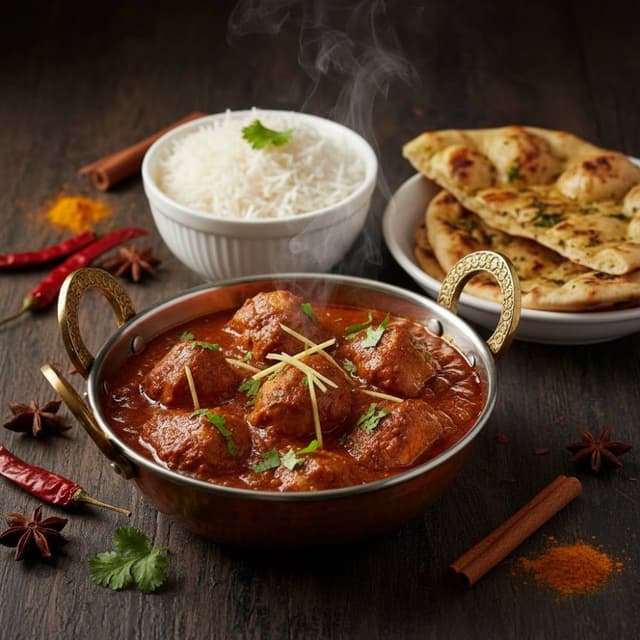
The classic pairing — fluffy long-grain basmati provides the perfect neutral canvas for the rich, intensely flavored dal. The contrast between the light rice and creamy, dark dal is visually striking and perfectly balanced in flavor.
Butter Naan or Garlic Naan
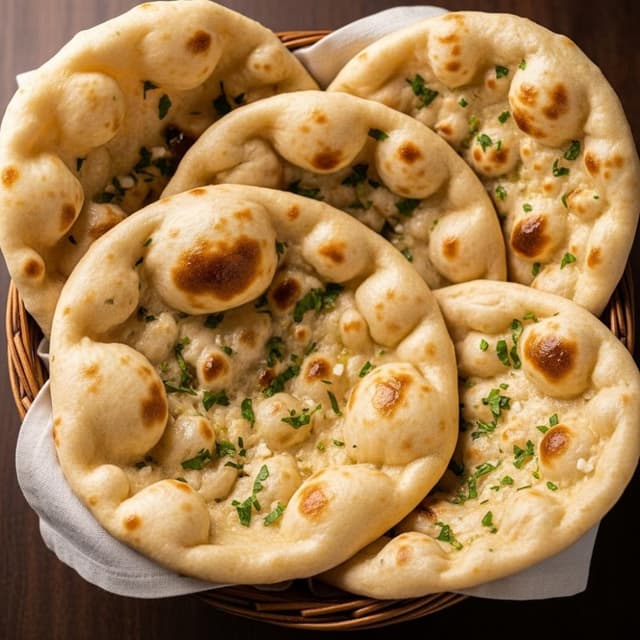
Warm naan bread is ideal for scooping up the thick, velvety dal. The slight chewiness and buttery surface of naan pairs beautifully with the richness of the dal makhani. Tear and dip generously.
Sliced Onions with Lemon
A traditional North Indian accompaniment — thinly sliced raw onion sprinkled with lemon juice and salt. The sharp, acidic crunch cuts through the richness of the dal and refreshes the palate between bites.
Plain Yogurt or Raita
A dollop of plain whole-milk yogurt or cooling cucumber raita alongside dal makhani provides a cooling contrast to the bold, warming spices and rich butter-cream base.
Storage & Reheating
Keep it fresh and plan ahead
Refrigerator
Dal makhani stores beautifully in an airtight container for up to 4 days. It thickens considerably as it cools — add a splash of water or broth when reheating. The flavors deepen noticeably after the first day.
Freezer
Freezes very well for up to 3 months. The lentil-based texture holds up much better than cream-based sauces after freezing. Thaw overnight in the refrigerator and reheat gently on the stovetop with a splash of water.
Make-Ahead
Dal makhani is an excellent make-ahead dish — it tastes better the second and third day. Make the complete dal, cool, and refrigerate. Reheat just before serving and add a finishing pat of butter and cream swirl for a fresh, luxurious appearance.
Reheating
Reheat in a saucepan over medium-low heat, stirring frequently to prevent the thick dal from sticking to the bottom. Add water or broth, 2-3 tablespoons at a time, to restore the original creamy consistency. A final stir of butter and splash of cream refreshes the richness.
Cooking tonight?
Get a month of dinners like this — done for you
30 chef-tested dinners mapped to the month, plus 5 ready-to-shop grocery lists. One-time $8.99 — 30 dinners planned for you, zero nightly decisions.
See the 30-Day Plan →Got Leftovers?
Turn what you already have in your fridge into delicious meals. Our AI-powered generator creates personalized recipes from your ingredients.
Go Deeper
Master the Culinary Science
Every recipe is a doorway. Our 7 Mastery Guides give you the science, technique, and framework to understand why food works — not just how to follow steps.
AI-Powered
Have Ingredients? Generate a Recipe.
Tell our AI what's in your fridge and get a custom recipe with image in seconds. No waste, no boredom.
Try the AI Recipe Generator →Browse more like this:
You Might Also Like
Discover more delicious recipes similar to what you're cooking