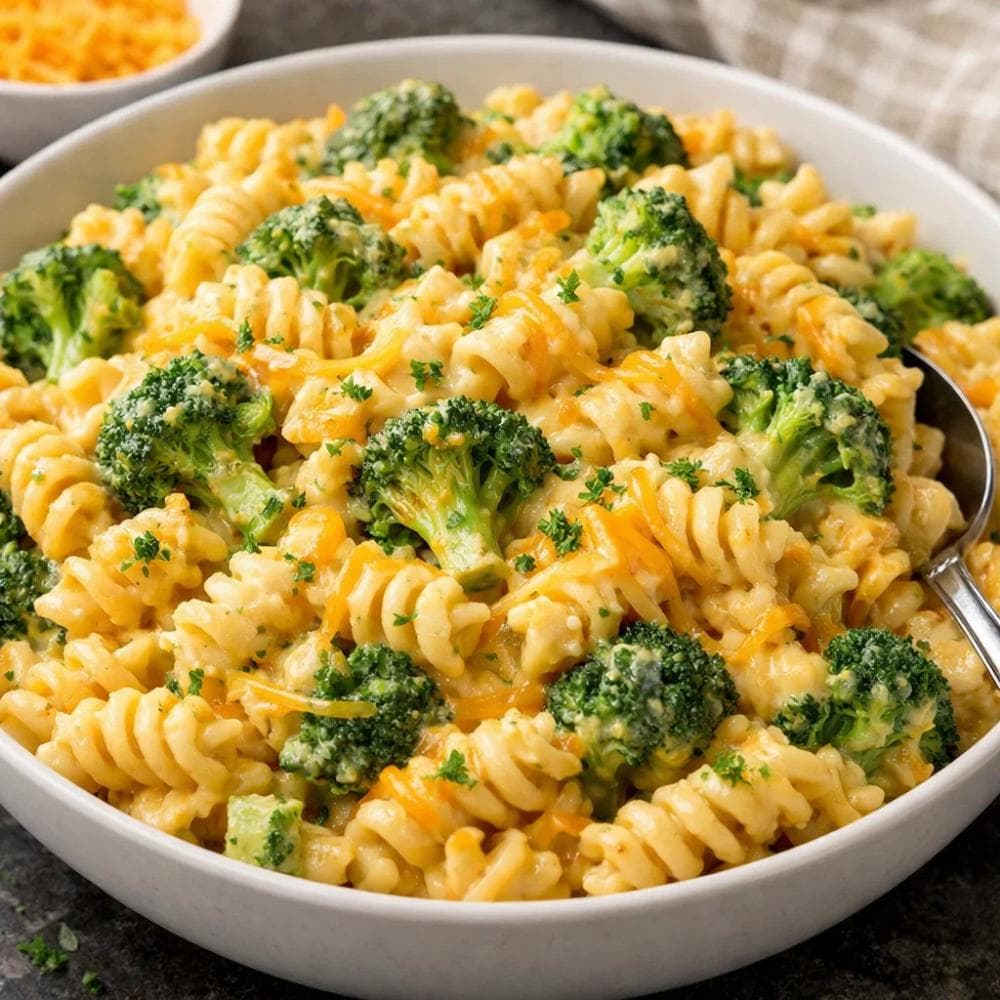
Broccoli Cheddar Pasta (Creamy Family Favorite)
Al dente pasta tossed in a rich, velvety cheddar cheese sauce with tender broccoli florets — a comforting, crowd-pleasing dinner that comes together in 25 minutes. The homemade cheese sauce is silky, sharp, and deeply satisfying in a way that no packet sauce can replicate.
The Quick Answer
Beyond a grainy sauce, the two things that wreck this dish are a sauce that turns to glue minutes after plating and waterlogged, drab broccoli. Control the roux-to-liquid ratio and cook the florets in the pasta water only briefly so the starch stays loose and the broccoli keeps its bite.
Why does my broccoli cheddar pasta turn thick and gluey after a few minutes?
The sauce keeps thickening on the plate because the roux and the cheddar both go on tightening as they cool. The flour starch gelatinises and sets, and cheddar's casein proteins firm up below serving temperature, gripping the pasta into a stiff mass. The fix is built into the method: the 100ml reserved pasta water is loaded with dissolved starch that acts as a buffer, keeping the sauce emulsified and pourable. Toss in splashes until the sauce just coats the pasta - it should look slightly looser than you want, because the residual heat will thicken it further in seconds. A sauce that looks perfect in the pan will be gluey by the time it reaches the table.
Why does my broccoli go grey and mushy in the pasta?
Broccoli loses its bright green and turns olive-grey when its cells rupture and release acids that strip magnesium from the chlorophyll. The longer it sits in boiling water, the worse this gets, and overcooked florets also collapse into mush that disappears into the sauce. Adding the florets for only the final 3 minutes of the pasta's boil sets the colour through brief heat without breaking the cells down, and draining them with the pasta stops the cooking immediately. Cutting the head into small, even florets means they cook through in those 3 minutes rather than needing extra time that would push the tender tips past their point and leave the stems undercooked.
Not sure what to cook next? Let the generator pick your next dish in one click.
Random Recipe GeneratorAbout This Recipe
What is this dish?
Broccoli cheddar pasta is a crowd-pleasing comfort food that combines the richness of a homemade béchamel-based cheese sauce with the natural sweetness of broccoli and the satisfying chew of al dente pasta. It sits in the same culinary space as macaroni cheese — deeply comforting, dairy-forward, and universally loved — but the broccoli adds colour, nutrition, and a slightly earthy flavour that makes it feel more complete.
Why you'll love it
It takes 25 minutes, uses ingredients most households have, feeds a family of four from a single pan, and is one of the most genuinely satisfying pasta dishes in the comfort food repertoire. Children love it. Adults love it. The homemade cheese sauce made from a proper roux is vastly superior to anything from a packet.
When to serve
A quick weeknight family dinner, a vegetarian crowd-pleaser, a comfort food craving meal, or a budget-friendly dinner that punches well above its price. Add bacon for a heartier version.
Quick tips
Grate your own cheese. Remove from heat before adding cheese. Reserve pasta water. Cook broccoli in the pasta water. Serve immediately.
Ingredient Highlights
Mature Cheddar
The sharper and more mature the cheddar, the more flavour the sauce will have. Mild cheddar produces a creamy but bland result; extra mature cheddar produces a sauce with real depth, sharpness, and character. Use the best cheddar you can find — this is a dish where the quality of one ingredient determines the quality of the entire result.
Broccoli
Broccoli is the ideal vegetable for this dish — its slight bitterness and earthiness balance the richness of the cheese sauce, its florets trap the sauce in their crevices, and its bright green colour makes the dish visually striking. Cook it for just 3 minutes in the pasta water to retain colour and a slight bite — overcooked broccoli becomes grey and mushy.
Pasta Water
The starchy water left from cooking pasta is a genuine culinary tool, not just waste. Its starch content acts as an emulsifier, helping the fat and water in the cheese sauce bind together into a silky, cohesive coating that clings to each piece of pasta rather than sliding to the bottom of the bowl. This is how professional pasta kitchens achieve their characteristic glossy pasta.
Substitution Options
Replace broccoli with cauliflower, tenderstem broccoli, or a mixture of both. Use gluten-free pasta and replace plain flour with cornstarch (1.5 tablespoons) for a gluten-free version. Replace single cream with extra milk or crème fraîche. Substitute Gruyère or Gouda for cheddar. Add crispy bacon, diced ham, or cooked chicken for a meat version.
You'll likely need to buy
Likely in your pantry
Step-by-Step Instructions
Cook the pasta and broccoli
Bring a large pot of well-salted water to a boil. Cook the pasta according to packet instructions until al dente. Add the broccoli florets to the pasta water for the final 3 minutes of cooking time. Reserve 100ml of the starchy pasta cooking water before draining. Drain the pasta and broccoli together.
Chef's Tips
- ›Cook the broccoli in the pasta water to save a pot and retain the bright green colour
- ›Reserve the pasta water before draining — the starch is essential for helping the sauce coat the pasta properly
- ›Al dente is critical — overcooked pasta becomes mushy when tossed in the hot cheese sauce
Make the roux
While the pasta cooks, melt butter in a large, deep saucepan over medium heat. Add the garlic and cook for 30 seconds. Add the flour and stir constantly for 1–2 minutes until the mixture turns a pale golden colour and smells biscuity. This is the roux.
Chef's Tips
- ›Cooking the flour in the butter removes the raw, starchy taste — it should smell biscuity and nutty, not raw
- ›Use a pan large enough to hold the pasta later — you will add everything to this pan
Add the milk and cream
Gradually whisk the milk and cream into the roux, adding it in a steady stream while whisking constantly to prevent lumps. Increase heat to medium-high and continue whisking until the sauce thickens and begins to simmer, about 4–5 minutes. Reduce heat to low.
Chef's Tips
- ›Whisk constantly while adding the milk — stopping for even a few seconds risks lumps forming
- ›Warm the milk slightly first (30 seconds in the microwave) to prevent the cold liquid seizing the roux and creating lumps
Add the cheese and seasonings
Remove the pan from the heat and stir in the grated cheddar and Parmesan in three additions, stirring until each addition has fully melted before adding the next. Add the Dijon mustard, smoked paprika, onion powder, salt, pepper, and cayenne. Stir until smooth and combined.
Chef's Tips
- ›Remove from the heat before adding cheese — adding cheese to a boiling sauce causes the proteins to seize and the fat to separate, resulting in a grainy, broken sauce
- ›Add cheese in small additions and let each melt fully — patience here is rewarded with a perfectly smooth sauce
Combine and serve
Add the drained pasta and broccoli to the cheese sauce. Toss to coat, adding splashes of the reserved pasta water to loosen the sauce to the desired consistency — it should cling to the pasta without being stiff or gluey. Serve immediately in warm bowls.
Chef's Tips
- ›The pasta water starch helps emulsify the sauce and makes it cling to the pasta rather than pooling at the bottom of the bowl
- ›Serve immediately — the sauce thickens as it cools and cannot be restored to the same silky consistency after sitting
Chef's Tips
Techniques that separate good from great
Always grate your own cheese
Pre-shredded cheese is coated in potato starch or cellulose to prevent clumping in the bag. These coatings inhibit melting and produce a grainy, clumpy sauce rather than a smooth, silky one. Block cheddar grated at home melts perfectly every time.
Add Dijon mustard to every cheese sauce
Dijon mustard does not make the sauce taste of mustard — it enhances the sharpness of the cheddar and brightens the overall flavour. It is used by professional cooks as a flavour amplifier in cheese sauces. Start with a teaspoon and add more to taste.
Use pasta water generously
The starchy pasta cooking water is one of the most underused ingredients in home cooking. It emulsifies the sauce, helps it cling to the pasta, and loosens a sauce that has thickened without diluting its flavour the way plain water would. Add it a tablespoon at a time until the sauce reaches the perfect consistency.
Nutrition Facts
Per serving · Estimated values
* Estimated per serving based on a 2,000 calorie diet.
Equipment Needed
As an Amazon Associate we earn from qualifying purchases — at no extra cost to you.
Quick Tips
- Grate the cheese yourself — pre-grated cheese contains anti-caking agents that prevent it melting smoothly into a silky sauce
- Remove the pan from heat before adding cheese — this is the single most important technique for a smooth, non-grainy sauce
- Reserve the pasta water before draining — this is easy to forget but important for the final texture
- Serve immediately — broccoli cheddar pasta does not hold or reheat as well as many dishes because the sauce thickens and the broccoli can become soft
Recipe Variations
Different ways to make this dish your own
Broccoli Cheddar Baked Pasta
Transfer the assembled pasta to a baking dish, top with extra grated cheese and a handful of breadcrumbs mixed with butter. Bake at 200°C for 20 minutes until golden and bubbling. The baked version has a satisfying, slightly crispy top that many people prefer.
Bacon Broccoli Cheddar Pasta
Add 150g of diced bacon or pancetta, crisped in a pan before starting the sauce. Stir through the finished pasta for a smoky, salty dimension that elevates the dish significantly. Reserve some of the crispy bacon to scatter over the top.
Spicy Broccoli Cheddar Pasta
Add a generous teaspoon of cayenne pepper and a tablespoon of hot sauce to the cheese sauce. Top with sliced pickled jalapeños. The heat cuts beautifully through the richness of the cheese sauce.
Three-Cheese Broccoli Pasta
Replace 50g of the cheddar with smoked Gouda and add 50g of cream cheese stirred in at the end. The cream cheese adds extra creaminess; the smoked Gouda adds a complex, smoky depth. A richer, more indulgent version.
What to Serve With
Perfect pairings to complete the meal
Garlic Bread
Warm, garlicky bread alongside is a natural accompaniment to any creamy pasta dish — ideal for scooping up extra sauce from the bowl and making the meal more substantial.
Simple Green Salad
A fresh green salad with a sharp vinaigrette provides the acidic contrast that cuts through the rich, creamy cheese sauce and balances the meal nutritionally.
Crispy Bacon Crumbles
A handful of crispy bacon crumbles scattered over the top at the table adds a salty, smoky, crunchy element that contrasts beautifully with the creamy pasta. Cook the bacon separately and offer it as a garnish.
Extra Parmesan at the Table
A small bowl of freshly grated Parmesan at the table for guests to add to their bowls adds sharpness and a savoury, nutty finish. It is always popular and requires no additional preparation.
Storage & Reheating
Keep it fresh and plan ahead
Refrigerator
Keeps for up to 3 days in a sealed container, though the sauce thickens significantly in the fridge.
Freezer
Not ideal for freezing — cheese sauces can become grainy after freezing and the pasta texture suffers. Best eaten fresh.
Make-Ahead
The cheese sauce can be made up to 2 days ahead and refrigerated separately. Reheat gently with a splash of milk while cooking the pasta fresh — this gives the best result.
Reheating
Reheat in a pan over low heat with a generous splash of milk, stirring frequently, until smooth and heated through. Do not use high heat. The sauce will be slightly thicker than when first made — add milk to adjust.
Cooking tonight?
Get a month of dinners like this — done for you
30 chef-tested dinners mapped to the month, plus 5 ready-to-shop grocery lists. One-time $8.99 — 30 dinners planned for you, zero nightly decisions.
See the 30-Day Plan →Be the first to review this recipe!
Got Leftovers?
Turn what you already have in your fridge into delicious meals. Our AI-powered generator creates personalized recipes from your ingredients.
Go Deeper
Master the Culinary Science
Every recipe is a doorway. Our 7 Mastery Guides give you the science, technique, and framework to understand why food works — not just how to follow steps.
AI-Powered
Have Ingredients? Generate a Recipe.
Tell our AI what's in your fridge and get a custom recipe with image in seconds. No waste, no boredom.
Try the AI Recipe Generator →Browse more like this:
You Might Also Like
Discover more delicious recipes similar to what you're cooking