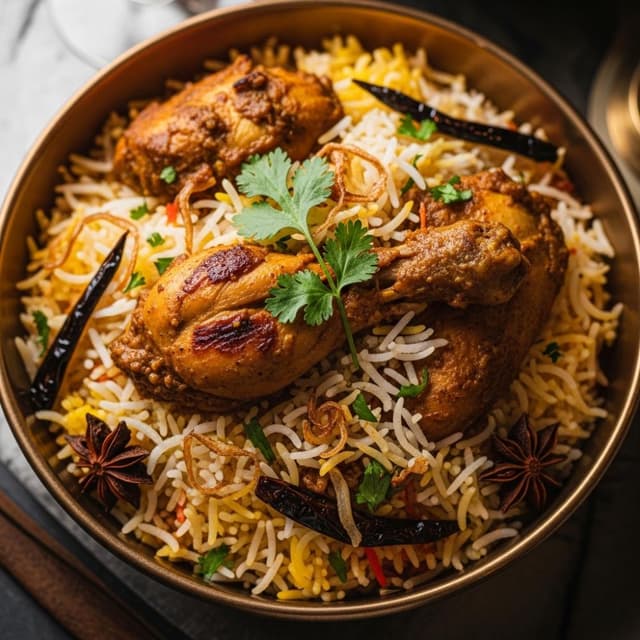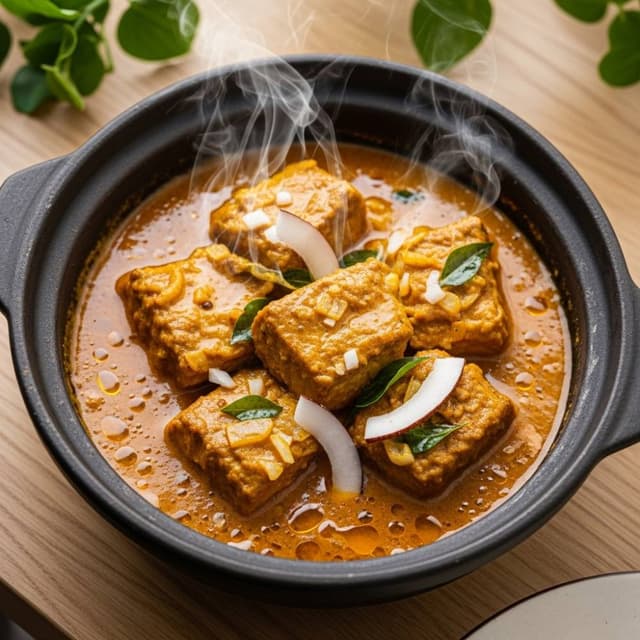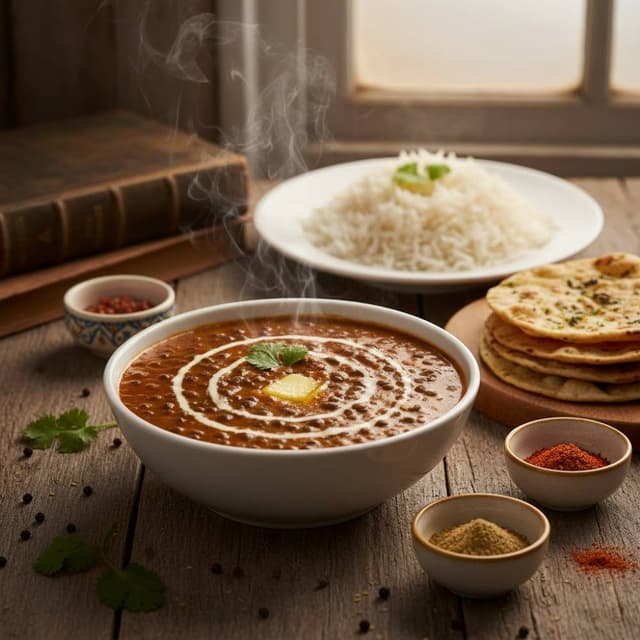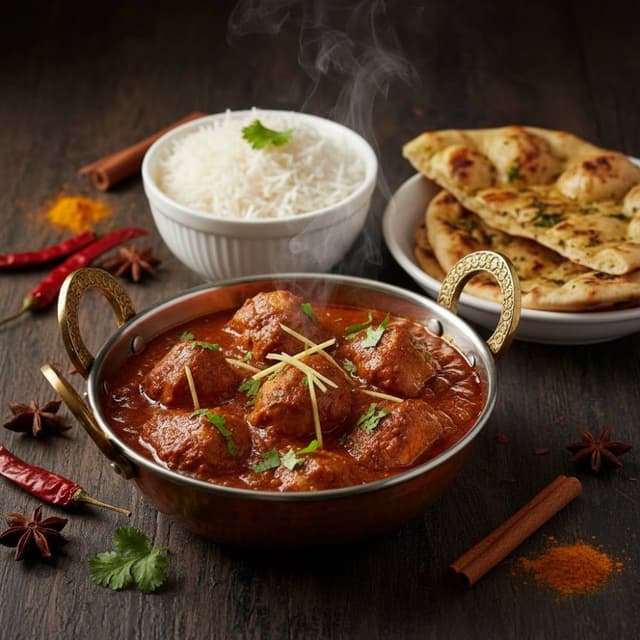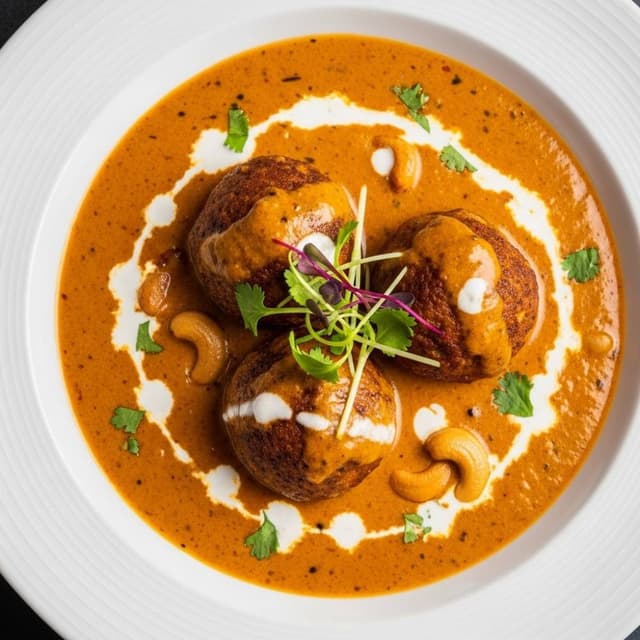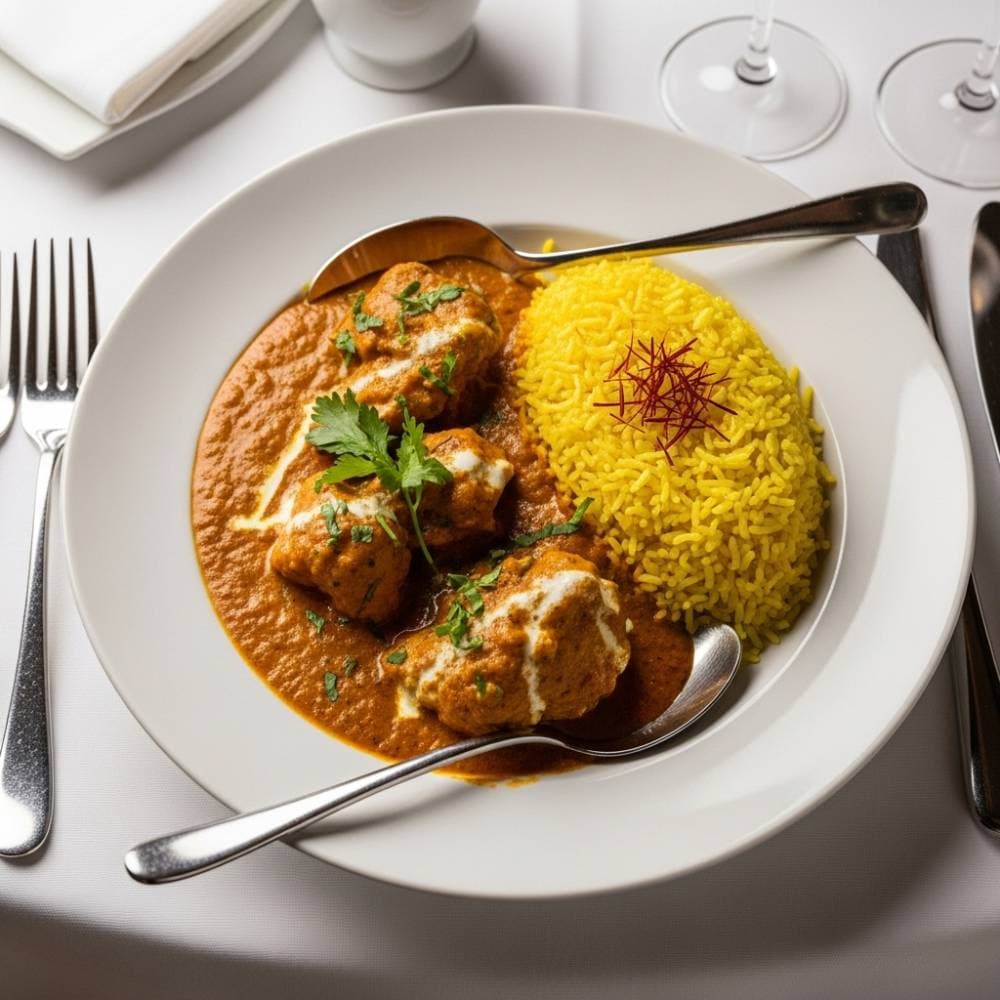
Chicken Korma with Saffron Rice
A rich and creamy Indian chicken curry (korma) made with yogurt, nuts, and aromatic spices, served alongside fragrant basmati rice infused with saffron. A luxurious and comforting meal for two.
The Quick Answer
Korma reads as one sauce, but it is built from three dairy and nut components that each behave differently under heat, and tempering them in the right order is what keeps it pale and glossy. The marinade yogurt, the blended cashews, and the finishing cream all need different handling.
Should I cook off the yogurt marinade before adding cream and cashew paste?
Yes. The chicken thighs carry their marinade yogurt into the pot, and that thin acidic yogurt curdles much more readily than the later cream because it is lower in fat and already partly broken by the lemon-free spice acids. Cook the marinated chicken with the golden onions over medium heat until the yogurt's water has largely steamed off and the mixture looks dry and oil-flecked before you introduce the cashew paste and cream. By driving out that loose whey first, you remove the most fragile dairy from the equation, so the smoother, fat-rich cashew and cream stage simmers cleanly instead of fighting an already-separating base.
Why does my saffron rice come out gummy or clumped rather than separate?
Basmati's prized separate grains depend on rinsing out loose surface amylose and then cooking by absorption, not stirring. After you toast the cardamom, cloves and cinnamon in ghee and add the rinsed rice, the one-minute coat in fat films each grain so the starch leaching during the 12-15 minute simmer cannot glue grains together. Stirring after the water goes in is the usual culprit: it abrades the grains and releases sticky starch. Leave the lid on, let it rest off heat for the full five minutes so trapped steam finishes the centers evenly, then fold the warm saffron milk through with a fork. Forking, not spooning, lifts grains apart instead of mashing them.
Not sure what to cook next? Let the generator pick your next dish in one click.
Random Recipe GeneratorAbout This Recipe
What is this dish?
Chicken korma is Mughal India's most refined curry — a dish of the royal kitchens that spread from the Delhi court across the subcontinent. Unlike most Indian curries, korma is defined by what it doesn't have: no tomatoes, no harshness, almost no heat. Instead, it is built on a foundation of yogurt, nuts, cream, and whole aromatic spices (cardamom, cinnamon, cloves) that create a sauce of extraordinary delicacy and fragrance. The word 'korma' derives from a Urdu-Turkish word meaning 'to braise.'
Why you'll love it
Korma is the gateway curry — the dish that convinces people who claim not to like Indian food. Its creamy, mildly sweet sauce with gentle warmth and floral spice notes is universally appealing. Paired with saffron-perfumed basmati rice, it is one of the most complete and satisfying rice dishes in any cuisine. The saffron rice transforms the meal from everyday to celebratory.
When to serve
Korma is a dinner party centerpiece — elegant enough to impress guests yet mild enough for all palates. Serve for Eid celebrations, special family dinners, or any occasion where you want a showstopping Indian meal. It pairs beautifully with naan or garlic naan if you prefer to skip the saffron rice.
Quick tips
Soak the cashews for at least 30 minutes in hot water — this is what creates the sauce's silky texture. The onions must be cooked to deep golden brown before adding chicken. Never boil the sauce hard after adding cream. The saffron should be steeped in warm milk, not cold water, for maximum color and fragrance.
Ingredient Highlights
Cashews
Soaked and blended cashews create the korma's distinctive silky, nut-thickened sauce. They add richness and body without dairy and contribute a subtle natural sweetness. Blanched almonds or a mix of both work equally well. The soaking is essential — blending dry cashews leaves a grainy sauce.
Saffron
The world's most expensive spice by weight, used in a tiny pinch for dramatic effect. Saffron threads steeped in warm milk release a golden-orange color and a floral, slightly honey-like aroma that is incomparable. The saffron transforms plain rice into a centerpiece worthy of royal cuisine.
Whole Aromatic Spices
Cardamom pods, cinnamon, and cloves are used whole in korma (unlike ground spices in other curries) to perfume the oil gently at the beginning. They release their essential oils into the fat and create the characteristic Mughal-style aromatic backdrop without adding heat or harshness.
Heavy Cream
The finishing element that gives korma its characteristic richness and pale, creamy color. Added off direct heat to prevent curdling, it rounds all the spices and mellows the yogurt's tang. Coconut cream or additional cashew paste can substitute for a dairy-free version.
Substitution Options
Replace chicken with lamb (increase cooking time by 20 minutes), paneer, or vegetables (cauliflower and peas are classic korma vegetables). Cashews can be replaced with blanched almonds or a nut-free alternative of coconut cream. Plain coconut yogurt substitutes for dairy yogurt in the marinade. Ghee can be replaced with butter or coconut oil. If saffron is unavailable, a small pinch of turmeric in the rice creates a golden color (different flavor profile).
You'll likely need to buy
Likely in your pantry
Step-by-Step Instructions
Marinate the chicken
In a medium bowl, combine the chicken pieces with 1/4 cup plain full-fat yogurt, 1 tablespoon ginger-garlic paste, 1 teaspoon red chili powder, 1/2 teaspoon turmeric powder, 1 teaspoon ground coriander, 1/2 teaspoon ground cumin, 1/2 teaspoon garam masala, and 1/4 teaspoon salt. Mix well to coat. Cover and refrigerate for at least 30 minutes. Marinating allows the flavors to soak in and tenderizes the chicken.
Chef's Tips
- ›Marinating longer, up to 2 hours, enhances flavor.
- ›Ginger-garlic paste is a common Indian aromatic base.
Prepare nuts for sauce
Soak 1/4 cup raw cashews or blanched almonds in 1/4 cup hot water for at least 20 minutes. This softens them for blending into a smooth paste for the Korma sauce.
Chef's Tips
- ›Soaking nuts helps create a smooth, creamy sauce.
- ›Blanched almonds are almonds with their skins removed.
Cook chicken and onion for Korma
Heat 1 tablespoon ghee or vegetable oil in a heavy-bottomed pot or Dutch oven over medium heat. Add 1/2 thinly sliced medium onion and cook for 8-10 minutes, stirring occasionally, until deeply golden brown and soft. Stir in the marinated chicken and cook for 5-7 minutes until lightly browned on all sides.
Chef's Tips
- ›Ghee is clarified butter. Deeply browning the onion adds sweetness and color to the sauce.
- ›Browning the chicken adds a layer of flavor.
Prepare Saffron Rice
While chicken cooks, make the rice. Rinse 1 cup basmati rice until water runs clear. In a medium saucepan, heat 1 tablespoon ghee or vegetable oil. Add 2 green cardamom pods, 2 cloves, and 1 small cinnamon stick. Cook for 30 seconds until fragrant (smells pleasant and aromatic). Add the rinsed basmati rice and stir for 1 minute to coat. Pour in 1 1/2 cups water and 1/4 teaspoon salt. Bring to a boil, then reduce heat to low, cover tightly, and simmer (cook gently just below boiling, with small bubbles) for 12-15 minutes, or until water is absorbed. Take off heat and let sit, covered, for 5 minutes. Stir in the saffron steeped in warm milk or water. Fluff with a fork.
Chef's Tips
- ›Fragrant means it smells good and aromatic.
- ›Simmer means to cook gently just below boiling, with small bubbles.
Finish Korma sauce
Drain the soaked cashews or almonds. Blend them with a small amount of fresh water (about 2 tablespoons) until a very smooth paste forms. Add this nut paste to the pot with the chicken and onion. Stir in 1/4 cup heavy cream and 1/2 teaspoon sugar. Add 1/4 teaspoon salt (or to taste). Bring the Korma to a gentle simmer. Cook for 5-7 minutes, stirring occasionally, until the sauce is heated through and has thickened to your liking. Do not boil vigorously after adding cream, as it can separate.
Chef's Tips
- ›A very smooth nut paste is essential for a creamy Korma.
- ›Do not boil Korma vigorously after adding cream.
Serve
Taste the Chicken Korma and adjust salt or sugar if needed. Garnish generously with 2 tablespoons chopped fresh cilantro. Serve the Chicken Korma immediately with the Saffron Rice.
Chef's Tips
- ›Fresh cilantro adds a bright, fresh finish.
- ›Korma is best enjoyed hot and fresh.
Chef's Tips
Techniques that separate good from great
Cook the onions to deep golden brown — this is the flavor foundation
Many home cooks under-brown the onions in korma and wonder why their sauce lacks depth. The onions must be cooked to a deep, even golden-brown over 10-12 minutes of patient stirring. This caramelization creates the foundational sweetness that balances the yogurt's acidity and the cream's richness. Under-browned onions produce a pale, flat sauce.
Steep saffron in warm milk, not cold water, for maximum color and flavor
Hot milk (not boiling) extracts more of saffron's color compounds (crocin) and aromatic compounds (safranal) than cold water. Use whole milk for the best extraction. Let the saffron steep for at least 10 minutes before adding to the rice. The milk becomes a brilliant orange-gold.
Finish with the nut paste after the chicken is cooked, not before
Adding cashew paste too early causes it to stick to the pan bottom and burn. Cook the chicken fully in the spiced onion base first, then stir in the nut paste, cream, and seasonings. This sequence ensures the paste heats gently and blends seamlessly into the sauce rather than scorching.
Add a small pinch of sugar to balance the yogurt's acidity
The yogurt marinade provides essential tanginess, but a tiny pinch of sugar (about 1/2 teaspoon) in the korma sauce balances the acid and enhances the natural sweetness of the cashews and onions. This is a small detail that makes a noticeable difference in the finished sauce's harmony.
Nutrition Facts
Per serving · Estimated values
* Estimated per serving based on a 2,000 calorie diet.
Equipment Needed
- Medium bowl (for chicken marinating)
- Small bowl (for nut soaking)
- Heavy-bottomed pot or Dutch oven (for korma)
- Medium saucepan (for rice)
- Blender or food processor (for nut paste)
- Spatula or wooden spoon
- Measuring cups
- Measuring spoons
- Knife and cutting board
As an Amazon Associate we earn from qualifying purchases — at no extra cost to you.
Quick Tips
- For a truly dairy-free Korma, substitute plain coconut yogurt for dairy yogurt, and use full-fat canned coconut milk or more cashew paste instead of heavy cream.
- The sweetness of Korma can be adjusted. Add a little more sugar if you prefer a sweeter profile.
- Basmati rice is ideal for Saffron Rice due to its aromatic qualities and long grains.
Recipe Variations
Different ways to make this dish your own
Vegetable Korma
Replace chicken with a mix of cauliflower, peas, potatoes, and carrots. Simmer vegetables in the korma sauce until just tender — about 15 minutes. Add a handful of raisins for an authentic touch of sweetness.
Lamb Korma (Gosht Korma)
Replace chicken with bone-in lamb shoulder pieces for the most traditional version of this dish. Lamb korma requires 60-90 minutes of slow simmering for the meat to become tender — the extra time rewards with deeper, more complex flavor.
Shahi Korma (Royal Korma)
The most luxurious version: add a pinch of saffron directly to the korma sauce in addition to the rice, increase the cream to 1/3 cup, and stir in rose water (1 teaspoon) and kewra water (1 teaspoon) at the very end for a intensely perfumed royal preparation.
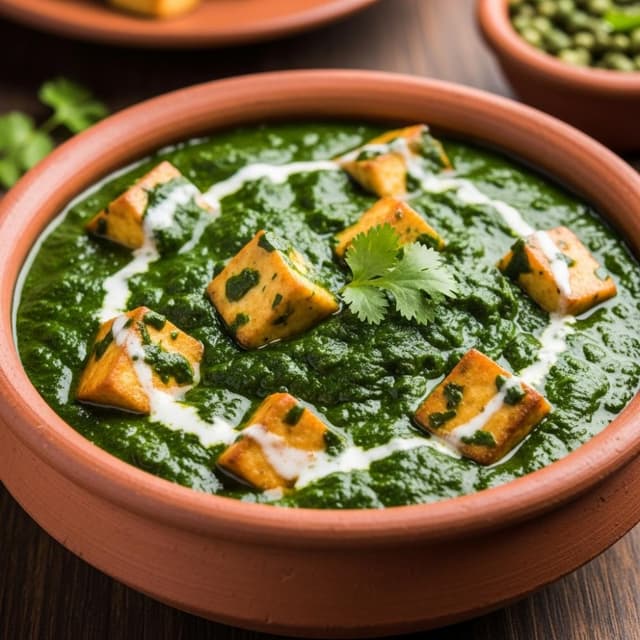
Paneer Korma
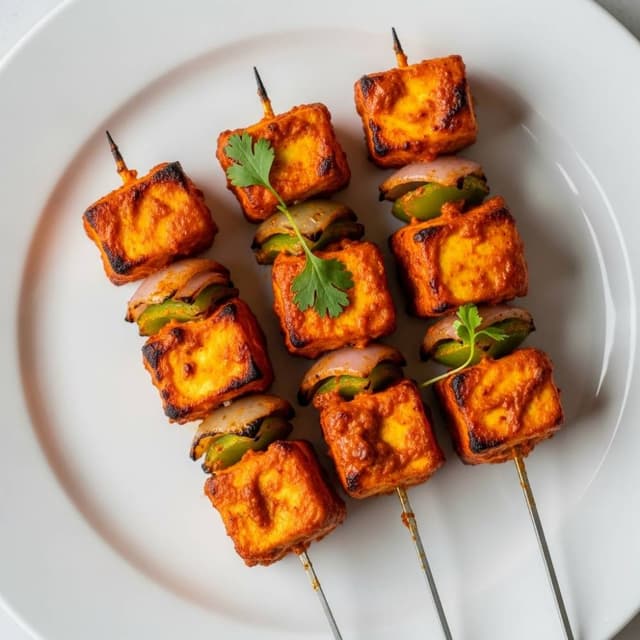
Replace chicken with pan-fried paneer cubes and omit the chicken marinating step. Fry the paneer in ghee until golden, then add to the finished sauce for 2 minutes. A popular vegetarian alternative with the same creamy, aromatic sauce.
What to Serve With
Perfect pairings to complete the meal
With Saffron Basmati Rice
The natural pairing included in this recipe. The golden, fragrant saffron rice elevates the entire meal to celebratory status. The gentle saffron perfume complements the korma's cardamom notes without competing.
With Garlic Naan
Tear garlic naan to scoop the korma sauce — the garlicky flatbread contrasts beautifully with the mild, sweet curry. Much more satisfying than plain naan for a dish as delicate as korma.
With Cucumber Raita
A cooling raita of yogurt, grated cucumber, and cumin provides a textural contrast and temperature contrast to the warm, rich korma. Essential for balance when serving multiple people with varying spice tolerance.
With Rose Petal and Pistachio Garnish
For a Mughal-inspired presentation, garnish the finished korma with dried rose petals and chopped pistachios. This is how the dish was served in royal kitchens and makes an extraordinary visual and aromatic impression.
Storage & Reheating
Keep it fresh and plan ahead
Refrigerator
Korma keeps well refrigerated for up to 3 days in an airtight container. The sauce may thicken considerably — add 2-3 tablespoons of water or cream when reheating and stir gently. The flavor deepens after a day.
Freezer
Korma sauce freezes well for up to 2 months. Freeze the chicken separately from the sauce if possible, as the chicken's texture degrades slightly in the freezer. Thaw overnight in the refrigerator.
Make-Ahead
The korma sauce can be made up to 2 days ahead without the final cream addition. Add cream only when reheating just before serving. The saffron rice should be made fresh.
Reheating
Reheat the korma gently over low-medium heat, stirring frequently and adding splashes of water or cream to restore the sauce's consistency. Do not boil vigorously — heat just until steaming throughout.
Cooking tonight?
Get a month of dinners like this — done for you
30 chef-tested dinners mapped to the month, plus 5 ready-to-shop grocery lists. One-time $8.99 — 30 dinners planned for you, zero nightly decisions.
See the 30-Day Plan →Got Leftovers?
Turn what you already have in your fridge into delicious meals. Our AI-powered generator creates personalized recipes from your ingredients.
Go Deeper
Master the Culinary Science
Every recipe is a doorway. Our 7 Mastery Guides give you the science, technique, and framework to understand why food works — not just how to follow steps.
AI-Powered
Have Ingredients? Generate a Recipe.
Tell our AI what's in your fridge and get a custom recipe with image in seconds. No waste, no boredom.
Try the AI Recipe Generator →Browse more like this:
You Might Also Like
Discover more delicious recipes similar to what you're cooking