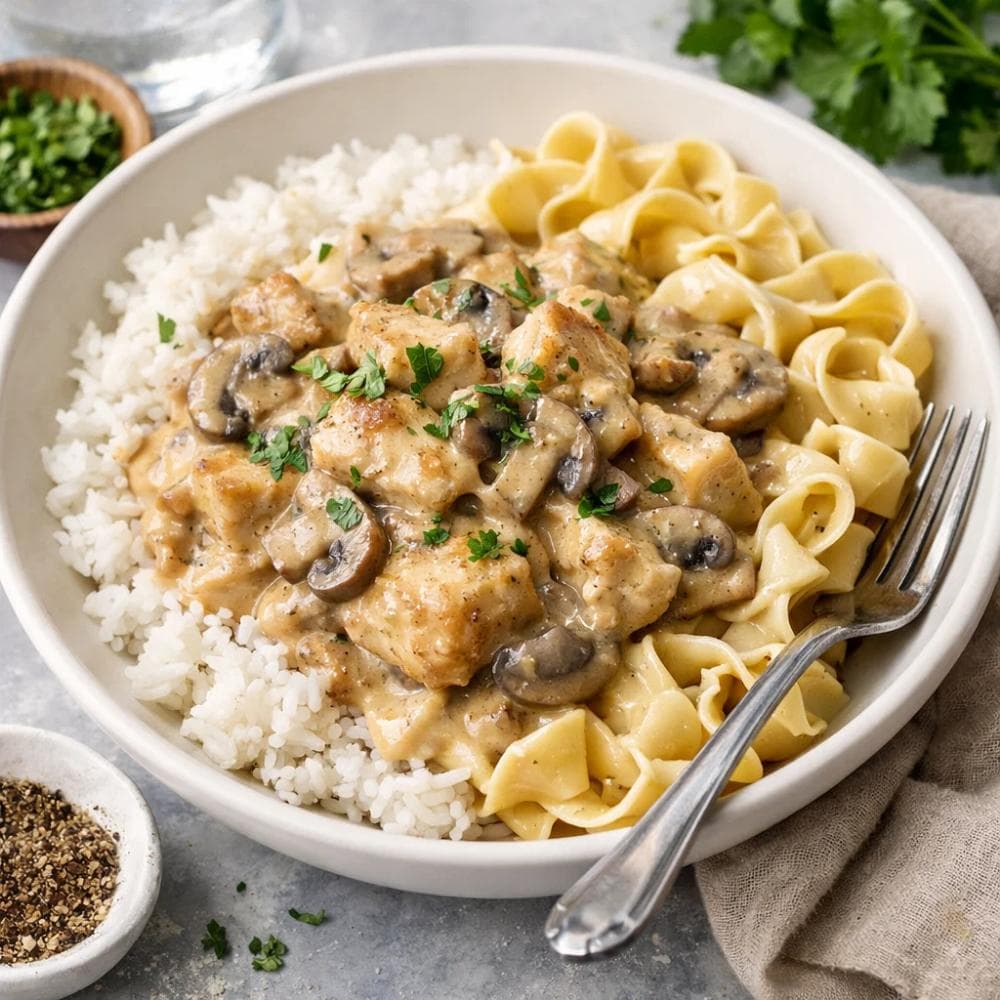
Chicken Stroganoff (Creamy Comfort Food Made Lighter)
A lighter, quicker take on the classic beef stroganoff — tender strips of chicken breast cooked with mushrooms in a tangy, creamy sauce of soured cream, Dijon mustard, and a splash of white wine. Ready in 25 minutes in a single pan, it has all the comforting richness and flavour of the original with a fresher, more delicate character. Serve over egg noodles, rice, or mashed potato for a complete, satisfying weeknight dinner.
The Quick Answer
The classic stroganoff failure is a broken, grainy sauce, which happens because soured cream is a low-fat dairy and its proteins curdle when heated too fast or in too acidic a pan. Stir the soured cream in off the boil over low heat, and let the deglazed wine reduce first so the alcohol cooks off before the dairy goes in.
Why does the soured cream in my stroganoff go grainy?
Soured cream sits around 18-20% fat, far less than double cream or creme fraiche, so it has more whey protein and less protective fat. When those proteins hit high heat they coagulate and clump, giving a grainy, split sauce. Acid makes it worse: adding soured cream straight into a pan still sharp with reduced white wine drops the pH and curdles the proteins on contact. Reduce the wine fully first, pull the pan to low heat, then stir the soured cream in. The Dijon mustard actually helps here, as its mucilage acts as a mild emulsifier that holds the fat and water together.
Why do my mushrooms make the stroganoff watery?
Chestnut and button mushrooms are roughly 90% water held in a spongy structure. Crowd them in the pan and the released moisture pools, dropping the surface temperature below the point where browning happens, so they simmer pale and grey instead of searing. That water then dilutes your finished sauce. Give them room and high heat so the liquid evaporates fast; once it has gone, the sugars and amino acids on the mushroom surface undergo Maillard browning, building the savoury depth that carries this lighter chicken version. Only deeply golden mushrooms add flavour rather than just bulk and water.
Not sure what to cook next? Let the generator pick your next dish in one click.
Random Recipe GeneratorAbout This Recipe
What is this dish?
Beef stroganoff — strips of beef in a soured cream sauce — is a 19th-century Russian dish that became one of the defining comfort foods of 20th-century home cooking. The chicken version emerged as a lighter, more everyday alternative that retains all the characteristic flavours of the original — the tang of soured cream, the warmth of Dijon, the savoury depth of Worcestershire — while being cheaper, faster, and more accessible. It is one of those dishes that is always slightly better than you expect it to be.
Why you'll love it
It is a one-pan dinner that comes together in 25 minutes and tastes like considerably more effort. The sauce is deeply comforting — rich, tangy, savoury, and complex — and is the kind of thing that benefits from egg noodles in a way that few sauces do. It is the right amount of indulgent for a weeknight.
When to serve
A weeknight comfort dinner or a casual dinner party main. Serves 4.
Quick tips
High heat for chicken. Golden mushrooms. Low heat for soured cream. Egg noodles are the best accompaniment.
Ingredient Highlights
Soured Cream
The defining ingredient of stroganoff — its characteristic tangy, slightly acidic flavour is what distinguishes the sauce from a plain cream sauce. Soured cream has a lower fat content than double cream and a more complex flavour. It must be added to a low heat and never boiled, as it curdles at high temperatures. Full-fat soured cream is more stable than reduced-fat.
Chestnut Mushrooms
Chestnut mushrooms have a deeper, earthier flavour than standard button mushrooms and hold their texture better during cooking. They are the ideal choice for stroganoff, where the mushrooms need to contribute flavour to the sauce rather than just provide texture. Cooking them until genuinely golden concentrates their flavour and produces a better sauce.
Dijon Mustard and Worcestershire Sauce
The two flavouring agents that give stroganoff its distinctive character. Dijon adds a sharp, mustardy warmth; Worcestershire adds a deeply savoury, slightly fermented depth. Neither should be identifiable as such in the finished sauce — they blend together to produce a complexity that makes people ask what makes the sauce so good.
Substitution Options
Use beef strips for classic stroganoff. Replace soured cream with crème fraîche or Greek yogurt (less tangy). Swap white wine for chicken stock. Use Worcestershire sauce alternatives for a different depth. Add a teaspoon of tomato paste for a richer colour. Replace chestnut mushrooms with a mixture of wild mushrooms.
You'll likely need to buy
Likely in your pantry
Step-by-Step Instructions
Season and sear the chicken
Season the chicken strips generously with smoked paprika, salt, and pepper. Heat 1 tablespoon of oil in a large frying pan over high heat until very hot. Add the chicken in a single layer — in batches if necessary — and cook for 2–3 minutes without stirring until golden on one side. Stir briefly and cook for a further 1–2 minutes. The chicken does not need to be fully cooked through at this stage. Remove to a plate.
Chef's Tips
- ›A very hot pan and dry, well-seasoned chicken produces the best golden colour — wet or crowded chicken steams and stays pale
- ›Cook in batches if the pan is crowded — it is better to do two fast batches than one slow, steamed one
Cook the onion and mushrooms
In the same pan, reduce the heat to medium and add the remaining oil or butter. Add the diced onion and cook for 5 minutes until softened and starting to turn golden. Add the garlic and cook for 1 minute. Add the mushrooms, increase the heat slightly, and cook for 5–7 minutes, stirring occasionally, until the mushrooms are golden and have released and reabsorbed their liquid. Pale, watery mushrooms produce a watery sauce — cook them until they are genuinely golden.
Chef's Tips
- ›Properly cooked mushrooms (golden and shrunken) are essential for flavour — pale, wet mushrooms dilute the sauce and produce a weak result
- ›Adding the mushrooms to a hot pan and not stirring immediately encourages browning rather than steaming
Build the sauce
Pour in the white wine or stock and scrape up any browned bits from the base of the pan. Let it bubble and reduce by half, about 2 minutes. Reduce the heat to low. Add the soured cream, Dijon mustard, and Worcestershire sauce, and stir to combine. Heat gently — do not boil, as soured cream can curdle at high temperatures. Taste and adjust the seasoning with salt, pepper, and more mustard or Worcestershire as desired.
Chef's Tips
- ›Gentle heat once the soured cream is in is critical — boiling soured cream causes it to split into curds and whey, producing a grainy sauce
- ›The Worcestershire sauce adds a savoury, umami depth that is important to the character of the sauce — do not omit it
Return the chicken and finish
Return the seared chicken to the pan and any juices that have accumulated on the plate. Stir to coat in the sauce and heat gently for 3–4 minutes until the chicken is cooked through and the sauce is heated throughout. Scatter over the fresh parsley and serve immediately over egg noodles, rice, or mashed potato.
Chef's Tips
- ›The juices that collect on the plate while the chicken rests contain flavour — add them to the sauce with the chicken
- ›Do not overcook after returning the chicken — the strips are thin and will become dry and rubbery within a few minutes of overcooking
Chef's Tips
Techniques that separate good from great
Use a mixture of mushrooms
Replacing or supplementing the chestnut mushrooms with shiitake, oyster, or cremini mushrooms adds layers of earthy complexity to the sauce. Shiitake in particular have a deeply savoury, almost meaty quality that works beautifully in the stroganoff sauce. Even a small proportion of dried porcini mushrooms — rehydrated in hot water and added with their soaking liquid (strain first) — adds an extraordinary depth.
Finish with a squeeze of lemon
A small squeeze of fresh lemon juice stirred in just before serving brightens and lifts the richness of the cream sauce in a way that is noticeable but not identifiable as lemon — people simply register the sauce as tasting more vibrant and less heavy. This is a classic finishing technique for cream sauces and is always worth doing.
Add a tablespoon of crème fraîche instead of all soured cream
Replacing half the soured cream with crème fraîche produces a slightly richer, less tangy sauce that is more stable at higher temperatures (crème fraîche is less likely to split). The two together produce a sauce with the tang of soured cream and the richness of crème fraîche — a better result than either alone.
Nutrition Facts
Per serving · Estimated values
* Estimated per serving based on a 2,000 calorie diet.
Equipment Needed
As an Amazon Associate we earn from qualifying purchases — at no extra cost to you.
Quick Tips
- Cook the chicken in batches over high heat to sear rather than steam
- Cook the mushrooms until genuinely golden — pale mushrooms dilute the sauce
- Keep the heat low once the soured cream is added — it will split if boiled
Recipe Variations
Different ways to make this dish your own
Beef Stroganoff
The classic original — replace chicken with 600g of fillet or sirloin beef cut into thin strips. Sear very quickly over extremely high heat (30 seconds per side) to keep the beef rare. The cooking method and sauce are identical. The beef version is richer and more luxurious but requires better quality meat.
Mushroom Stroganoff
Omit the chicken entirely and double the mushrooms to 600g, using a mixture of chestnut, oyster, and shiitake. Add a tablespoon of soy sauce for extra umami. A deeply satisfying vegetarian version that is almost as good as the original.
Chicken Stroganoff with Paprika
Increase the smoked paprika to 2 teaspoons and add 1 teaspoon of sweet Hungarian paprika to the sauce. A more intensely paprika-forward version that is closer to a Hungarian gulyás in character.
Light Chicken Stroganoff
Replace the soured cream with low-fat Greek yogurt and use chicken stock instead of wine. Stir a teaspoon of cornflour mixed with cold water into the sauce to provide body without the fat. A lighter but still very flavourful version for those watching calories.
What to Serve With
Perfect pairings to complete the meal
Egg Noodles
The traditional and best accompaniment — wide egg noodles tossed in a little butter catch the sauce in their curves and provide a satisfying, starchy base. The combination of stroganoff sauce and egg noodles is one of the great comfort food pairings.
Mashed Potato
Creamy, buttery mashed potato provides a rich, starchy base that absorbs the stroganoff sauce beautifully. For the most indulgent combination, use a Robuchon-style mashed potato with very generous amounts of butter.
Steamed Rice
Plain steamed white rice is a lighter and equally suitable accompaniment that lets the flavour of the sauce do the work. Basmati rice with its long grains and slight fragrance is particularly good.
Buttered Kasha
The traditional Russian accompaniment — buckwheat groats cooked in stock and finished with butter. The earthy, nutty character of buckwheat is an excellent match for the tangy cream sauce and is the most authentic serving option.
Storage & Reheating
Keep it fresh and plan ahead
Refrigerator
Keeps in the fridge for up to 3 days. The sauce may thicken when cold — add a splash of stock when reheating.
Freezer
The cream sauce does not freeze well — it can separate when thawed. Best eaten fresh or within 3 days of making.
Make-Ahead
The mushroom and onion base can be made ahead and refrigerated. Sear and add the chicken fresh when ready to serve, then add the cream sauce to order.
Reheating
Reheat gently over low heat with a splash of stock or water, stirring, until warmed through. Do not boil. Microwave on medium power in 1-minute bursts, stirring between each.
Cooking tonight?
Get a month of dinners like this — done for you
30 chef-tested dinners mapped to the month, plus 5 ready-to-shop grocery lists. One-time $8.99 — 30 dinners planned for you, zero nightly decisions.
See the 30-Day Plan →Be the first to review this recipe!
Got Leftovers?
Turn what you already have in your fridge into delicious meals. Our AI-powered generator creates personalized recipes from your ingredients.
Go Deeper
Master the Culinary Science
Every recipe is a doorway. Our 7 Mastery Guides give you the science, technique, and framework to understand why food works — not just how to follow steps.
AI-Powered
Have Ingredients? Generate a Recipe.
Tell our AI what's in your fridge and get a custom recipe with image in seconds. No waste, no boredom.
Try the AI Recipe Generator →Browse more like this:
You Might Also Like
Discover more delicious recipes similar to what you're cooking