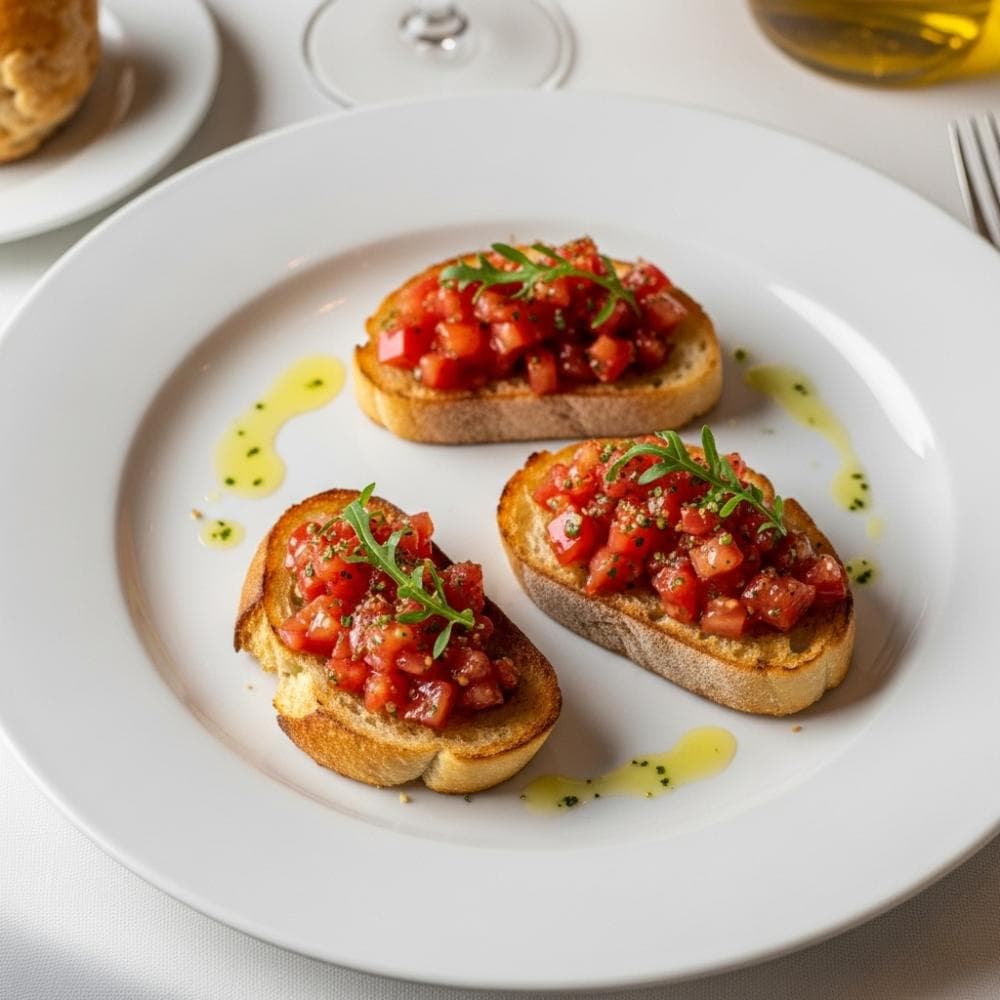
Classic Bruschetta
A fresh and flavorful Italian appetizer featuring slices of toasted bread rubbed with garlic, topped with a vibrant mixture of diced fresh tomatoes, basil, and a drizzle of olive oil. Perfect for two.
The Quick Answer
With raw tomatoes, basil, garlic, and toast, bruschetta succeeds or fails on small chemistry choices in assembly. When you drizzle the balsamic glaze and oil, and how the basil is handled, change both the look and the flavor more than people expect.
Why does the balsamic glaze go on after the topping, not into it?
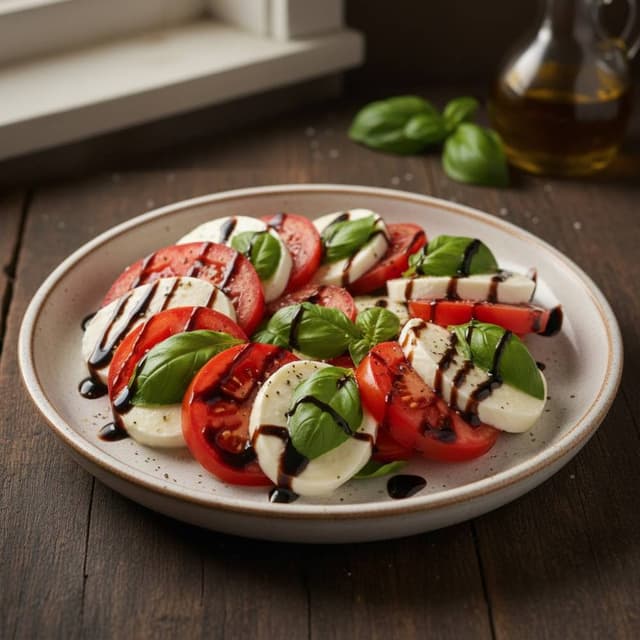
Balsamic glaze is reduced, sweet, and acidic, and its job is a finishing contrast against the fresh tomatoes and grassy basil. Stirred into the tomato bowl, that extra acid would draw even more water out of the diced tomatoes by osmosis, worsening the runoff that soaks the toast, and its dark color would muddy the bright red mixture into a dull brown. Drizzled over the assembled bruschetta at the end, it sits on the surface as glossy streaks, delivering sweet-sour pops bite by bite. The olive oil works the same way: applied as a final drizzle it stays as distinct, fruity slicks rather than being absorbed and diluted into the watery tomato liquid.
Why does my basil turn black on the bruschetta?
Cut basil bruises and blackens because chopping ruptures its cells, releasing enzymes that oxidize the leaf's phenolic compounds on contact with air and metal. A dull knife or aggressive mincing crushes more cells and speeds the darkening, and acid from the tomatoes and balsamic accelerates the color loss further. To keep the basil green, tear or roll-cut the leaves with a sharp blade and add them close to serving rather than letting them sit in the salted, acidic tomato mix. Since the recipe assembles and serves immediately, timing the basil last preserves both its color and its volatile aroma compounds, which fade fast once the leaf is broken.
Not sure what to cook next? Let the generator pick your next dish in one click.
Random Recipe GeneratorAbout This Recipe
What is this dish?
Bruschetta is an Italian appetizer of thick-cut bread grilled until charred, rubbed with a raw garlic clove, drizzled with extra virgin olive oil, and topped with a fresh tomato mixture seasoned with basil, salt, and pepper. The name comes from the Italian verb bruscare, meaning 'to roast over coals.' It originated as a way to taste fresh olive oil at harvest time and has become one of the most iconic Italian antipasti worldwide.
Why you'll love it
Bruschetta demonstrates that great Italian cooking is about exceptional ingredients, not complicated technique. When made with truly good tomatoes, excellent olive oil, fresh basil, and bread properly grilled and rubbed with garlic, the result is stunning despite its simplicity. It takes 15 minutes and tastes like summer on a plate.
When to serve
Bruschetta is the perfect summer appetizer when tomatoes are at peak ripeness. Serve it at outdoor dinner parties, barbecues, and Italian-themed gatherings before pasta or grilled meats. It also works as a light lunch alongside a salad. The critical rule: serve it immediately after assembling — this is not a dish that waits.
Quick tips
Use peak-season tomatoes — they make or break the dish entirely. Salt, drain, and gently press the diced tomatoes to prevent soggy bread. Rub the raw garlic clove on the bread while it's still hot from the grill. Assemble and serve immediately without holding.
Ingredient Highlights
Ripe Tomatoes
The entire dish depends on tomato quality. Use peak-season vine-ripened or heirloom tomatoes in summer. In winter, cherry tomatoes — which maintain better flavor year-round — or oven-roasted tomatoes are the best alternatives. The tomatoes should smell intensely, sweetly of tomato.
Crusty Italian Bread
Ciabatta and sourdough are the best choices — their open crumb and sturdy structure hold the topping without immediate sogginess. Slice 1/2 to 3/4 inch thick. The bread must be grilled or toasted well enough to develop char marks and real crunch while staying slightly chewy in the center.
Raw Garlic
Rubbed directly onto the hot, rough surface of the toasted bread — not chopped and scattered. The coarse, toasted bread acts like a fine grater, releasing garlic oils into the surface. One clove rubbed vigorously provides perfect garlic flavor without being overpowering.
Extra Virgin Olive Oil
Must be excellent quality — fruity, peppery, and freshly pressed if possible. The olive oil is a primary flavor in this dish, not just a cooking medium. Drizzle generously over both the bread and finished bruschetta. Neutral oil cannot substitute.
Substitution Options
Cherry tomatoes can substitute for larger tomatoes year-round — halve them and toss with salt, olive oil, and basil. Sourdough can replace ciabatta and actually gives a slightly better char. Balsamic glaze (not sharp regular balsamic vinegar) can be drizzled over the finished bruschetta for sweetness and visual appeal. Fresh oregano can partially substitute for basil in a pinch. White beans (cannellini) can be added to the tomato mixture for extra substance and protein. Fresh mozzarella or creamy burrata can be added for a caprese-bruschetta hybrid.
You'll likely need to buy
Likely in your pantry
Step-by-Step Instructions
Prepare the tomato topping
In a medium bowl, combine 2 large diced tomatoes, 1/4 cup chopped fresh basil leaves, 1 tablespoon olive oil, 1/4 teaspoon salt, and 1/8 teaspoon black pepper. Stir gently to combine. Let this mixture sit for at least 5 minutes to allow the flavors to blend.
Chef's Tips
- ›Dicing tomatoes evenly ensures a good texture in the topping.
- ›Letting the mixture sit helps the flavors meld together.
Toast the bread
Preheat your oven to 400°F (200°C), or heat a grill pan or large skillet over medium heat. Arrange 4-6 slices of bread on a baking sheet (if using oven) or directly on the hot pan. Toast for 3-5 minutes per side, or until golden brown and crispy. Remove from heat. While still warm, gently rub one side of each toasted bread slice with the peeled 1 clove garlic. This adds a subtle garlic flavor.
Chef's Tips
- ›Toasting the bread prevents it from getting soggy from the tomato mixture.
- ›Rubbing with garlic infuses a pleasant aroma.
Assemble and serve
Spoon a generous amount of the tomato and basil mixture onto the garlic-rubbed side of each toasted bread slice. Drizzle with 1 tablespoon balsamic glaze over the assembled bruschetta. Serve immediately as an appetizer.
Chef's Tips
- ›Assemble just before serving to maintain the crispness of the bread.
- ›Balsamic glaze adds a sweet and tangy finish.
Chef's Tips
Techniques that separate good from great
Use the best tomatoes available — this dish lives or dies by tomato quality
Bruschetta is one of the purest expressions of a single ingredient, which means quality is everything. In summer, use sun-ripened vine tomatoes, heirlooms, or San Marzanos at peak ripeness — they should smell intensely of tomato when you hold them. In winter, roasting less-than-perfect tomatoes at 300°F for 45 minutes concentrates their flavor and sweetness dramatically. Avoid mealy supermarket tomatoes; the whole dish will taste flat.
Salt, drain, and press the tomatoes to prevent soggy bread
Dice the tomatoes, toss with a generous pinch of salt, and let them sit in a colander for 15-20 minutes. Salt draws out the excess water (you'll see significant liquid pooling below). Press gently to remove more. This concentrates the tomato flavor while eliminating the liquid that would turn your beautifully toasted bread into a wet, soggy disappointment within seconds of assembling.
Rub raw garlic on the bread while it's hot from the grill
The correct technique is to cut a peeled garlic clove in half and rub the cut face vigorously over the rough, porous surface of the just-grilled bread. The heat of the bread activates and releases the garlic oils and compounds into the bread as you rub. The rough, toasted surface acts like a fine grater. Don't chop garlic and sprinkle — rubbing whole garlic is the authentic method and produces a completely different, more complex garlic flavor.
Use excellent extra virgin olive oil and apply it generously
The olive oil is not just a finishing drizzle — it's a primary flavor component. Use the best extra virgin olive oil you can afford, something peppery and grassy like a Sicilian or Tuscan varietals. Drizzle generously over both the garlic-rubbed bread and the finished bruschetta. In Italian cuisine, olive oil is used with a heavy hand, not as a precious garnish. A good olive oil will be noticeably peppery and fragrant, not neutral.
Nutrition Facts
Per serving · Estimated values
* Estimated per serving based on a 2,000 calorie diet.
Equipment Needed
- Medium bowl
- Baking sheet or grill pan/large skillet
- Knife and cutting board
- Measuring cups
- Measuring spoons
As an Amazon Associate we earn from qualifying purchases — at no extra cost to you.
Quick Tips
- For a deeper garlic flavor, you can finely mince the garlic and mix it directly into the tomato topping.
- Ensure tomatoes are ripe and flavorful for the best results.
- You can add a tiny pinch of red pepper flakes to the tomato mixture for a subtle kick.
Recipe Variations
Different ways to make this dish your own
Bruschetta with Burrata
Top the garlic-rubbed bread with a full portion of creamy burrata, then spoon the seasoned tomato mixture over and around it. Finish with basil, olive oil, and sea salt. This is the most indulgent, impressive variation that turns bruschetta into a proper course.
White Bean Bruschetta (Bruschetta al Fagioli)
Spread a layer of smashed, garlicky cannellini beans on the bread before adding the tomatoes. This classic Tuscan combination adds protein, creaminess, and a subtle earthiness. Drizzle with your best olive oil and fresh rosemary.
Mushroom Bruschetta
Replace the tomato topping with sautéed mushrooms (cremini, porcini, or a wild mix) cooked in olive oil, garlic, thyme, and a splash of white wine. Top with Parmesan shavings. A wonderful fall and winter alternative when tomatoes aren't at their peak.
Prosciutto and Fig Bruschetta
Top the bread with a thin slice of prosciutto, quartered fresh figs, a drizzle of honey, and peppery arugula. Finish with olive oil and coarsely cracked black pepper for a sweet-savory-bitter combination that feels celebratory.
What to Serve With
Perfect pairings to complete the meal
As a Classic Italian Aperitivo Starter
Arrange bruschetta on a wooden board alongside olives, thinly sliced prosciutto, and a wedge of Parmigiano-Reggiano for a simple Italian antipasto spread before a pasta dinner. The bruschetta provides crunch and freshness while the cured meats add richness. Pour a glass of chilled Prosecco or Campari spritz alongside for the complete Italian aperitivo experience.
With Burrata for an Elevated Version
Place a generous ball of fresh burrata on each piece of bruschetta before adding the tomato topping. The creamy, milky interior of the burrata melts slightly under the room-temperature tomatoes, creating a rich, indulgent base that makes bruschetta feel like a proper first course rather than a snack. Finish with torn fresh basil, a crack of black pepper, and quality olive oil.
As a Summer Outdoor Party Appetizer
Bruschetta is perfect for outdoor entertaining because it requires no heating at serving time and guests can eat it standing up. Prepare large batches of drained tomato topping and grilled bread slices ahead of time and set up a self-serve station. Keep the bread and tomatoes in separate bowls so guests assemble their own, ensuring the bread stays crispy.
As a Light Lunch with Soup
Two or three pieces of bruschetta alongside a bowl of minestrone, ribollita, or tomato soup make a satisfying and light Italian-style lunch. The bread's crunch provides textural contrast to the soup, and the flavors of garlic, olive oil, and tomato bridge between the bruschetta and most Italian soups beautifully. Add a simple green salad to complete the meal.
Storage & Reheating
Keep it fresh and plan ahead
Refrigerator
Store the tomato topping in an airtight container for up to 2 days — it actually improves as the flavors meld. Store grilled bread slices in a paper bag at room temperature for up to 1 day. Never store assembled bruschetta — the bread will be completely soggy within 30 minutes.
Freezer
Bruschetta does not freeze well in any form. The tomato topping loses its fresh texture upon freezing, and bread quality degrades. Make fresh for best results.
Make-Ahead
The tomato topping can be made up to 4 hours ahead (drain and season, then refrigerate). Grill the bread up to 2 hours ahead and store at room temperature in a paper bag. Rub with garlic just before serving (the garlic gets harsh as it sits). Assemble at the last possible moment — ideally right as guests arrive.
Reheating
Bruschetta is a room-temperature dish and should not be reheated. If the bread has softened, re-toast briefly in a toaster oven or under a broiler for 2 minutes, let cool for 30 seconds, then assemble fresh. The tomato topping should be served at room temperature — take it out of the fridge 20-30 minutes before serving.
Cooking tonight?
Get a month of dinners like this — done for you
30 chef-tested dinners mapped to the month, plus 5 ready-to-shop grocery lists. One-time $8.99 — 30 dinners planned for you, zero nightly decisions.
See the 30-Day Plan →Got Leftovers?
Turn what you already have in your fridge into delicious meals. Our AI-powered generator creates personalized recipes from your ingredients.
Go Deeper
Master the Culinary Science
Every recipe is a doorway. Our 7 Mastery Guides give you the science, technique, and framework to understand why food works — not just how to follow steps.
AI-Powered
Have Ingredients? Generate a Recipe.
Tell our AI what's in your fridge and get a custom recipe with image in seconds. No waste, no boredom.
Try the AI Recipe Generator →You Might Also Like
Discover more delicious recipes similar to what you're cooking