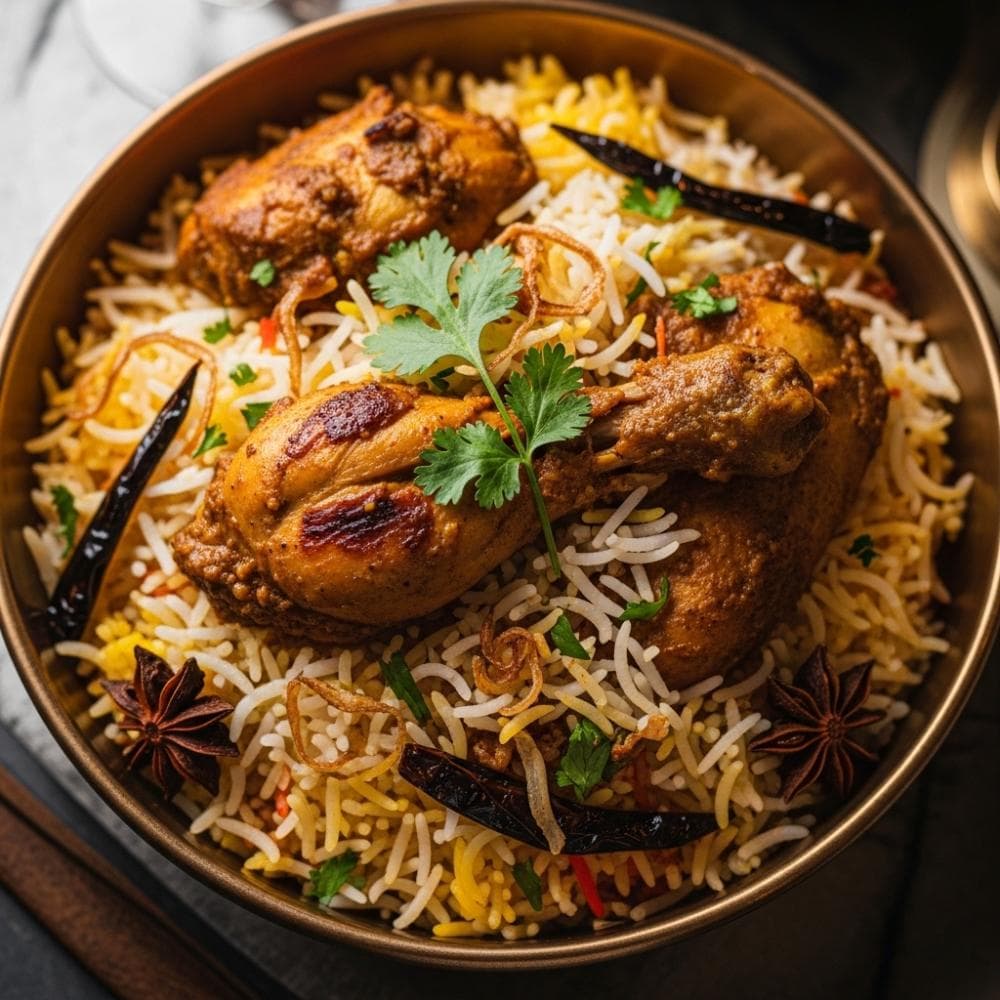
Classic Chicken Biryani
A fragrant and flavorful layered rice dish with tender marinated chicken, aromatic basmati rice, and a blend of traditional Indian spices. A comforting and special meal for two.
The Quick Answer
Biryani fails as a mushy clump or as crunchy raw grains depending on how the basmati is parboiled before the sealed dum stage. Boil the soaked rice in abundant salted water only until the grain bends but still resists at the center, drain at once, and let the trapped steam finish it gently under the lid.
Why does my biryani rice clump together instead of staying separate?
Two things glue basmati grains: surface starch and overcooking. As rice boils it sheds amylose and amylopectin into the water, and if that starchy film stays on the grains it acts like paste when they settle together during dum. Boiling in roughly four cups of water per cup of rice dilutes and rinses that loose starch away, which is why a large pot of water matters more than the exact timing. Draining the instant the grains are 70-80 percent done stops them gelatinizing further before layering. Adding the whole spices, cumin, cardamom, cinnamon and cloves to the boiling water also infuses the grains with aroma without any fat to make them tacky, keeping the finished biryani in distinct, perfumed strands.
Why does the chicken at the bottom of my biryani burn during dum?
During dum the pot is sealed and set on the lowest flame, so the only thing protecting the gravy from scorching is a buffer of moisture turning to steam. If the gravy cooks too dry or the flame creeps up, the sugars in the golden-browned onions and the yogurt marinade caramelize and then carbonize against the hot metal before the steam cycle establishes. Keep a little gravy moisture in the pot, use a heavy-bottomed Dutch oven that spreads heat, and start on the very lowest setting. The classic trick is to rest the sealed pot on a flat griddle or tawa, which diffuses the direct flame so the bottom layer steams the chicken rather than frying it onto the base.
Not sure what to cook next? Let the generator pick your next dish in one click.
Random Recipe GeneratorAbout This Recipe
What is this dish?
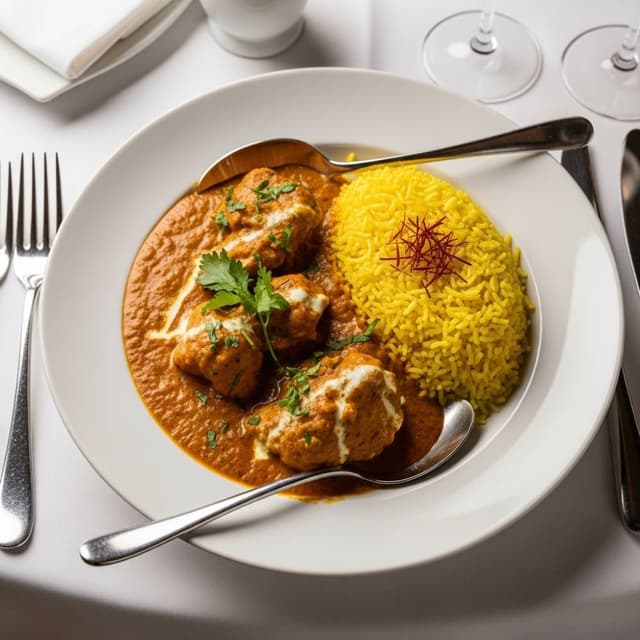
Classic chicken biryani is a fragrant, layered rice dish of South Asian origin in which marinated chicken and parcooked basmati rice are sealed together in a pot and slow-steamed using the dum cooking method. Layers of spiced, tender chicken alternate with fragrant saffron-tinted rice perfumed with whole spices, fried onions, fresh herbs, and ghee. Biryani is considered one of the great dishes of the world — a celebration food served at weddings, religious festivals, and family gatherings across the Indian subcontinent, the Middle East, and beyond.
Why you'll love it
Biryani rewards the cook with extraordinary depth of flavor relative to the effort involved — the dum cooking method does most of the work, creating aromatic rice that is fluffy, separate, and infused with the spiced braising liquid from the chicken below. The marinated chicken becomes exceptionally tender and flavorful from the yogurt and spice marinade. Every component — the crispy fried onions, the saffron rice, the spiced chicken — contributes something unique to each forkful, making biryani one of the most complex and satisfying single-dish meals you can make at home.
When to serve
Biryani is the dish of celebration in South Asian culture — it belongs at family gatherings, festive dinners, Eid celebrations, and dinner parties where you want to impress. It also makes a spectacular weekend project for a special Sunday dinner. Because it actually improves overnight, it's an excellent make-ahead dish for entertaining. Serve it with raita, kachumber salad, and salan for the full traditional experience.
Quick tips
Marinate the chicken overnight for maximum flavor penetration. Parboil the rice to exactly 70% done — it should still have a hard white center when bitten. Seal the pot tightly to trap steam during dum cooking. Let the biryani rest undisturbed for 10 minutes before opening. Fry the onions patiently until deeply golden — they are the key garnish that elevates the entire dish.
Ingredient Highlights
Basmati Rice
Long-grain aged basmati is the only acceptable rice for authentic biryani. Its extra-long grains elongate further during cooking, staying separate, fluffy, and fragrant with a characteristic nutty aroma. Soak the rice for at least 30 minutes before parboiling to ensure even cooking. The starch on the outside cooks off during soaking, contributing to the characteristic separate, non-sticky grains that define great biryani.
Chicken Pieces (Bone-In)
Bone-in chicken thighs and drumsticks are traditional — the bones add flavor to the braising liquid and the dark meat stays moist during the dum cooking process. The yogurt marinade tenderizes the chicken while the spices penetrate deeply. Boneless chicken breast can be used but requires shorter cooking time and is more prone to drying out.
Whole and Ground Spices
The complex spice blend is what makes biryani biryani — whole spices (bay leaves, cardamom, cloves, cinnamon, star anise) perfume the oil and rice, while ground spices (cumin, coriander, turmeric, chili, garam masala) penetrate the chicken in the marinade. The layering of whole spices in the rice and ground spices in the meat creates biryani's multi-dimensional aroma.
Fried Onions (Birista)
Thinly sliced onions slowly fried in oil until golden-brown and crispy are one of biryani's most important components — they add sweetness, crunch, and deep caramelized flavor that disperses throughout the dish. They are used both mixed into the chicken marinade (adding flavor) and scattered on top as garnish (adding texture). They can be made days ahead and stored at room temperature.
Saffron Milk
A few strands of saffron steeped in warm milk are drizzled over the top rice layer before sealing the pot. The saffron imparts its distinctive golden-yellow color and subtle floral, honey-like flavor to the top layer of rice, creating the beautiful two-toned appearance of yellow and white rice when the pot is opened.
Substitution Options
Replace chicken with lamb (increase cooking time by 20-30 minutes), goat, beef, shrimp (reduce cooking time significantly), or paneer and vegetables for a vegetarian version. Use jasmine or long-grain white rice if basmati is unavailable, though the texture and fragrance will differ. Replace saffron with a mixture of turmeric and a tiny pinch of food-grade rose water for color and aroma. Use yogurt-marinated paneer and vegetables for a vegetarian biryani. Add dried fruits (raisins, apricots) and nuts (cashews, almonds) for a Mughal-style sweet-savory variation. Replace ghee with butter or neutral oil for a dairy-reduced version.
You'll likely need to buy
Likely in your pantry
Step-by-Step Instructions
Marinate the chicken
In a medium bowl, combine the chicken pieces with 1/4 cup plain yogurt, 1 tablespoon ginger-garlic paste, 1/2 teaspoon red chili powder, 1/4 teaspoon turmeric powder, 1/2 teaspoon garam masala, and 1/4 teaspoon salt. Mix well to coat the chicken. Cover and let it marinate for at least 30 minutes in the refrigerator. This step adds flavor and tenderizes the chicken.
Chef's Tips
- ›Marinating longer, up to 2 hours, enhances flavor.
- ›Ginger-garlic paste is a common Indian aromatic base.
Cook the rice partly
Drain the soaked 1 cup basmati rice. In a medium pot, bring about 4 cups of water to a rolling boil. Add 1/2 teaspoon salt, 1/2 teaspoon whole cumin seeds, 2 green cardamom pods, 1 small cinnamon stick, and 2 cloves. Add the drained basmati rice and cook for 5-7 minutes, until the rice is about 70-80% cooked (it should still be a little firm in the center). Drain the rice immediately and set it aside.
Chef's Tips
- ›Cooking the rice partially ensures it finishes cooking evenly in the layered pot.
- ›Do not overcook the rice at this stage.
Prepare the chicken gravy
Heat 2 tablespoons ghee or vegetable oil in a heavy-bottomed pot or Dutch oven (the same one you will use for layering) over medium heat. Add the thinly sliced 1/2 large onion and cook for 8-10 minutes, stirring often, until it turns golden brown and soft. Stir in the marinated chicken pieces and 1 green chili (slit lengthwise). Cook for 5-7 minutes, stirring occasionally, until the chicken is lightly browned and starts to cook.
Chef's Tips
- ›Browning the onion well adds sweetness and color to the gravy.
- ›Cooking the chicken slightly before layering helps set its shape.
Layer and cook Biryani (Dum cooking)
Lower the heat to low. Spread half of the partially cooked rice evenly over the chicken gravy in the pot. Sprinkle with half of the fresh mint leaves (chopped) and half of the fresh cilantro (chopped). Layer the remaining rice over this. Drizzle the milk mixed with saffron strands (or colored milk) over the top of the rice. Cover the pot tightly with a lid. You can seal the lid with aluminum foil or dough for a tight fit (this is called 'dum' cooking). Cook on very low heat for 20-25 minutes, allowing the rice to steam and the flavors to blend.
Chef's Tips
- ›Dum cooking steams the rice and integrates flavors perfectly.
- ›A tight seal traps steam, ensuring even cooking.
Rest and serve
After cooking, remove the pot from heat and let it rest, still covered, for 10 minutes. This allows the steam to redistribute and the rice grains to become fluffy. Gently fluff the Biryani with a fork, mixing the layers. Garnish with 1/4 cup fried onions and 2 tablespoons fresh chopped cilantro. Serve immediately.
Chef's Tips
- ›Resting is crucial for fluffy rice and settled flavors.
- ›Serve gently to keep the distinct layers visible.
Chef's Tips
Techniques that separate good from great
Marinate the chicken overnight for the deepest flavor
Biryani marinade — yogurt, spices, and aromatics — needs time to fully penetrate the chicken. A minimum of 2 hours works, but overnight marination transforms the flavor entirely. The yogurt tenderizes the meat while the spices work their way deep into the muscle fibers. Cold-marinated chicken also gives you a head start on the cooking process, reducing active kitchen time.
Parboil the rice correctly — it should be 70% cooked
This is the most critical step that home cooks get wrong. Add rice to a large pot of heavily salted boiling water (it should taste almost as salty as the sea). Boil for exactly 5-6 minutes, then drain immediately. The rice should be cooked on the outside but still have a hard, white, chalky center when you bite a grain. It will finish cooking during the dum (steaming) phase inside the pot.
Seal the pot properly for genuine dum cooking
Traditional dum seals the pot with a rope of dough made from flour and water, trapping all steam inside. At home, cover the pot tightly with foil, then place the lid on top. Cook on medium-high heat for 5 minutes to build steam, then reduce to the lowest possible heat for 20-25 minutes. This gentle steaming on low heat is what makes biryani rice fluffy and separate rather than sticky.
Let the biryani rest for 10 minutes before opening
Opening the sealed pot immediately releases all the accumulated steam and can result in the top layer of rice being undercooked while the bottom is overdone. Resting allows the heat and moisture to distribute evenly throughout. When you do open it, use a large, flat spoon to fold the layers from bottom to top gently — avoid stirring aggressively, which breaks the rice grains.
Nutrition Facts
Per serving · Estimated values
* Estimated per serving based on a 2,000 calorie diet.
Equipment Needed
- Medium bowl (for marinating chicken)
- Medium pot (for cooking rice)
- Heavy-bottomed pot or Dutch oven (for gravy and layering)
- Spatula or wooden spoon
- Measuring cups
- Measuring spoons
- Knife and cutting board
As an Amazon Associate we earn from qualifying purchases — at no extra cost to you.
Quick Tips
- For a truly authentic flavor, ensure your spices are fresh and aromatic.
- You can make your own fried onions by thinly slicing an onion and frying it in oil until crispy.
- The spiciness can be adjusted by changing the amount of red chili powder and green chilies.
- Biryani often tastes even better the next day after the flavors have fully melded.
Recipe Variations
Different ways to make this dish your own
Lamb Biryani
Replace the chicken with bone-in lamb shoulder pieces. Brown the lamb thoroughly and increase the initial simmer time to 45-50 minutes before layering with rice. The gamier, richer lamb produces a more intensely flavored biryani that is especially prized in Lucknawi and Pakistani cooking traditions.
Vegetable Dum Biryani
Replace the chicken with a mixture of potatoes, cauliflower, carrots, green beans, and paneer marinated in the same yogurt-spice mixture. Layer with rice and dum cook as directed for a fully vegetarian biryani that is beloved in its own right across South India.
Hyderabadi Kacchi Biryani
Use raw (uncooked) marinated chicken directly in the bottom layer without pre-cooking — the chicken cooks entirely from the steam during dum. This Hyderabadi technique produces especially juicy chicken but requires precise heat management and longer dum cooking time of 35-40 minutes.
Biryani Rice Casserole
For a simpler weeknight version, cook the biryani components (spiced chicken and saffron rice) separately, then layer in a baking dish, cover with foil, and bake at 350°F for 25 minutes. Less theatrical than traditional dum but still deeply flavored.
What to Serve With
Perfect pairings to complete the meal
With Raita and Kachumber Salad
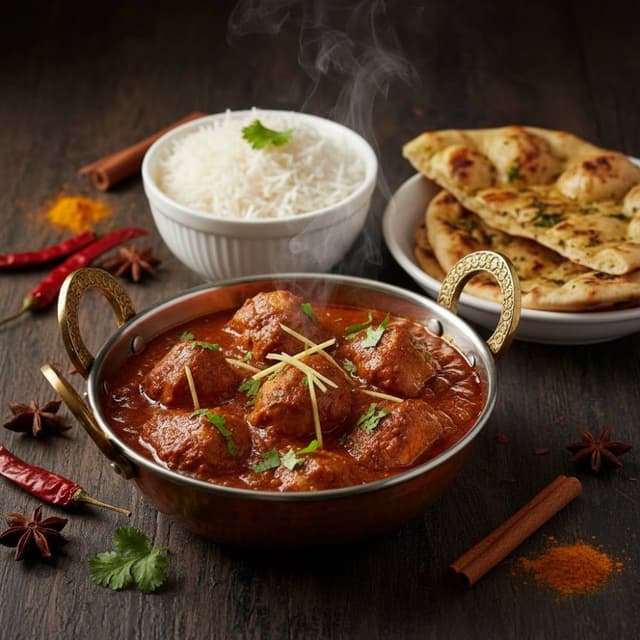
Biryani is traditionally served with raita — yogurt whisked with grated cucumber, fresh mint, cumin, and a pinch of salt. The cool, creamy raita provides essential contrast to the rich, spiced biryani. Add kachumber (a fresh chopped salad of tomatoes, onions, cucumber, and cilantro with lemon juice) for crunch and acidity. This combination is the definitive biryani pairing.
With Salan (Mirchi or Bagara)
In Hyderabadi tradition, biryani is served alongside a thin curry called salan — most commonly mirchi ka salan (spicy green chili curry in a peanut-sesame gravy). The tangy, nutty salan is spooned alongside the biryani and eaten together. This combination elevates a home-cooked biryani to restaurant quality and provides a saucy element to moisten each mouthful.
As a Festive Centerpiece
Biryani is the dish of celebration in South Asian cuisine — weddings, Eid, birthdays. Serve it dramatically at the table in the pot it was cooked in, opening the sealed lid at the table so the fragrant steam rises in front of your guests. Garnish with fried onions, fresh cilantro, mint leaves, saffron milk, and warm ghee drizzled over the top.
With Boiled Egg and Fried Potato
Hard-boiled eggs (halved) and fried potato wedges are classic biryani accompaniments in many regions of India. Fry potato chunks in oil until golden, season with chili powder and salt, and arrange alongside the biryani. The fried potatoes absorb the spiced rice flavors beautifully and add satisfying starchy texture. Halved eggs provide additional protein and visual contrast.
Storage & Reheating
Keep it fresh and plan ahead
Refrigerator
Store in an airtight container for up to 3-4 days. Biryani famously improves overnight as the spices meld and the flavors deepen. Separate the chicken from the rice if possible to make reheating easier and prevent the chicken from drying out while the rice warms through.
Freezer
Biryani freezes well for up to 3 months. Portion into individual servings before freezing for convenient reheating. The texture of the rice changes slightly after freezing — it may become a bit softer — but the flavor is largely preserved. Thaw completely in the refrigerator before reheating.
Make-Ahead
Marinate the chicken up to 24 hours ahead. Fry the onions up to 2 days ahead and store at room temperature — they stay crispy. The whole biryani can be assembled, cooked, cooled, and refrigerated up to 1 day ahead. Many biryani lovers intentionally make it a day ahead as the flavors develop beautifully overnight.
Reheating
Sprinkle 2-3 tablespoons of water over the biryani before reheating to prevent drying. Microwave in 2-minute increments, stirring between intervals, until steaming throughout. Alternatively, reheat in a covered pot on the lowest heat setting with a splash of water for 15-20 minutes. Drizzle with a little warm ghee before serving to restore richness.
Cooking tonight?
Get a month of dinners like this — done for you
30 chef-tested dinners mapped to the month, plus 5 ready-to-shop grocery lists. One-time $8.99 — 30 dinners planned for you, zero nightly decisions.
See the 30-Day Plan →Got Leftovers?
Turn what you already have in your fridge into delicious meals. Our AI-powered generator creates personalized recipes from your ingredients.
Go Deeper
Master the Culinary Science
Every recipe is a doorway. Our 7 Mastery Guides give you the science, technique, and framework to understand why food works — not just how to follow steps.
AI-Powered
Have Ingredients? Generate a Recipe.
Tell our AI what's in your fridge and get a custom recipe with image in seconds. No waste, no boredom.
Try the AI Recipe Generator →Browse more like this:
You Might Also Like
Discover more delicious recipes similar to what you're cooking