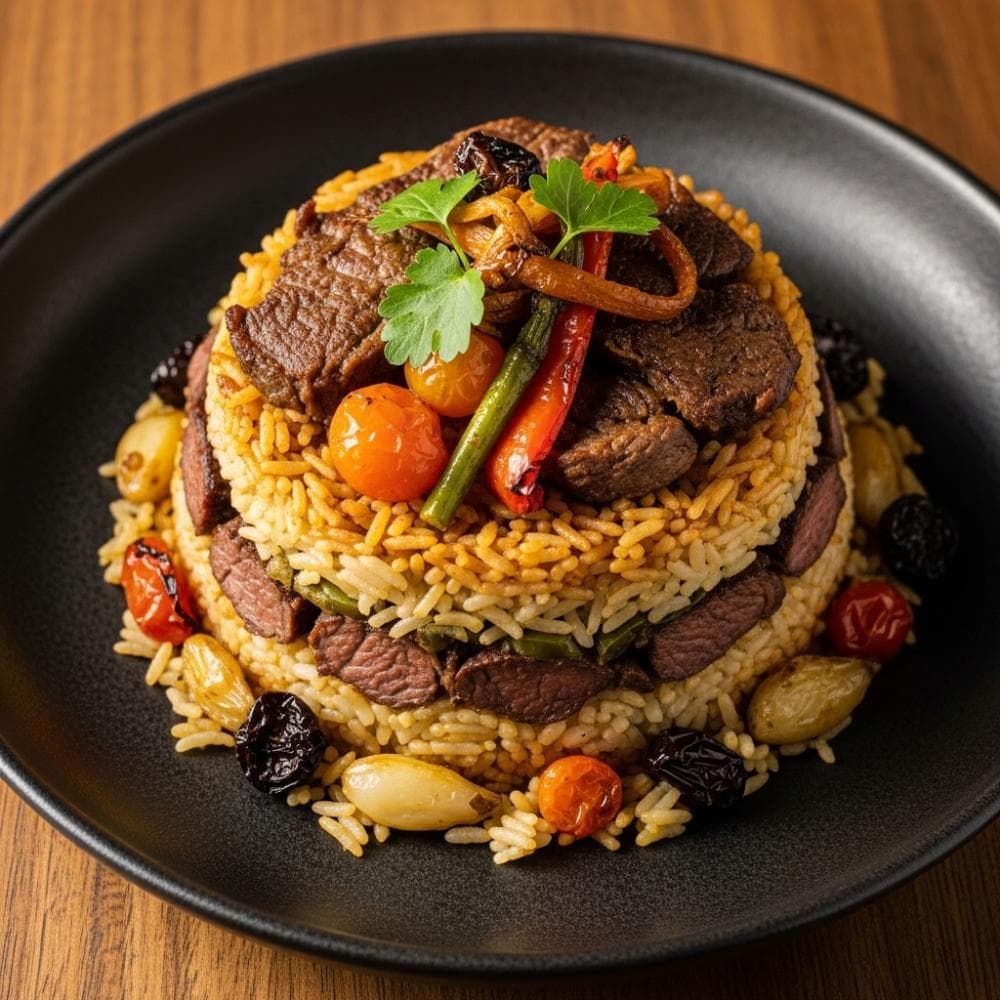
Classic Chicken Maqluba
A traditional Levantine dish featuring seasoned chicken, fried vegetables (like eggplant and cauliflower), and aromatic rice, all cooked in layers and then dramatically flipped upside down for serving. A flavorful and impressive meal for two.
The Quick Answer
Maqluba slumps on the flip when the bottom layer carries standing liquid or the rice is underdone, so the starch never gels enough to bind the stack into a sliceable cake. The molded shape depends on cooked basmati starch firming as the pot rests, plus a base layer dry enough not to pool.
Why does the tomato-and-potato base of my maqluba turn soggy and slide off the top after flipping?
The layer you arrange on the very bottom becomes the exposed top after inverting, and in this recipe that base is sliced tomato over fried potato, the two wettest elements in the pot. Tomato is mostly water and releases it as it cooks; if the potato slices underneath were fried only until pale rather than golden, they have not formed a firm surface and they soak that liquid up into mush. Frying the potato and eggplant until deeply browned sets a dehydrated, structured surface that resists going to paste. Arranging the tomato in a single tight layer rather than overlapping rounds also limits how much juice can pool against the base, so the top of the finished tower holds its slices instead of collapsing.
Why does the chicken layer in my maqluba taste bland compared with the rice?
Maqluba is built dry-spiced: the turmeric, allspice, and cinnamon are rubbed onto the chicken and the rice cooks in the 1 3/4 cups of broth, so flavor concentrates unevenly during the layered simmer. Because the lid stays on and nothing is stirred, seasoning cannot migrate between layers the way it does in a stew. Searing the chicken skin-side down first builds browned, fat-soluble flavor compounds that render into the drippings left in the pot, and spreading those drippings under the layers seasons the rice from below. Using the chicken-cooking liquid as the broth rather than plain store-bought stock carries that rendered flavor up through the grains, closing the gap between a well-seasoned chicken layer and flat rice.
Not sure what to cook next? Let the generator pick your next dish in one click.
Random Recipe GeneratorAbout This Recipe
What is this dish?
Classic Chicken Maqluba is a spectacular Levantine one-pot dish that translates to 'upside down' in Arabic, featuring layers of spiced chicken, fried vegetables like eggplant and cauliflower, and aromatic basmati rice cooked together in a pot, then dramatically flipped onto a serving platter to reveal the beautiful layered presentation. This iconic Palestinian, Jordanian, and Syrian dish represents celebratory home cooking at its finest, traditionally prepared for special occasions and family gatherings. The rice absorbs all the flavorful juices from the meat and vegetables as it cooks, while warm spices like turmeric, allspice, and cinnamon infuse every layer with Middle Eastern character. The theatrical flip onto a platter creates a stunning dome that showcases the colorful vegetables and golden rice.
Why you'll love it
This recipe delivers an impressive, restaurant-worthy presentation that looks far more complicated than it actually is to prepare. The layering technique allows the rice to absorb incredible flavor from the spiced chicken and vegetables, creating a dish where every component enhances the others. The fried eggplant and cauliflower add satisfying texture and richness, while the warm spices provide aromatic depth without overwhelming heat. The one-pot cooking method means minimal cleanup despite the complex flavors, and the dramatic flip never fails to impress guests. The dish is naturally gluten-free and dairy-free, and the combination of protein, vegetables, and rice makes it a complete, balanced meal that feeds a crowd.
When to serve
Maqluba is perfect for special occasions, family gatherings, and celebrations when you want to serve something impressive that showcases Middle Eastern culinary tradition. The dramatic presentation makes it ideal for dinner parties where you want a show-stopping centerpiece that sparks conversation. Serve it for holiday meals, potlucks, or any time you are cooking for a group and want a complete one-pot dish. The recipe scales easily for larger crowds and can be prepared partially ahead, with the final cooking and flip done just before serving. Pair with yogurt sauce, Arabic salad, and pickles for an authentic Middle Eastern feast.
Quick tips
Soak the basmati rice for 30 minutes before cooking to achieve fluffy, separate grains that do not clump together. Fry the eggplant and cauliflower in hot oil until golden and slightly crispy before layering — this adds flavor and prevents them from becoming mushy. Layer the ingredients carefully in the pot with vegetables on the bottom, then chicken, then rice, so when flipped the vegetables are beautifully displayed on top. Let the pot rest for 10-15 minutes after cooking before flipping to allow the rice to set slightly, making it less likely to fall apart. Flip confidently in one swift motion onto a large serving platter, then gently lift the pot to reveal your masterpiece.
Ingredient Highlights
Basmati Rice
Long-grain aromatic rice that stays fluffy and separate when cooked, essential for the layered structure of maqluba. Soaking the rice before cooking removes excess starch and ensures each grain cooks perfectly without sticking. Basmati has a subtle nutty flavor that does not compete with the spices and absorbs the chicken and vegetable juices beautifully.
Eggplant and Cauliflower
The traditional vegetables that provide textural contrast and visual appeal when the dish is flipped and revealed. Frying them first adds rich, caramelized flavor and prevents them from becoming watery or mushy during the rice cooking. These vegetables are staples in Middle Eastern cuisine and pair perfectly with warm spices.
Warm Spices
Turmeric, allspice, and cinnamon create the signature aromatic profile that defines Middle Eastern rice dishes. These warming spices infuse throughout all the layers as the dish cooks, adding depth and complexity without heat. The spices also give the rice its characteristic golden color.
Bone-In Chicken
Provides rich flavor and moisture as it cooks with the rice. Bone-in pieces stay juicier than boneless and their bones enrich the cooking liquid with flavor. Chicken thighs or drumsticks work best as they do not dry out during the extended cooking time.
Chicken Broth
The cooking liquid that ties everything together, providing savory depth that water cannot match. As the rice absorbs the broth, it becomes infused with chicken flavor and the spices suspended in the liquid. Use low-sodium broth to control salt levels.
Substitution Options
Replace chicken with lamb, beef, or make it vegetarian with chickpeas and extra vegetables. Use brown rice instead of white for a nuttier, healthier version, increasing liquid and cooking time. Swap eggplant with zucchini or potatoes, and cauliflower with carrots or green beans. Add tomatoes, bell peppers, or pine nuts for regional variations. Use ghee or butter instead of olive oil for richer flavor. Replace turmeric with saffron for a more luxurious version. For the rice, jasmine or long-grain white rice can substitute for basmati. Bake in the oven at 350°F instead of stovetop for more even cooking. Top with toasted nuts, fresh herbs, or fried onions for garnish. Serve with plain yogurt, cucumber-yogurt sauce, or a simple tomato-cucumber salad.
You'll likely need to buy
Likely in your pantry
Step-by-Step Instructions
Cook the chicken
Season the chicken thighs or drumsticks with 1/4 teaspoon salt, 1/8 teaspoon black pepper, 1/4 teaspoon ground turmeric, 1/4 teaspoon ground allspice, and 1/8 teaspoon ground cinnamon. Heat 1 tablespoon olive oil in a large, heavy-bottomed pot or Dutch oven over medium-high heat. Place the chicken skin-side down and cook for 5-7 minutes until the skin is golden brown and crispy. Flip and cook for another 5 minutes to brown the other side. Remove chicken from the pot and set aside. Keep the chicken drippings in the pot.
Chef's Tips
- ›Browning the chicken deeply adds great flavor and texture to the finished dish.
- ›Do not overcrowd the pot; cook in batches if needed.
Prepare and fry vegetables
While the chicken is cooking, prepare the vegetables. You can use the same pot as the chicken. Add the remaining 1 tablespoon olive oil if needed. Fry the eggplant slices in batches until golden brown on both sides. Remove to a plate lined with paper towels to drain any extra oil. Repeat with the cauliflower florets and potato slices until golden and tender. Season all fried vegetables lightly with a pinch of salt.
Chef's Tips
- ›Frying vegetables adds a necessary depth of flavor to Maqluba. You can use an air fryer or roast them for a lighter option.
- ›Draining oil is important to prevent the dish from being greasy.
Assemble the layers in the pot
Drain the soaked 1 cup basmati rice. In the same pot used for chicken (with its drippings), arrange the sliced tomato rounds on the very bottom in a single layer. Next, arrange the fried potato slices. Then, place the browned chicken pieces on top of the potatoes. Distribute the fried eggplant and cauliflower around and over the chicken. Sprinkle the thinly sliced 1/2 medium onion over the vegetables and chicken.
Chef's Tips
- ›Layering carefully ensures a beautiful presentation when the dish is flipped.
- ›Make sure the tomato slices are flat on the bottom for a good seal and flavor.
Add rice and cook
Evenly spread the drained basmati rice over the layers of chicken and vegetables. Gently pour 1 3/4 cups chicken broth over the rice. You want the broth to just cover the rice. Bring the pot to a boil over medium-high heat. Once boiling, reduce the heat to low, cover the pot tightly with a lid, and let it simmer (cook gently just below boiling, with small bubbles) for 30-45 minutes, or until all the liquid has been absorbed by the rice and the rice is tender. Do not lift the lid during this time.
Chef's Tips
- ›Simmer means to cook gently just below boiling, with small bubbles.
- ›A tight-fitting lid is essential for the rice to cook properly through steaming.
Flip and serve
Once the rice is cooked, remove the pot from the heat and let it rest, covered, for 10 minutes. This allows the steam to redistribute and the layers to settle. Place a large serving platter upside down over the top of the pot. Holding the pot and platter firmly together, carefully and quickly flip them over. Let the pot sit upside down on the platter for 5 minutes before gently lifting the pot to reveal the layered Maqluba. Garnish with 2 tablespoons toasted pine nuts and 2 tablespoons chopped fresh parsley. Serve immediately, often with a side of plain yogurt or a simple salad.
Chef's Tips
- ›The rest time before flipping is crucial for the Maqluba to hold its shape.
- ›Flipping quickly and confidently is key to a successful presentation.
Chef's Tips
Techniques that separate good from great
Soak the rice for 30 minutes — no shortcuts
Soaking basmati removes excess surface starch that would make the grains sticky and clump together during cooking. Thirty minutes is the minimum; longer is fine. The difference between soaked and unsoaked rice in maqluba is visible — soaked grains stay distinct and fluffy while unsoaked grains stick and form clumps in the layers.
Fry the vegetables until deeply golden
Lightly cooked eggplant and cauliflower turn mushy during the rice-cooking stage. Fry them until they're genuinely golden and have some crispness on the edges — they'll soften further in the pot, but starting from a firmer, more caramelized place means they retain texture and flavor in the finished dish.
Rest the pot for 10 full minutes before flipping
The rice needs those 10 minutes off heat with the lid on to finish steaming and to allow the bottom layer to set slightly. Flipping too early while the rice is still loose will cause the entire structure to collapse. Use a timer — the wait is worth it.
Flip with confidence in one swift motion
Hesitation causes spills. Place the largest platter you have over the pot, press down firmly with one hand on the platter and the other gripping the pot handle, count to three, and flip decisively in one continuous motion. Lower the pot to the platter before lifting to reveal. Even a slightly imperfect flip tastes amazing.
Nutrition Facts
Per serving · Estimated values
* Estimated per serving based on a 2,000 calorie diet.
Equipment Needed
- Large, heavy-bottomed pot or Dutch oven (oven-safe)
- Large serving platter
- Spatula or tongs
- Paper towels
- Measuring cups
- Measuring spoons
- Knife and cutting board
- Small skillet (for toasting nuts)
As an Amazon Associate we earn from qualifying purchases — at no extra cost to you.
Quick Tips
- For a truly traditional flavor, consider finding a Middle Eastern '7 Spice' blend for seasoning the chicken and rice.
- You can vary the vegetables based on preference; potatoes, carrots, or even bell peppers are common additions.
- The beauty of Maqluba is in its presentation. Do not worry if it is not perfect on the first try; it will still be delicious!
Recipe Variations
Different ways to make this dish your own
Lamb Maqluba
Replace the chicken with bone-in lamb shoulder pieces. Brown the lamb well and increase the cooking time — simmer for 45-50 minutes before layering with the rice. The lamb's richer flavor produces a more intensely savory maqluba.
Vegetarian Maqluba
Omit the meat entirely and double the vegetables — add sliced potatoes, cauliflower, and eggplant all fried separately before layering. Use vegetable broth as the cooking liquid for a fully plant-based version.
Maqluba with Pine Nuts and Raisins
Toast pine nuts and soak golden raisins in warm water, then scatter both over the serving platter after inverting for a sweet-savory topping common in the Palestinian Levantine tradition.
Beef Maqluba
Use beef short rib pieces or bone-in beef chuck for a hearty variation. Brown the beef deeply for fond, then simmer for 60-70 minutes until tender before layering with the vegetables and rice.
What to Serve With
Perfect pairings to complete the meal
With Plain Yogurt or Raita
Serve a bowl of plain yogurt or cucumber-yogurt sauce alongside — the cool, tangy dairy cuts through the warm spiced rice and rich chicken beautifully and is the traditional accompaniment throughout the Levant.
With a Tomato-Cucumber Salad
A simple salad of diced tomato, cucumber, parsley, lemon juice, and olive oil provides refreshing contrast to the hearty, aromatic rice and makes the meal feel complete and balanced.
Garnished with Toasted Pine Nuts and Fried Onions
Scatter toasted pine nuts and crispy fried onion rings over the top immediately after flipping — they add textural contrast and visual drama that makes the presentation genuinely spectacular for guests.
As a Celebration Centerpiece
Bring the whole pot to the table and perform the flip in front of guests — the theatrical reveal of the layered dish is part of the experience and always generates excitement. Serve with Arabic flatbread for a full Middle Eastern feast.
Storage & Reheating
Keep it fresh and plan ahead
Refrigerator
Store in an airtight container for up to 3 days. The rice will absorb remaining moisture and the layers will compress — it reheats beautifully with a splash of broth added.
Freezer
Freeze in portions for up to 2 months. Thaw overnight in the refrigerator. The texture of the vegetables softens further after freezing but the flavors remain excellent.
Make-Ahead
Fry the vegetables and cook the chicken up to 1 day ahead. Assemble and cook the full dish 1-2 hours before serving and keep warm covered. The flavors improve as it sits.
Reheating
Reheat covered in the microwave with 2 tablespoons of water for 2-3 minutes, or in a covered pan over low heat with a splash of broth for 8-10 minutes until heated through.
Cooking tonight?
Get a month of dinners like this — done for you
30 chef-tested dinners mapped to the month, plus 5 ready-to-shop grocery lists. One-time $8.99 — 30 dinners planned for you, zero nightly decisions.
See the 30-Day Plan →Got Leftovers?
Turn what you already have in your fridge into delicious meals. Our AI-powered generator creates personalized recipes from your ingredients.
Go Deeper
Master the Culinary Science
Every recipe is a doorway. Our 7 Mastery Guides give you the science, technique, and framework to understand why food works — not just how to follow steps.
AI-Powered
Have Ingredients? Generate a Recipe.
Tell our AI what's in your fridge and get a custom recipe with image in seconds. No waste, no boredom.
Try the AI Recipe Generator →Browse more like this:
You Might Also Like
Discover more delicious recipes similar to what you're cooking