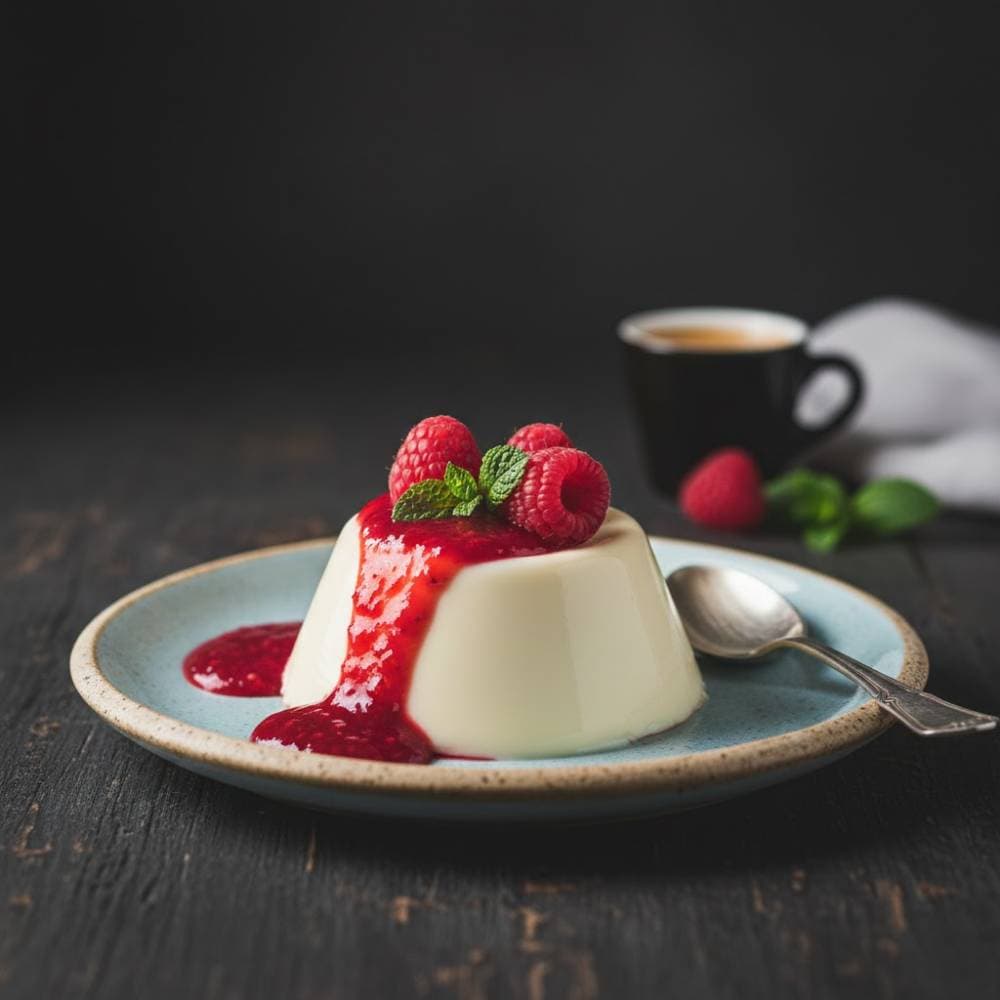
Classic Italian Panna Cotta (Silky Vanilla Dessert)
An elegant, creamy Italian dessert that literally means 'cooked cream.' This delicate, silky custard wobbles perfectly on the plate and melts in your mouth. Surprisingly easy and make-ahead friendly.
The Quick Answer
Panna cotta lives or dies on gelatin handling and a clean, silky finish, so the two pitfalls are a custard that turns rubbery and one that tears or skins when you serve it. Use just enough gelatin in cream that is hot but never boiling, then strain and unmold carefully so the surface stays glass-smooth.
Why is my panna cotta rubbery and bouncy instead of silky?
The hallmark of good panna cotta is a delicate wobble that barely holds its shape, and that depends on using just enough gelatin. The 2 1/4 teaspoons here is calibrated to roughly three cups of cream and milk; adding more, or reducing the dairy without reducing the gelatin, produces a dense, rubbery set that springs back like jelly. The high proportion of heavy cream keeps the texture luxurious because fat softens the gel network, which is why swapping cream for milk firms it up. Straining the mixture before chilling removes any undissolved gelatin specks that would otherwise create tough spots in the smooth custard.
Why strain panna cotta and unmold it in warm water?
Two small steps protect the silky finish. Straining the warm mixture through a fine-mesh sieve catches stray vanilla-bean fibres and any partly dissolved gelatin granules, both of which would set into gritty specks or tough lumps in an otherwise glass-smooth custard. Pressing plastic wrap directly on the surface during chilling stops a skin forming as surface proteins and fat dry out. To unmold cleanly, dip the ramekin base in hot water for five to ten seconds: the heat melts only the thin outer layer of set gelatin against the dish, breaking the suction so the custard slides out intact instead of tearing. Run a thin knife around the rim first to release the edge.
Not sure what to cook next? Let the generator pick your next dish in one click.
Random Recipe GeneratorAbout This Recipe
What is this dish?
Panna cotta — Italian for 'cooked cream' — is one of Italy's most elegant and effortless desserts. Silky, barely-set cream sweetened with sugar and flavored with vanilla, thickened with a small amount of gelatin to create a delicate wobble. It requires no oven, no temperature monitoring, and no special equipment, yet the result is a dessert of extraordinary refinement that shimmers and melts on the tongue. Originating in Piedmont in northern Italy, it is the perfect make-ahead dessert.
Why you'll love it
Panna cotta is the rare dessert that is genuinely effortless to make yet looks and tastes extraordinarily sophisticated. It requires only 10 minutes of active work, can be made up to 3 days ahead, and is endlessly versatile — the vanilla base can be paired with almost any topping. The silky, barely-set texture is unlike any other dessert, melting instantly as it hits the warmth of your mouth.
When to serve
Panna cotta is ideal for dinner parties because it must be made ahead and holds in the refrigerator for days. It works beautifully as a light, elegant dessert after a rich main course, when something sweet but not heavy is desired. Serve with seasonal fruit compote in summer, a warm caramel sauce in autumn, or a rich chocolate ganache in winter.
Quick tips
Bloom gelatin in cold water before adding to warm cream — never skip this step. Do not boil the cream as it can prevent proper setting. The panna cotta needs at least 4 hours to set, overnight is ideal. Test the wobble before serving: it should jiggle softly but hold its shape when unmolded.
Ingredient Highlights
Heavy Cream
The defining ingredient — panna cotta means 'cooked cream' and the high fat content of heavy cream creates the signature silky, luxurious texture. Using all heavy cream gives a rich, indulgent result. Substituting some with whole milk creates a lighter version that still sets well.
Gelatin
The setting agent that gives panna cotta its characteristic soft, trembling texture. The amount of gelatin is critical — too much creates a rubbery dessert, too little produces one that will not unmold. The standard ratio is 2 1/4 teaspoons per 3 cups of liquid for a soft, wobbling panna cotta.
Vanilla Bean
Split vanilla beans scraped into the cream infuse an intense, complex vanilla flavor with visible black specks. The heat opens the bean's flavor compounds into the cream during gentle heating. Pure vanilla extract can substitute, added off the heat after the cream cools slightly.
Whole Milk
Added in a smaller amount alongside heavy cream to slightly lighten the texture while maintaining creaminess. The ratio of cream to milk affects both richness and the ease of setting — more cream creates a firmer, richer result.
Substitution Options
Replace 1 cup of heavy cream with whole milk for a lighter panna cotta. Use coconut cream and agar-agar powder (1.5 teaspoons) for a vegan version — agar must be boiled to activate, unlike gelatin. Almond extract (1/2 teaspoon) can replace vanilla for a different flavor. For flavored panna cotta, infuse the cream with coffee beans, lemon zest, or cardamom pods during heating. Honey can replace sugar for a floral sweetness. Serve with fresh berries and coulis, salted caramel, chocolate ganache, or a fruit compote.
You'll likely need to buy
Likely in your pantry
Step-by-Step Instructions
Bloom the gelatin
Pour 3 tablespoons cold water into a small bowl. Sprinkle 2 1/4 teaspoons (1 packet) unflavored gelatin powder evenly over the water. Let it sit for 5 minutes without stirring. The gelatin will absorb the water and swell—this is called 'blooming.' It should look wrinkled and gel-like.
Chef's Tips
- ›Don't stir the gelatin while blooming—just let it sit.
- ›Cold water is essential; warm water will activate the gelatin too early.
Heat the cream mixture
In a medium saucepan, combine 2 1/2 cups heavy cream, 1/2 cup whole milk, 1/2 cup sugar, and a pinch of salt. If using a vanilla bean, split it lengthwise with a sharp knife and scrape out the seeds. Add both the seeds and the pod to the saucepan. Place over medium heat and stir occasionally until the sugar dissolves and the mixture is hot but not boiling, about 5-7 minutes. Small bubbles should form around the edges. If using vanilla extract instead, wait to add it until after the gelatin.
Chef's Tips
- ›Don't let the mixture boil—it should just be hot enough to dissolve the gelatin.
- ›Using a vanilla bean gives the best flavor and those beautiful vanilla specks.
Dissolve the gelatin
Remove the saucepan from the heat. Add the bloomed gelatin to the hot cream mixture. Whisk gently but thoroughly for 1-2 minutes until the gelatin is completely dissolved and no lumps remain. If using vanilla extract instead of a vanilla bean, stir in 2 teaspoons of vanilla extract now. Remove and discard the vanilla bean pod if used.
Chef's Tips
- ›Make sure the gelatin is fully dissolved or the panna cotta won't set properly.
- ›Run a spatula along the bottom to check for any undissolved gelatin.
Strain and pour
Place a fine-mesh strainer over a large measuring cup or bowl with a pouring spout. Pour the cream mixture through the strainer to remove any bits of vanilla bean or undissolved gelatin. Divide the strained mixture evenly among 4-6 ramekins (4 oz / 120ml size works well), small serving bowls, or wine glasses. You should have about 3 cups of mixture total.
Chef's Tips
- ›Straining ensures a perfectly smooth texture.
- ›Lightly oil the ramekins with neutral oil if you plan to unmold the panna cotta later.
Chill until set
Let the panna cotta cool at room temperature for 15-20 minutes. Cover each ramekin with plastic wrap (press it directly on the surface to prevent a skin from forming). Transfer to the refrigerator and chill for at least 4 hours, or preferably overnight, until fully set. The panna cotta should wobble gently when shaken but hold its shape.
Chef's Tips
- ›Don't rush this step—patience is key for the perfect texture.
- ›Panna cotta can be made up to 3 days ahead.
Serve
Serve the panna cotta directly in the ramekins, or unmold them: Run a thin knife around the edge of each ramekin, dip the bottom in hot water for 5-10 seconds, then invert onto a serving plate. Top with fresh berries, berry coulis, fruit compote, caramel sauce, or a drizzle of honey. Garnish with fresh mint leaves if desired.
Chef's Tips
- ›If serving in the ramekin, top with berries and coulis for an elegant presentation.
- ›The wobble is part of the charm—panna cotta should jiggle, not be firm like Jell-O.
Chef's Tips
Techniques that separate good from great
Bloom gelatin in cold water until it becomes spongy — never add to hot liquid directly
Gelatin granules must absorb cold water first (blooming) before being dissolved in warm liquid. Adding dry gelatin directly to hot cream causes uneven dissolution and lumps. Bloom in 3 tablespoons of cold water for 5 minutes until the texture is spongy, then stir into warm (not boiling) cream.
Heat cream to steaming but never boiling — boiling kills gelatin's setting power
Excessive heat degrades gelatin's proteins, weakening or destroying its ability to set. Heat the cream until it steams and small bubbles form at the edges (about 180°F), then remove from heat before adding bloomed gelatin. Boiling will result in panna cotta that never sets properly.
Test the set before serving: tap the ramekin side gently
A properly set panna cotta will jiggle like firm jello throughout — the entire surface should wobble as one piece. If the center is liquid while the edges have set, it needs more chilling time. If it does not wobble at all, too much gelatin was used. The ideal is a soft, uniform jiggle.
Unmold by briefly dipping the ramekin base in warm water
Run a thin knife around the top edge, then set the ramekin in a shallow dish of very warm water for 10 seconds. The warmth slightly melts the outer edge, creating an air gap. Place a plate over the ramekin and flip decisively. If it does not release immediately, a few gentle shakes will help.
Nutrition Facts
Per serving · Estimated values
* Estimated per serving based on a 2,000 calorie diet.
Equipment Needed
- Medium saucepan
- Whisk
- Fine-mesh strainer
- Measuring cups and spoons
- 4-6 ramekins or small serving bowls
- Plastic wrap
- Knife (for vanilla bean)
As an Amazon Associate we earn from qualifying purchases — at no extra cost to you.
Quick Tips
- For coffee panna cotta, add 2 tablespoons instant espresso powder to the cream mixture.
- For chocolate panna cotta, whisk in 4 oz melted dark chocolate after dissolving the gelatin.
- If you prefer a less rich version, substitute 1 cup of the heavy cream with additional whole milk.
Recipe Variations
Different ways to make this dish your own
Coffee Panna Cotta
Add 2 tablespoons of instant espresso powder to the warm cream mixture before adding the gelatin. The coffee flavor is subtle but unmistakable, and the dessert takes on a beautiful pale mocha color.
Chocolate Panna Cotta
Add 3 oz of finely chopped dark chocolate (70% cacao) to the warm cream and stir until fully melted and smooth. The gelatin amount can be reduced slightly since chocolate contributes to setting.
Lemon or Limoncello Panna Cotta
Infuse the cream with the zest of 2 lemons during heating, then strain. Add 2 tablespoons of limoncello off the heat for an Italian summer version with bright, refreshing citrus flavor.
Panna Cotta with Strawberry Coulis
Make a quick strawberry coulis by blending 1 cup of hulled strawberries with 2 tablespoons of sugar and a squeeze of lemon. Strain and pour over unmolded panna cotta for a classic presentation.
What to Serve With
Perfect pairings to complete the meal
Fresh Seasonal Berries and Mint
The simplest and most elegant presentation — a small mound of fresh raspberries, strawberries, or blueberries on top of the unmolded panna cotta with a sprig of fresh mint. The bright, acidic fruit contrasts perfectly with the sweet, rich cream.
Salted Caramel Sauce
A drizzle of warm, homemade salted caramel provides a bittersweet, slightly smoky complement to the vanilla cream. The salt in the caramel amplifies both flavors and creates a sophisticated, restaurant-worthy presentation.
Poached Stone Fruit
In summer, gently poach halved peaches or apricots in white wine with sugar and vanilla, then serve warm alongside the cold panna cotta. The temperature contrast and fruit sweetness make for an extraordinary pairing.
Amaretti Cookies and Amaretto
Serve alongside small, crispy amaretti cookies with a splash of amaretto drizzled over the panna cotta. The bitter almond flavor is a classic Italian pairing with vanilla cream desserts.
Storage & Reheating
Keep it fresh and plan ahead
Refrigerator
Panna cotta stores exceptionally well for up to 4-5 days. Cover individual ramekins tightly with plastic wrap pressed directly on the surface to prevent a skin from forming. The flavor actually improves on days 2-3 as the vanilla infuses further.
Freezer
Not recommended. Freezing causes the gelatin structure to break down, creating a watery, grainy texture when thawed. Always enjoy panna cotta directly from the refrigerator.
Make-Ahead
Panna cotta is the ideal make-ahead dessert for dinner parties. Make it up to 3 days ahead, cover each ramekin with plastic wrap, and store in the refrigerator. Unmold just before serving or serve directly in the ramekins.
Reheating
Panna cotta is served cold — it should never be reheated. Remove from the refrigerator 5 minutes before serving for the best texture and flavor. Cold straight from the fridge slightly mutes the vanilla aroma.
Cooking tonight?
Get a month of dinners like this — done for you
30 chef-tested dinners mapped to the month, plus 5 ready-to-shop grocery lists. One-time $8.99 — 30 dinners planned for you, zero nightly decisions.
See the 30-Day Plan →Got Leftovers?
Turn what you already have in your fridge into delicious meals. Our AI-powered generator creates personalized recipes from your ingredients.
Go Deeper
Master the Culinary Science
Every recipe is a doorway. Our 7 Mastery Guides give you the science, technique, and framework to understand why food works — not just how to follow steps.
AI-Powered
Have Ingredients? Generate a Recipe.
Tell our AI what's in your fridge and get a custom recipe with image in seconds. No waste, no boredom.
Try the AI Recipe Generator →You Might Also Like
Discover more delicious recipes similar to what you're cooking