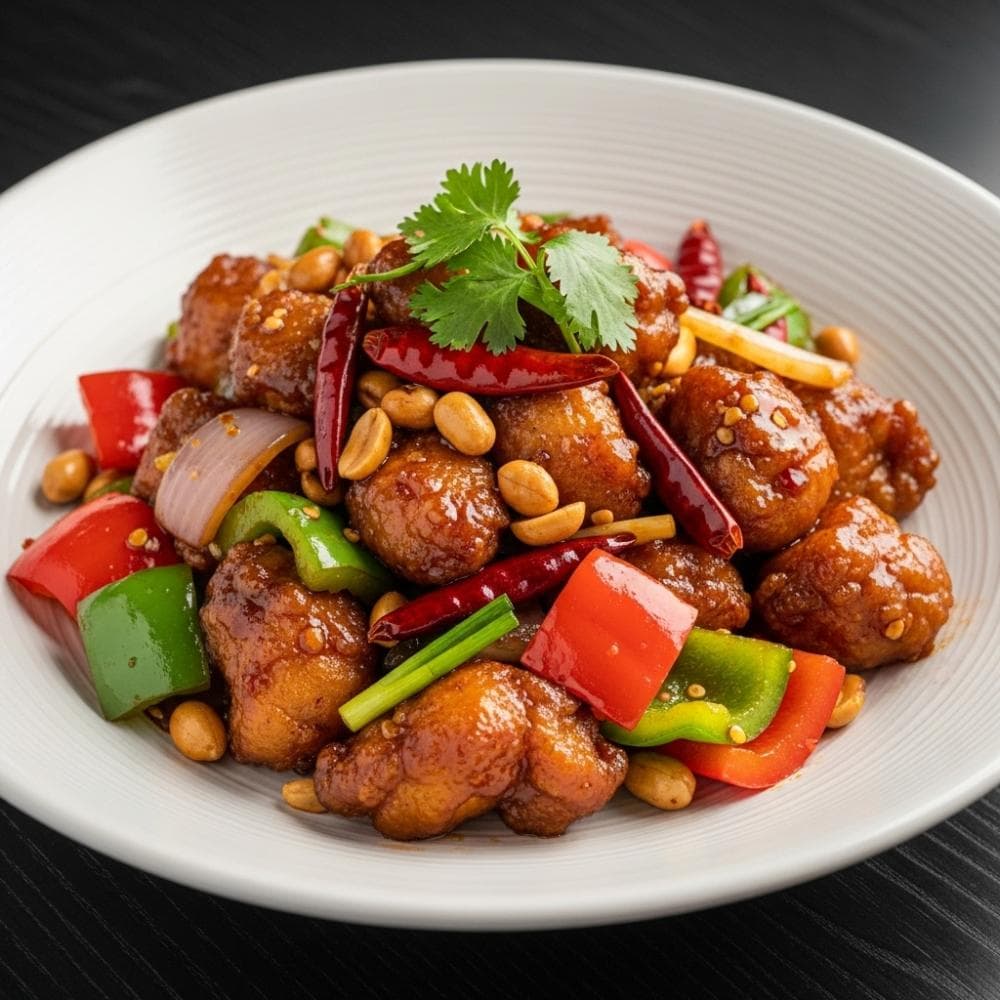
Classic Kung Pao Chicken
A famous Chinese stir-fry with tender chicken pieces, crunchy peanuts, and a mix of bell peppers and green onions, all tossed in a bold and spicy sauce. A quick and exciting meal for two.
The Quick Answer
Kung pao turns out gray and steamed with a watery sauce when a cool, overcrowded wok lets the chicken poach in its own released juices instead of searing. Cook over high heat in batches and stir the cornstarch sauce in only at the end, where it gelatinizes into a glossy coat that clings to each cube.
Why is my kung pao chicken pale and watery instead of seared?
Stir-frying needs a wok hot enough to flash off moisture the instant the chicken touches metal, which is what lets the Maillard reaction brown the surface above roughly 300°F. Dump in the full 1/2 pound at once and the cold mass drops the pan below that threshold; the cubes release water, the wok floods, and you boil rather than sear, hence the gray, limp result. The cornstarch in the marinade (velveting) forms a thin film that protects the meat and helps it brown, but it cannot rescue a crowded, cooled wok. Sear the chicken in one or two loose batches and leave each batch undisturbed for a few seconds before tossing, so the surface sets before it starts shedding juice.
Why won't my kung pao sauce thicken and coat the chicken?
The glossy cling comes from cornstarch, whose granules swell and burst to thicken only once the sauce reaches a near-boil, around 200°F (starch gelatinization). Pour it into a wok that has cooled, or add it too early and let it sit, and it stays thin and slides off. Re-whisk the bowl right before pouring, because the cornstarch settles to the bottom within minutes and the sugar and black vinegar separate out. Stream it into a ripping-hot wok and stir constantly so it gels within seconds into a lacquer-like coat. One caution specific to this sauce: do not boil it hard for long, prolonged high heat and the acidity of the black vinegar break the starch gel back down and it thins out again.
Not sure what to cook next? Let the generator pick your next dish in one click.
Random Recipe GeneratorAbout This Recipe
What is this dish?
Classic Kung Pao Chicken is one of the most famous dishes from Sichuan province in China, featuring tender chicken pieces stir-fried with dried red chilies, Sichuan peppercorns, crisp bell peppers, green onions, and roasted peanuts in a bold, complex sauce that balances sweet, sour, salty, and spicy flavors. This iconic dish is named after a Qing Dynasty official, Ding Baozhen, whose official title was Kung Pao, and represents the distinctive flavor profile of Sichuan cuisine with its characteristic mala (numbing-spicy) sensation from Sichuan peppercorns. Unlike the Americanized version often found in Chinese-American restaurants, authentic Kung Pao delivers complex heat and aromatic depth rather than just sweetness. The quick stir-fry technique keeps the chicken tender and vegetables crisp.
Why you'll love it
This recipe delivers authentic restaurant-quality Kung Pao at home with layers of flavor that far surpass typical takeout versions. The combination of tender chicken, crunchy peanuts, and crisp vegetables creates satisfying textural variety in every bite. The sauce is perfectly balanced — sweet from sugar, tangy from vinegar, savory from soy sauce, with heat from chilies and the unique tingling numbness from Sichuan peppercorns that defines Sichuan cuisine. The dish comes together quickly in one pan with minimal cleanup, making it perfect for weeknight dinners that taste exciting and complex. Marinating the chicken briefly ensures it stays tender during high-heat stir-frying.
When to serve
Kung Pao Chicken is perfect for weeknight dinners when you want takeout-quality Chinese food at home in less time than delivery. Serve it over steamed white or brown rice to soak up the flavorful sauce, or with fried rice for a more substantial meal. The dish works beautifully as part of a larger Chinese feast alongside dishes like hot and sour soup, spring rolls, and vegetable stir-fries. It is excellent for introducing friends to authentic Sichuan flavors beyond typical Americanized Chinese food. The relatively quick cooking time makes it ideal when you are craving bold, spicy flavors but do not have hours to cook.
Quick tips
Have all ingredients prepped and ready before you start cooking — stir-frying happens very quickly over high heat and requires constant attention. Toast the Sichuan peppercorns briefly in a dry pan before adding to release their essential oils and maximize the signature numbing sensation. Marinate the chicken for at least 15 minutes to tenderize and flavor the meat before cooking. Use the highest heat your stove can produce for authentic wok hei (breath of the wok) flavor and to keep ingredients crisp rather than steamed. Add the sauce at the end and toss quickly — overcooking makes it gloppy rather than glossy and coating.
Ingredient Highlights
Chicken Breast or Thigh
The protein base that absorbs the marinade and stays tender during high-heat stir-frying. Chicken thighs are more forgiving and stay juicier, while breasts are leaner. Cutting the chicken into uniform bite-sized pieces ensures even cooking. Marinating with cornstarch creates a protective coating that keeps the meat moist.
Sichuan Peppercorns
The signature ingredient that creates the unique mala (numbing-spicy) sensation that defines authentic Sichuan cuisine. These are not actually peppers but dried berries that produce a tingling, almost electric numbness on the tongue. Toasting them before use releases aromatic oils and intensifies the flavor. They are essential for authentic Kung Pao.
Dried Red Chilies
Provide the smoky heat that complements the numbing Sichuan peppercorns. Whole dried chilies are toasted briefly in oil to infuse their flavor throughout the dish without making it excessively spicy. Remove the seeds for less heat if desired. They add visual drama and authentic Sichuan character.
Roasted Peanuts
Add essential crunchy texture that contrasts with tender chicken and vegetables. Peanuts are traditional and provide nutty flavor and satisfying bite. Unsalted roasted peanuts work best to control sodium. The nuts should be added at the end to maintain their crunch.
Kung Pao Sauce
The complex sauce that balances sweet, sour, salty, and umami flavors. Made from soy sauce, black vinegar (or rice vinegar), sugar, cornstarch, and often chili oil or doubanjiang (fermented bean paste), it coats every ingredient with glossy, flavorful sauce. The sauce thickens quickly when added to the hot wok, creating a silky coating.
Substitution Options
Replace chicken with shrimp, tofu, or pork for different proteins, adjusting cooking times accordingly. Use cashews instead of peanuts for buttery, milder flavor, or sunflower seeds for a nut-free version. Swap Sichuan peppercorns with black pepper if unavailable, though the authentic numbing sensation will be missing. Use tamari instead of soy sauce for a gluten-free version. Replace Chinese black vinegar with rice vinegar or apple cider vinegar. Add vegetables like zucchini, water chestnuts, or snap peas for variety. Use chili garlic sauce or sriracha if you cannot find doubanjiang or chili oil. For less heat, reduce dried chilies or remove their seeds. Serve over cauliflower rice for a low-carb option, or with noodles for a different presentation.
You'll likely need to buy
Likely in your pantry
Step-by-Step Instructions
Marinate the chicken
In a medium bowl, combine the chicken pieces with 1 tablespoon soy sauce, 1 teaspoon Shaoxing wine or dry sherry, 1 teaspoon cornstarch, and 1/2 teaspoon sesame oil. Mix well to coat the chicken evenly. Let it sit for at least 15 minutes to marinate.
Chef's Tips
- ›Marinating helps the chicken become tender and flavorful.
- ›Shaoxing wine or dry sherry adds depth to Chinese dishes.
Prepare the sauce
In a small bowl, whisk together 1 tablespoon soy sauce, 1 tablespoon Chinese black vinegar or rice vinegar, 1 tablespoon sugar, 1 teaspoon chili garlic sauce (or doubanjiang), 1 teaspoon cornstarch, 2 tablespoons chicken broth or water, and 1/2 teaspoon sesame oil. Stir until the sugar and cornstarch are dissolved.
Chef's Tips
- ›Have the sauce ready before you start cooking, as stir-fries cook very quickly.
- ›Chinese black vinegar offers a unique tang; rice vinegar is a good substitute.
Stir-fry aromatics and chilies
Heat 1 tablespoon neutral oil in a large wok or skillet over medium-high heat. Add the 15-20 dried red chilies and 1/2 teaspoon Sichuan peppercorns (if using). Cook for 30 seconds to 1 minute, stirring constantly, until they are fragrant (smell pleasant and aromatic). Be careful not to burn them. Remove the chilies and peppercorns from the wok and set aside, leaving the flavored oil.
Chef's Tips
- ›Fragrant means it smells good and aromatic.
- ›Be careful not to burn the chilies, as they will become bitter.
Cook chicken and vegetables
Add the remaining 1 tablespoon neutral oil to the hot wok. Add the marinated chicken and cook for 3-5 minutes, stirring, until it is cooked through and lightly browned. Push the chicken to one side of the wok. Add the minced garlic and grated ginger to the empty side and cook for 30 seconds until fragrant. Add the red bell pepper pieces and green bell pepper pieces. Stir-fry for 2-3 minutes until they are tender-crisp.
Chef's Tips
- ›Tender-crisp means the vegetables are cooked but still have a slight bite.
- ›Do not overcrowd the wok; cook chicken in batches if necessary.
Combine and finish
Pour the prepared sauce into the wok, stirring constantly as it thickens. Add the cooked chicken, bell peppers, green onions, and the toasted peanuts. Return the reserved dried chilies and Sichuan peppercorns to the wok. Toss everything together vigorously to coat evenly. Cook for 1-2 minutes until everything is well combined and heated through.
Chef's Tips
- ›Stir the sauce well before adding to prevent the cornstarch from clumping.
- ›Tossing quickly ensures all ingredients are evenly coated.
Serve
Serve the Classic Kung Pao Chicken immediately with steamed white rice.
Chef's Tips
- ›Kung Pao Chicken is best enjoyed hot and fresh.
- ›You can adjust the spiciness by adding more or fewer dried chilies.
Chef's Tips
Techniques that separate good from great
Velvet the chicken with cornstarch
Toss the cut chicken pieces with a teaspoon of cornstarch before marinating. This creates a thin coating that protects the protein during high-heat cooking, keeping each piece tender and juicy rather than tough and chewy. It also helps the sauce cling to the chicken more effectively.
Mise en place is non-negotiable for stir-fries
Stir-frying over maximum heat moves faster than you can chop. Have every ingredient measured, cut, and positioned beside the stove before you heat the wok. Once the oil is hot and the chilies go in, there's no time to reach for anything — each ingredient needs to follow the next within seconds.
Toast Sichuan peppercorns separately
Add the Sichuan peppercorns to the cold oil and heat them together until they sizzle and become fragrant (about 30 seconds), then remove them and set aside. This blooms their essential oils fully without burning. Add them back at the end for maximum aromatic impact.
Add peanuts at the very last second
Peanuts need only warmth, not cooking. Adding them too early causes them to soften from the steam and sauce, losing the crunchy contrast that makes the dish textually interesting. Toss them in after removing from heat, right before plating.
Nutrition Facts
Per serving · Estimated values
* Estimated per serving based on a 2,000 calorie diet.
Equipment Needed
- Large wok or skillet
- Small bowls (for marinade and sauce)
- Whisk
- Spatula or tongs
- Measuring cups
- Measuring spoons
- Knife and cutting board
As an Amazon Associate we earn from qualifying purchases — at no extra cost to you.
Quick Tips
- For a gluten-free version, use tamari instead of regular soy sauce and ensure any chili sauce or doubanjiang is gluten-free.
- If you do not like spicy food, reduce the number of dried chilies or omit them entirely.
- Toasted peanuts add essential crunch; do not skip them!
- Prep all your ingredients (chop vegetables, mix sauces) before you start cooking, as stir-frying is very fast.
Recipe Variations
Different ways to make this dish your own
Kung Pao Shrimp
Replace the chicken with large peeled shrimp. Shrimp cook in just 2-3 minutes total, so add them last and cook until pink and curled. The lighter flavor of shrimp lets the numbing Sichuan heat and tangy sauce shine more intensely.
Kung Pao Cauliflower
Use large roasted cauliflower florets instead of chicken for a vegetarian version. Roast at 425°F until golden and slightly charred before adding to the wok. The caramelized cauliflower absorbs the sauce beautifully.
Extra Spicy Kung Pao
Double the dried chilies (leave the seeds in), add a tablespoon of doubanjiang (spicy fermented bean paste), and finish with a drizzle of chili oil for an intensely spicy, deeply complex version for heat lovers.
Kung Pao Noodles
Cook the sauce separately and toss with cooked lo mein or rice noodles instead of serving over rice. Add the chicken and vegetables on top for a noodle bowl version that's saucy, spicy, and deeply satisfying.
What to Serve With
Perfect pairings to complete the meal
Over Steamed Jasmine Rice
Serve over a mound of fluffy steamed jasmine rice — the neutral, slightly sticky rice is perfect for absorbing the glossy kung pao sauce and balancing the heat of the chilies.
As Part of a Chinese Feast
Pair with a bowl of hot and sour soup, steamed dumplings, and a simple bok choy stir-fry for a full Chinese restaurant experience at home — kung pao chicken works best as one dish among several rather than the sole focus of the meal.
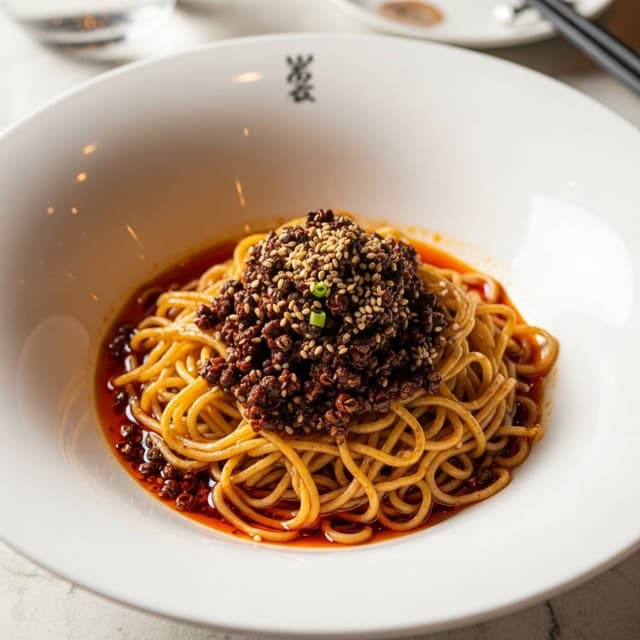
With Dan Dan Noodles
Serve alongside thin noodles tossed with sesame paste, soy, black vinegar, and chili oil for a Sichuan double feature — the noodles provide a different texture and absorb the spice-laden sauce beautifully.
In a Rice Bowl with Pickled Cucumber
Build a bowl with steamed rice, kung pao chicken, and quick-pickled cucumber (cucumber + rice vinegar + salt + pinch of sugar, 10 minutes) for a meal-prep friendly version that balances rich flavors with refreshing crunch.
Storage & Reheating
Keep it fresh and plan ahead
Refrigerator
Store in an airtight container for up to 3 days. The peanuts will soften over time — if this bothers you, store them separately and add fresh peanuts when reheating.
Freezer
Freeze without the peanuts for up to 2 months. Thaw overnight in the refrigerator and add fresh toasted peanuts when reheating and serving.
Make-Ahead
Marinate the chicken up to 24 hours ahead. Mix the sauce and prep all vegetables up to 4 hours ahead. Stir-fry right before serving for best texture — this dish does not benefit from sitting assembled.
Reheating
Reheat in a hot wok or skillet over medium-high heat for 3-4 minutes, tossing frequently, with a splash of water to loosen the sauce. Avoid the microwave, which makes the chicken tough and steams away the wok flavor.
Cooking tonight?
Get a month of dinners like this — done for you
30 chef-tested dinners mapped to the month, plus 5 ready-to-shop grocery lists. One-time $8.99 — 30 dinners planned for you, zero nightly decisions.
See the 30-Day Plan →Got Leftovers?
Turn what you already have in your fridge into delicious meals. Our AI-powered generator creates personalized recipes from your ingredients.
Go Deeper
Master the Culinary Science
Every recipe is a doorway. Our 7 Mastery Guides give you the science, technique, and framework to understand why food works — not just how to follow steps.
AI-Powered
Have Ingredients? Generate a Recipe.
Tell our AI what's in your fridge and get a custom recipe with image in seconds. No waste, no boredom.
Try the AI Recipe Generator →Browse more like this:
You Might Also Like
Discover more delicious recipes similar to what you're cooking