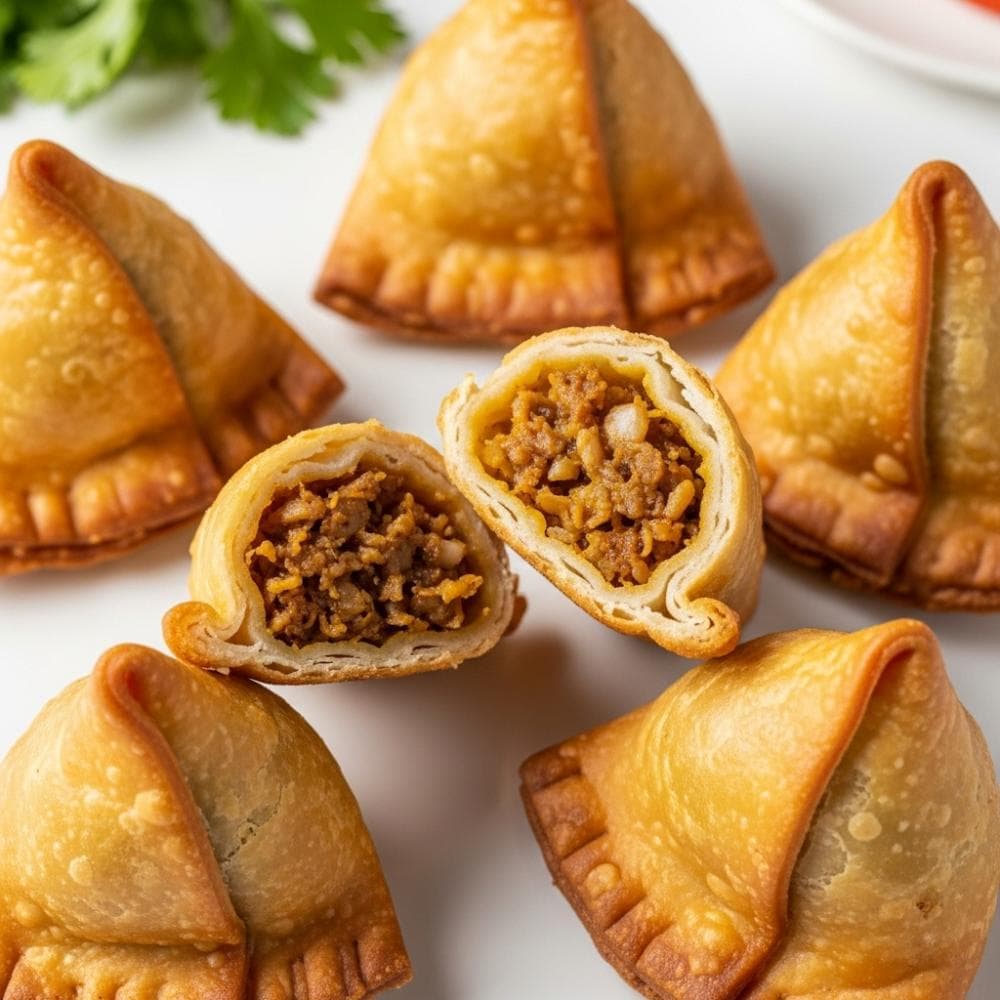
Classic Samosas
Crispy, triangular pastries filled with a delicious and aromatic mixture of spiced potatoes and green peas. Perfect as a flavorful snack or appetizer for two.
The Quick Answer
Samosas blister instead of staying glassy when the oil runs hot, and they split or weep grease at the seam when the cone is sealed or filled badly. Fry low at 300-325F so the stiff, fat-rubbed dough dehydrates evenly, and seal a clean overlap so steam cannot blow the seam open or let oil seep in.
Why do my samosas blister and bubble instead of staying smooth?
The glassy samosa shell depends on a stiff, low-water dough fried gently. The two tablespoons of oil rubbed into the flour (the moyan) coat the flour particles and limit gluten, giving short, crisp layers rather than a bready puff. When the oil runs hot the outer surface sets and browns before interior steam can leave evenly, so trapped vapour lifts the skin into pockets and blisters. Holding 300-325F across the long eight-to-twelve-minute fry lets moisture migrate out slowly while the surface stays taut. A blistered, bubbled shell is the reliable tell that the oil was too hot, not that the dough was wrong.
Why do my samosas leak grease or burst open at the seam?
A samosa is sealed twice: the cone seam and the top edge over the filling. If either is only pinched, not bonded with a wet overlap and firm pressure, the gap becomes the weak point. Hot oil seeps through an unsealed seam and saturates the dough from inside, giving the greasy, limp shell people blame on the oil temperature. The same gap lets steam from the potato-and-pea filling escape violently, which can split the pastry mid-fry. Overstuffing past the two-thirds mark stretches the dough thin at the join and forces it open. Moisten, overlap, and press each edge into a sealed lip, and add the back pleat so the samosa sits without rolling onto a weak seam.
Not sure what to cook next? Let the generator pick your next dish in one click.
Random Recipe GeneratorAbout This Recipe
What is this dish?
Classic Samosas are iconic triangular-shaped pastries from Indian and South Asian cuisine, featuring a crispy, flaky outer shell made from simple wheat dough encasing a spiced filling of potatoes, peas, and aromatic spices like cumin, coriander, garam masala, and turmeric. These beloved snacks and appetizers are deep-fried until golden brown and crispy, creating an irresistible contrast between the crunchy exterior and soft, flavorful filling. Samosas are a street food staple throughout India, Pakistan, Bangladesh, and beyond, served at celebrations, tea time, and as popular appetizers in Indian restaurants worldwide. They are traditionally accompanied by mint-cilantro chutney and sweet tamarind chutney for dipping.
Why you'll love it
This recipe delivers authentic, restaurant-quality samosas at home with perfectly crispy pastry that shatters when you bite into it, giving way to warmly spiced, satisfying filling. Making samosas from scratch allows you to control the spice level and filling ingredients while being more economical than buying them. The process of folding samosas into their distinctive triangular shape is surprisingly fun and meditative once you get the hang of it. While they do require some time and effort, samosas freeze beautifully uncooked, so you can make large batches and fry them as needed for quick snacks or appetizers. The combination of crispy, salty pastry and aromatic, mildly spiced potato filling is universally appealing and addictive.
When to serve
Samosas are perfect as appetizers for Indian-themed dinner parties, potlucks, and celebrations where finger food is needed. Serve them during Diwali, Ramadan iftars, or any festive gathering when traditional Indian snacks are called for. They work beautifully for afternoon tea or chai time, a beloved tradition in South Asian households. Samosas also make excellent party snacks, game day food, or after-school treats that both kids and adults love. Serve them hot with mint chutney, tamarind chutney, and sweet chili sauce for an authentic experience.
Quick tips
Make the dough with cold water and do not overknead it — overworking develops too much gluten, making the pastry tough rather than flaky. Let the dough rest for at least 30 minutes to relax the gluten and make it easier to roll thin. Seal the samosa edges tightly with water paste (flour mixed with water) to prevent them from opening during frying. Fry in oil heated to 350°F (175°C) — too hot and they burn before cooking through, too cool and they absorb oil and become greasy. Fry on medium heat for 10-12 minutes until deeply golden for the crispiest results.
Ingredient Highlights
All-Purpose Flour Dough
Forms the crispy, flaky pastry shell that makes samosas irresistible. The dough is made simply with flour, water, salt, and a bit of oil, which creates tender layers. Proper kneading and resting develop the right texture — not too tough, not too crumbly. The pastry should be rolled thin enough to be crispy when fried but thick enough to hold the filling.
Potatoes
The main filling ingredient that provides satisfying substance and creamy texture. Potatoes are boiled until tender, then mashed or chopped and mixed with spices. They absorb the aromatic spices beautifully while providing mild, comforting flavor. Potatoes are filling, affordable, and create the perfect base for the spice blend.
Green Peas
Add pops of sweetness, color, and texture that contrast with the soft potatoes. Peas provide additional nutrition including protein, fiber, and vitamins. Fresh or frozen peas work equally well — frozen are actually convenient and maintain good texture.
Aromatic Spices
Cumin seeds, coriander, garam masala, turmeric, and green chilies create the signature warm, complex flavor of samosa filling. These spices provide anti-inflammatory benefits and distinctive Indian character. The spices should be fragrant but not overwhelming, allowing the vegetables to shine through.
Substitution Options
Make the filling vegetarian with sweet potatoes, cauliflower, or paneer instead of regular potatoes. Add ground meat (lamb, beef, or chicken) for keema samosas with a completely different character. Use spring roll wrappers or phyllo dough if you do not want to make dough from scratch, though texture will differ. Bake at 400°F instead of deep-frying for a lighter version — brush generously with oil for best results. Replace green peas with corn, carrots, or lentils. Add raisins and cashews to the filling for a sweet-savory variation. Use gluten-free flour blend for the dough if needed. For air fryer samosas, cook at 375°F for 12-15 minutes, flipping halfway. Serve with various chutneys — mint-cilantro, tamarind, mango, or even ketchup for a fusion twist.
You'll likely need to buy
Likely in your pantry
Step-by-Step Instructions
Make the samosa dough
In a large bowl, combine 1 cup all-purpose flour and 1/4 teaspoon salt. Add 2 tablespoons vegetable oil and use your fingertips to rub it into the flour until the mixture looks like coarse breadcrumbs. Gradually add 1/4 cup + 1 tablespoon warm water, mixing until a firm dough forms. Knead the dough on a lightly floured surface for 5-7 minutes until it is smooth and elastic. Cover the dough with a damp cloth or plastic wrap and let it rest for 30 minutes. Resting makes the dough easier to roll.
Chef's Tips
- ›Rubbing the oil into the flour properly helps create a flaky crust.
- ›Letting the dough rest is important for a pliable (easy to bend) dough.
Prepare the filling
Boil and mash 1 large potato, leaving some small chunks for texture. Heat 1 tablespoon vegetable oil in a medium skillet over medium heat. Add 1/2 teaspoon whole cumin seeds and cook for 30 seconds until they sizzle. Add 1/4 teaspoon asafoetida (if using). Add the finely chopped 1/2 onion, 1 teaspoon grated ginger, and 1/2 green chili (finely minced). Cook for 5-7 minutes until the onion is soft and translucent. Stir in 1/2 cup green peas, 1/2 teaspoon ground coriander, 1/4 teaspoon turmeric powder, 1/4 teaspoon garam masala, 1/4 teaspoon amchur (if using), and 1/4 teaspoon salt. Cook for 1-2 minutes, stirring. Add the mashed potato and 2 tablespoons chopped fresh cilantro. Mix everything well and let the filling cool completely.
Chef's Tips
- ›Translucent means you can see through it, indicating it's soft.
- ›Cooling the filling is important to prevent the dough from tearing when shaping.
Shape the samosas
Divide the rested dough into 2-3 equal portions. Take one portion and roll it into a thin oval shape, about 6-7 inches long. Cut the oval in half lengthwise to create two semicircles. Take one semicircle and moisten one straight edge with a little water. Bring the two straight edges together to form a cone shape, pressing them firmly to seal. Fill the cone with 1-2 tablespoons of the cooled potato filling, filling it about two-thirds full. Moisten the remaining open edge with water and press firmly to seal the samosa into a triangle shape. You can create a small pleat on the back edge to help it stand. Repeat with remaining dough and filling. Keep shaped samosas covered with a damp cloth.
Chef's Tips
- ›Roll the dough as thinly and evenly as possible for a crisp samosa.
- ›Sealing well is crucial to prevent the samosas from opening during frying.
Fry the samosas
Pour 3-4 cups vegetable oil into a deep pot or Dutch oven, ensuring it's at least 2-3 inches deep. Heat the oil over medium-low heat to 300-325°F (150-165°C). Carefully lower 2-3 samosas into the hot oil. Do not overcrowd the pot. Fry for 8-12 minutes per batch, turning occasionally, until they are golden brown and crispy all over. The relatively lower heat cooks the inside dough without burning the outside. Remove cooked samosas and place them on a wire rack set over paper towels to drain any extra oil. Repeat with remaining samosas.
Chef's Tips
- ›Frying at a lower temperature first helps cook the dough inside and makes it flaky.
- ›A wire rack helps drain oil and keeps samosas crispy.
Serve
Serve the classic samosas hot with your favorite chutney, such as tamarind chutney or mint chutney.
Chef's Tips
- ›Samosas are best enjoyed fresh and hot.
- ›Pair with a sweet and tangy chutney for a traditional experience.
Chef's Tips
Techniques that separate good from great
Rest the dough before rolling
After kneading the samosa dough, cover it with a damp cloth and let it rest for at least 20-30 minutes. Resting relaxes the gluten, making the dough much easier to roll thinly without springing back. Thin dough is the key to crispy samosas — thick dough results in a doughy, bready crust rather than the delicate, flaky shell samosas are known for.
Cool the filling completely before filling
Adding hot filling to the dough softens it immediately and makes sealing impossible. The steam from warm filling can also create holes in the dough and cause bursting during frying. Let the potato filling cool to room temperature, or refrigerate it for 30 minutes before filling. Cold filling is firm and holds its shape better when folded.
Seal edges with a flour-water paste
Mix a thick paste of flour and water (about 1:1 ratio) and use it like glue to seal the samosa edges. Press firmly with your fingertips, then crimp decoratively to ensure a secure seal. Any gaps will cause the samosa to burst open during frying and the filling will escape into the hot oil, making a mess and leaving you with a hollow shell.
Fry at the right temperature — 325-350°F
Frying at too high a temperature browns the outside before the dough is fully cooked through, leaving the inner layers chewy. Too low and the samosas absorb excess oil and become greasy. Test with a small piece of dough — it should rise slowly to the surface within 3-4 seconds. Fry in batches to maintain oil temperature and turn occasionally for even browning.
Nutrition Facts
Per serving · Estimated values
* Estimated per serving based on a 2,000 calorie diet.
Equipment Needed
- Large mixing bowl
- Rolling pin
- Medium skillet (for filling)
- Deep pot or Dutch oven (for frying)
- Cooking thermometer (for oil, recommended)
- Wire rack
- Baking sheet (to set wire rack over)
- Paper towels
- Knife and cutting board
- Measuring cups
- Measuring spoons
As an Amazon Associate we earn from qualifying purchases — at no extra cost to you.
Quick Tips
- For a gluten-free option, you would need to use a gluten-free flour blend for the dough, though the texture may vary.
- You can make the filling and dough ahead of time. Store the dough in the refrigerator (wrapped tightly) for up to 2 days, and the filling for up to 3 days.
- Unfried samosas can be frozen on a baking sheet until solid, then transferred to a freezer-safe bag. Fry from frozen, adjusting time slightly.
Recipe Variations
Different ways to make this dish your own
Keema (Meat) Samosas
Replace the potato filling with spiced ground lamb or beef cooked with onions, peas, ginger, and garam masala until dry. Keema samosas are heartier and more savory than the vegetarian version and are extremely popular across South Asia.
Sweet Potato Samosas
Swap regular potatoes for roasted sweet potatoes and add 1/2 teaspoon of cinnamon and a handful of dried cranberries for a sweet-savory filling with warming spices — excellent for autumn entertaining.
Baked Samosas
Brush the assembled samosas generously with oil and bake on a lined sheet at 400°F for 25-30 minutes, turning once halfway, until golden and crispy. They are less oily than fried versions but still develop satisfying crunch.
Mini Cocktail Samosas
Make samosas at half the standard size for two-bite party appetizers. Use the same dough and filling, just divide each portion into smaller triangles. Mini samosas are easier to eat standing up and look beautiful arranged on a platter.
What to Serve With
Perfect pairings to complete the meal
With Fresh Mint-Cilantro Chutney
The classic pairing that cuts through the richness of the fried dough. Blend fresh mint, cilantro, green chili, garlic, lime juice, and a pinch of salt with just enough water for a bright, herbaceous dipping sauce. The coolness and acidity of the chutney perfectly balances the warm, spiced filling and crispy exterior.
With Masala Chai for Afternoon Snacking
In India, samosas and chai are an iconic pairing enjoyed at tea time. Brew strong Assam or Darjeeling tea with whole spices (cardamom, cinnamon, ginger), simmer with milk, and sweeten to taste. The warmth and spice of the chai harmonize with the samosa filling while the richness of the tea cuts through the oiliness of the fried pastry.
On a Chaat Plate with Chutneys and Yogurt
Crush the samosas slightly and arrange on a plate, then drizzle generously with sweet tamarind chutney, mint-cilantro chutney, and a spoonful of whisked yogurt. Top with chopped red onion, sev (crispy chickpea noodles), fresh cilantro, and a pinch of chaat masala. This transforms individual samosas into a full chaat dish called samosa chaat.
As Elegant Party Appetizers
Make mini samosas (about half the standard size) for bite-sized party snacks that can be eaten without utensils. Arrange on a platter with small bowls of dipping chutneys and fresh cilantro garnish. They can be fried a few hours ahead and crisped briefly in a hot oven before serving. Mini samosas also make excellent additions to an Indian-themed appetizer spread.
Storage & Reheating
Keep it fresh and plan ahead
Refrigerator
Store cooled fried samosas in an airtight container for up to 3 days. They will soften in the fridge but can be re-crisped easily. Unfried shaped samosas can be refrigerated on a tray for up to 24 hours before frying.
Freezer
Unfried samosas freeze beautifully for up to 3 months. Arrange on a baking sheet to freeze individually, then transfer to freezer bags. Fry directly from frozen, adding 2-3 extra minutes to the frying time. Fried samosas can also be frozen for up to 2 months but the texture suffers more upon thawing.
Make-Ahead
The potato filling can be made up to 2 days ahead and refrigerated. The dough can be made, rested, and refrigerated (wrapped tightly) for up to 1 day. Fully assemble and shape samosas up to 1 day ahead and refrigerate uncovered on a tray so they dry out slightly, which helps them fry up crisper.
Reheating
Re-crisp refrigerated or thawed samosas in a 375°F oven for 8-10 minutes, in an air fryer at 375°F for 5-6 minutes, or in a dry skillet over medium heat. Avoid microwaving as it makes the pastry soft and soggy. A brief oven reheat restores most of the original crispy texture.
Cooking tonight?
Get a month of dinners like this — done for you
30 chef-tested dinners mapped to the month, plus 5 ready-to-shop grocery lists. One-time $8.99 — 30 dinners planned for you, zero nightly decisions.
See the 30-Day Plan →Got Leftovers?
Turn what you already have in your fridge into delicious meals. Our AI-powered generator creates personalized recipes from your ingredients.
Go Deeper
Master the Culinary Science
Every recipe is a doorway. Our 7 Mastery Guides give you the science, technique, and framework to understand why food works — not just how to follow steps.
AI-Powered
Have Ingredients? Generate a Recipe.
Tell our AI what's in your fridge and get a custom recipe with image in seconds. No waste, no boredom.
Try the AI Recipe Generator →You Might Also Like
Discover more delicious recipes similar to what you're cooking