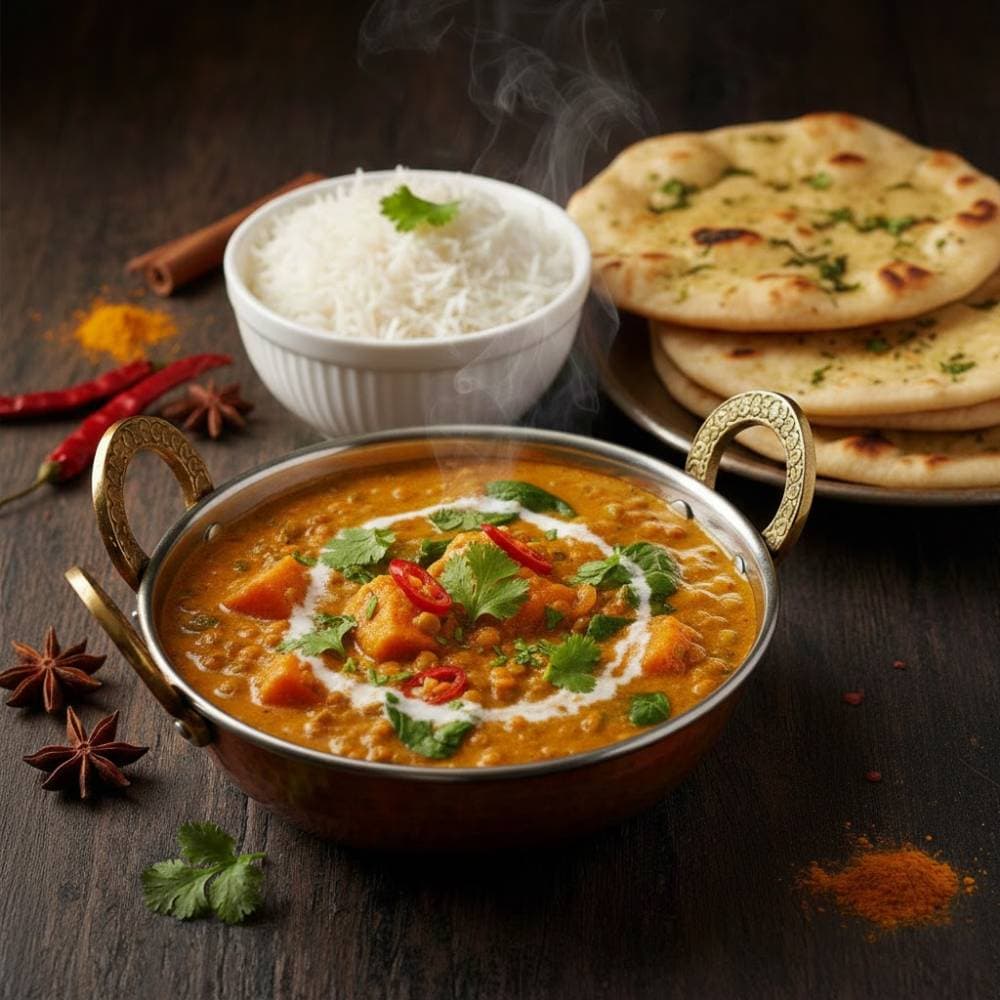
Coconut Lentil Curry (Vegan, One-Pot, Weeknight Friendly)
A hearty, creamy plant-based curry loaded with protein-rich red lentils, aromatic spices, and coconut milk. This one-pot wonder is wholesome, budget-friendly, and ready in under 40 minutes.
The Quick Answer
This red lentil curry can scorch on the bottom or turn gluey because red lentils dump starch and sink as they break down. Stir occasionally while it simmers and add the acidic tomatoes alongside the lentils from the start, since once you understand that red lentils are meant to collapse, the creamy texture becomes the goal rather than a flaw.
Why does my red lentil curry stick and scorch on the bottom?
Red lentils are split and hulled, so they have no skin to slow them down and they disintegrate fast, releasing a lot of starch into the pot. That starch thickens the curry but also settles to the bottom, where it sits against the hot metal and scorches if left alone, leaving a burnt taste through the whole batch. The rinse step matters here: washing the lentils until the water runs clear removes loose surface starch and cuts the foaming and sticking. During the 20-25 minute simmer, keep the heat at medium-low and stir occasionally to lift settled starch off the base. Partially covering the pot keeps the temperature gentle so the bottom never gets hot enough to catch.
Why won't my red lentils soften in coconut lentil curry?
If red lentils stay firm after a long simmer, the usual culprit is acid added too aggressively or lentils that are simply old. Acid from the diced tomatoes can slow the softening of legumes by firming their cell walls, though red lentils are forgiving enough that the recipe adds tomatoes with the cooking liquid and still cooks through in 20-25 minutes. The bigger issue is age: lentils stored for a year or more lose moisture and resist breaking down no matter how long you cook. Make sure there is enough liquid, since the coconut milk and broth must keep the lentils submerged to hydrate and gelatinize. If the curry thickens before they soften, add a splash more broth and keep simmering.
Not sure what to cook next? Let the generator pick your next dish in one click.
Random Recipe GeneratorAbout This Recipe
What is this dish?
Coconut lentil curry is a one-pot, plant-based marvel — red lentils simmered with warming Indian spices, canned tomatoes, and full-fat coconut milk until thick, creamy, and deeply flavorful. It is entirely vegan and gluten-free, yet so satisfying and rich-tasting that omnivores love it equally. Red lentils cook down to a smooth, creamy consistency that creates a naturally thick curry without any added cream or dairy.
Why you'll love it
This curry is the rare dish that is simultaneously cheap, easy, fast, healthy, and delicious. Red lentils need no soaking and cook in under 25 minutes. The coconut milk creates a natural creaminess without dairy. It delivers genuine Indian-spiced comfort food from entirely pantry-friendly ingredients in one pot with minimal cleanup.
When to serve
Coconut lentil curry is the perfect busy weeknight dinner — everything goes into one pot and it is ready in under 40 minutes. It is ideal for meal prep since it stores and freezes beautifully and improves with time. Serve it at plant-based dinner parties alongside naan and raita for a crowd-pleasing meal.
Quick tips
Rinse lentils until water runs clear to prevent foamy cooking. Bloom spices in hot oil for at least 60 seconds before adding liquid. Stir frequently in the final stage to prevent the thick lentils from sticking. Add greens only in the last 3 minutes to keep them vibrant.
Ingredient Highlights
Red Lentils (Masoor Dal)
The fastest-cooking legume — red lentils require no soaking and become tender in 20-25 minutes. Unlike green or brown lentils, red lentils break down completely during cooking, naturally creating the thick, creamy consistency that is the defining texture of this curry. Rich in protein and fiber.
Full-Fat Coconut Milk
The element that makes this curry remarkable. Canned full-fat coconut milk provides a silky creaminess, a subtle sweetness, and a rich mouthfeel that transforms the lentil base into something luxurious. The fat content also helps carry the spice flavors throughout the curry.
Curry Powder
The flavor backbone — a blend of turmeric, cumin, coriander, and chili that gives the curry its characteristic warmth and golden color. The quality of your curry powder significantly affects the final result. A fresh jar from an Indian grocery will taste far more vibrant than a stale supermarket version.
Fresh Spinach or Kale
Added in the last few minutes of cooking, leafy greens contribute iron, vitamins, and a fresh, slightly bitter contrast to the rich coconut base. Spinach wilts quickly and blends into the curry seamlessly. Kale takes a minute longer and retains more texture.
Substitution Options
Green or brown lentils can replace red lentils, but add 40-45 minutes to the cooking time and they will retain their shape rather than creating a creamy sauce. Use vegetable broth instead of water for extra depth. For a non-vegan version, replace coconut milk with heavy cream and coconut oil with butter. Baby spinach, frozen peas, or canned chickpeas can be used instead of or alongside the greens. Diced sweet potato, carrot, or cauliflower florets can be added with the onions for a more substantial, vegetable-rich version.
You'll likely need to buy
Likely in your pantry
Step-by-Step Instructions
Rinse the lentils
Place 1 cup of dried red lentils in a fine-mesh strainer and rinse under cold running water until the water runs clear. This removes excess starch and helps prevent foaming during cooking. Drain well and set aside.
Chef's Tips
- ›Red lentils cook faster than other varieties and break down into a creamy texture.
- ›Rinsing is important to prevent a gummy consistency.
Sauté the aromatics
Heat 2 tablespoons of coconut oil or vegetable oil in a large pot or Dutch oven over medium heat. Add 1 diced onion and cook for 5-6 minutes until soft and translucent. Add 3 cloves minced garlic and 1 tablespoon grated fresh ginger. Cook for 1 minute, stirring constantly, until fragrant.
Chef's Tips
- ›Coconut oil adds subtle coconut flavor that complements the curry.
- ›Make sure the garlic doesn't burn or it will taste bitter.
Add spices and toast
Add 1 tablespoon curry powder, 1 teaspoon ground cumin, 1 teaspoon ground coriander, 1/2 teaspoon turmeric, and 1/2 teaspoon chili powder to the pot. Stir well and cook for 1 minute until the spices are toasted and aromatic. This step, called 'blooming' the spices, releases their essential oils and deepens the flavor.
Chef's Tips
- ›Stir constantly to prevent the spices from burning.
- ›You'll know they're ready when the kitchen smells amazing.
Add liquids and lentils
Add the rinsed lentils to the pot and stir to coat them with the spice mixture. Pour in 1 can coconut milk, 1 can diced tomatoes (with their juice), 2 cups vegetable broth or water, 1 teaspoon salt, and 1/2 teaspoon black pepper. Stir well to combine and bring the mixture to a boil over high heat.
Chef's Tips
- ›Use full-fat coconut milk for a richer, creamier curry.
- ›The lentils will absorb liquid as they cook, so don't worry if it looks soupy at first.
Simmer the curry
Once boiling, reduce the heat to medium-low and cover the pot partially with a lid. Simmer for 20-25 minutes, stirring occasionally, until the lentils are soft and the curry has thickened to your desired consistency. If it becomes too thick, add a splash more broth or water. If too thin, simmer uncovered for a few extra minutes.
Chef's Tips
- ›Red lentils cook much faster than green or brown lentils.
- ›The curry will continue to thicken as it sits, so keep it slightly looser than your target consistency.
Add greens and finish
Stir in 2 cups of fresh spinach or chopped kale. Cook for 2-3 minutes until the greens are wilted and tender. Remove from heat and stir in 1 tablespoon lemon juice. Taste and adjust seasoning with more salt, pepper, or lemon juice as needed.
Chef's Tips
- ›Spinach wilts down significantly, so don't be shy about adding it.
- ›Lemon juice brightens the rich, creamy flavors.
Serve
Ladle the coconut lentil curry into bowls and garnish with 2 tablespoons chopped fresh cilantro. Serve hot over steamed basmati rice, with warm naan bread, or enjoy on its own as a hearty soup.
Chef's Tips
- ›A dollop of coconut yogurt on top adds creaminess.
- ›This curry tastes even better the next day after the flavors have melded.
Chef's Tips
Techniques that separate good from great
Rinse red lentils until the water runs clear
Red lentils have a starchy coating that, if not rinsed off, creates a thick, gluey foam during cooking that can make the texture muddy. Rinse in a fine-mesh strainer under cold water, swishing with your hand, for about 30-45 seconds until the water flows clear.
Bloom spices in oil for 1 full minute before adding liquids
The fat-soluble flavor compounds in curry powder, cumin, and turmeric only fully release in hot fat. Stir the spices into the hot oil over medium heat for 60 seconds until they smell intensely fragrant and the kitchen fills with aroma. Then add your liquids. This step makes a dramatic difference.
Cook uncovered for the last 5-10 minutes to thicken
Red lentils become very thick and can benefit from uncovered simmering at the end. Once the lentils have softened, remove the lid and let some moisture evaporate to concentrate the flavors and bring the curry to your preferred thickness.
Add greens in the last 3 minutes only
Fresh spinach and kale overcook quickly and turn drab and bitter if simmered too long. Add them only in the final 2-3 minutes of cooking — they need just enough time to wilt and incorporate into the curry while retaining their vibrant color and fresh flavor.
Nutrition Facts
Per serving · Estimated values
* Estimated per serving based on a 2,000 calorie diet.
Equipment Needed
- Large pot or Dutch oven with lid
- Fine-mesh strainer (for rinsing lentils)
- Wooden spoon or spatula
- Knife and cutting board
- Measuring cups
- Measuring spoons
As an Amazon Associate we earn from qualifying purchases — at no extra cost to you.
Quick Tips
- For extra vegetables, add diced carrots, bell peppers, or sweet potato along with the onions.
- This curry freezes beautifully for up to 3 months. Thaw overnight in the refrigerator and reheat gently on the stovetop.
- Red lentils are the fastest-cooking lentil variety and break down to create a thick, creamy texture perfect for curries.
Recipe Variations
Different ways to make this dish your own
Red Lentil Soup (Dal Soup)
Add an extra cup of vegetable broth and blend about one-third of the curry to create a hearty, slightly thick soup. Serve with crusty bread for dipping rather than rice or naan.
Coconut Lentil Curry with Chickpeas
Add one can of drained, rinsed chickpeas along with the lentils. The chickpeas retain their shape and create textural contrast against the creamy lentil base, making the dish more filling and protein-rich.
Thai-Inspired Coconut Lentil Curry
Replace the Indian spice blend with 2 tablespoons of Thai red curry paste, add 1 tablespoon fish sauce (or soy sauce for vegan), and finish with lime juice and Thai basil for a completely different but equally satisfying direction.
Coconut Lentil Soup with Roasted Vegetables
Roast diced sweet potato, butternut squash, or cauliflower at 400°F for 25 minutes until caramelized, then stir into the finished lentil curry. The roasted vegetables add depth, texture, and natural sweetness.
What to Serve With
Perfect pairings to complete the meal
Steamed Basmati Rice
The classic pairing — the fluffy, fragrant rice provides the perfect neutral canvas for the rich, spiced coconut lentil curry. The lentils coat every grain beautifully.
Warm Naan or Flatbread
Any warm flatbread is excellent for scooping up this thick curry. Store-bought naan warmed in a dry pan works perfectly. The bread also helps scoop up the especially thick lentil texture.
Crispy Fried Shallots
Thinly sliced shallots fried in oil until golden and crispy scattered on top add a savory crunch that contrasts beautifully with the smooth, creamy curry. An easy finishing touch that elevates the dish.
Coconut Yogurt with Fresh Cilantro
A dollop of coconut yogurt (or plain dairy yogurt) topped with fresh cilantro leaves provides a cooling contrast to the warm curry. The fresh herb brightens the dish and the yogurt adds a creamy contrast.
Storage & Reheating
Keep it fresh and plan ahead
Refrigerator
Stores exceptionally well for up to 5 days in an airtight container. The curry thickens considerably as it cools — add a splash of water or broth when reheating. The flavors deepen and improve each day.
Freezer
One of the best curries for freezing. Freeze in airtight containers for up to 3 months. The lentil-based texture holds up very well after freezing and thawing, unlike cream-based sauces. Thaw overnight in the refrigerator.
Make-Ahead
Perfect for batch cooking and meal prep. Make a double batch, cool completely, and portion into individual containers for the week. The curry is often at its best 24-48 hours after cooking when the spices have fully melded.
Reheating
Reheat in a saucepan over medium heat, stirring frequently to prevent the thick curry from scorching the bottom. Add water or broth, 2-3 tablespoons at a time, to restore the original creamy consistency. Microwave with a cover on medium power, stirring once halfway through.
Cooking tonight?
Get a month of dinners like this — done for you
30 chef-tested dinners mapped to the month, plus 5 ready-to-shop grocery lists. One-time $8.99 — 30 dinners planned for you, zero nightly decisions.
See the 30-Day Plan →Got Leftovers?
Turn what you already have in your fridge into delicious meals. Our AI-powered generator creates personalized recipes from your ingredients.
Go Deeper
Master the Culinary Science
Every recipe is a doorway. Our 7 Mastery Guides give you the science, technique, and framework to understand why food works — not just how to follow steps.
AI-Powered
Have Ingredients? Generate a Recipe.
Tell our AI what's in your fridge and get a custom recipe with image in seconds. No waste, no boredom.
Try the AI Recipe Generator →You Might Also Like
Discover more delicious recipes similar to what you're cooking