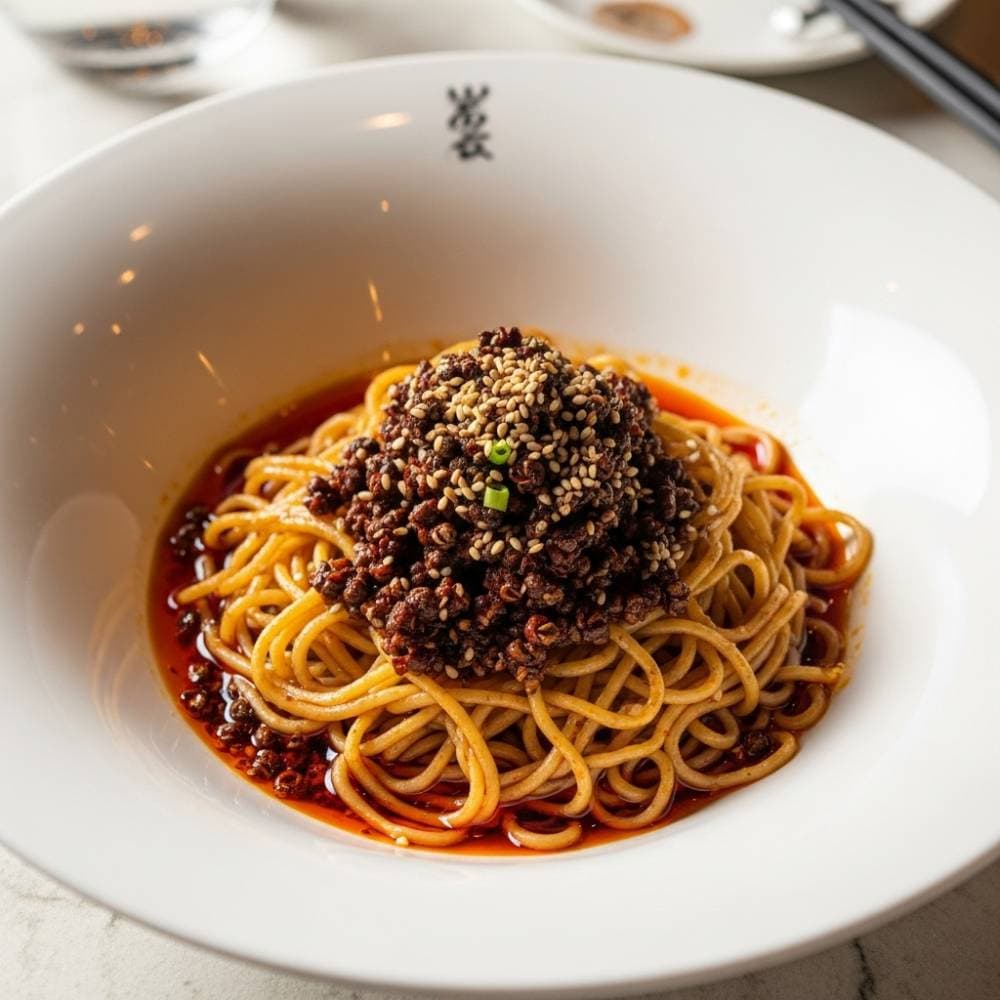
Dan Dan Noodles (Spicy Sichuan Style)
A classic Sichuan street food dish featuring springy noodles, a savory and spicy pork topping, and a rich, nutty sauce with a unique numbing spice. A bold and flavorful meal for two.
The Quick Answer
Two separate sensations define this bowl: the chili oil's capsaicin burn and the Sichuan peppercorn's numbing buzz, which come from different molecules hitting different nerves. Knowing how each behaves tells you when to add them and why the sauce must be tossed hot, not poured cold.
Why does my mouth go numb separately from the chili heat in dan dan noodles?
The tingling buzz comes from the Sichuan peppercorn powder, not the chili oil. Peppercorns contain hydroxy-alpha-sanshool, which activates touch and vibration nerve receptors, while the chili oil's capsaicin triggers separate heat-pain receptors. That is why authentic dan dan feels numbing (ma) and spicy (la) at the same time from two ingredients. Sanshool is fat-soluble and volatile, so it dissolves readily into the chili oil but also fades during storage. Because your recipe whisks the peppercorn powder straight into the oil-rich sauce base rather than dusting it on top, the sanshool disperses into every droplet of fat, spreading the numbing evenly through the bowl instead of leaving hot, intense spots.
Why does the black vinegar lose its punch by the time I eat dan dan noodles?
Chinese black (Chinkiang) vinegar carries fruity, malty aromatics on top of its acetic-acid sharpness, and those aromatic compounds are volatile. When they hit the steaming hot noodles and chili oil, much of that fragrance flashes off as vapor within a minute or two, leaving a flatter, merely sour taste. This is why the recipe builds the full vinegar-soy-sugar base in the bowl first and tosses everything immediately before serving, rather than letting an assembled bowl sit. Serving at once captures the vinegar's high notes against the rich pork and sesame paste. If you must hold the noodles, keep the vinegar out and stir it in only at the moment you plate.
Not sure what to cook next? Let the generator pick your next dish in one click.
Random Recipe GeneratorAbout This Recipe
What is this dish?
Dan dan noodles are one of the most iconic dishes of Sichuan cuisine — chewy wheat noodles in a complex, numbing-spicy sauce of sesame paste, chili oil, doubanjiang (fermented chili bean paste), Sichuan peppercorns, and savory ground pork. The name comes from the bamboo carrying poles (dan dan) street vendors used to balance two baskets of ingredients for this dish. Dan dan noodles represent the defining flavor profile of Sichuan cooking: the 'ma la' (numbing-spicy) sensation.
Why you'll love it
Dan dan noodles deliver a flavour experience unlike almost any other noodle dish — the Sichuan peppercorn creates a unique tingling, numbing sensation on the lips and tongue that amplifies the heat of the chili oil into something extraordinary. The sesame paste provides richness, the doubanjiang provides fermented depth, and the ground pork provides savory meatiness. Every element is essential and irreplaceable.
When to serve
Serve as a quick weeknight dinner, a solo noodle bowl, or as part of a Sichuan Chinese dinner spread. Dan dan noodles are also excellent as a room-temperature noodle dish, making them surprisingly good as packed lunches.
Quick tips
Don't skimp on the Sichuan peppercorns — they are what makes this dish unique, not just spicy. Toast them briefly in a dry pan before grinding. Use fresh or refrigerated noodles for the best texture. Have all sauce components measured before cooking the pork, as it comes together quickly.
Ingredient Highlights
Sichuan Peppercorns
Not true pepper but a dried berry from the prickly ash tree, Sichuan peppercorns create a unique tingling, numbing sensation (called 'ma') on the lips and tongue. This sensation doesn't just add flavor — it actually changes how you perceive the chili heat, making it feel more intense and aromatic. Toast briefly in a dry pan before grinding for maximum potency.
Doubanjiang (Fermented Chili Bean Paste)
The soul of Sichuan cooking. Doubanjiang is made from fermented fava beans, chili, salt, and time. It has a deep, complex, funky fermented depth that no other chili paste replicates. Pixian doubanjiang, aged for 3+ years, is considered the finest. Available at Asian grocery stores. Store in the refrigerator after opening.
Chinese Sesame Paste or Tahini
Chinese sesame paste (zhima jiang) is made from toasted sesame seeds and has a darker, more intense, nuttier flavor than Middle Eastern tahini. It provides the sauce's creamy, rich backbone. Tahini is a functional substitute but produces a slightly different, milder flavor. Never use American sesame tahini without tasting and adjusting.
Chili Oil
The heat and color of dan dan noodles comes from generously seasoned chili oil. Store-bought Sichuan chili oil (like Lao Gan Ma brand) is excellent and convenient. The best chili oil contains dried shrimp, preserved black beans, and multiple chili varieties for complexity beyond simple heat.
Substitution Options
If Sichuan peppercorns are unavailable, use a mix of regular black pepper and lemon zest for a vague approximation (the numbing sensation cannot be fully replicated). Doubanjiang can be partially replaced with gochujang (Korean chili paste) plus miso, though the flavor differs. Chinese sesame paste can be replaced with tahini mixed with a few drops of toasted sesame oil. Ground chicken or turkey replace pork for a lighter version.
You'll likely need to buy
Likely in your pantry
Step-by-Step Instructions
Prepare the spicy sauce base
In a large serving bowl (or divide between two bowls), combine 4 tablespoons Sichuan chili oil, 2 tablespoons Chinese black vinegar, 2 tablespoons soy sauce, 1 tablespoon Chinese sesame paste or tahini, 1 tablespoon granulated sugar, 1 teaspoon Sichuan peppercorn powder (a spice that creates a numbing sensation), and 2 cloves minced garlic. Whisk all the ingredients together until they are well combined. This is the sauce that will coat your noodles.
Chef's Tips
- ›Sichuan peppercorn powder is crucial for the authentic numbing sensation of Dan Dan noodles.
- ›Whisking well ensures the sauce is smooth and blended.
Cook the pork topping
Heat 1 tablespoon cooking oil in a skillet or wok over medium-high heat. Add 1/2 pound ground pork and cook, breaking it apart with a spoon, until it is browned and cooked through. Drain any excess fat. Stir in 1 tablespoon Shaoxing wine (Chinese cooking wine) or dry sherry and 1 tablespoon soy sauce. Cook for 1-2 minutes until the liquid has reduced (cooked down and become thicker). Remove from heat.
Chef's Tips
- ›Reduced means cooked down to be thicker and more flavorful.
- ›Shaoxing wine adds a distinct flavor to Chinese dishes.
Cook the noodles
Bring a large pot of water to a rolling boil. Add 8 ounces fresh or dried Chinese wheat noodles and cook according to package directions until they are al dente (tender but still firm to the bite). Reserve 1/4 cup of the pasta cooking water before draining the noodles. Drain the noodles well.
Chef's Tips
- ›Al dente means cooked so that it is still firm when bitten.
- ›Reserving pasta water helps make the sauce cling to the noodles.
Assemble and serve
Add the hot, drained noodles directly into the bowl with the prepared spicy sauce. Add a tablespoon or two of the reserved noodle cooking water if the sauce seems too thick. Toss the noodles vigorously with tongs to ensure they are thoroughly coated in the sauce. Divide the noodles evenly between two serving bowls. Spoon a generous amount of the cooked pork topping over each bowl of noodles. Garnish with 4 tablespoons chopped green onions. Serve immediately.
Chef's Tips
- ›Toss noodles quickly while hot to absorb the sauce better.
- ›Dan Dan noodles are best served fresh and warm.
Chef's Tips
Techniques that separate good from great
Toast and grind Sichuan peppercorns fresh for dramatically better flavor
Pre-ground Sichuan peppercorn powder loses its numbing potency rapidly. Toast whole Sichuan peppercorns in a dry pan over medium heat for 1-2 minutes until fragrant, then grind in a spice grinder or mortar. Freshly ground Sichuan pepper has 3-4x the numbing power and aromatic intensity of pre-ground.
Cook the ground pork until crispy and caramelized, not just cooked through
The texture of the ground pork topping matters enormously in dan dan noodles. Cook over medium-high heat without stirring frequently, allowing the pork to brown and develop caramelized, almost crispy edges. This creates textural interest that soft, steamed-looking ground pork simply doesn't provide.
Mix the sauce base before adding noodles — never add components separately to the bowl
All sauce ingredients should be whisked together in the bowl first: sesame paste, soy sauce, black vinegar, chili oil, Sichuan peppercorn, and seasoning. Add a tablespoon of hot pasta cooking water and stir to create an emulsified sauce. Then add hot noodles and toss immediately to coat evenly.
Use the pasta cooking water to loosen the sauce — it is the secret emulsifier
The starchy pasta water transforms the thick sesame paste and chili oil from a potentially clumpy mixture into a smooth, glossy sauce that coats every strand of noodle. Add it in small increments — 1-2 tablespoons — while tossing until the sauce reaches the right consistency.
Nutrition Facts
Per serving · Estimated values
* Estimated per serving based on a 2,000 calorie diet.
Equipment Needed
- Large serving bowl (or two individual bowls)
- Small bowl (for sauce)
- Skillet or wok
- Large pot (for noodles)
- Whisk
- Tongs
- Measuring cups
- Measuring spoons
- Knife and cutting board
As an Amazon Associate we earn from qualifying purchases — at no extra cost to you.
Quick Tips
- Authentic Sichuan chili oil is essential for the best flavor. It often contains chili flakes, Sichuan peppercorns, and other spices.
- Chinese sesame paste (zhī ma jiàng) is thicker and nuttier than tahini; use it if possible for a more authentic taste. Tahini is a good substitute.
- Adjust the amount of Sichuan chili oil and Sichuan peppercorn powder to your preferred level of spiciness and numbing sensation.
Recipe Variations
Different ways to make this dish your own
Cold Dan Dan Noodles
Cook and rinse the noodles under cold water, then toss with the sauce (adjusted to be slightly saucier) for a refreshing cold noodle version. Particularly popular in summer. The cold noodles absorb less sauce, so make the dressing richer.
Vegetarian Dan Dan Noodles
Replace ground pork with a mix of finely minced shiitake mushrooms and crumbled firm tofu, cooked with the same aromatics. Add an extra teaspoon of doubanjiang and a splash of soy sauce to compensate for the lost umami from the pork.
Extra Numbing Version (Ma La Style)
Double the Sichuan peppercorn quantity and add a teaspoon of Sichuan peppercorn oil to the sauce for a full 'ma la' experience. Not for the faint-hearted — this version produces a significant lip-numbing effect.
Dan Dan Noodle Soup
Serve the noodles and sauce in a bowl of hot chicken or pork bone broth. Ladle hot broth over the noodles and sauce just before serving, thinning the sauce slightly. This is the original Sichuan street version of the dish.
What to Serve With
Perfect pairings to complete the meal
With Bok Choy or Blanched Greens
Blanch small bok choy or Chinese spinach in the noodle cooking water for 1 minute and arrange alongside the noodles. The mild, slightly bitter greens provide balance to the intensely flavored sauce.
As Part of a Sichuan Feast
Serve dan dan noodles alongside Mapo tofu, twice-cooked pork, and stir-fried green beans with preserved vegetables for an authentic Sichuan home-cooking spread.
As a Standalone Noodle Bowl
Serve in a deep bowl with all garnishes arranged on top: the ground pork, chili oil, a pinch more Sichuan pepper, sliced scallions, and crushed peanuts. This presentation shows off all the components before they are mixed.
With Cold Beer or Sparkling Water
The 'ma la' numbing-spicy sensation calls for a cold, slightly sweet beverage. Cold lager beer, sparkling water with lime, or even cold coconut water are the best drinks to serve alongside dan dan noodles.
Storage & Reheating
Keep it fresh and plan ahead
Refrigerator
The sauce keeps refrigerated for up to 5 days. Cooked noodles should be stored separately from the sauce and tossed with a drop of sesame oil to prevent sticking. Combined noodles and sauce keep for up to 2 days but the noodles absorb the sauce and soften.
Make-Ahead
The sauce can be made completely ahead. The ground pork topping can be cooked and refrigerated for up to 3 days. Cook noodles fresh when ready to serve for the best texture.
Reheating
Reheat the ground pork topping in a skillet over medium heat. Reheat the sauce gently with a splash of water or broth. Cook fresh noodles for the best result, or quickly warm refrigerated noodles in boiling water for 30 seconds.
Cooking tonight?
Get a month of dinners like this — done for you
30 chef-tested dinners mapped to the month, plus 5 ready-to-shop grocery lists. One-time $8.99 — 30 dinners planned for you, zero nightly decisions.
See the 30-Day Plan →Got Leftovers?
Turn what you already have in your fridge into delicious meals. Our AI-powered generator creates personalized recipes from your ingredients.
Go Deeper
Master the Culinary Science
Every recipe is a doorway. Our 7 Mastery Guides give you the science, technique, and framework to understand why food works — not just how to follow steps.
AI-Powered
Have Ingredients? Generate a Recipe.
Tell our AI what's in your fridge and get a custom recipe with image in seconds. No waste, no boredom.
Try the AI Recipe Generator →Browse more like this:
You Might Also Like
Discover more delicious recipes similar to what you're cooking