Falafel Pita with Tahini Sauce
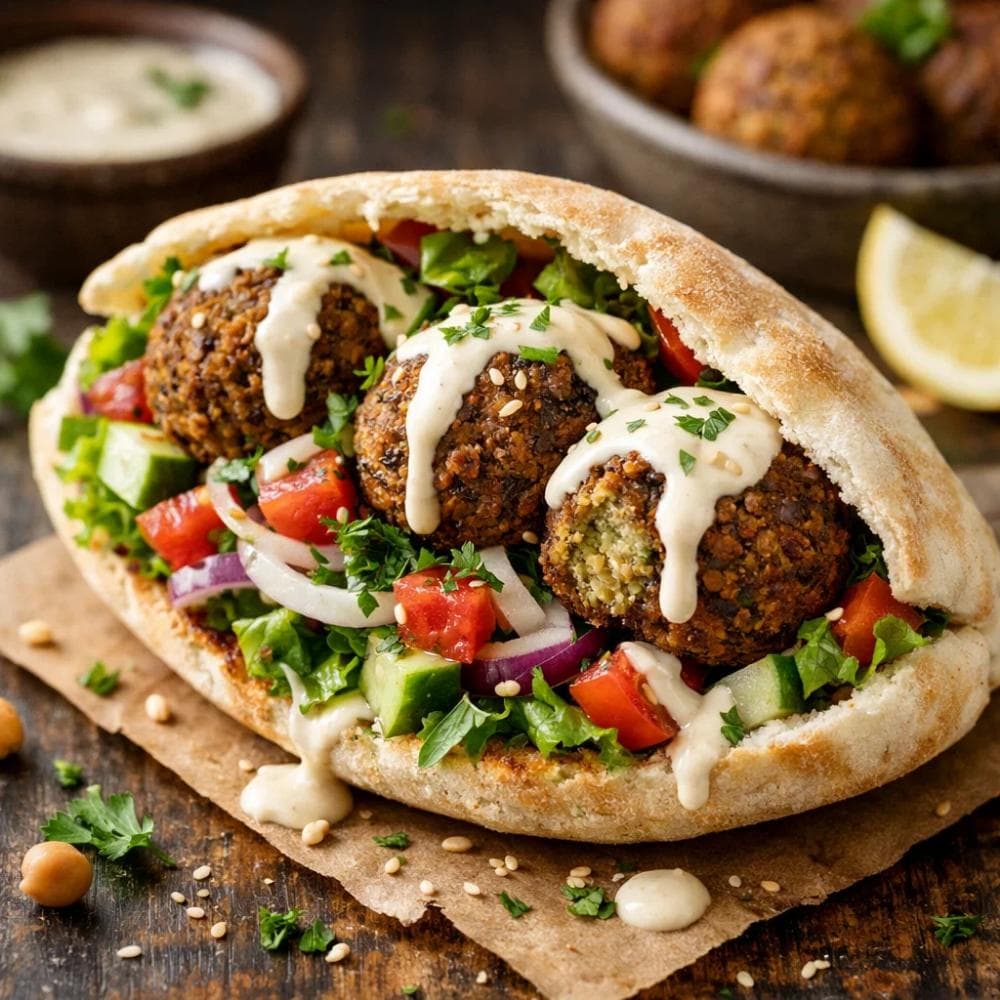
Crispy, herb-flecked falafel made from scratch and stuffed into warm pitta with shredded salad, sliced tomatoes, and a creamy, nutty tahini sauce. This is the real thing — proper falafel with a shatteringly crispy exterior and a bright green, herb-fragrant interior, not the dense, grey version from a packet. Ready in 45 minutes.
The Quick Answer
The two failure modes that ruin homemade falafel are a smooth, paste-like grind that fries up dense and a tahini sauce that seizes into a stiff paste the moment it meets lemon juice. Pulse the soaked chickpeas only to a coarse, clumping crumb, and build the tahini sauce by adding the cold water after the acid so it loosens rather than tightens.
Why does my falafel come out dense instead of light and fluffy?
Because raw soaked chickpeas have not been cooked, falafel has no gelatinised starch network to trap air, so lightness comes entirely from texture and steam. A coarse, breadcrumb-like grind leaves tiny air pockets between chickpea fragments; when the ball hits 175C oil, the surface water flashes to steam and the parsley and coriander moisture expands those pockets, lifting the interior. A smooth puree collapses those gaps into a solid mass that fries dense and gluey. The half-teaspoon of baking powder helps by releasing CO2 as it heats, but it can only inflate a structure that already has gaps, which is why grind texture matters more than the raising agent.
Why does my tahini sauce turn thick and grainy when I add lemon?
Tahini is roughly half oil suspended in finely ground sesame solids. When you first add an acidic, watery liquid like lemon juice, the water binds tightly to the sesame particles and the loose oil emulsion inverts, so the sauce abruptly seizes into a stiff, claggy paste, which alarms most cooks into thinking they have ruined it. You have not. Keep whisking and add the two tablespoons of cold water a little at a time; the extra water re-disperses the particles and flips the mixture back into a smooth, pourable emulsion. Adding all the water at once, or warm water, gives a thinner, less stable sauce, so cold and gradual is the reliable route.
Not sure what to cook next? Let the generator pick your next dish in one click.
Random Recipe GeneratorAbout This Recipe
What is this dish?
Falafel is a Middle Eastern street food made from ground chickpeas or fava beans mixed with herbs and spices, shaped into balls or discs, and deep-fried until golden. It is one of the oldest fast foods in the world — sold from street carts throughout Egypt, Israel, Lebanon, Palestine, and the wider Arab world. Stuffed into pitta with salad and tahini sauce, it is one of the most complete, satisfying, and nutritious street foods ever created.
Why you'll love it
Homemade falafel is categorically better than any packet or restaurant version — the bright green interior, the herb fragrance, the shatteringly crispy exterior. Once you make them from scratch with soaked dried chickpeas, you will not go back. The tahini sauce is silky and punchy; the pitta is soft and warm; the whole assembly is deeply satisfying.
When to serve
A vegetarian dinner, a Middle Eastern feast alongside hummus and tabbouleh, a packed lunch, or a casual entertaining spread. Excellent for a crowd — the falafel mixture can be made ahead and fried to order.
Quick tips
Use dried soaked chickpeas only. Do not over-process. Refrigerate before frying. Oil at 175°C. Season immediately after frying.
Ingredient Highlights
Soaked Dried Chickpeas
This is the most important ingredient rule in falafel. Dried chickpeas soaked overnight have the ideal moisture content and texture — firm enough to bind and hold their shape in hot oil while producing the characteristic slightly grainy, herb-flecked interior. Tinned chickpeas are too wet and produce falafel that disintegrates.
Fresh Herbs
Equal quantities of flat-leaf parsley and coriander are the herb foundation of classic falafel. They are added raw and in large quantities — the food processor reduces them to fine flecks distributed through the mixture. This is why good falafel has a bright green interior. Do not use dried herbs — the fresh herbs are essential.
Tahini
The tahini sauce is as important as the falafel itself. Made from just tahini, lemon juice, water, garlic, and salt, it produces a creamy, nutty, slightly bitter sauce that complements the earthy chickpeas and herb filling perfectly. Proper Lebanese tahini sauce is more liquid than paste — add enough water to achieve a pourable consistency.
Substitution Options
Replace half the chickpeas with soaked dried fava beans for a more traditional Egyptian falafel. Add dried chilli flakes for extra heat. Use lime instead of lemon in the tahini sauce. Serve in a wrap or flatbread instead of pitta. Add hummus, pickled vegetables, or hot sauce.
You'll likely need to buy
Likely in your pantry
Step-by-Step Instructions
Make the falafel mixture
Drain the soaked chickpeas. Combine in a food processor with the onion, garlic, parsley, coriander, cumin, ground coriander, baking powder, salt, and cayenne. Pulse until the mixture resembles coarse breadcrumbs — it should clump when squeezed but not be a smooth paste. Add sesame seeds and pulse once. Refrigerate for 20 minutes.
Chef's Tips
- ›CRITICAL: Use soaked dried chickpeas, not tinned. Tinned chickpeas are too wet and produce falafel that falls apart in the oil and lacks the correct texture
- ›Do not over-process — the mixture should be slightly coarse, not smooth. A smooth paste produces dense, heavy falafel
Shape the falafel
Scoop heaped tablespoons of mixture and shape into balls or discs about 4cm in diameter. Press firmly so they hold together. If they crack, the mixture is too dry — add 1 tablespoon of water. If they are falling apart, refrigerate for a further 10 minutes.
Chef's Tips
- ›Wetting your hands slightly helps shape the falafel without it sticking
- ›Disc-shaped falafel cook more evenly and have more surface area for crispiness — slightly flatten each ball
Fry the falafel
Heat the oil in a deep pan to 175°C. Fry falafel in batches of 4–5 for 3–4 minutes, turning halfway, until deep golden brown all over. Drain on kitchen paper and season with a pinch of salt immediately.
Chef's Tips
- ›Test oil temperature with a small piece of mixture — it should sizzle immediately and float to the surface
- ›Do not rush the temperature — under-temperature oil produces greasy, soft falafel; over-temperature burns the outside before the inside cooks
Make tahini sauce and assemble
Whisk tahini, lemon juice, cold water, minced garlic, and salt together until smooth and pourable. Warm the pitta and split open. Fill with shredded lettuce, diced tomatoes, cucumber, and red onion. Add the hot falafel and drizzle generously with tahini sauce.
Chef's Tips
Techniques that separate good from great
Dry the soaked chickpeas thoroughly
After soaking and draining, spread the chickpeas on a clean tea towel and pat dry. Excess moisture in the mixture is the primary reason falafel falls apart in the oil. Dry chickpeas produce a firmer, drier mixture that holds its shape.
Add bicarbonate of soda to the soaking water
Soak the chickpeas with a teaspoon of bicarbonate of soda in the water. It softens the skins and helps the chickpeas hydrate more evenly, producing a smoother, more cohesive falafel mixture. Rinse thoroughly before processing.
Nutrition Facts
Per serving · Estimated values
* Estimated per serving based on a 2,000 calorie diet.
Equipment Needed
- Food processor
- Deep pan or heavy-bottomed pot (for frying)
- Kitchen thermometer (recommended)
- Kitchen paper
As an Amazon Associate we earn from qualifying purchases — at no extra cost to you.
Quick Tips
- Soaked dried chickpeas are non-negotiable for proper falafel — tinned chickpeas are too wet
- Do not over-process — coarse is correct. Smooth is wrong.
- Refrigerating the shaped falafel before frying dramatically reduces the chance of them falling apart
- Fry at 175°C — too cool produces greasy falafel, too hot burns the outside
Recipe Variations
Different ways to make this dish your own
Baked Falafel
Place shaped falafel on a generously oiled baking sheet and bake at 220°C for 25–30 minutes, flipping halfway. Less crispy than fried but a good lower-fat option.
Falafel Bowl
Serve falafel over a bed of rice, quinoa, or bulgur wheat with the salad, tahini sauce, and a spoonful of hummus. A hearty, complete meal.
Spiced Falafel with Harissa
Add a tablespoon of harissa paste to the falafel mixture for a North African-inspired version with a warm, complex heat. Serve with yoghurt sauce instead of tahini.
What to Serve With
Perfect pairings to complete the meal
Hummus
A generous smear of hummus inside the pitta before adding the falafel is the classic approach in many Middle Eastern countries. It adds richness and a complementary chickpea flavour.
Pickled Turnips
Bright pink pickled turnips are the traditional accompaniment to falafel across the Middle East. Their sharp acidity and crunch contrast beautifully with the rich, earthy falafel.
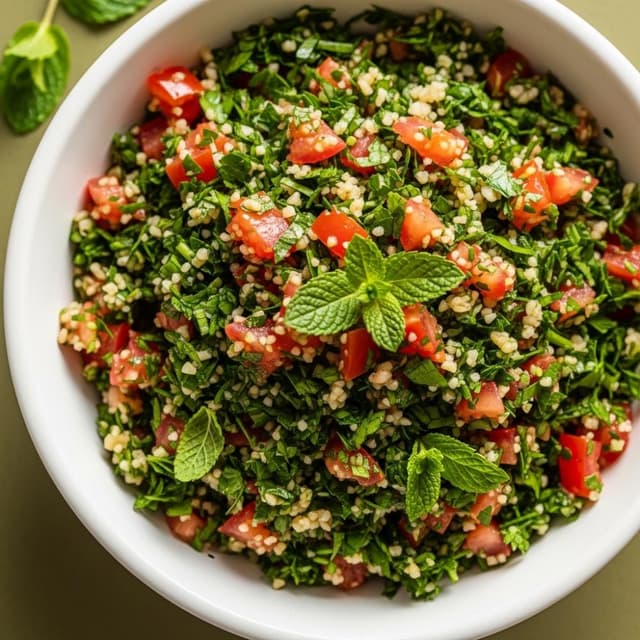
Tabbouleh
A fresh tabbouleh — bulgur wheat, parsley, mint, tomato, lemon, and olive oil — alongside provides a bright, herby counterpoint to the fried falafel.
Storage & Reheating
Keep it fresh and plan ahead
Refrigerator
Cooked falafel keeps for up to 3 days in the fridge. The crust softens — reheat in a pan or oven to restore some crispiness. Uncooked shaped falafel keeps for 24 hours.
Freezer
Freeze shaped, uncooked falafel on a baking sheet until solid, then transfer to a bag. Fry from frozen, adding 1–2 minutes to cooking time. Alternatively, freeze cooked falafel and reheat in a hot oven.
Make-Ahead
The mixture can be made up to 24 hours ahead. Shape and fry fresh for best results.
Reheating
Reheat cooked falafel in a 200°C oven for 8–10 minutes or in a dry pan over medium heat for 3–4 minutes per side until hot and slightly crispy again.
Cooking tonight?
Get a month of dinners like this — done for you
30 chef-tested dinners mapped to the month, plus 5 ready-to-shop grocery lists. One-time $8.99 — 30 dinners planned for you, zero nightly decisions.
See the 30-Day Plan →Be the first to review this recipe!
Got Leftovers?
Turn what you already have in your fridge into delicious meals. Our AI-powered generator creates personalized recipes from your ingredients.
Go Deeper
Master the Culinary Science
Every recipe is a doorway. Our 7 Mastery Guides give you the science, technique, and framework to understand why food works — not just how to follow steps.
AI-Powered
Have Ingredients? Generate a Recipe.
Tell our AI what's in your fridge and get a custom recipe with image in seconds. No waste, no boredom.
Try the AI Recipe Generator →Browse more like this:
You Might Also Like
Discover more delicious recipes similar to what you're cooking