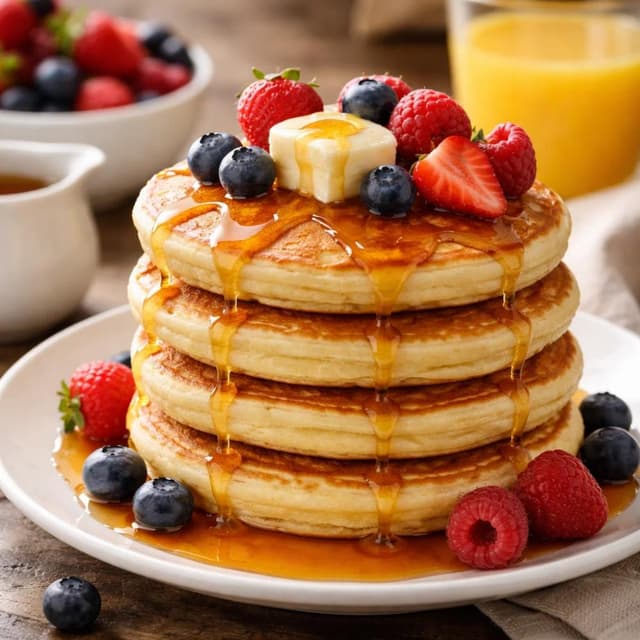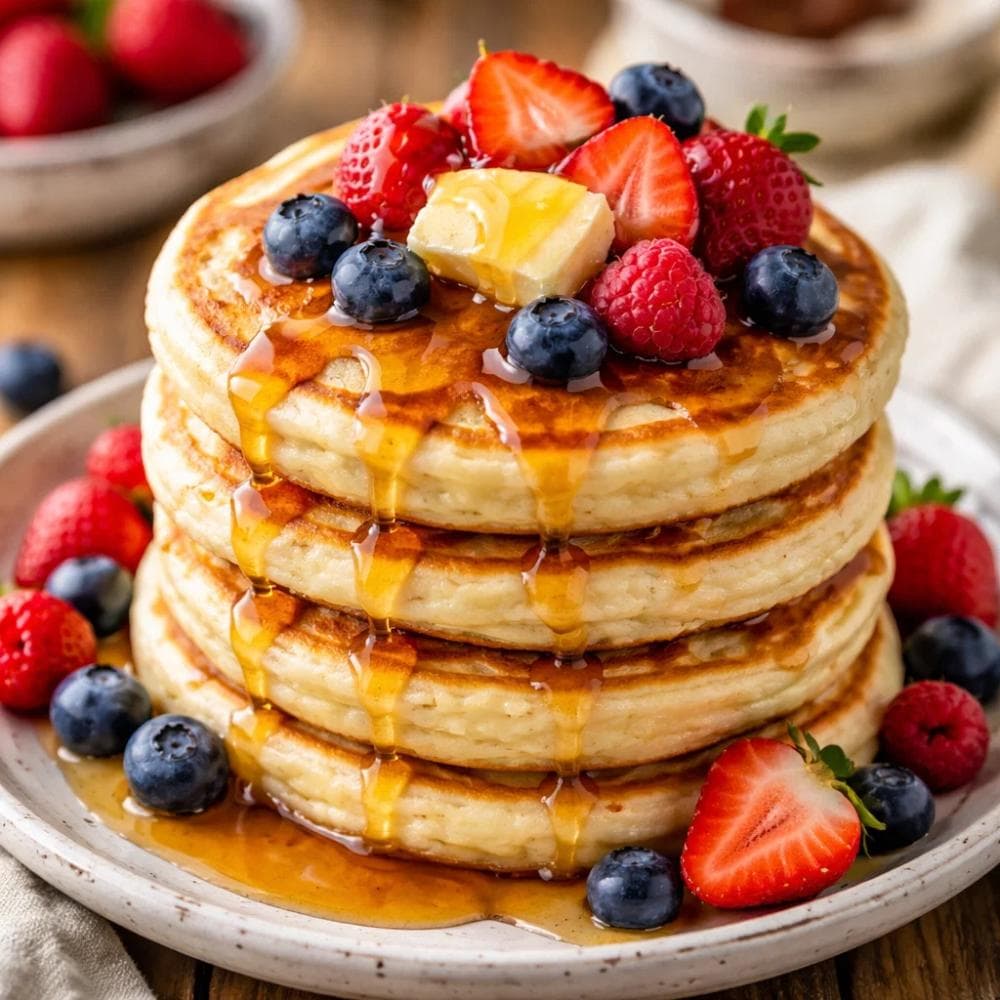
Fluffy Yogurt Pancakes
Thick, cloud-like pancakes made with Greek yogurt instead of buttermilk — tangy, tender, and extraordinarily fluffy, with a golden crust and soft, airy interior.
You'll likely need to buy
Likely in your pantry
Planning the week? Start with a free 7-day dinner plan
Seven tested weeknight dinners from our kitchen, with one combined shopping list. Free, and no sign-up needed to see it.
Step-by-Step Instructions
Mix the Wet Ingredients
In a large bowl, whisk together the Greek yogurt, eggs, milk, and vanilla extract until smooth and combined. The Greek yogurt provides acidity that will react with the bicarbonate of soda to create lift, so full-fat yogurt is preferred for both flavour richness and the best chemical reaction. The mixture will be quite thick — this is correct and contributes to the height of the finished pancakes.
Chef's Tips
- ›Room temperature eggs incorporate more smoothly than cold eggs.
- ›Full-fat Greek yogurt gives a richer, more tender crumb than low-fat varieties.
Combine Dry Ingredients
In a separate bowl, whisk together the flour, sugar, baking powder, bicarbonate of soda, and salt. Whisking the dry ingredients together ensures the leavening agents are evenly distributed throughout the batter, which produces consistent rise across every pancake rather than uneven pockets of baking soda.
Chef's Tips
- ›Measure flour by spooning into the measuring cup and levelling — packing it in leads to dense pancakes.
- ›Ensure the baking powder is fresh — test it by adding a teaspoon to hot water; it should fizz immediately.
Fold Together and Rest
Pour the wet ingredients into the dry ingredients and fold gently with a spatula or wooden spoon until just combined. Stop mixing the moment no dry flour is visible — lumps in the batter are normal and desirable. Overmixing develops gluten, which makes pancakes tough and flat rather than fluffy and tender. Let the batter rest for 5 minutes: this allows the baking powder and bicarbonate of soda to begin activating, and the gluten to relax, producing noticeably fluffier pancakes.
Chef's Tips
- ›A lumpy batter is a good batter — stop mixing before it looks perfectly smooth.
- ›The 5-minute rest is optional but noticeably improves the texture.
Cook on Low-Medium Heat
Heat a non-stick frying pan or griddle over low-medium heat. Add a small knob of butter and let it melt and coat the pan. When the butter foams but does not brown, the temperature is correct. For each pancake, drop approximately 3–4 tablespoons of batter into the pan — it should spread slightly but remain quite thick. Cook until bubbles form across the surface and the edges look set and matte rather than shiny, approximately 2–3 minutes. Flip once and cook for a further 1–2 minutes until golden on both sides.
Chef's Tips
- ›Low-medium heat gives the pancakes time to cook through without burning.
- ›Only flip once — pressing down or multiple flips deflates the air you have built into the batter.
Keep Warm and Serve
Transfer cooked pancakes to a plate in a low oven (90°C / 200°F) to keep warm while cooking the remaining batter. Wipe the pan between batches if butter residue darkens. Serve a stack of 3–4 pancakes with your chosen toppings. The height and fluffiness of these pancakes is best appreciated immediately — they will soften slightly as they cool.
Chef's Tips
- ›Avoid stacking pancakes directly on top of each other before serving — they trap steam and go soft.
- ›Keep them in a single layer on an oven rack for the crispiest edges.
About This Recipe
What is this dish?
Fluffy yogurt pancakes use Greek yogurt in place of buttermilk to create a thick, tangy batter that bakes up into extraordinarily tall, tender stacks. The combination of baking powder and bicarbonate of soda reacting with the yogurt's natural acidity generates exceptional lift, producing pancakes with a cloud-like interior and golden, slightly crispy exterior.
Why you'll love it
These pancakes require no buttermilk, no special equipment, and no advanced technique — just the discipline to under-mix the batter and resist the urge to cook on high heat. The Greek yogurt adds protein, keeps the crumb moist for longer, and gives a subtle tang that makes these taste more complex and interesting than standard diner pancakes.
When to serve
Serve as a leisurely weekend breakfast or brunch with fresh fruit, maple syrup, or whipped cream. They are substantial enough to serve as dessert with ice cream and warm berry compote, and work well for children's breakfasts given their mild, slightly sweet flavour.
Quick tips
Under-mix the batter, rest for 5 minutes, cook on low-medium heat, and flip only once.
Ingredient Highlights
Greek Yogurt
The star ingredient and the buttermilk replacement. Full-fat Greek yogurt provides acidity for leavening activation, fat for tenderness, and protein that helps the batter hold its structure. Its thick consistency also creates a naturally thicker batter that holds its shape in the pan and produces taller pancakes.
Bicarbonate of Soda
Unlike baking powder, bicarbonate of soda requires an acid to activate — in this case, the Greek yogurt. The reaction is immediate and powerful, producing larger, more numerous bubbles in the batter than baking powder alone. The combination of both leaveners ensures maximum and sustained lift during cooking.
Vanilla Extract
A teaspoon of pure vanilla extract adds warmth and depth that makes these pancakes taste restaurant-quality without any additional effort. It rounds out the slight tang of the yogurt and enhances the perception of sweetness without adding extra sugar.
Substitution Options
Greek yogurt can be replaced with sour cream (same quantity, similar tang and fat content) or regular plain yogurt (reduce milk to 1 tablespoon). For a dairy-free version, use thick coconut yogurt and plant-based milk; the results are very good. Plain flour can be replaced with a 1:1 gluten-free flour blend. Sugar can be replaced with maple syrup or honey (add to the wet ingredients). For extra flavour, add 1/2 teaspoon of ground cinnamon or the zest of one lemon to the dry ingredients.
Chef's Tips
Techniques that separate good from great
Separate the Eggs for Maximum Height
For the tallest possible pancakes, separate the eggs. Beat the yolks into the yogurt mixture as usual, then whip the whites to soft peaks in a separate bowl and fold them in gently at the very end before resting the batter. The trapped air in the egg whites creates pancakes that are almost soufflé-like in their height and lightness.
Brown Butter for Depth of Flavour
Instead of plain butter for cooking, use brown butter (beurre noisette). Heat the butter in the pan until it turns golden-amber and smells nutty, then add the batter. The brown butter flavour permeates the base of each pancake, adding a toasty, caramel note that is completely transformative.
Nutrition Facts
Per serving · Estimated values
* Estimated per serving based on a 2,000 calorie diet.
Equipment Needed
As an Amazon Associate we earn from qualifying purchases — at no extra cost to you.
Quick Tips
- Do not overmix the batter — lumps are fine and actually indicate you have not overworked the gluten.
- Rest the batter for 5 minutes before cooking to allow the leavening agents to activate and the gluten to relax.
- Cook on low-medium heat — high heat browns the outside before the inside sets, resulting in doughy centres.
Recipe Variations
Different ways to make this dish your own
Blueberry Lemon Pancakes
Add the zest of one lemon to the wet ingredients and fold 100g of fresh or frozen blueberries into the finished batter. The lemon brightens the yogurt tang and the blueberries burst during cooking, creating jammy pockets throughout each pancake.
Banana Walnut Pancakes
Mash one ripe banana into the wet ingredients before mixing. Add 50g of roughly chopped walnuts to the batter. Reduce the milk to 1 tablespoon as the banana adds moisture. Serve with honey and extra banana slices.
Chocolate Chip Pancakes
Fold 80g of dark chocolate chips into the finished batter. For an extra-indulgent version, add 1 tablespoon of cocoa powder to the dry ingredients for a double-chocolate effect. Serve with sliced strawberries and lightly whipped cream.
What to Serve With
Perfect pairings to complete the meal
Classic Maple and Butter
Stack 3–4 pancakes and top with a generous knob of salted butter that melts down between the layers, then drizzle with real maple syrup. Add a handful of fresh berries for colour and freshness.
Berry Compote
Simmer 150g of mixed frozen berries with 1 tablespoon of sugar and 1 tablespoon of lemon juice for 5 minutes until jammy. Spoon over the pancake stack with a dollop of Greek yogurt or lightly whipped cream.
Savoury Option
Omit the sugar and vanilla from the batter and serve with smoked salmon, cream cheese, capers, and dill for a savoury brunch variation that showcases the yogurt's natural tang as a complement to saline, creamy toppings.
Storage & Reheating
Keep it fresh and plan ahead
Refrigerator
Cooked pancakes can be stacked with parchment between layers and stored in an airtight container for up to 2 days. They reheat well and remain moist.
Freezer
Freeze cooled pancakes in a single layer on a baking tray, then transfer to a freezer bag separated by parchment paper. Freeze for up to 2 months. Reheat from frozen in a toaster or oven.
Make-Ahead
The batter can be made the evening before and stored covered in the fridge. The pancakes will be slightly less fluffy due to the leavening agents partially exhausting overnight, but still delicious. Add a pinch of extra baking powder to compensate.
Reheating
Reheat in a toaster for crispy edges, in a low oven (160°C) for 5 minutes, or briefly in a dry pan over medium heat. Microwaving works but makes the edges soft.
Cooking tonight?
Get a month of dinners like this — done for you
30 chef-tested dinners mapped to the month, plus 5 ready-to-shop grocery lists. One-time $8.99 — 30 dinners planned for you, zero nightly decisions.
See the 30-Day Plan →The Quick Answer
Even with a perfect lumpy batter, pancakes go flat from a stale or mis-measured bicarbonate of soda, or from a batter left to sit too long after mixing. The acid in the Greek yogurt and the bicarbonate react on contact, so use fresh raising agents and get the batter into a properly preheated pan before the lift escapes.
Why are my yogurt pancakes flat even when I don't overmix?
Greek yogurt is acidic (around pH 4.4), and the instant it meets the bicarbonate of soda the two react to release carbon dioxide. That reaction is fast and finite - it does not wait for the pan. The short 5-minute rest helps the bubbles establish in a thick batter, but leave it 20-30 minutes and most of the gas has already fizzed off, so the pancakes spread thin and dense. Two other culprits: bicarbonate of soda loses potency once opened for months, and the recipe relies on both it and the baking powder, so an under-measured 1/2 teaspoon leaves too little base to neutralise the yogurt's acid and generate lift.
Why do my pancakes brown too fast but stay raw inside?
This batter is unusually thick because of the 200g of Greek yogurt, so heat has to travel further to set the centre. On high heat the milk sugars and the small amount of caster sugar hit Maillard and caramelisation temperatures within a minute, giving a dark crust while the middle is still wet batter. That is why the method specifies low-medium heat and butter that foams but does not brown - browning butter signals the pan is too hot. The visual cue matters more than a timer: wait until bubbles break across the whole surface and the edges look matte and set, which means the lower portion has cooked through enough to flip safely.
Not sure what to cook next? Let the generator pick your next dish in one click.
Random Recipe GeneratorGot Leftovers?
Turn what you already have in your fridge into delicious meals. Our AI-powered generator creates personalized recipes from your ingredients.
Go Deeper
Master the Culinary Science
Every recipe is a doorway. Our 7 Mastery Guides give you the science, technique, and framework to understand why food works — not just how to follow steps.
AI-Powered
Have Ingredients? Generate a Recipe.
Tell our AI what's in your fridge and get a custom recipe with image in seconds. No waste, no boredom.
Try the AI Recipe Generator →Find this recipe in these collections
You Might Also Like
Discover more delicious recipes similar to what you're cooking