Garlic Mushroom Udon Noodles (Better Than Takeout)
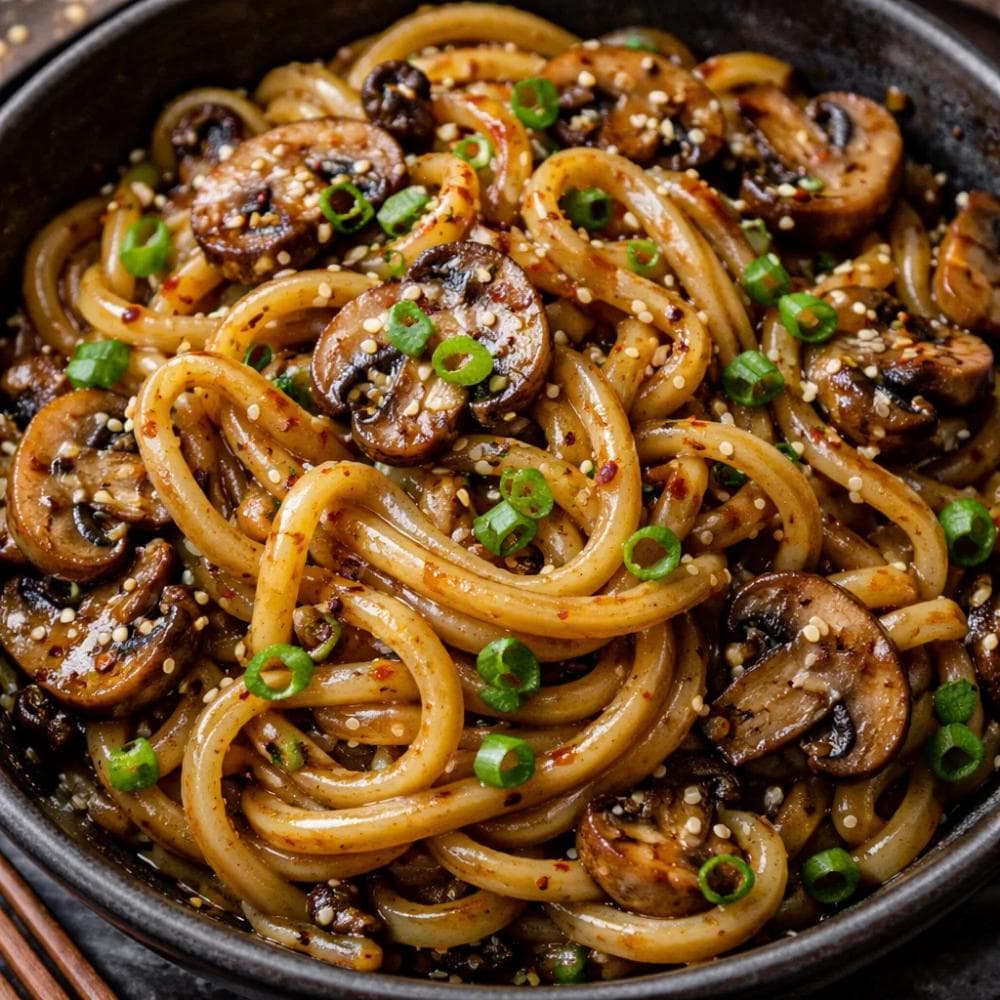
Thick, chewy udon noodles tossed with a heap of deeply savoury mushrooms in a glossy garlic butter and soy sauce. This is a 20-minute vegetarian noodle dish that tastes like something you would order from a Japanese restaurant — silky, umami-rich, and intensely satisfying. The key is getting the mushrooms properly golden before adding the sauce.
The Quick Answer
This dish disappoints when the mushrooms turn out rubbery and watery or the garlic burns bitter. Sear the mushrooms hard in a single layer to drive off their water before browning, and add the sliced garlic only after the heat drops and butter goes in.
Why are my mushrooms rubbery and watery instead of golden?
Mushrooms are around 90 percent water held in a sponge-like structure, and crowding them in the pan is the classic mistake. When piled up, the water they release can't evaporate fast enough, so the temperature stays at 100C and they stew in their own juices - leathery and pale. Spreading them in a single layer over high heat, working in batches if needed, lets that steam escape so the surface can finally reach the 150C-plus needed for browning. Leaving them undisturbed for two to three minutes is key: every toss resets the contact and releases more water. Once browned, their texture firms and the savoury, roasted flavour develops fully.
Why does my garlic taste bitter and burnt?
Thinly sliced garlic has lots of exposed surface and very little water, so it scorches fast - and once garlic burns, its sugars and sulphur compounds turn acrid and bitter, tainting the whole pan. That's why it goes in after the mushrooms are seared and the heat is reduced to medium, melted into butter rather than dropped onto a ripping-hot dry surface. Butter's water content and lower smoke point moderate the temperature, while the fat gently draws out garlic's flavour over 60 to 90 seconds without burning it. Adding it late also means it stays fragrant and golden, perfuming the soy-and-mirin glaze instead of overpowering it with bitterness.
Not sure what to cook next? Let the generator pick your next dish in one click.
Random Recipe GeneratorAbout This Recipe
What is this dish?
Garlic mushroom udon is one of those dishes that seems too simple to be as good as it is. Thick, pillowy udon noodles — the chewy Japanese wheat noodles with a texture unlike any other — tossed in a glossy garlic butter sauce with deeply caramelised mushrooms. It is Japanese comfort food at its most direct: no complicated technique, no hard-to-find ingredients, and a result that genuinely tastes better than most takeaway noodle dishes.
Why you'll love it
It is ready in 20 minutes, it is vegetarian and dairy-free (with one simple swap), and the combination of chewy noodles, golden mushrooms, and savoury garlic butter sauce is profoundly satisfying. It is also easy to adapt — add whatever protein you have, use whatever mushrooms are available, and adjust the sauce to your taste.
When to serve
A perfect quick weeknight dinner for 2–3 people. Scales easily. Also works as a side dish alongside other Japanese dishes such as gyoza, teriyaki chicken, or miso soup.
Quick tips
Use high heat for the mushrooms. Don't crowd the pan. Add sesame oil off the heat. Vacuum-packed udon needs only a brief warm through.
Ingredient Highlights
Udon Noodles
The thick, chewy Japanese wheat noodles that define this dish. Vacuum-packed udon (found in the refrigerated or ambient section of Asian supermarkets) are the most convenient — they need only a brief soak in boiling water to separate and are ready in seconds. Their substantial, pillowy texture is what makes this dish so satisfying.
Mixed Mushrooms
Using a mixture of mushroom varieties creates a more complex, interesting dish than any single type alone. Shiitake contributes deep umami and a slightly meaty texture. Oyster mushrooms add delicacy. Chestnut mushrooms provide earthiness and firm up nicely when browned. The variety in texture and flavour is worth seeking out.
Mirin
A Japanese sweet rice wine used in cooking. It adds a subtle sweetness and a slight glaze to the sauce that balances the saltiness of the soy sauce. It is the ingredient that gives Japanese sauces their characteristic gentle sweetness and helps create the glossy coating on the noodles. Find it in Asian supermarkets or the international aisle.
Substitution Options
Replace mirin with 1 tsp sugar dissolved in the soy sauce. Swap butter for vegan butter or extra vegetable oil. Use tamari instead of soy sauce for a gluten-free version (also use rice noodles instead of udon, which contains wheat). Replace sesame oil with a neutral oil and a pinch of toasted sesame seeds for less sesame character.
You'll likely need to buy
Likely in your pantry
Step-by-Step Instructions
Prepare the noodles
If using vacuum-packed udon noodles, place them in a colander and pour over a kettle of boiling water to separate them. Gently loosen with your fingers or tongs. If using fresh noodles, they can go straight into the pan. If using dried udon, cook according to packet instructions, drain, and rinse briefly with cold water to stop cooking.
Chef's Tips
- ›Vacuum-packed udon noodles are ideal for this dish — they are already cooked, need only a brief warm through, and have the best texture
- ›Don't overcook udon — they should be tender but retain their characteristic chewiness
Brown the mushrooms
Heat the vegetable oil in a large wok or wide skillet over high heat until shimmering. Add the mushrooms in a single layer — work in two batches if the pan is crowded. Cook without stirring for 2–3 minutes until the undersides are deeply golden. Toss and cook for another minute. The mushrooms should be properly browned, not steamed. Season with white pepper.
Chef's Tips
- ›High heat and no stirring is the secret to golden, flavourful mushrooms — moving them traps steam and causes them to stew rather than caramelise
- ›Work in batches if needed — an overcrowded pan drops the temperature and produces pale, watery mushrooms
Add garlic and butter
Reduce the heat to medium. Push the mushrooms to one side of the pan and add the butter to the empty space. Once melted, add the sliced garlic and cook for 60–90 seconds, stirring, until fragrant and just beginning to turn golden. Toss the garlic butter through the mushrooms.
Chef's Tips
- ›Sliced garlic rather than minced gives a better texture and a more mellow, sweet flavour at this stage
- ›Don't let the garlic burn — it turns bitter quickly; lower the heat if needed
Add the noodles and sauce
Add the prepared udon noodles to the pan. Pour over the soy sauce and mirin. Toss everything together over medium-high heat for 2 minutes, making sure the noodles are fully coated in the sauce and have absorbed the flavours from the mushrooms. If the pan seems dry, add 2–3 tablespoons of water to help the noodles move freely.
Chef's Tips
- ›Mirin adds a subtle sweetness that balances the salt of the soy sauce — don't skip it, but if unavailable use a teaspoon of sugar dissolved in the soy sauce
- ›The noodles will absorb the sauce quickly — keep moving them to ensure even coating
Finish and serve
Remove from the heat and drizzle over the sesame oil. Toss to combine. Divide into bowls and top with the sliced spring onions and toasted sesame seeds. Serve immediately.
Chef's Tips
- ›Sesame oil is added off the heat to preserve its fragrance — heat dulls it quickly
- ›A soft-boiled or fried egg on top makes this a more substantial meal
Chef's Tips
Techniques that separate good from great
Deglaze with a splash of sake
After the mushrooms are golden and before adding the soy sauce, add a small splash of sake or dry sherry to the pan. It lifts any stuck bits from the base of the pan and adds a subtle complexity to the sauce that makes the dish taste a little more restaurant-quality.
Tear rather than slice the mushrooms
Tearing mushrooms by hand rather than cutting them with a knife creates more irregular surfaces that brown more thoroughly and trap more sauce. The texture of torn mushrooms in the final dish is also more interesting and varied.
Use a mix of mushroom varieties
Using three different types — shiitake for depth and meatiness, oyster for delicacy and texture, chestnut for earthiness — creates a much more interesting dish than using a single variety. Each type cooks at a slightly different rate and contributes something different to the final flavour.
Nutrition Facts
Per serving · Estimated values
* Estimated per serving based on a 2,000 calorie diet.
Equipment Needed
As an Amazon Associate we earn from qualifying purchases — at no extra cost to you.
Quick Tips
- Cook mushrooms in a single layer on very high heat without stirring — this is the only way to get the golden, caramelised surface that gives the dish its depth of flavour
- Add the sesame oil off the heat to preserve the nutty fragrance that makes the dish taste authentically Japanese
- Vacuum-packed udon noodles are the best option here — they are pre-cooked, have an excellent chewy texture, and take just seconds to warm through
Recipe Variations
Different ways to make this dish your own
Spicy Garlic Mushroom Udon
Add 1–2 teaspoons of gochujang or a teaspoon of chilli paste (sambal oelek) with the soy sauce. The heat adds another dimension to the savoury garlic butter base and transforms this into a bolder, more assertive dish.
Garlic Mushroom Udon with Egg
Crack an egg into the pan after adding the noodles, toss everything together over high heat to create a soft, barely-set egg that coats the noodles — similar to a yaki-udon style preparation. A soft-fried or poached egg on top is also excellent.
Teriyaki Mushroom Udon
Replace the plain soy sauce and mirin with 3 tablespoons of teriyaki sauce. It adds a slightly thicker, more caramelised glaze with a stronger sweetness.
Garlic Mushroom Udon with Crispy Tofu
Press a block of extra-firm tofu dry, cube it, and pan-fry in vegetable oil until golden on all sides before the mushrooms. Add it back in with the noodles. The tofu absorbs the sauce and provides a satisfying, protein-rich addition.
What to Serve With
Perfect pairings to complete the meal
Miso Soup
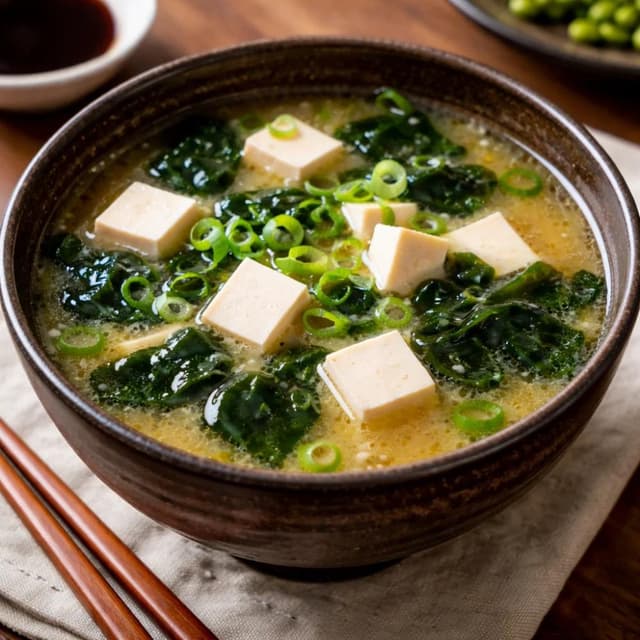
A simple bowl of miso soup alongside — made from instant miso paste dissolved in hot water with a few cubes of silken tofu and dried wakame seaweed — completes the meal in an authentically Japanese way.
Gyoza
Pan-fried or steamed gyoza alongside the noodles make for a satisfying Japanese-style dinner. The crispy dumplings are a textural contrast to the soft, chewy noodles.
Edamame
Steamed and lightly salted edamame is the ideal simple side — it adds protein, a fresh clean flavour, and requires almost no preparation.
Japanese Pickles
A few pieces of Japanese pickled daikon (takuan) or cucumber pickles on the side add the acidity and crunch that cuts through the richness of the garlic butter noodles.
Storage & Reheating
Keep it fresh and plan ahead
Refrigerator
Store leftovers in an airtight container for up to 2 days. The noodles will absorb the sauce and stiffen when cold.
Freezer
Not recommended — udon noodles lose their characteristic texture when frozen and thawed.
Make-Ahead
The mushrooms can be cooked up to a day ahead and refrigerated. Reheat in a hot pan before adding freshly prepared noodles and sauce.
Reheating
Reheat in a wok or skillet over medium-high heat with a splash of water or soy sauce to loosen. Toss frequently until heated through. Avoid the microwave if possible — it makes the noodles gummy.
Cooking tonight?
Get a month of dinners like this — done for you
30 chef-tested dinners mapped to the month, plus 5 ready-to-shop grocery lists. One-time $8.99 — 30 dinners planned for you, zero nightly decisions.
See the 30-Day Plan →Be the first to review this recipe!
Got Leftovers?
Turn what you already have in your fridge into delicious meals. Our AI-powered generator creates personalized recipes from your ingredients.
Go Deeper
Master the Culinary Science
Every recipe is a doorway. Our 7 Mastery Guides give you the science, technique, and framework to understand why food works — not just how to follow steps.
AI-Powered
Have Ingredients? Generate a Recipe.
Tell our AI what's in your fridge and get a custom recipe with image in seconds. No waste, no boredom.
Try the AI Recipe Generator →Browse more like this:
You Might Also Like
Discover more delicious recipes similar to what you're cooking