Juicy Pork Tenderloin with Garlic Sauce
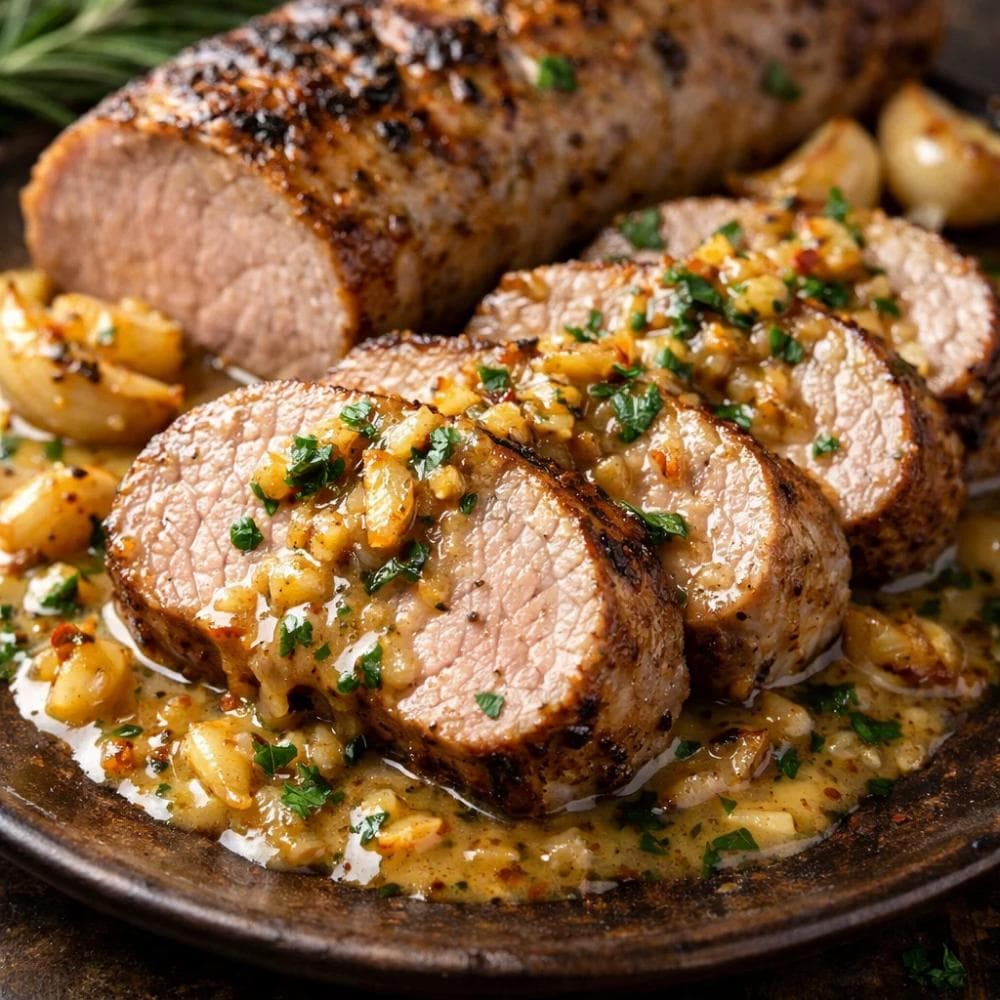
Pan-seared pork tenderloin with a golden crust, finished in the oven and served with a rich, buttery garlic and herb pan sauce. Pork tenderloin is one of the leanest, most tender cuts of meat available — this method ensures it stays juicy every time, with a restaurant-quality sauce made from the pan drippings.
The Quick Answer
Pork tenderloin is so lean that the real risks are a chewy band of silver skin and slices that pull apart along the grain. Trim the silver skin before searing, and once rested, cut the medallions across the muscle fibres so each bite stays short and tender.
Why must I remove the silver skin from pork tenderloin?
Silver skin is the thin, pearly sheet of connective tissue running along one side of the tenderloin, made mostly of collagen wrapped in a tough membrane. Unlike the collagen in slow-cooked cuts, it never gets enough time or moisture during this quick sear-and-roast to break down into gelatine, so it stays rubbery and chewy on the plate. Worse, it shrinks faster than the meat as it heats, bowing the tenderloin into a curve so it cooks unevenly and sears patchily. Slide a thin knife just under one end, angle the blade slightly up toward the membrane, and pull it off in strips. Removing it lets the seasoning rub sit directly on the meat and the loin lie flat for an even crust.
Why does my pan sauce turn greasy instead of silky?
The finishing butter is what makes this sauce glossy, but it only works if it emulsifies rather than melts. Butter is itself an emulsion of fat and water held together by milk solids. If you whisk it into a sauce that is boiling, the emulsion breaks and the fat separates out as an oily slick. Pulling the pan off the heat first, then whisking in the cold butter a little at a time, lets the fat disperse into tiny suspended droplets, giving a thick, satiny sauce. The Dijon mustard helps stabilise that emulsion, and the lemon juice adds brightness to cut the richness of the butter.
Not sure what to cook next? Let the generator pick your next dish in one click.
Random Recipe GeneratorAbout This Recipe
What is this dish?
Pork tenderloin is one of the finest everyday cuts of meat — exceptionally lean, naturally tender, and fast-cooking. Pan-seared and oven-finished with a simple garlic butter pan sauce, it produces a restaurant-quality dinner from a modest, affordable cut. The pan sauce made from the drippings turns an already excellent piece of meat into something genuinely special.
Why you'll love it
Pork tenderloin cooks in under 25 minutes from fridge to table, is leaner than chicken breast, and produces almost no waste. The garlic butter sauce takes 6 minutes and requires no special skills. The result is a genuinely impressive dinner that looks and tastes far more effort than it requires.
When to serve
A weeknight dinner that feels like a restaurant meal, an easy dinner party main course, or a special occasion dinner for two. Pairs beautifully with roasted vegetables, creamy mashed potato, or a simple green salad.
Quick tips
Pat completely dry. Sear at high heat. Use a thermometer — 63°C is the target. Rest 5 minutes before slicing. Make the sauce while it rests.
Ingredient Highlights
Pork Tenderloin
The most tender cut of pork, running along the inside of the backbone. It is leaner than pork loin, cooks faster than any other pork cut, and has virtually no waste. Its leanness is both its greatest virtue and its greatest vulnerability — it must not be overcooked. At 63°C it is silky, tender, and mildly flavoured; at 75°C it is dry, pale, and tough.
Dijon Mustard
Added at the end of the pan sauce, Dijon mustard provides a sharp, tangy complexity that balances the richness of the butter and the mildness of the pork. It also acts as an emulsifier, helping the butter and stock form a smooth, cohesive sauce rather than a greasy liquid.
Pan Drippings
The golden-brown residue left in the pan after searing the pork is called fond — it is concentrated, caramelised protein and fat packed with flavour. Deglazing with wine releases and incorporates all of this flavour into the sauce, which is why a pan sauce from a well-seared piece of meat is always far better than a sauce made from scratch.
Substitution Options
Replace pork tenderloin with chicken breast (adjust cooking time and target 74°C) or turkey tenderloin. Use beef stock instead of chicken stock. Replace white wine with chicken stock plus a teaspoon of white wine vinegar. Swap Dijon mustard for wholegrain mustard for a different texture and slightly milder flavour. Add cream to the sauce for a richer, creamier result.
You'll likely need to buy
Likely in your pantry
Step-by-Step Instructions
Prepare and season the pork
Pat the pork tenderloins completely dry with kitchen paper — this is the most important step for getting a good sear. Mix the salt, pepper, garlic powder, smoked paprika, and dried thyme and rub all over the tenderloins, pressing the seasoning in firmly.
Chef's Tips
- ›Drying the surface is critical — moisture prevents browning and causes steaming instead of searing
- ›Season at least 10 minutes before cooking, or up to 24 hours ahead in the fridge for deeper flavour penetration
Sear on the hob
Preheat oven to 200°C. Heat olive oil in a large, oven-safe skillet (cast iron or stainless steel) over high heat until just beginning to smoke. Add the tenderloins and sear for 2 minutes per side, turning to brown all sides — approximately 6–8 minutes total. The pork should be deeply golden all over.
Chef's Tips
- ›Do not move the pork for the first 2 minutes — it needs to build a crust before it will release naturally
- ›A cast iron skillet is ideal as it retains heat well when the cold pork is added
Finish in the oven
Transfer the skillet to the oven and roast for 12–15 minutes until the internal temperature reaches 63°C (145°F) — the safe temperature for pork, which will still be slightly pink in the centre and very juicy. Remove from the oven, transfer the pork to a board, and rest for 5 minutes before slicing.
Chef's Tips
- ›Use a meat thermometer — it is the only reliable way to know when pork tenderloin is done. At 63°C it is safe, juicy, and slightly pink.
- ›Resting is not optional — cutting immediately causes the juices to run out and leaves dry, pale meat
Make the garlic pan sauce
While the pork rests, return the skillet to medium heat. Add the garlic and cook for 30 seconds until fragrant. Pour in the wine and deglaze, scraping all the brown bits from the bottom of the pan. Add the chicken stock and simmer for 3 minutes until reduced by half. Remove from heat and whisk in the butter, thyme, Dijon mustard, and lemon juice. Taste and season.
Chef's Tips
- ›The brown bits (fond) on the bottom of the pan are concentrated flavour — scrape them all up when adding the wine
- ›Whisk the butter in off the heat — adding butter to a boiling liquid causes it to separate rather than emulsify into a glossy sauce
Slice and serve
Slice the rested pork into 2cm medallions against the grain. Arrange on warm plates and spoon the garlic butter sauce generously over the top. Garnish with fresh parsley.
Chef's Tips
Techniques that separate good from great
Target 63°C, not higher
Modern food safety standards confirm that pork is safe to eat at 63°C (145°F) — slightly pink in the centre. This produces a tenderloin that is genuinely juicy and tender. Cooking to the old 75°C standard produces dry, chalky pork. Use a thermometer and stop at 63°C.
Silver skin must be removed
Pork tenderloin has a tough, silvery membrane running along one side called the silver skin. If left on, it causes the meat to curl during cooking and is unpleasant to eat. Slide a boning knife or sharp knife under it and trim it away before seasoning.
Make the sauce while the pork rests
The resting time is exactly the right amount of time to make the pan sauce. Work efficiently and the sauce will be ready at the same moment the pork is ready to slice — no waiting, no cold meat.
Nutrition Facts
Per serving · Estimated values
* Estimated per serving based on a 2,000 calorie diet.
Equipment Needed
As an Amazon Associate we earn from qualifying purchases — at no extra cost to you.
Quick Tips
- A meat thermometer is essential for pork tenderloin — it is so lean that even a few degrees of overcooking makes it dry and tough
- Pat completely dry before searing — surface moisture is the enemy of browning
- Rest for a full 5 minutes before slicing — the internal temperature will rise slightly and the juices will redistribute
- Slice against the grain for the most tender texture — the muscle fibres run lengthways, so cut across them
Recipe Variations
Different ways to make this dish your own
Honey Garlic Pork Tenderloin
Add 2 tablespoons of honey to the sauce along with the butter for a sweet, sticky glaze. Brush a little honey over the pork during the final minutes of oven cooking for a beautifully lacquered, caramelised exterior.
Herb-Crusted Pork Tenderloin
Mix 3 tablespoons of fresh breadcrumbs with 2 tablespoons of fresh parsley, 1 tablespoon of thyme, and 1 tablespoon of olive oil. After searing, press this mixture onto the top of the tenderloin and finish in the oven — it forms a golden, herby crust.
Pork Tenderloin with Creamy Mushroom Sauce
After making the base sauce, add 200g of sliced mushrooms and cook for 3 minutes before adding the stock. Finish with 100ml of double cream instead of butter for a rich, creamy mushroom sauce that transforms the dish into a more indulgent dinner.
Asian-Glazed Pork Tenderloin
Replace the seasoning rub with a mixture of soy sauce, honey, ginger, and garlic. Sear and finish in the oven as directed. Make a sauce from soy, sesame oil, honey, and garlic in the same pan. Serve sliced over rice with steamed pak choi.
What to Serve With
Perfect pairings to complete the meal
Creamy Mashed Potato
The classic partner — buttery, creamy mashed potato is the perfect vehicle for the garlic pan sauce and provides a rich, comforting base that elevates the elegant sliced pork into a genuinely satisfying dinner.
Roasted Asparagus
Roasted asparagus spears alongside add colour, freshness, and a slightly bitter, grassy flavour that contrasts beautifully with the rich, buttery garlic sauce. Roast at 220°C for 10 minutes while the pork is in the oven.
Roasted Cherry Tomatoes
Halved cherry tomatoes roasted until bursting and slightly caramelised add bright acidity and sweetness that cuts through the richness of the pork and sauce. The tomato juices mix with the pan sauce on the plate.
Green Beans with Almonds
Blanched green beans tossed with toasted flaked almonds and a squeeze of lemon are a classic accompaniment that adds crunch, freshness, and a nutty richness that pairs elegantly with the garlic butter sauce.
Storage & Reheating
Keep it fresh and plan ahead
Refrigerator
Cooked pork tenderloin keeps in the fridge for up to 3 days. It is delicious cold, sliced thinly for sandwiches or salads.
Freezer
Freezes reasonably well for up to 2 months, though the texture softens slightly. Freeze sliced, in the sauce if possible, for best results.
Make-Ahead
The pork can be seared but not finished in the oven up to 24 hours ahead — refrigerate after searing and finish in a 200°C oven when needed (add 3–5 minutes to the oven time from cold). The sauce is best made fresh.
Reheating
Slice before reheating if refrigerated. Reheat in a pan over medium-low heat with a splash of stock for 2–3 minutes, turning once. Avoid the microwave — it can make the lean meat rubbery.
Cooking tonight?
Get a month of dinners like this — done for you
30 chef-tested dinners mapped to the month, plus 5 ready-to-shop grocery lists. One-time $8.99 — 30 dinners planned for you, zero nightly decisions.
See the 30-Day Plan →Be the first to review this recipe!
Got Leftovers?
Turn what you already have in your fridge into delicious meals. Our AI-powered generator creates personalized recipes from your ingredients.
Go Deeper
Master the Culinary Science
Every recipe is a doorway. Our 7 Mastery Guides give you the science, technique, and framework to understand why food works — not just how to follow steps.
AI-Powered
Have Ingredients? Generate a Recipe.
Tell our AI what's in your fridge and get a custom recipe with image in seconds. No waste, no boredom.
Try the AI Recipe Generator →Browse more like this:
You Might Also Like
Discover more delicious recipes similar to what you're cooking