Korean Beef Rice Bowls (Easy Weeknight Dinner)
Made it? Rate this recipeSweet, sticky, garlicky ground beef served over fluffy rice with a quick cucumber salad and a drizzle of sesame oil. Ready in 20 minutes flat and better than any takeaway you'll have this week.
You'll likely need to buy
Likely in your pantry
Planning the week? Start with a free 7-day dinner plan
Seven tested weeknight dinners from our kitchen, with one combined shopping list. Free, and no sign-up needed to see it.
Step-by-Step Instructions
Make the quick cucumber salad
Slice the cucumber into thin rounds or half-moons. Toss with rice vinegar, soy sauce, sesame oil, sugar, and chilli flakes. Leave to sit while you cook the beef — it only needs 10 minutes to pickle lightly. Taste and adjust the seasoning.
Chef's Tips
- ›Salting the cucumber slices and leaving for 5 minutes before dressing removes excess water and keeps the salad from going soggy
- ›Add a tiny pinch of sugar to balance the vinegar
Mix the sauce
In a small bowl, whisk together the soy sauce, brown sugar, sesame oil, rice vinegar, gochujang, and black pepper until the sugar dissolves. Taste it — it should be salty, sweet, and slightly spicy. Adjust with more soy for salt or more sugar for sweetness.
Chef's Tips
- ›Making the sauce in advance lets the flavours meld — do this up to 3 days ahead and keep it in the fridge
- ›Gochujang adds a fermented depth that sriracha doesn't — use it if you can find it
Brown the beef
Heat the neutral oil in a large skillet or wok over high heat. Add the ground beef and press into a single layer. Leave it untouched for 2 minutes to brown properly — resist the urge to stir immediately. Break it apart and continue cooking until no pink remains, about 3–4 minutes total.
Chef's Tips
- ›High heat and patience in the first 2 minutes gives you caramelised, flavourful beef rather than grey, steamed beef
- ›Drain excess fat if needed, but leave a little — it carries flavour
Add aromatics and sauce
Push the beef to the sides of the pan to create a clear space in the centre. Add the minced garlic and grated ginger to the centre and cook for 30 seconds until fragrant, stirring just in that spot. Mix the garlic and ginger into the beef, then pour the sauce over everything. Toss to coat and cook for a further 1–2 minutes until the sauce reduces slightly and becomes glossy and sticky.
Chef's Tips
- ›Cooking the garlic and ginger in the centre of the pan (away from the beef) prevents them from burning against the hot pan surface
- ›The sauce reduces quickly at high heat — don't walk away during this step
Assemble the bowls
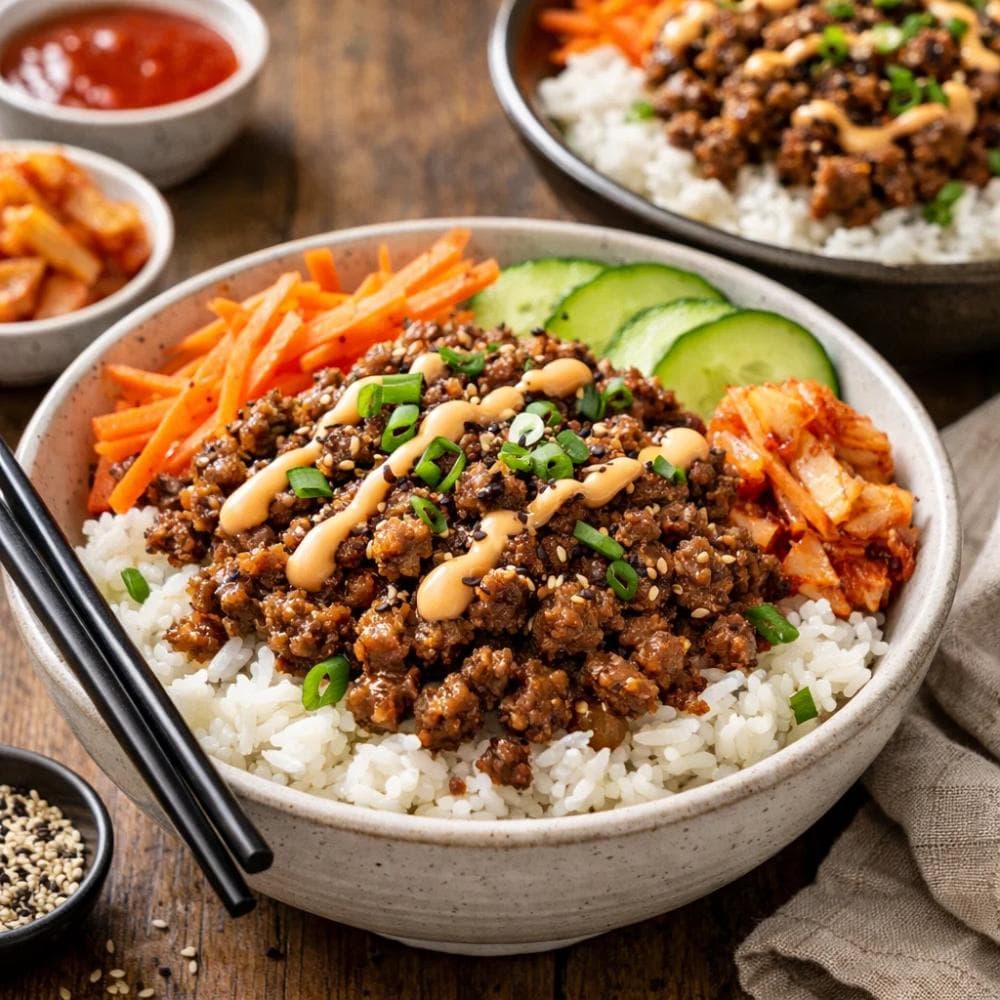
Divide the cooked rice between bowls. Spoon the Korean beef generously over one side. Arrange the cucumber salad on the other side. Scatter over the sliced spring onions and sesame seeds. Drizzle with a little extra sesame oil if you like, and add more gochujang or sriracha to taste.
Chef's Tips
- ›Warm the bowls briefly in the microwave before assembling — everything stays hot longer
- ›A fried egg on top (soft yolk) takes this from great to genuinely memorable
Made it? Rate it
One tap. It helps other cooks pick a dinner.
About This Recipe
What is this dish?
Korean beef rice bowls are one of those weeknight dinners that feel like cheating — 20 minutes, one pan, five components, and the result tastes like you ordered from a Korean restaurant. The ground beef is cooked in a soy, brown sugar, sesame, and gochujang sauce that goes sticky and glossy in the pan, then gets piled over rice with a quick pickled cucumber salad and finished with spring onions, sesame seeds, and a bit more chilli. It's fast, it's satisfying, and it makes excellent leftovers.
Why you'll love it
The sauce has the kind of depth that usually takes much longer to build. Sweet, salty, garlicky, with just enough heat — it coats every bit of beef and soaks slightly into the rice underneath. The cucumber salad cuts through the richness. The sesame oil ties it all together. It's a complete meal in a bowl and it takes less time than delivery.
When to serve
Monday to Friday dinner, meal prep for the week ahead, or any time you need something fast that doesn't taste like you were in a hurry. The beef reheats brilliantly which makes it great for lunch boxes.
Quick tips
Start the rice first. High heat for the beef. Don't stir too early. Mix the sauce before you start cooking. A fried egg on top is optional but strongly recommended.
Ingredient Highlights
Gochujang
Fermented Korean chilli paste that adds heat, sweetness, and a deep umami quality that no other chilli sauce quite replicates. A teaspoon is enough to add complexity without making the dish overwhelmingly spicy.
Sesame Oil
Added at the end of cooking and used in the dressing for the cucumber salad. Sesame oil has a low smoke point and loses its flavour if overheated — the toasty, nutty aroma is what makes this dish smell and taste distinctly Korean.
Brown Sugar
Creates the sticky, caramelised coating on the beef as the sauce reduces. The molasses in brown sugar adds a little more depth than white sugar, though both work.
Substitution Options
Replace beef with ground turkey, chicken, or pork. Swap soy sauce for tamari for gluten-free. Use coconut aminos instead of soy for a slightly sweeter, less salty version. Replace gochujang with sriracha or sambal oelek. Substitute the cucumber salad with shredded carrots, kimchi, or steamed pak choi.
Chef's Tips
Techniques that separate good from great
Use freshly grated ginger
Powdered ginger and fresh ginger taste quite different. Fresh ginger has a brighter, more floral heat that works particularly well in Korean-style dishes. A microplane makes grating it effortless.
Add a fried egg on top
A fried egg with a runny yolk is one of the most common ways to serve Korean rice bowls (bibimbap style). The yolk mixes into the beef and sauce and makes everything richer. Highly recommended.
Toast the sesame seeds yourself
Pre-toasted sesame seeds from a jar are fine, but 2 minutes in a dry pan over medium heat transforms them. Freshly toasted sesame has a nuttier, more fragrant quality that you can actually taste.
Nutrition Facts
Per serving · Estimated values
* Estimated per serving based on a 2,000 calorie diet.
Equipment Needed
- Large skillet or wok
- Small mixing bowl
- Grater or microplane
- Rice cooker or saucepan
Quick Tips
- Cook the rice first — this is a 20-minute recipe only if the rice is already done or you start it before anything else
- Don't overcrowd the pan when browning the beef — if the pan is too full, the beef steams instead of caramelises
- The sauce reduces very fast at high heat — have everything prepped before you start cooking
Recipe Variations
Different ways to make this dish your own
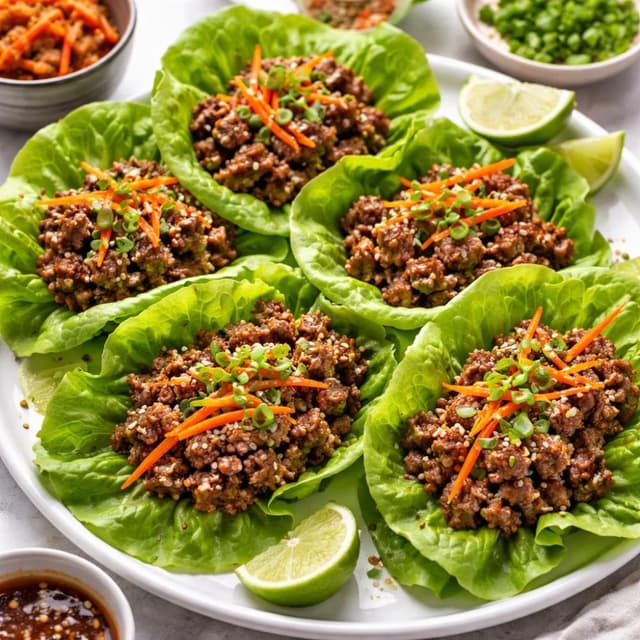
Korean Beef Lettuce Cups
Serve the beef in crisp iceberg or butter lettuce leaves instead of over rice for a low-carb version. The leaves act as a fresh, crunchy vessel for the sticky beef.
Spicy Korean Beef Bowls
Double the gochujang, add ½ teaspoon of Korean red pepper flakes (gochugaru), and top with kimchi and extra sliced jalapeños. For those who genuinely want heat.
Korean Beef Noodle Bowls
Serve the beef over rice noodles or glass noodles instead of rice. Toss the noodles with a little sesame oil and soy sauce before topping with beef.
Bibimbap-Style
Serve over rice in a hot stone bowl or cast-iron skillet. Add blanched spinach, bean sprouts, julienned carrots, and a fried egg on top. Mix everything together at the table like a proper bibimbap.
What to Serve With
Perfect pairings to complete the meal
Kimchi
The obvious Korean pairing. Store-bought kimchi is completely acceptable — the fermented funk and heat is exactly what this bowl wants alongside it.
Fried Egg
A fried egg with a runny yolk placed on top of the beef is arguably the best thing you can add to this bowl. Not optional in our opinion.
Steamed Pak Choi
Halved pak choi steamed or quickly stir-fried with a little garlic and soy adds green vegetables to the bowl without complicating anything.
Miso Soup
A small bowl of simple miso soup on the side turns this into a more complete meal with very little extra effort.
Storage & Reheating
Keep it fresh and plan ahead
Refrigerator
Store the cooked beef separately from the rice for up to 4 days. The cucumber salad is best eaten fresh but keeps for 1 day in the fridge.
Freezer
The cooked beef freezes well for up to 3 months. Cool completely, portion into bags, and freeze flat. Thaw overnight in the fridge.
Make-Ahead
The sauce can be made up to 3 days ahead. The beef reheats so well that making a double batch for the week is highly recommended.
Reheating
Reheat the beef in a skillet over medium heat with a splash of water or soy sauce to loosen it, about 2 minutes. Or microwave in 60-second bursts, stirring between each, until piping hot.
Kitchen tools for this recipe
The equipment this recipe is cooked with.
As an Amazon Associate we earn from qualifying purchases.
Cooking tonight?
Get a month of dinners like this — done for you
30 chef-tested dinners mapped to the month, plus 5 ready-to-shop grocery lists. One-time $8.99 — 30 dinners planned for you, zero nightly decisions.
See the 30-Day Plan →Be the first to review this recipe!
The Quick Answer
The two failure points in this bowl are dull, grey beef and a sauce that scorches the instant it hits the pan. Both come down to heat management: brown the lean beef hard and dry before any liquid goes in, then add the brown-sugar soy mixture last and pull the pan the moment it turns glossy.
Why does my ground beef go grey instead of browning?
Lean ground beef releases a lot of water, and water caps the surface temperature at 100C - far below the 150C+ needed for the Maillard reaction that builds savoury, roasted flavour. Crowding the pan or stirring too early traps that steam, so the meat poaches in its own juices and turns grey. Pressing the beef into a single layer over high heat and leaving it untouched for two minutes lets the moisture flash off at the edges first, so the surface dries and actually sears. Only break it apart once one face has caramelised; that browned crust is the backbone of the dish's flavour.
Why does the gochujang sauce burn so fast?
This sauce carries two tablespoons of brown sugar plus the sugars already in gochujang, and sucrose begins to caramelise and then scorch around 170C. On the high heat needed to brown beef, those sugars hit burning point in seconds, leaving an acrid, bitter coating. That is why the sauce goes in last, after the garlic and ginger, and why the pan reduces it for only one to two minutes. The rice vinegar also matters here: its acidity balances the sweetness so you can stop reducing while the glaze is still glossy rather than chasing thickness by overcooking and risking burnt sugar.
Not sure what to cook next? Let the generator pick your next dish in one click.
Random Recipe GeneratorGot Leftovers?
Turn what you already have in your fridge into delicious meals. Our AI-powered generator creates personalized recipes from your ingredients.
Go Deeper
Master the Culinary Science
Every recipe is a doorway. Our 7 Mastery Guides give you the science, technique, and framework to understand why food works — not just how to follow steps.
AI-Powered
Have Ingredients? Generate a Recipe.
Tell our AI what's in your fridge and get a custom recipe with image in seconds. No waste, no boredom.
Try the AI Recipe Generator →You Might Also Like
Discover more delicious recipes similar to what you're cooking