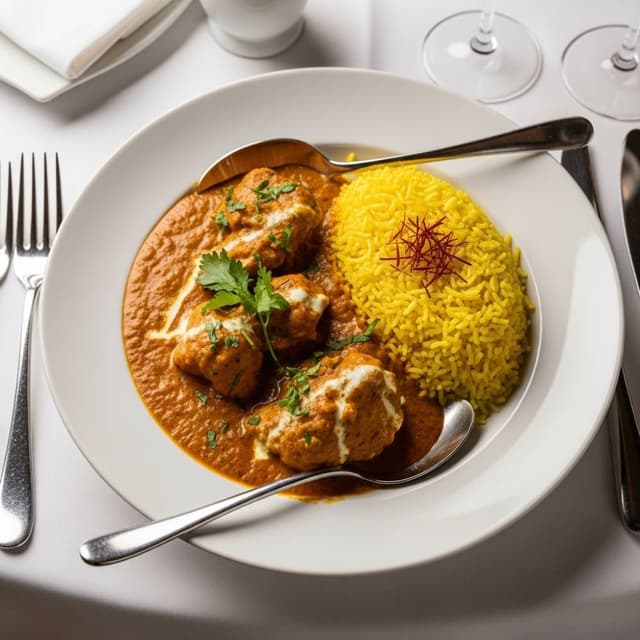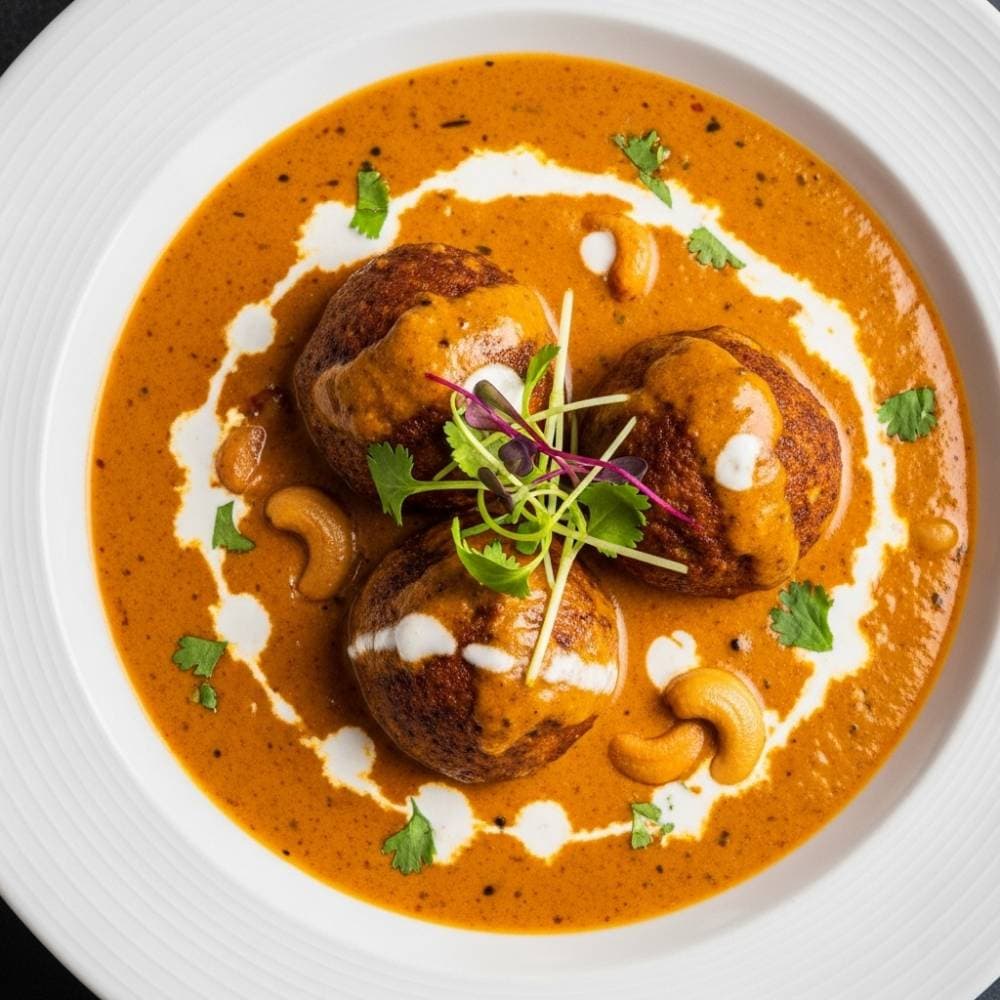
Malai Kofta with Cashew Cream Sauce
Soft and creamy dumplings (kofta) made from paneer and potatoes, served in a rich, mild, and luscious cashew cream sauce. A celebrated vegetarian Indian dish, perfect for two.
The Quick Answer
Malai kofta most often fails when the dumplings disintegrate in the hot oil or soak up grease and turn heavy, both traceable to too much moisture and too little binder in the paneer-potato mix. Keep the mixture firm and well-bound with cornstarch, fry at a steady 325-350°F, and add the kofta to the cashew sauce only at the last minute so they stay intact.
Why do my kofta fall apart in the oil?
A kofta holds together only if enough binder traps the moisture from the paneer and mashed potato. The two tablespoons of cornstarch are critical: as the kofta hits hot oil, the starch granules gelatinize and set into a web that locks the dumpling together before its water can turn to steam and blow it apart. Frying temperature is the other half. Below about 325°F the oil soaks in faster than a crust forms, so the kofta turn greasy and slump; well above 350°F the outside browns before the inside sets and they crack. Mixing the paneer and potato gently rather than kneading keeps the mixture from getting wet and sticky, which is also why a single test kofta tells you whether to add more cornstarch.
Why blend and strain the cashew sauce twice?
The silky, pale body of this gravy comes from soaked cashews rather than flour or heavy reduction. Soaking the raw cashews in hot water softens their cell walls so they break down completely when blended, releasing their fat and starch into a smooth, creamy emulsion that thickens the sauce naturally. Straining through a fine sieve removes the gritty cashew skin fragments and any unblended onion and tomato fiber that would make the gravy grainy on the tongue, giving the restaurant-smooth texture malai kofta is known for. The cashew paste also stabilizes the quarter cup of heavy cream against the acidic tomato, which is why you can finish with cream over low heat without the sauce splitting.
Not sure what to cook next? Let the generator pick your next dish in one click.
Random Recipe GeneratorAbout This Recipe
What is this dish?
Malai kofta is one of the crown jewels of North Indian vegetarian cooking — a dish so rich and celebratory that it is traditionally reserved for weddings and special occasions. Soft, fried dumplings (kofta) made from paneer and potato are bathed in a velvety cashew cream sauce perfumed with cardamom, cinnamon, and garam masala. The name literally means 'cream dumplings' and describes both the texture of the kofta and the richness of the sauce.
Why you'll love it
Malai kofta delivers an indulgent restaurant experience at home. The cashew cream sauce has a silky, almost impossibly smooth texture with a subtle warmth from the spices. The kofta themselves are pillowy-soft inside with a golden crust — a textural contrast that makes every bite deeply satisfying. Despite the elaborate appearance, the dish breaks down into manageable steps.
When to serve
Serve for a special dinner occasion, a vegetarian dinner party main course, or any time you want to impress guests with Indian cuisine. It pairs beautifully with naan, garlic naan, or basmati rice. It is a complete protein-rich vegetarian meal.
Quick tips
Soaking the cashews is essential — don't skip it. Blend and sieve the sauce twice for the smoothest possible texture. Add the kofta to the sauce only at the very end and serve immediately, or they will become soggy.
Ingredient Highlights
Paneer
Fresh Indian cheese that holds its shape when fried without melting. It provides a mild, milky flavor and soft texture inside the kofta. Make your own from whole milk for the freshest result, or use store-bought. Firm paneer gives the best kofta structure.
Raw Cashews
The secret to the sauce's extraordinary creaminess. Soaked and blended cashews create a naturally thick, rich cream without any dairy. They must be soaked in hot water for at least 30 minutes and blended until completely smooth to avoid graininess.
Garam Masala
The essential finishing spice that ties the entire sauce together. Added at the end of cooking to preserve its aromatic complexity. Each brand has a different blend, but most combine cumin, coriander, cardamom, black pepper, cinnamon, and cloves.
Heavy Cream
Adds an additional layer of richness and a subtle dairy sweetness to the cashew cream base. For a fully dairy-free version, simply increase the cashew paste quantity or add a splash of coconut cream instead.
Substitution Options
Replace paneer with firm tofu or boiled and mashed chickpeas for a vegan version. Cashews can be substituted with blanched almonds or sunflower seeds for a different nut-free cream (though cashews give the smoothest result). Ghee can be replaced with coconut oil. Heavy cream can be replaced with coconut cream or additional cashew paste for dairy-free. Cornstarch in the kofta can be replaced with chickpea flour (besan) for an authentic flavor.
You'll likely need to buy
Likely in your pantry
Step-by-Step Instructions
Make the kofta (dumplings)
In a large bowl, combine 1 cup crumbled paneer, 1/2 large mashed potato, 2 tablespoons cornstarch (or all-purpose flour), 1/2 finely minced green chili, 1/2 teaspoon grated fresh ginger, and 1/4 teaspoon salt. Mix gently until just combined. Do not overmix. Divide the mixture into 8-10 equal portions and gently roll them into smooth, oval or round kofta (dumplings).
Chef's Tips
- ›Kofta means dumplings. Mixing gently prevents the kofta from becoming tough.
- ›Make sure the kofta are smooth to prevent them from breaking during frying.
Fry the kofta
Heat 2-3 cups vegetable oil in a deep pot or kadai (a deep, round-bottomed cooking pot) over medium heat until it reaches 325-350°F (160-175°C). Carefully lower 3-4 kofta into the hot oil. Do not overcrowd the pot. Fry for 8-12 minutes, turning occasionally, until they are golden brown all over. Remove the cooked kofta with a slotted spoon and place them on a paper towel-lined plate to drain any extra oil. Repeat with remaining kofta. Keep fried kofta warm.
Chef's Tips
- ›Maintain oil temperature for even cooking and golden color.
- ›Frying in batches prevents the oil temperature from dropping too much.
Prepare cashew paste and sauce base
Drain the soaked 1/2 cup raw cashews. Blend them with a splash of fresh water to make a very smooth paste. In a separate large pan or pot, heat 1 tablespoon ghee or vegetable oil over medium heat. Add 1/2 teaspoon whole cumin seeds, 2 green cardamom pods, 1 small cinnamon stick, and 2 cloves. Cook for 30 seconds until fragrant (smells pleasant and aromatic). Add 1/2 finely chopped onion, 1 teaspoon grated ginger, and 2 cloves minced garlic. Cook for 5-7 minutes until the onion is soft and translucent (you can see through it). Add 1 medium roughly chopped tomato and cook for 5 minutes until it softens. Let this mixture cool slightly.
Chef's Tips
- ›Fragrant means it smells good and aromatic.
- ›Translucent means you can see through it, indicating it is soft.
Make the cashew cream sauce
Carefully transfer the cooled onion-tomato mixture to a blender. Add the smooth cashew paste. Blend until the sauce is completely smooth. If needed, add a little water to help it blend. Pass the blended sauce through a fine-mesh sieve into the clean large pan or pot for an extra smooth consistency. Return the sauce to medium-low heat. Stir in 1/2 teaspoon red chili powder, 1 teaspoon ground coriander, 1/4 teaspoon turmeric powder, 1/2 teaspoon garam masala, 1/2 cup water or vegetable broth, 1/4 cup heavy cream, 1/2 teaspoon sugar, and 1/4 teaspoon salt. Bring the sauce to a gentle simmer (cook gently just below boiling, with small bubbles) and cook for 10-15 minutes, stirring occasionally, allowing the flavors to meld and the sauce to thicken slightly. Simmer means to cook gently just below boiling, with small bubbles.
Chef's Tips
- ›Blending until very smooth is key for a creamy sauce.
- ›Sieving creates a restaurant-quality smooth texture.
Combine and serve
Gently place the fried kofta into the simmering cashew cream sauce. Cook for 2-3 minutes, stirring very gently, just to heat the kofta through. Do not stir too vigorously, or the kofta may break. Taste the sauce and adjust salt or sugar if needed. Garnish generously with 2 tablespoons chopped fresh cilantro. Serve hot with naan bread, basmati rice, or jeera rice.
Chef's Tips
- ›Adding kofta at the very end prevents them from becoming soggy.
- ›Serve immediately to enjoy the kofta's texture and warm sauce.
Chef's Tips
Techniques that separate good from great
Test-fry one kofta before frying the entire batch
Even with the correct ratio of potato to paneer to binder, individual batches can vary based on moisture content. Fry a single kofta first. If it breaks apart in the oil, add more cornstarch to the mixture. If it's too dense, add a splash of water. This one-minute test saves the entire batch.
Blend and strain the sauce twice for restaurant-quality smoothness
The difference between home-style and restaurant-quality malai kofta sauce is texture. Blend the onion-tomato mixture very well, strain through a fine-mesh sieve pressing hard, then blend the strained liquid again with the cashew paste. This double process creates an exceptionally smooth, silky sauce.
Add kofta to the sauce only just before serving
Kofta placed in sauce even 10-15 minutes before serving begin absorbing liquid and become soft and soggy. For entertaining, prepare the sauce fully and the kofta fully, then combine them in the final 2 minutes just before serving. Guests should experience the textural contrast of crispy-outside, soft-inside kofta.
Keep the sauce on the lowest possible heat after adding cream
Once the heavy cream (or coconut cream) goes into the sauce, vigorous boiling causes it to break and look curdled. Maintain a very gentle simmer — barely a bubble — and stir constantly. The sauce is already fully cooked at this stage; you're just heating it through.
Nutrition Facts
Per serving · Estimated values
* Estimated per serving based on a 2,000 calorie diet.
Equipment Needed
- Large bowl (for kofta mixture)
- Deep pot or kadai (for frying)
- Slotted spoon
- Paper towel-lined plate
- Blender
- Large pan or pot (for sauce)
- Fine-mesh sieve (optional, for sauce)
- Measuring cups
- Measuring spoons
- Knife and cutting board
As an Amazon Associate we earn from qualifying purchases — at no extra cost to you.
Quick Tips
- For a truly dairy-free version, use dairy-free paneer (such as tofu paneer) and dairy-free heavy cream or increase the cashew paste amount.
- Ensuring the sauce is super smooth will elevate the dish; blending and sieving are recommended.
- The kofta should be firm but soft; overmixing or too little binder can make them fall apart in oil. Fry a test kofta first.
Recipe Variations
Different ways to make this dish your own
Baked Kofta (Lighter Version)
Brush the formed kofta with oil and bake at 400°F (200°C) for 20-25 minutes, turning once, until golden. They won't be as crispy as fried but are significantly lighter and still excellent in the cashew cream sauce.
Stuffed Kofta
Press a small raisin, a cashew, or a pinch of saffron into the center of each kofta before rolling. The surprise filling adds a delightful sweetness or crunch when you bite into the dumpling.
Spinach Kofta (Palak Kofta)
Replace half the paneer with finely chopped and well-drained cooked spinach for green kofta with a slightly different flavor. Serve in the same cashew cream sauce for a beautiful color contrast.
With Makhani Sauce
Replace the cashew cream sauce with a classic butter chicken (makhani) sauce — blend roasted tomatoes, butter, cream, and spices — for a richer, slightly tangier kofta preparation.
What to Serve With
Perfect pairings to complete the meal
With Garlic Naan
The classic pairing. Tear pieces of warm garlic naan to scoop up the kofta and cashew cream sauce. The garlic notes in the naan complement the cardamom and garam masala in the sauce beautifully.
With Jeera Rice or Basmati
Plain jeera (cumin) rice or saffron basmati rice is an excellent base for malai kofta. The mildly flavored rice lets the complex sauce shine. Spoon the kofta and sauce generously over the rice.
As Part of an Indian Feast
Malai kofta is a stunning centerpiece for an Indian dinner spread alongside dal makhani, palak paneer, raita, and naan. It provides richness and a protein centerpiece for a vegetarian thali-style meal.
With a Light Cucumber Raita
The cooling, yogurt-based raita with cucumber and mint perfectly balances the richness of the cashew cream sauce. Serve a small bowl alongside to give guests a palate break between bites.
Storage & Reheating
Keep it fresh and plan ahead
Refrigerator
Store the cashew cream sauce separately from the kofta for up to 3 days in airtight containers. The sauce reheats beautifully; the kofta will soften overnight but remain flavorful.
Freezer
The cashew cream sauce freezes well for up to 1 month. The kofta do not freeze well as the texture becomes mealy upon thawing. Make the sauce ahead and freeze; fry kofta fresh.
Make-Ahead
The cashew cream sauce can be made entirely 1-2 days ahead and refrigerated. The kofta mixture can be formed and refrigerated (unfried) for up to 4 hours. Fry the kofta fresh and combine with reheated sauce just before serving.
Reheating
Gently reheat the sauce over low heat, stirring and adding a splash of water or cream if it has thickened too much. Add freshly fried kofta to the warm sauce and serve immediately.
Cooking tonight?
Get a month of dinners like this — done for you
30 chef-tested dinners mapped to the month, plus 5 ready-to-shop grocery lists. One-time $8.99 — 30 dinners planned for you, zero nightly decisions.
See the 30-Day Plan →Got Leftovers?
Turn what you already have in your fridge into delicious meals. Our AI-powered generator creates personalized recipes from your ingredients.
Go Deeper
Master the Culinary Science
Every recipe is a doorway. Our 7 Mastery Guides give you the science, technique, and framework to understand why food works — not just how to follow steps.
AI-Powered
Have Ingredients? Generate a Recipe.
Tell our AI what's in your fridge and get a custom recipe with image in seconds. No waste, no boredom.
Try the AI Recipe Generator →Browse more like this:
You Might Also Like
Discover more delicious recipes similar to what you're cooking