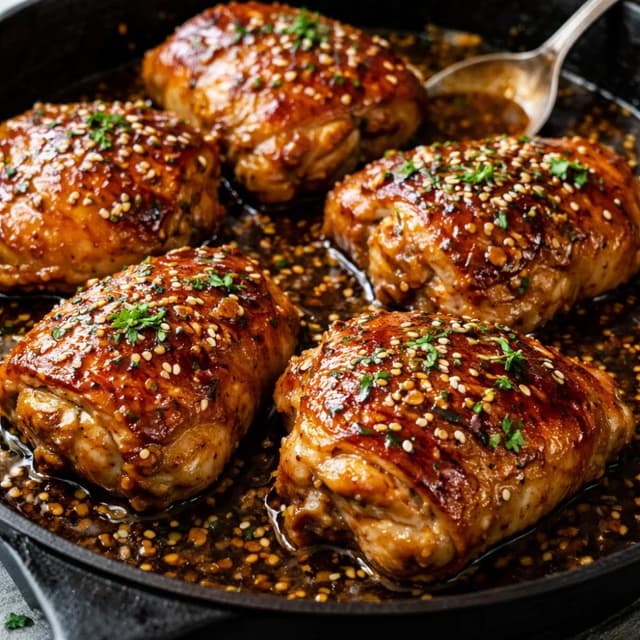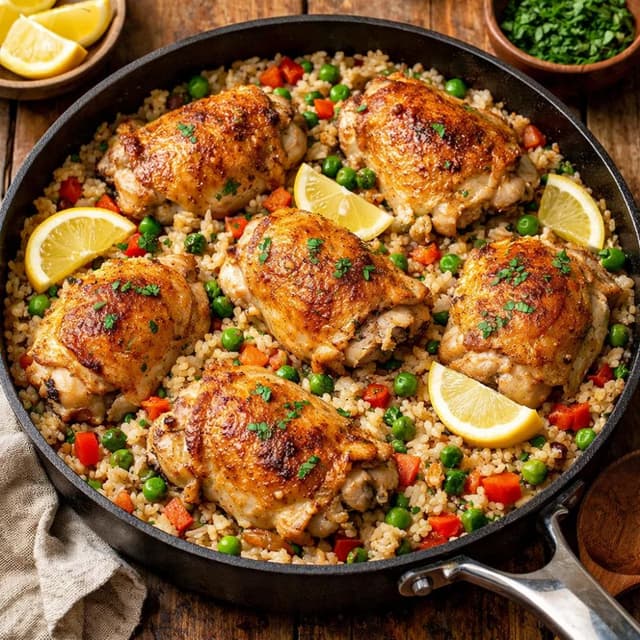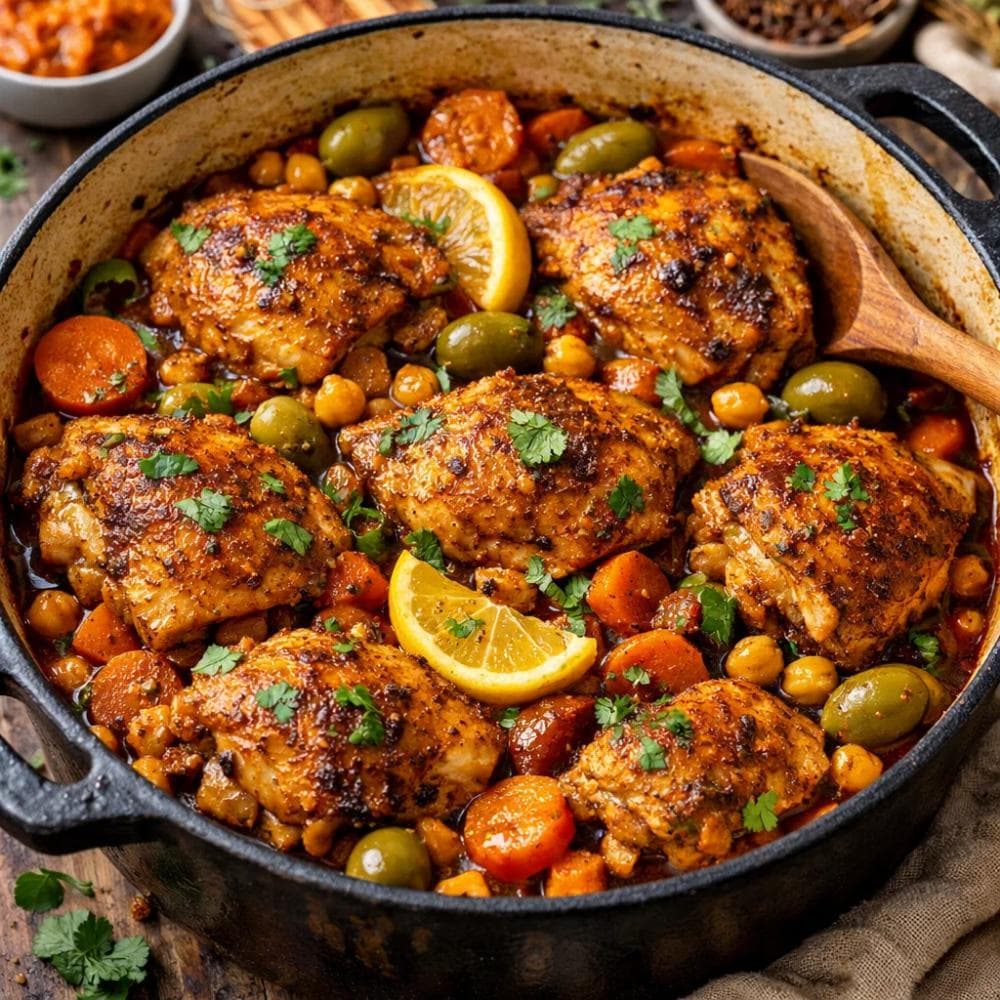
Moroccan Chicken with Spices (One-Pot Dinner)
A warmly spiced, aromatic one-pot chicken dish inspired by the tagines of Morocco — golden chicken thighs braised with preserved lemon, green olives, and a heady blend of cumin, coriander, ginger, and cinnamon. The preserved lemon adds a unique, intensely fragrant citrus note that is the hallmark of Moroccan cooking. Serve with fluffy couscous or warm flatbread to soak up the sauce.
The Quick Answer
This braise disappoints when the ground spices taste dusty and raw or the preserved lemon makes the whole pot aggressively salty. Bloom the cumin, coriander, ginger, and cinnamon in hot fat before any liquid goes in, and use only the rinsed preserved-lemon rind so its perfume comes through without overwhelming salinity.
Why do my Moroccan spices taste dusty and raw?
Cumin, coriander, ginger, turmeric, and cinnamon carry their aroma in fat-soluble compounds locked in the ground powder. Stir them straight into watery stock or tomato and they stay raw and chalky, coating the tongue with a dusty edge. Frying them for a minute or two in the hot oil with the softened onion - a step called blooming - dissolves those aromatic oils into the fat, which then disperses their flavour evenly through the whole dish. Heat also drives off the harsh volatile notes and deepens the warm, toasty character. Adding half the cumin and coriander as a rub on the chicken before searing gives a second hit of bloomed spice from the browning stage, layering depth that a single late addition can never reach.
Why is my Moroccan chicken too salty from the preserved lemon?
Preserved lemons are cured in a heavy salt brine, and that salt concentrates almost entirely in the soft pulp and the surrounding liquid. Chopping in the whole lemon, pulp and all, dumps a large dose of salt into a sauce that already gets soy-free seasoning from the stock and your own salt. Using only the rind, and rinsing it if it tastes very salty, keeps the fermented citrus perfume - the floral, slightly funky aroma that defines the dish - while leaving most of the salt behind. Green olives add their own brine too, so season the chicken and sauce cautiously and taste only after the final uncovered reduction, since boiling off water concentrates whatever salt is already in the pot.
Not sure what to cook next? Let the generator pick your next dish in one click.
Random Recipe GeneratorAbout This Recipe
What is this dish?
Moroccan chicken with spices is a home cook's version of the aromatic, slow-cooked tagines that are central to Moroccan cuisine. A tagine is both the name of the dish and the conical clay pot it is traditionally cooked in, but a regular heavy-based saucepan produces results that are every bit as good. The combination of warm spices — cumin, coriander, ginger, cinnamon, turmeric — with preserved lemon and green olives is one of the most distinctive and beautiful flavour profiles in all of North African cooking.
Why you'll love it
It is a one-pot dinner that fills the kitchen with extraordinary fragrance and produces a dish that looks and tastes far more impressive than the effort involved. The warm spices, the saltiness of the preserved lemon, and the briny olives create a sauce with remarkable depth. It is also naturally dairy-free and gluten-free (serve without couscous), making it suitable for a wide range of dietary requirements.
When to serve
A relaxed weeknight dinner or a dinner party dish that serves 4. Scales easily. Ideal for making ahead.
Quick tips
Brown the chicken well. Bloom the spices in the onion. Keep the chicken skin-side up during the braise. Don't skip the fresh coriander.
Ingredient Highlights
Preserved Lemon
The ingredient that most defines Moroccan cuisine. Whole lemons pickled in salt and their own juices develop a unique, intensely fragrant, mellow citrus character that fresh lemon cannot replicate. Only the skin is used — rinse and finely chop, discarding the pulp. Available in larger supermarkets, Middle Eastern shops, and delicatessens. Once opened, a jar keeps in the fridge indefinitely.
Green Olives
Briny, firm, and slightly bitter, green olives are the traditional pairing with preserved lemon in Moroccan cooking. They add salt, texture, and a sharpness that cuts through the rich braising sauce. Use good quality pitted green olives — cracked Moroccan olives from a deli are ideal, though jarred Castelvetrano or regular pitted green olives work well.
Warm Spice Blend
The combination of cumin, coriander, ginger, turmeric, and cinnamon is the characteristic Moroccan spice profile. Each plays a role: cumin and coriander provide the earthy base, ginger adds warmth and slight heat, turmeric contributes colour and subtle bitterness, and cinnamon adds the sweet warmth that is the hallmark of North African cooking.
Substitution Options
Replace preserved lemon with fresh lemon zest and a squeeze of juice. Swap green olives for Kalamata olives. Use vegetable stock and chickpeas instead of chicken for a vegan version. Replace fresh tomatoes with tinned. Swap couscous for rice, flatbread, or mashed potato.
You'll likely need to buy
Likely in your pantry
Step-by-Step Instructions
Brown the chicken
Season the chicken thighs generously with salt, pepper, and half the cumin and coriander. Heat the olive oil in a large, heavy-based saucepan or wide casserole over medium-high heat. Brown the chicken skin-side down for 4–5 minutes until deeply golden. Flip and brown for 2 minutes on the other side. Remove and set aside.
Chef's Tips
- ›Don't rush the skin-side browning — the golden skin adds flavour and visual appeal to the finished dish
- ›Season the chicken with the spices before browning; this creates a fragrant, lightly crusted surface
Cook the aromatics
In the same pan, reduce the heat to medium. Add the sliced onion and cook for 5–6 minutes, stirring occasionally, until soft and translucent. Add the garlic, ginger, turmeric, cinnamon, and the remaining cumin and coriander. Cook for 1–2 minutes, stirring, until fragrant.
Chef's Tips
- ›The spices need a minute of cooking in the fat and onion to bloom — this transforms them from dry powder to a fragrant, rounded paste
- ›Scrape up any browned bits from the chicken as you cook the onion — they add flavour
Add the liquid and braise
Add the tomatoes to the pan and cook for 2 minutes, stirring, until they begin to break down. Pour in the chicken stock. Return the browned chicken to the pan skin-side up, nestling it among the onions. Add the preserved lemon and green olives. Bring to a gentle simmer, cover, and cook for 25 minutes.
Chef's Tips
- ›Arrange the chicken skin-side up so the skin stays above the liquid — keeping it dry helps preserve the texture gained from browning
- ›The preserved lemon is intensely flavoured — use only the skin, not the pulp, and rinse the skin briefly under cold water to remove excess salt if very salty
Finish the sauce
Remove the lid and simmer uncovered for a further 10 minutes to reduce and thicken the sauce slightly. The chicken should be fully cooked through (the juices run clear when pierced) and the sauce should have a light, coating consistency. Taste and adjust seasoning.
Chef's Tips
- ›Taste the sauce for salt — preserved lemons and olives are both salty, so the dish may need no additional salt
- ›If the sauce is too thin, remove the chicken and reduce on high heat for 3–4 minutes before returning it
Garnish and serve
Scatter the fresh coriander generously over the top of the dish just before serving. Serve directly from the pot at the table with couscous or warm flatbread alongside for soaking up the sauce.
Chef's Tips
- ›Fresh coriander is not optional — it provides a bright, herbaceous lift that the cooked spices cannot
- ›Serve with a wedge of lemon on the side for those who like extra brightness
Chef's Tips
Techniques that separate good from great
Toast your own spices
If you have whole cumin and coriander seeds, toast them briefly in a dry pan until fragrant, then grind in a pestle and mortar. Freshly ground spices have a noticeably more vibrant, aromatic character than pre-ground powder. It takes two extra minutes and makes a real difference in a spice-forward dish like this.
Make your own preserved lemons
Preserved lemons require nothing but lemons, salt, and 3–4 weeks of patience. Quarter the lemons almost through, pack generously with salt, press into a sterilised jar, and leave at room temperature. The result is more complex and less sharp than most shop-bought versions. Once started, they last for months and are used in countless Moroccan dishes.
Add a handful of raisins or apricots
A small handful of golden raisins or chopped dried apricots added with the stock introduces a gentle sweetness that is very characteristic of Moroccan cooking — the sweet-savoury-spiced combination is one of the cuisine's signatures and transforms the dish into something even more aromatic and complex.
Nutrition Facts
Per serving · Estimated values
* Estimated per serving based on a 2,000 calorie diet.
Equipment Needed
As an Amazon Associate we earn from qualifying purchases — at no extra cost to you.
Quick Tips
- Brown the chicken well before braising — the golden crust adds flavour to both the chicken and the braising liquid
- Use only the preserved lemon skin, not the pulp — rinse it if it seems very salty
- Don't skip the fresh coriander at the end — it adds the bright freshness that balances the warm, earthy spices
Recipe Variations
Different ways to make this dish your own
Moroccan Lamb with Chickpeas
Replace the chicken with 800g of bone-in lamb shoulder pieces and add a tin of drained chickpeas with the stock. Lamb needs a longer braise — 1.5–2 hours — but the resulting dish is richer and more deeply flavoured.
Moroccan Vegetable Tagine
Omit the chicken and replace with a generous selection of vegetables — aubergine, courgette, sweet potato, and chickpeas. Use vegetable stock. The spice base and preserved lemon make it as aromatic as the meat version.
Moroccan Chicken with Apricots
Add a small handful of dried apricots (about 80g) with the stock. They plump up during the braise and add a sweet-savoury contrast that is very characteristic of Moroccan cooking.
Moroccan Chicken with Harissa
Stir a tablespoon of rose harissa paste into the sauce at the beginning for a spicier, more complex version. Rose harissa adds floral heat that complements the warm spice blend beautifully.
What to Serve With
Perfect pairings to complete the meal
Steamed Couscous
The most traditional accompaniment. Pour boiling chicken stock over the couscous (equal volumes), cover, and leave for 5 minutes. Fluff with a fork and season with salt, olive oil, and a little cumin. The fluffy couscous soaks up the braising sauce beautifully.
Warm Flatbread
Moroccan flatbread (khobz) or any warm flatbread for scooping the chicken and sauce. The informal, communal style of eating directly from the pot with bread is how this dish is traditionally served at Moroccan family tables.
Harissa Yoghurt
A spoonful of thick Greek yoghurt swirled with harissa paste alongside adds a creamy, spicy element that contrasts with the warm braised flavours. Also provides a cooling element for those who find the dish too spicy.
Simple Green Salad
A Moroccan-style salad of grated raw carrot dressed with lemon juice, olive oil, cumin, and fresh coriander is the classic fresh element alongside a tagine.
Storage & Reheating
Keep it fresh and plan ahead
Refrigerator
Keeps very well in an airtight container in the fridge for up to 4 days. The flavours develop and improve overnight.
Freezer
Freezes well for up to 3 months. Defrost overnight in the fridge and reheat gently on the hob.
Make-Ahead
An excellent make-ahead dish — make the full recipe a day ahead and reheat gently for even better flavour.
Reheating
Reheat in the pan over medium-low heat with a splash of water or stock. Stir occasionally and add fresh coriander after reheating.
Cooking tonight?
Get a month of dinners like this — done for you
30 chef-tested dinners mapped to the month, plus 5 ready-to-shop grocery lists. One-time $8.99 — 30 dinners planned for you, zero nightly decisions.
See the 30-Day Plan →Be the first to review this recipe!
Got Leftovers?
Turn what you already have in your fridge into delicious meals. Our AI-powered generator creates personalized recipes from your ingredients.
Go Deeper
Master the Culinary Science
Every recipe is a doorway. Our 7 Mastery Guides give you the science, technique, and framework to understand why food works — not just how to follow steps.
AI-Powered
Have Ingredients? Generate a Recipe.
Tell our AI what's in your fridge and get a custom recipe with image in seconds. No waste, no boredom.
Try the AI Recipe Generator →Browse more like this:
You Might Also Like
Discover more delicious recipes similar to what you're cooking