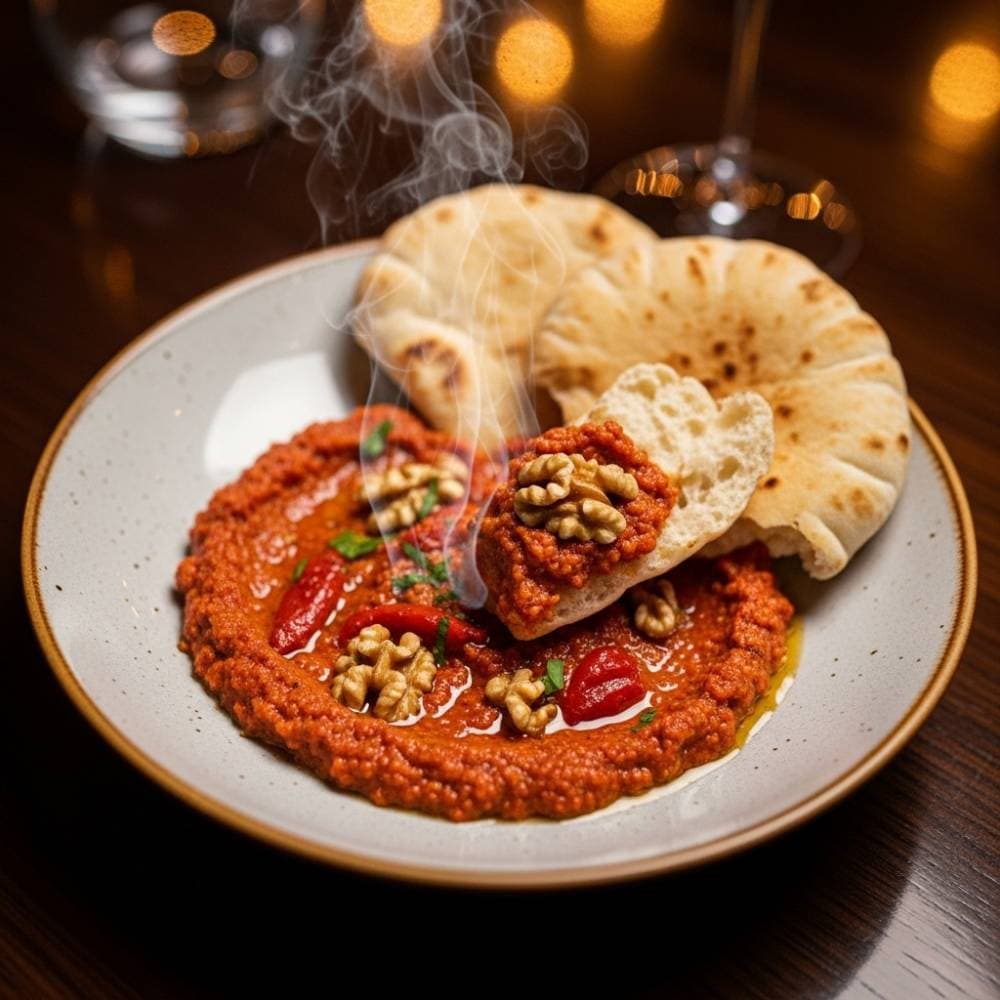
Muhammara with Warm Pita
A flavorful and vibrant Middle Eastern dip made from roasted red bell peppers and walnuts, blended with tangy pomegranate molasses and spices. Served with warm pita bread, it is perfect as an appetizer for two.
The Quick Answer
Muhammara tastes thin and sharp or turns to greasy paste when the pomegranate molasses is unbalanced or the walnuts are over-processed. The breadcrumbs and the toasted walnut fat are what give the dip body and round off the acid, so the pulse length and the molasses ratio carry the dish.
What do the breadcrumbs actually do in muhammara?
The two tablespoons of gluten-free breadcrumbs are a functional binder, not a filler. Roasted red peppers release a lot of free water, and the breadcrumb starch swells and absorbs that liquid, thickening the dip so it scoops rather than weeps on the plate. The crumbs also act as an emulsifier scaffold: their starch and surface help hold the olive oil and the walnut oil in suspension, so the dip stays cohesive instead of splitting into an oily layer. Because they soak up moisture, they let you keep added water to a minimum, which preserves the concentrated roasted-pepper flavor. Skip them and the muhammara turns loose and watery, and you are tempted to over-blend chasing body.
Why is my muhammara too sharp and tangy?
Pomegranate molasses is intensely sour and mildly bitter, and a single tablespoon can dominate if the peppers haven't built enough sweetness to push back. Roasting until the skins blacken caramelizes the peppers' natural sugars, and that sweetness is what the molasses is balanced against; under-roasted, pale peppers leave the acid exposed and the dip tastes harshly tangy. The lemon juice adds a second, brighter acid, so taste before adding all of it. Salt also matters here: it suppresses perceived sourness and bitterness, which is why adjusting salt at the end can tame a dip that reads too sharp. If it is still aggressive, a few extra toasted walnuts add fat and tannin that blunt the acidity.
Not sure what to cook next? Let the generator pick your next dish in one click.
Random Recipe GeneratorAbout This Recipe
What is this dish?
Muhammara is a Syrian and Lebanese red pepper and walnut dip of remarkable complexity — roasted red peppers, toasted walnuts, pomegranate molasses, Aleppo pepper, and olive oil blended into a thick, slightly smoky, sweet-and-sour spread. The name comes from the Arabic word for 'reddened.' Originating in Aleppo, Syria, muhammara has spread across the Levant and beyond as one of the most distinctive and sophisticated dips in Middle Eastern cuisine.
Why you'll love it
Muhammara delivers a flavor profile unlike any other dip — simultaneously sweet from the red peppers, tangy from the pomegranate molasses, nutty from the walnuts, smoky from the Aleppo pepper, and complex from all the elements working together. It pairs beautifully with warm pita for a starter that impresses guests without requiring cooking expertise. It is also dairy-free and vegan.
When to serve
Serve as a meze starter, part of a Middle Eastern spread, alongside grilled meats as a sauce, or as a sophisticated dip for crudités. Muhammara is a showstopper at dinner parties and is far less well-known than hummus, making it a memorable and distinctive choice.
Quick tips
Roast the red peppers until completely charred — the more charred, the better the smoky flavor. Peel while still warm for easier removal of the skin. Toast the walnuts before blending for deeper flavor. Don't skip the pomegranate molasses — it is the essential tart-sweet element.
Ingredient Highlights
Roasted Red Peppers
The primary flavor and body of muhammara. Char the peppers under the broiler or over a flame until completely blackened and blistered all over, then steam in a covered bowl. This process softens the flesh to silk and develops a deep, complex smoky sweetness. Jarred roasted red peppers are an acceptable shortcut though lack some smoky character.
Pomegranate Molasses
The ingredient that makes muhammara uniquely Syrian. Pomegranate molasses is concentrated pomegranate juice reduced to a thick, deeply tart-sweet syrup with a flavor impossible to describe without tasting — fruity, sour, sweet, and intensely complex. Available at Middle Eastern grocery stores. Without it, muhammara becomes just a red pepper dip.
Walnuts
Provide the dip's body, richness, and a bitter earthiness that balances the peppers' sweetness. Toast walnuts before using — raw walnuts have a harsh tannin that mellows significantly with heat. The texture of walnuts in the finished dip should be somewhere between smooth and slightly chunky.
Aleppo Pepper (Pul Biber)
The characteristic red pepper flakes of Syrian and Turkish cooking — moderately hot with a distinctive fruity, slightly oily, and complex flavor different from standard red pepper flakes. Named for the Syrian city of Aleppo. If unavailable, use a mixture of regular red pepper flakes and a small pinch of cayenne.
Substitution Options
Jarred roasted red peppers can substitute for fresh roasted peppers (drain well and pat dry). If pomegranate molasses is unavailable, make a substitute by reducing 1/2 cup pomegranate juice with 2 teaspoons sugar and 1 teaspoon lemon juice to a thick syrup. Aleppo pepper can be replaced with 1/2 teaspoon regular red pepper flakes plus a tiny pinch of cayenne and a pinch of sweet paprika. Walnuts can be replaced with pecans for a slightly sweeter, softer flavor.
You'll likely need to buy
Likely in your pantry
Step-by-Step Instructions
Roast the bell peppers
Preheat your oven to 400°F (200°C). Place 2 large red bell peppers on a baking sheet. Roast for 20-25 minutes, turning them halfway through, until the skins are softened and slightly charred (lightly browned and blackened in spots). Alternatively, you can char them over an open flame on a gas stove or under a broiler (cook under a top heating element). Once roasted, transfer the hot peppers to a bowl and cover tightly with plastic wrap or a lid for 10-15 minutes. This steaming helps loosen the skins. Once cool enough to handle, peel the skins off the peppers, remove the stems and seeds. Chop the roasted pepper flesh roughly. Broil means to cook food directly under a high heat source.
Chef's Tips
- ›Charring adds a smoky flavor to the peppers.
- ›Steaming helps make peeling easier.
Toast walnuts and combine ingredients
While peppers steam, toast 1/2 cup walnuts in a dry skillet over medium heat for 3-5 minutes, stirring often, until fragrant (smells pleasant and aromatic). Be careful not to burn them. Let them cool. In a food processor, combine the chopped roasted red bell peppers, toasted walnuts, 2 tablespoons gluten-free breadcrumbs, 1 tablespoon pomegranate molasses (a thick, tangy syrup made from pomegranate juice), 1 tablespoon olive oil, 1 clove minced garlic, 1/2 teaspoon ground cumin, 1/4 teaspoon red pepper flakes, 1 tablespoon fresh lemon juice, and 1/4 teaspoon salt. Fragrant means it smells good and aromatic.
Chef's Tips
- ›Toasting walnuts enhances their flavor and crunch.
- ›Pomegranate molasses is a key ingredient for the sweet and tangy flavor of Muhammara.
Blend the muhammara
Process all ingredients in the food processor until they form a coarse paste. Do not blend until completely smooth; Muhammara (a red pepper and walnut dip) should have a slightly textured consistency. If the mixture is too thick, add 2 tablespoons water, 1 tablespoon at a time, until it reaches your desired consistency. Taste and adjust salt or lemon juice if needed.
Chef's Tips
- ›Blending to a coarse paste provides a pleasant texture.
- ›Adjust consistency by adding water gradually.
Serve
Transfer the Muhammara to a serving bowl. Drizzle with a little extra olive oil. Serve immediately or chill for flavors to meld. Serve with 2 warm pita breads (flatbreads), cut into wedges. The pita bread makes the dish no longer gluten-free.
Chef's Tips
- ›Muhammara tastes even better after chilling for a few hours as flavors deepen.
- ›Pita is a type of flatbread.
Chef's Tips
Techniques that separate good from great
Char the red peppers until completely blackened — don't stop at 'slightly charred'
The depth of muhammara's smoky character comes from thorough charring of the pepper skins. The peppers should be blackened all over — not just in spots. This level of charring would seem excessive for other preparations but is correct for muhammara. The charred skin is discarded; its flavor infuses the flesh during the steaming process.
Toast walnuts in a dry pan until fragrant and barely golden — watch carefully
Toasted walnuts have significantly reduced bitterness and a deeper, nuttier flavor than raw. Heat a dry pan over medium heat, add walnuts, and stir frequently for 4-5 minutes until they smell intensely nutty and are very lightly golden. Over-toasting makes them bitter — they should be barely golden, not brown.
Let the muhammara rest for 30 minutes after blending before serving
The flavors of muhammara harmonize and deepen as the dip rests. Freshly blended muhammara tastes good; muhammara after 30 minutes of resting tastes extraordinary. All the flavors — pepper, walnut, pomegranate, spice — have time to meld into a cohesive whole. This is one of those dishes where patience is directly rewarded.
Serve at room temperature, not cold from the refrigerator
Cold muhammara is muted and flat — the olive oil congeals slightly and the volatile aromatic compounds in the peppers and spices are suppressed by cold temperature. Remove from the refrigerator at least 30 minutes before serving. At room temperature, the flavors bloom and the dip's consistency is much better for spreading.
Nutrition Facts
Per serving · Estimated values
* Estimated per serving based on a 2,000 calorie diet.
Equipment Needed
- Baking sheet
- Food processor
- Skillet (for walnuts)
- Serving bowl
- Measuring cups
- Measuring spoons
- Knife and cutting board
As an Amazon Associate we earn from qualifying purchases — at no extra cost to you.
Quick Tips
- For a spicier Muhammara, add more red pepper flakes or a small fresh red chili.
- Ensure your pomegranate molasses is good quality for the best flavor.
- Muhammara can be prepared a day ahead and stored in an airtight container in the refrigerator.
Recipe Variations
Different ways to make this dish your own
Muhammara with Breadcrumbs (Thicker Version)
Add 1/4 cup fresh or day-old breadcrumbs to the blender with all other ingredients for a thicker, more textured version. Traditional Lebanese muhammara often includes breadcrumbs for body and a slightly different texture.
Muhammara Pasta Sauce
Thin muhammara with 1/4 cup pasta water and toss with cooked rigatoni or penne for a quick, stunning pasta sauce. Top with feta crumbles and fresh mint. The roasted pepper-walnut sauce coats pasta beautifully.
Muhammara Chicken Marinade
Thin muhammara with a little olive oil and use as a marinade for chicken thighs. Marinate 4+ hours and grill or roast. The spiced pepper-walnut coating creates an extraordinary crust.
Spicy Muhammara
Double the Aleppo pepper and add a fresh red chili (seeded) to the blender for a significantly spicier version closer to the original Aleppan preparation.
What to Serve With
Perfect pairings to complete the meal
With Warm Pita and Crudités
Spread muhammara generously on a plate, drizzle with olive oil, sprinkle with extra Aleppo pepper and walnuts, and surround with warm pita wedges and crudités for an elegant, visually striking mezze plate.
As Part of a Middle Eastern Mezze Spread
Serve muhammara alongside hummus, baba ganoush, tabbouleh, stuffed grape leaves, olives, and warm pita for a complete Middle Eastern mezze spread. Muhammara's striking red color and bold flavor makes it a standout among the other dips.
Alongside Grilled Lamb or Chicken
Muhammara makes an extraordinary sauce alongside grilled lamb chops or chicken. The smoky, sweet pepper and walnut combination complements char-grilled meats in the same way that mint sauce complements British lamb.
As a Spread on Flatbread Pizza
Use muhammara as the sauce base for a flatbread pizza, topped with feta, olives, roasted vegetables, and fresh herbs. The bold flavor of muhammara requires simpler toppings to avoid overwhelming the palate.
Storage & Reheating
Keep it fresh and plan ahead
Refrigerator
Muhammara keeps refrigerated for up to 5 days in an airtight container. Drizzle a thin layer of olive oil over the surface before storing to prevent oxidation and keep the color vibrant.
Freezer
Muhammara freezes well for up to 2 months. Thaw overnight in the refrigerator and stir well before serving. The texture remains good after freezing.
Make-Ahead
This is an excellent make-ahead dish — the flavors improve over 24 hours. Make 1-2 days ahead, refrigerate, and bring to room temperature before serving.
Reheating
Muhammara is served at room temperature — no reheating required. Simply remove from the refrigerator 30 minutes before serving.
Cooking tonight?
Get a month of dinners like this — done for you
30 chef-tested dinners mapped to the month, plus 5 ready-to-shop grocery lists. One-time $8.99 — 30 dinners planned for you, zero nightly decisions.
See the 30-Day Plan →Got Leftovers?
Turn what you already have in your fridge into delicious meals. Our AI-powered generator creates personalized recipes from your ingredients.
Go Deeper
Master the Culinary Science
Every recipe is a doorway. Our 7 Mastery Guides give you the science, technique, and framework to understand why food works — not just how to follow steps.
AI-Powered
Have Ingredients? Generate a Recipe.
Tell our AI what's in your fridge and get a custom recipe with image in seconds. No waste, no boredom.
Try the AI Recipe Generator →Browse more like this:
You Might Also Like
Discover more delicious recipes similar to what you're cooking