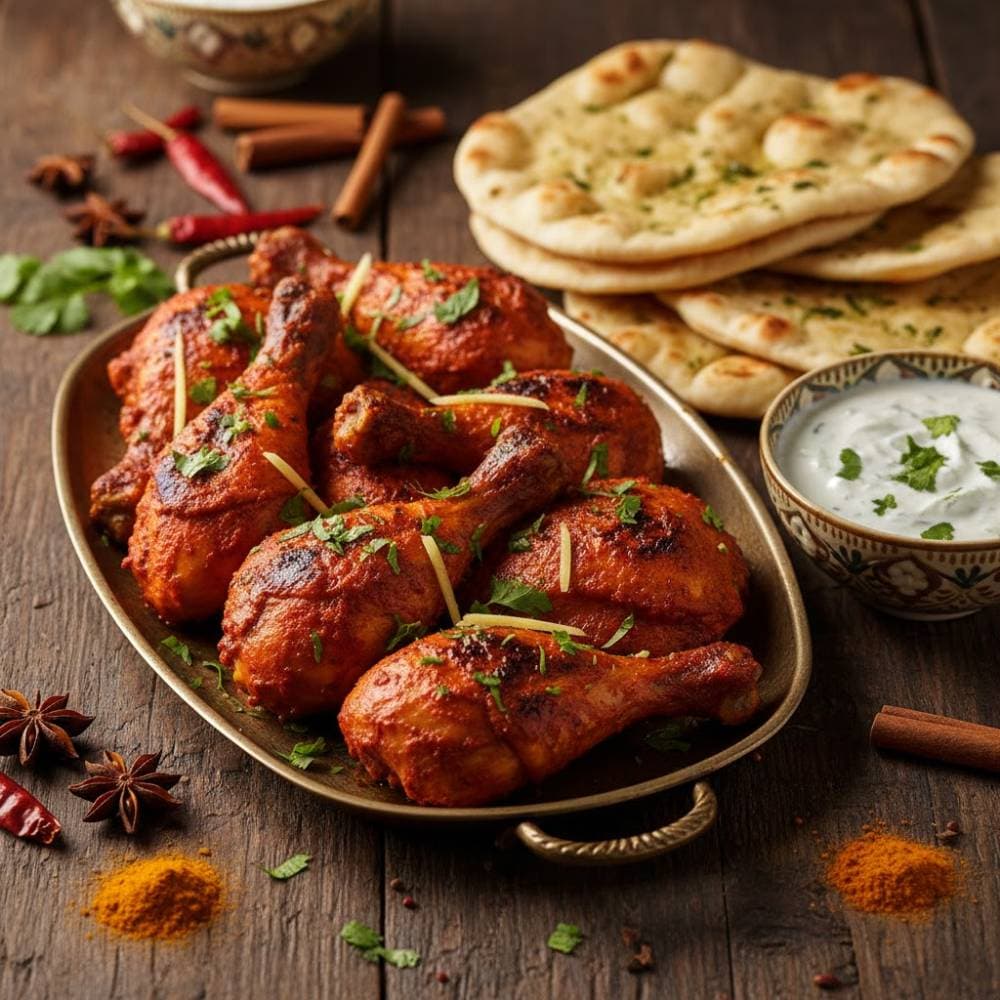
Oven-Baked Tandoori Chicken (Easy Restaurant-Style Recipe)
Juicy, flavorful chicken legs marinated in a vibrant yogurt and spice blend, then oven-baked to achieve a charred, smoky finish reminiscent of a traditional tandoor oven. A showstopping Indian classic made easy at home for two.
The Quick Answer
Oven tandoori chicken comes out pale and flabby instead of charred when the marinade stays wet on the skin and the oven runs too cool. Wipe off excess marinade, bake on a wire rack at a high 450F so moisture drains and evaporates, then broil briefly to mimic the tandoor's blast of radiant heat.
Why doesn't my oven tandoori chicken get charred like the restaurant version?
Char is the Maillard reaction and light surface caramelization, and both demand a dry surface and intense heat. A real tandoor hits over 800F, so a home oven has to work harder. Two things hold it back: a thick wet coat of yogurt marinade and a low oven. Excess marinade is mostly water that must boil off before the surface can color, so the skin steams and stays pale if you do not wipe the chicken down first. The 450F setting and a wire rack let fat and juices drip away and air circulate, drying the surface so it can brown. The final broil delivers the close, radiant heat that scorches the high points into the smoky charred spots that define tandoori.
Why does the yogurt marinade matter beyond flavor in tandoori chicken?
The 1/2 cup of yogurt is doing chemistry, not just carrying spice. Yogurt is mildly acidic from lactic acid and contains live cultures and calcium that gently break down the surface proteins of the chicken, tenderizing the meat and helping it stay juicy through a hot 450F bake. Its acidity also lets the marinade cling and penetrate, especially into the 1/4-inch slashes cut into each leg, carrying paprika, garam masala and ginger deep into the meat rather than just sitting on top. Yogurt browns well too: its milk proteins and sugars contribute to the charred color under the broiler. Marinating at least 2 hours gives the acid time to work; overnight deepens both tenderness and flavor.
Not sure what to cook next? Let the generator pick your next dish in one click.
Random Recipe GeneratorAbout This Recipe
What is this dish?
Tandoori chicken is one of India's most iconic dishes — bone-in chicken pieces marinated in a vibrant blend of yogurt, lemon juice, and aromatic spices, then cooked at extreme heat in a cylindrical clay oven called a tandoor. The name comes directly from this oven. This home-oven version replicates the essence of tandoor cooking using high heat and a finishing broil to achieve the signature charred exterior and juicy, spice-penetrated interior.
Why you'll love it
This recipe gives you restaurant-quality tandoori chicken without specialized equipment. The yogurt marinade tenderizes the chicken magnificently while infusing it with warming spices, and the high-heat baking and broil finish creates those irresistible charred spots. The flavor is bold, complex, and deeply satisfying — impressive enough for guests but straightforward enough for a weeknight.
When to serve
Tandoori chicken works beautifully as a showstopping main course at dinner parties, served on a platter with sliced onions, lemon wedges, and naan. It is equally excellent for casual family dinners. Leftover tandoori chicken is wonderful in wraps, salads, or chopped into fried rice, making it a practical meal-prep protein.
Quick tips
Marinate for at least 2 hours, overnight is ideal. Score the chicken deeply so the marinade reaches the meat. Use a wire rack on the baking sheet for even heat circulation and proper charring. Finish under the broiler for the authentic charred exterior. Rest for 5 minutes before serving.
Ingredient Highlights
Plain Yogurt
The marinade base that does two critical jobs: the mild acidity tenderizes the chicken by partially breaking down protein fibers, and the yogurt clings to the meat and creates a coating that chars beautifully in the oven. Full-fat plain yogurt works best — non-fat yogurt can make the marinade too thin to adhere properly.
Garam Masala
The warming spice blend in the marinade that provides the aromatic backbone of tandoori flavor. Along with cumin and coriander, it creates the complex, layered spice profile that defines the dish. Fresh, fragrant garam masala from an Indian grocery store makes a notable difference.
Paprika
Provides the rich orange-red color on the surface of the finished chicken. Smoked paprika adds extra depth and a subtle smokiness that mimics the tandoor effect. For the vivid red color seen in restaurant tandoori, Kashmiri chili powder is the traditional choice.
Bone-In, Skin-On Chicken Legs
Bone-in pieces are essential for tandoori chicken. The bone conducts heat evenly and prevents the meat from drying out at high oven temperatures. Skin-on pieces brown and char better than skinless. Leg quarters (drumstick plus thigh) are the traditional and most practical choice for this preparation.
Substitution Options
Use boneless chicken thighs or breasts as a quicker alternative, reducing the baking time to 20-25 minutes. Greek yogurt can replace plain yogurt for a thicker marinade that adheres even better. If paprika is unavailable, use an equal amount of mild chili powder. For the vivid restaurant-red color, use Kashmiri chili powder (1.5 tablespoons) instead of paprika — it gives color without extra heat. The lemon juice can be replaced with an equal amount of lime juice.
You'll likely need to buy
Likely in your pantry
Step-by-Step Instructions
Prepare the chicken
Pat 4 bone-in, skin-on chicken legs dry with paper towels. Using a sharp knife, make 3 shallow diagonal cuts (slashes) on each chicken piece, cutting about 1/4 inch deep into the meat. These cuts allow the marinade to penetrate the chicken for more flavor. Place the chicken pieces in a large bowl or resealable bag.
Chef's Tips
- ›Patting the chicken dry helps the marinade stick better.
- ›Slashing the chicken ensures the marinade flavors reach deep into the meat.
Make the marinade and marinate
In a medium bowl, combine 1/2 cup plain yogurt, 2 tablespoons lemon juice, 2 tablespoons vegetable oil, 3 cloves minced garlic, 1 tablespoon grated fresh ginger, 1 tablespoon paprika, 1 teaspoon ground cumin, 1 teaspoon ground coriander, 1 teaspoon garam masala, 1/2 teaspoon ground turmeric, 1/2 teaspoon chili powder, 1/4 teaspoon cayenne pepper (if using), and 1 teaspoon salt. Whisk until smooth and well combined. Pour the marinade over the chicken pieces. Use your hands or tongs to rub the marinade thoroughly into the cuts and all over the chicken. Cover and refrigerate for at least 2 hours (or up to overnight for best results).
Chef's Tips
- ›Marinating for at least 2 hours is essential for authentic tandoori flavor.
- ›The yogurt tenderizes the chicken while the spices infuse it with flavor.
Bake the chicken
Preheat your oven to 450°F (230°C). Line a baking sheet with aluminum foil and place a wire rack on top (this allows air to circulate for even cooking). Lightly grease the rack with cooking spray or oil. Remove the chicken from the marinade, allowing any excess to drip off, and place the pieces on the wire rack, skin-side up. Bake for 35-40 minutes, or until the chicken is cooked through (internal temperature of 165°F / 74°C) and the skin is charred in spots and deeply colored. For extra char, switch the oven to broil for the last 3-5 minutes, watching closely to prevent burning.
Chef's Tips
- ›The high oven temperature mimics a tandoor oven and creates charring.
- ›Broiling at the end adds the signature blackened spots of tandoori chicken.
Rest and serve
Remove the chicken from the oven and let it rest for 5 minutes. Resting allows the juices to redistribute throughout the meat, making it juicier. Arrange the tandoori chicken on a serving plate. Garnish with 2 tablespoons chopped fresh cilantro. Serve with lemon wedges and sliced red onion on the side. Pairs well with steamed basmati rice, naan bread, raita (yogurt sauce), or a simple green salad.
Chef's Tips
- ›Resting the chicken ensures it stays juicy when you cut into it.
- ›A squeeze of fresh lemon juice before eating adds brightness to the smoky flavors.
Chef's Tips
Techniques that separate good from great
Score the chicken deeply before marinating for maximum flavor penetration
The marinade needs to reach the meat, not just coat the surface. Make 3 diagonal cuts on each piece, cutting about 1/2 inch deep through the skin into the meat. This allows the yogurt and spices to penetrate, resulting in seasoned meat all the way through rather than just a flavorful coating.
Use a wire rack on a baking sheet — never bake directly on foil
Placing the chicken directly on a foil-lined pan traps steam underneath, making the bottom soggy rather than charred. A wire rack allows hot air to circulate around all sides of the chicken, giving you proper color and even cooking. This single equipment change dramatically improves the result.
Finish under the broiler for authentic char
The tandoor's defining quality is intense, direct heat that creates char on the surface. Home ovens can replicate this with a final 3-5 minutes under the broiler. Watch closely and rotate the pan once for even charring. The charred spots are not burned — they are essential to the authentic tandoori experience.
Marinate overnight for restaurant-quality depth
The minimum 2-hour marinating time is functional, but overnight marinating (up to 24 hours) transforms the dish. The yogurt acid slowly tenderizes the chicken fibers and the spices penetrate far deeper into the meat. Plan ahead and refrigerate overnight for markedly better results.
Nutrition Facts
Per serving · Estimated values
* Estimated per serving based on a 2,000 calorie diet.
Equipment Needed
- Large bowl or resealable bag (for marinating)
- Medium bowl (for marinade)
- Baking sheet
- Aluminum foil
- Wire rack
- Whisk
- Measuring cups
- Measuring spoons
- Knife and cutting board
- Meat thermometer (recommended)
As an Amazon Associate we earn from qualifying purchases — at no extra cost to you.
Quick Tips
- For a more vibrant red color, add 1-2 drops of red food coloring to the marinade (optional and purely cosmetic).
- If you do not have a wire rack, place the chicken directly on the foil-lined baking sheet and flip halfway through cooking.
- Leftover tandoori chicken is excellent in wraps, salads, or chopped and added to fried rice. Store in an airtight container in the refrigerator for up to 3 days.
Recipe Variations
Different ways to make this dish your own
Tandoori Chicken Tikka
Use boneless chicken breast or thigh cut into 1.5-inch cubes instead of whole legs. Thread onto skewers and grill or broil for 12-15 minutes, turning once. The smaller pieces cook faster and create more charred surface area relative to meat.
Tandoori Fish
Use firm white fish fillets (salmon, cod, or halibut) with the same marinade. Marinate for only 30 minutes as the acid quickly starts to cook the fish. Bake at 425°F for 12-15 minutes or broil for 8-10 minutes.
Tandoori Paneer Skewers
Use 1-inch cubes of paneer with the same yogurt-spice marinade. Grill or bake at high heat for 10-12 minutes until the outside is charred and the cheese is softened. A beautiful vegetarian version of the classic.
Tandoori Cauliflower
Marinate whole cauliflower florets in the yogurt-spice mixture and roast at 450°F for 25-30 minutes until caramelized and slightly charred. The cauliflower absorbs the marinade deeply and creates a stunning vegetarian centerpiece.
What to Serve With
Perfect pairings to complete the meal
Sliced Onions with Lemon and Chaat Masala
Thinly sliced raw red onion tossed with lemon juice, salt, and a pinch of chaat masala is the traditional garnish for tandoori chicken. The sharp, acidic crunch cuts through the richness of the marinated meat and brightens every bite.
Mint Chutney
A vibrant green sauce made from fresh mint, cilantro, green chili, and lemon that pairs classically with tandoori chicken. The bright, cooling, herby sauce is the perfect counterpoint to the warm, charred spice crust.
Garlic Naan or Roomali Roti
Warm Indian flatbread serves as both accompaniment and utensil. Torn pieces of naan or the thin, soft roomali roti ('handkerchief bread') wrap around pieces of chicken with onion and chutney for the complete experience.
Cucumber Raita
Yogurt with grated cucumber, cumin, and fresh mint provides a cooling, creamy contrast to the bold, smoky tandoori flavors. A generous dollop alongside the chicken tempers any heat and adds dairy richness.
Storage & Reheating
Keep it fresh and plan ahead
Refrigerator
Store cooked tandoori chicken in an airtight container for up to 3 days. The chicken stays flavorful and the skin loses its crispness when refrigerated. Excellent used cold in salads and wraps.
Freezer
Freeze cooked tandoori chicken pieces for up to 3 months. Wrap individually in foil then transfer to freezer bags. Thaw overnight in the refrigerator. The texture is best reheated in the oven rather than the microwave.
Make-Ahead
Prepare the marinade and marinate the chicken up to 24 hours in advance. Store in an airtight bag in the refrigerator. The longer the chicken marinates, the better the flavor and tenderness. Bake fresh when ready to eat.
Reheating
Reheat in a 375°F oven on a wire rack for 10-12 minutes until heated through and the skin has some crispness restored. Avoid the microwave which makes the skin rubbery. A brief spell under the broiler for the last 2-3 minutes restores some of the original char.
Cooking tonight?
Get a month of dinners like this — done for you
30 chef-tested dinners mapped to the month, plus 5 ready-to-shop grocery lists. One-time $8.99 — 30 dinners planned for you, zero nightly decisions.
See the 30-Day Plan →Got Leftovers?
Turn what you already have in your fridge into delicious meals. Our AI-powered generator creates personalized recipes from your ingredients.
Go Deeper
Master the Culinary Science
Every recipe is a doorway. Our 7 Mastery Guides give you the science, technique, and framework to understand why food works — not just how to follow steps.
AI-Powered
Have Ingredients? Generate a Recipe.
Tell our AI what's in your fridge and get a custom recipe with image in seconds. No waste, no boredom.
Try the AI Recipe Generator →Browse more like this:
You Might Also Like
Discover more delicious recipes similar to what you're cooking