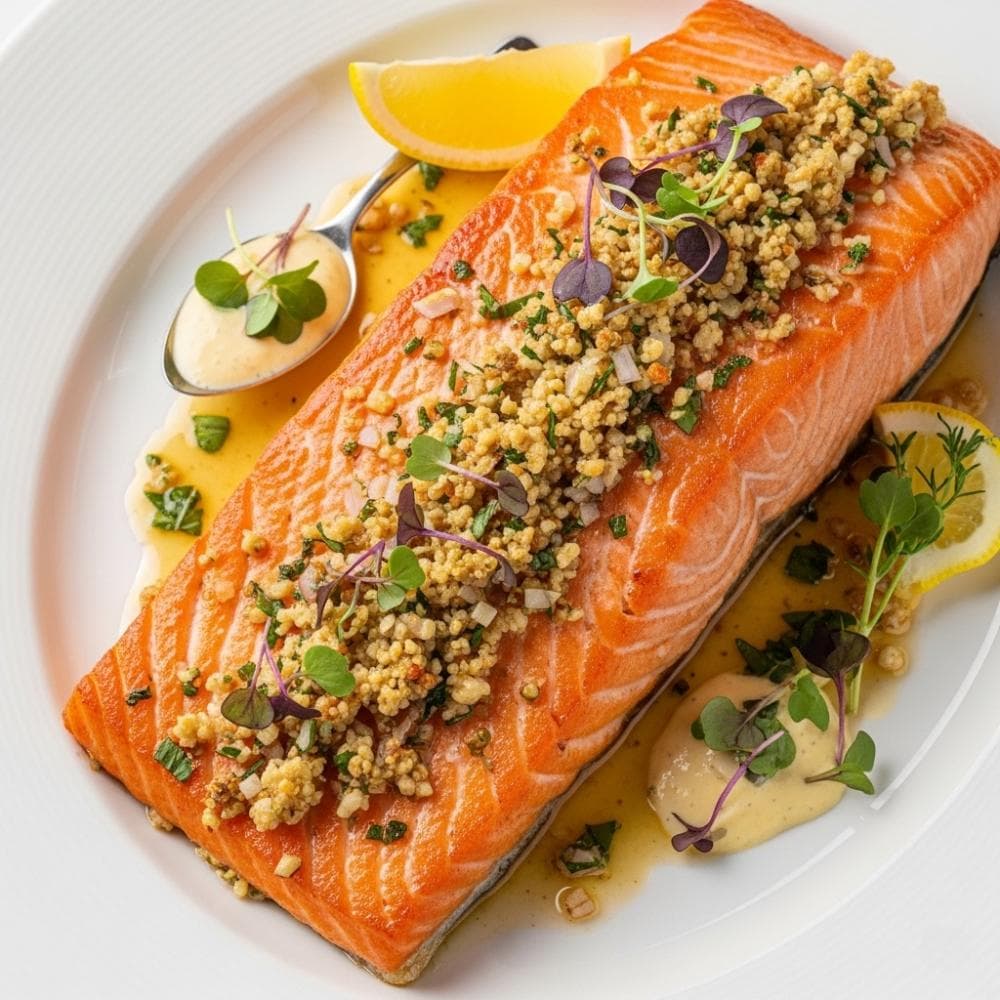
Simple Baked Salmon
Flaky salmon fillets baked to perfection with lemon and herbs. This easy and healthy recipe is ideal for a quick and satisfying meal for two.
The Quick Answer
Salmon's window between underdone and dry is narrow because its fat and connective tissue behave unlike lean white fish. The lemon slices laid on top and whether the skin is on or off both change how that window plays out in a 400-degree oven.
Does putting lemon slices on salmon actually do anything while it bakes?
The lemon does more than decorate. As the slices heat, their juice and oils release citric acid and aromatic limonene onto the fillet's surface, and the acid lightly denatures the outermost proteins, firming the surface and slightly cutting the rich, oily mouthfeel of the salmon's fat. Because the slices sit directly on the flesh they also shield that strip from the oven's drying radiant heat, so the covered area stays a touch moister. They will not cook the interior, though, since acid penetrates the dense muscle very slowly in 12 to 15 minutes, which is why this stays a bake and not a ceviche. Skin-side contact still drives the actual doneness.
Why is my baked salmon mushy and pale instead of flaky?
Salmon flesh separates into clean flakes only once its connective collagen has set and the muscle fibers have just firmed; pull it too early and the proteins are still loose, giving a soft, almost raw-feeling texture rather than distinct flakes. Farmed salmon, being fattier, can also read as soft because the fat stays liquid and slick at serving heat. Baking on parchment at 400 degrees gives gentle, even conduction, but parchment and a wet surface mean almost no browning, so do not wait for color as a doneness cue, it will dry out first. Flaking that resists slightly and turns opaque, not the surface look, tells you the proteins have finally set.
Not sure what to cook next? Let the generator pick your next dish in one click.
Random Recipe GeneratorAbout This Recipe
What is this dish?
Simple Baked Salmon is an easy, elegant weeknight dinner featuring tender salmon fillets baked to flaky perfection with just olive oil, lemon, herbs, and simple seasonings. This no-fuss recipe lets the natural rich flavor of the salmon shine through while keeping the fish incredibly moist and tender. Baking is one of the healthiest cooking methods for salmon, requiring minimal added fat while preserving the fish's beneficial omega-3 fatty acids. The dish comes together in less than 20 minutes from start to finish, making it perfect for busy weeknights when you want something nutritious, delicious, and impressive without spending hours in the kitchen.
Why you'll love it
This recipe delivers perfectly cooked salmon every single time with minimal effort and just a handful of ingredients you likely already have on hand. The simple preparation allows the salmon's natural buttery richness to take center stage, enhanced by bright lemon and aromatic herbs without overwhelming the delicate fish flavor. Baking ensures even cooking and requires no flipping or constant attention, freeing you to prepare side dishes while the fish cooks hands-off. Salmon is one of the healthiest proteins available, packed with heart-healthy omega-3 fatty acids, high-quality protein, and vitamin D. The recipe is naturally gluten-free, dairy-free, and low-carb, fitting virtually any dietary plan while tasting indulgent.
When to serve
Baked salmon is perfect for healthy weeknight dinners when you need something nutritious, satisfying, and ready in under 20 minutes. Serve it alongside roasted vegetables, steamed asparagus, quinoa, or a fresh green salad for a balanced, restaurant-quality meal at home. The dish works beautifully for date nights and entertaining since it looks and tastes impressive despite being incredibly simple to prepare. Salmon is also excellent for meal prep — bake extra fillets and use them cold in salads, grain bowls, or sandwiches throughout the week. The mild flavor and elegant presentation make it suitable for both casual family dinners and more formal occasions.
Quick tips
Pat the salmon fillets completely dry with paper towels before seasoning to help the seasonings stick and promote better browning. Bake skin-side down if your fillets have skin — it acts as a natural barrier, keeps the fish moist, and peels off easily after cooking. Check for doneness at the thinner end of the fillet first, as it cooks faster than the thick end — aim for 145°F internal temperature or when the fish flakes easily with a fork. Do not overbake or the salmon will become dry and chalky — it is better to slightly undercook and let it rest, as carryover cooking will finish it perfectly. Add lemon slices on top during baking for more intense citrus flavor and beautiful presentation.
Ingredient Highlights
Salmon Fillets
The star of the dish — wild-caught salmon has a richer flavor and firmer texture, while farmed salmon is fattier and more tender. Salmon is one of the best sources of omega-3 fatty acids EPA and DHA, which support heart health, brain function, and reduce inflammation. It is also high in high-quality protein, vitamin D, B vitamins, and selenium. Choose fillets that are evenly thick for consistent cooking.
Fresh Lemon
Provides bright acidity that cuts through the rich, fatty salmon and enhances all the other flavors. Lemon juice helps tenderize the fish slightly and adds freshness that prevents the dish from tasting heavy. The citrus aroma while baking makes your kitchen smell amazing. Fresh lemon is essential — bottled lemon juice cannot replicate the vibrant flavor.
Olive Oil
Adds moisture and helps the fish brown slightly while preventing it from sticking to the pan. Extra virgin olive oil provides its own fruity, peppery flavor notes and healthy monounsaturated fats. The oil also helps the dry seasonings adhere to the salmon and creates a slightly crispy exterior.
Dried Dill
A classic herb pairing for salmon that adds delicate, fresh, slightly sweet anise-like flavor. Dill complements the richness of salmon without overwhelming its delicate taste. While fresh dill is wonderful, dried dill is convenient and provides concentrated flavor that stands up well to baking.
Substitution Options
Replace salmon with other firm fish fillets like arctic char, trout, or halibut — adjust cooking time based on thickness. Use fresh dill (1 tablespoon chopped) instead of dried for brighter flavor, or substitute with fresh parsley, thyme, or rosemary. Swap lemon with lime or orange for different citrus profiles. Add a drizzle of honey or maple syrup for a sweet-savory glaze. Use melted butter instead of olive oil for richer flavor. For extra flavor, add Dijon mustard, minced garlic, or a sprinkle of everything bagel seasoning. Finish with a pat of herb butter after baking for restaurant-style richness. Serve with any grain, roasted vegetables, or salad — it pairs beautifully with nearly any side dish.
You'll likely need to buy
Likely in your pantry
Step-by-Step Instructions
Prepare for baking
Preheat your oven to 400°F (200°C). Line a baking sheet with parchment paper for easy cleanup. Pat the salmon fillets dry with paper towels. This helps them cook better and get a nicer finish.
Chef's Tips
- ›Patting the salmon dry is an important step for good texture.
- ›Parchment paper prevents sticking and makes cleanup simple.
Season the salmon
Place the salmon fillets on the prepared baking sheet. Drizzle 1 tablespoon olive oil over the salmon. Sprinkle 1/4 teaspoon garlic powder, 1/2 teaspoon dried dill, 1/4 teaspoon salt, and 1/8 teaspoon black pepper evenly over both fillets. Arrange the 1/2 lemon, thinly sliced, over the salmon.
Chef's Tips
- ›Even seasoning ensures every bite is flavorful.
- ›Lemon slices add a fresh, bright taste and keep the fish moist.
Bake the salmon
Place the baking sheet in the preheated oven. Bake for 12-15 minutes, or until the salmon is cooked through and flakes easily with a fork. The exact cooking time depends on how thick your salmon fillets are. Fish is done when it reaches an internal temperature of 145°F (63°C).
Chef's Tips
- ›Avoid overcooking salmon, or it can become dry and tough.
- ›Flaking easily with a fork is a good sign it is done.
Serve
Carefully remove the baking sheet from the oven. Serve the baked salmon immediately. You can offer extra lemon wedges on the side for squeezing over the fish.
Chef's Tips
- ›This meal is best enjoyed fresh from the oven.
- ›A squeeze of fresh lemon always brightens flavors.
Chef's Tips
Techniques that separate good from great
Pat the salmon completely dry before seasoning
Moisture on the surface of the fillet creates steam in the oven, which prevents browning and makes the exterior soft and slightly steamed rather than lightly crisped. Press paper towels firmly over the entire surface of the fish and let it air-dry for 2 minutes before adding oil and seasoning.
Check doneness at the thin end first
The thinner tail end of a salmon fillet cooks significantly faster than the thick center. Start checking there — if it flakes easily with a fork, the thick part likely needs 1-2 more minutes. The center should be just opaque and reach 125-130°F for moist, restaurant-style salmon (FDA says 145°F for fully cooked).
Bake skin-side down, always
The skin acts as a protective barrier that insulates the delicate flesh from the direct pan heat. It keeps the bottom from drying out and makes the fillet much easier to lift off the pan intact. The skin peels off cleanly after baking for anyone who doesn't want to eat it.
Don't overbake — carryover cooking is real
Salmon continues to cook for 2-3 minutes after you pull it from the oven. Remove it when it's just slightly underdone in the thickest part and let it rest on the pan for 3 minutes. The residual heat finishes the job, leaving the center perfectly moist rather than dried out.
Nutrition Facts
Per serving · Estimated values
* Estimated per serving based on a 2,000 calorie diet.
Equipment Needed
As an Amazon Associate we earn from qualifying purchases — at no extra cost to you.
Quick Tips
- For a hint of spice, add a tiny pinch of red pepper flakes with the seasoning.
- Pair this salmon with a simple side salad, roasted vegetables, or quinoa for a complete meal.
- Leftovers can be stored in an airtight container in the refrigerator for up to 2 days.
Recipe Variations
Different ways to make this dish your own
Honey Garlic Glazed Salmon
Make a glaze of 2 tablespoons honey, 2 cloves minced garlic, 1 tablespoon soy sauce, and a squeeze of lemon. Brush over the salmon in the last 5 minutes of baking and broil briefly until caramelized and sticky.
Miso-Glazed Salmon
Mix 2 tablespoons white miso, 1 tablespoon mirin, 1 tablespoon sake, and 1 teaspoon sugar into a smooth glaze. Marinate the salmon for 1 hour (or overnight), then bake as directed for a deeply umami, Japanese-inspired preparation.
Herb-Crusted Salmon
Press a thick layer of fresh herb breadcrumbs (parsley, dill, thyme, panko, lemon zest, and olive oil) onto the salmon before baking. The crust creates a fragrant, textured topping that is visually impressive and adds flavor contrast.
Teriyaki Salmon
Brush with homemade teriyaki sauce (soy sauce, mirin, sake, and sugar reduced until slightly syrupy) before and during baking, finishing under the broiler for a glossy, caramelized glaze that pairs perfectly with steamed rice.
What to Serve With
Perfect pairings to complete the meal
With Roasted Asparagus and Lemon Butter
Roast asparagus spears alongside the salmon at the same temperature (they cook in 10-12 minutes), finish with a small pat of butter and a squeeze of lemon — an effortless, elegant sheet-pan dinner.
Over Garlic Herb Quinoa
Serve over fluffy quinoa tossed with sautéed garlic, olive oil, and fresh herbs for a high-protein, nutrient-dense bowl that complements the salmon without competing with it.
In a Grain Bowl the Next Day
Flake leftover cold salmon over mixed greens, cucumber, avocado, and a lemony vinaigrette for a next-day lunch that's arguably better than the original dinner — easy, fresh, and no reheating needed.
With Creamy Dill Sauce
Whisk together Greek yogurt, fresh dill, a squeeze of lemon, minced garlic, and a pinch of salt for a 2-minute sauce that elevates the simple baked salmon into something that feels restaurant-quality.
Storage & Reheating
Keep it fresh and plan ahead
Refrigerator
Store cooked salmon in an airtight container for up to 2 days. It's excellent served cold in salads or grain bowls the next day — no reheating necessary.
Freezer
Freeze raw salmon fillets in vacuum-sealed bags or wrapped tightly in plastic for up to 3 months. Thaw overnight in the refrigerator, not at room temperature.
Make-Ahead
Season the salmon up to 4 hours ahead and refrigerate uncovered — the salt draws out surface moisture and results in slightly better browning when baked.
Reheating
Reheat gently in a 275°F (135°C) oven for 10-15 minutes until just warmed through. Higher temperatures dry it out quickly. Alternatively, enjoy cold or at room temperature in salads.
Cooking tonight?
Get a month of dinners like this — done for you
30 chef-tested dinners mapped to the month, plus 5 ready-to-shop grocery lists. One-time $8.99 — 30 dinners planned for you, zero nightly decisions.
See the 30-Day Plan →Got Leftovers?
Turn what you already have in your fridge into delicious meals. Our AI-powered generator creates personalized recipes from your ingredients.
Go Deeper
Master the Culinary Science
Every recipe is a doorway. Our 7 Mastery Guides give you the science, technique, and framework to understand why food works — not just how to follow steps.
AI-Powered
Have Ingredients? Generate a Recipe.
Tell our AI what's in your fridge and get a custom recipe with image in seconds. No waste, no boredom.
Try the AI Recipe Generator →Browse more like this:
You Might Also Like
Discover more delicious recipes similar to what you're cooking