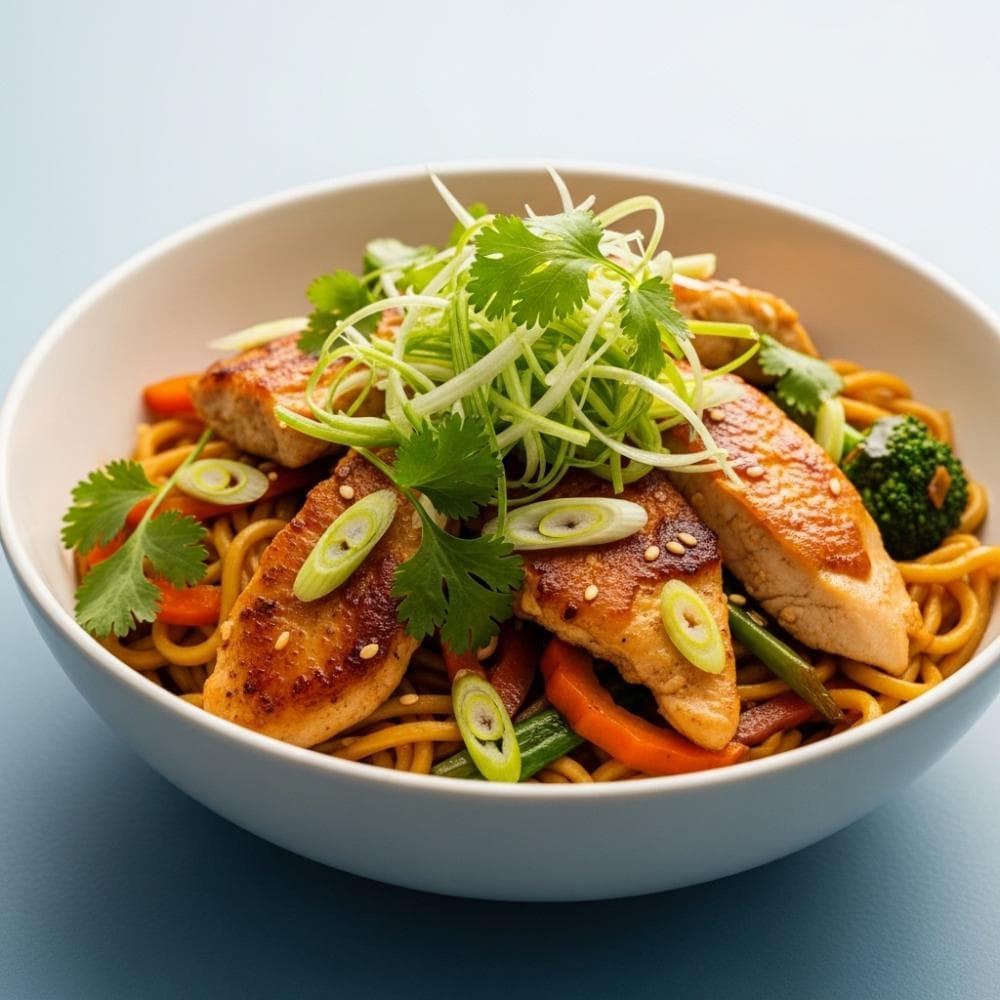
Simple Chicken and Vegetable Lo Mein
A quick and easy version of the classic Chinese-American noodle dish, featuring tender chicken and crisp vegetables tossed with soft noodles in a light, savory sauce. Perfect for a weeknight meal for two.
The Quick Answer
Lo mein tastes pale and watery when the wok never gets hot enough to drive off moisture and lightly toast the noodles. The fix is high, dry heat applied in stages so the soy-sesame sauce reduces and clings instead of pooling, and the vegetables hit doneness without weeping.
Why does my lo mein taste bland and pale instead of savory?
Most of the flavor depends on heat the noodles never receive in a cool, crowded wok. A genuinely hot surface lets the soy sauce hit the metal and lightly caramelize, and gives the noodles a faint smoky toast often called wok hei; below that threshold everything just simmers and tastes flat. Stirring the sauce in around the hot edge of the wok, rather than dumping it over the noodle pile, lets it sizzle and concentrate before it coats everything. The teaspoon of sugar is not only for sweetness: it accelerates browning and deepens color, so a hot wok turns those few tablespoons of soy into a glossy, savory glaze instead of thin gray liquid.
Why do my vegetables come out soggy or watery in lo mein?
Carrots and broccoli are mostly water held in rigid cells, and a wok that is too cool or too full drops below the point where that surface moisture flashes to steam. The water then leaks out and stews the vegetables limp, also diluting the sauce. Add them to a screaming-hot wok in a thin layer and keep them moving so the heat sears the outside before the interiors collapse, leaving them tender-crisp. Order matters too: the dense carrot needs a head start over the quicker broccoli, and the garlic and ginger go in late because their sugars scorch in seconds at stir-fry temperatures, turning bitter if they sit on the hot metal too long.
Not sure what to cook next? Let the generator pick your next dish in one click.
Random Recipe GeneratorAbout This Recipe
What is this dish?
Simple Chicken and Vegetable Lo Mein is a quick and satisfying Chinese-American noodle dish featuring soft, chewy egg noodles tossed with tender sliced chicken and crisp vegetables in a light, savory sauce. Lo mein, which means 'stirred noodles' in Cantonese, is a popular takeout favorite that is surprisingly easy to recreate at home in just 25 minutes from start to finish. This version uses fresh or dried Chinese egg noodles combined with garlic, ginger, soy sauce, and sesame oil for authentic flavor, making it a perfect weeknight dinner that rivals your favorite restaurant.
Why you'll love it
This recipe delivers authentic takeout flavor with fresh ingredients and without the excess oil and sodium found in restaurant versions. The high-heat stir-fry technique creates perfectly tender-crisp vegetables while keeping the noodles soft and silky, all coated in a simple yet flavorful sauce made from pantry staples. Everything cooks quickly in one pan, making cleanup a breeze, and the recipe is infinitely customizable with your favorite proteins and vegetables. It is budget-friendly, comes together faster than ordering delivery, and tastes fresher and more vibrant than anything from a takeout container.
When to serve
Lo mein is perfect for busy weeknight dinners when you need something quick, satisfying, and crowd-pleasing that the whole family will enjoy. It works beautifully as a standalone meal or as part of a larger Chinese-inspired spread alongside dishes like egg rolls, dumplings, or hot and sour soup. The recipe is excellent for using up leftover vegetables in your refrigerator, making it a practical choice for meal planning. Serve it immediately while hot and fresh for the best texture and flavor, making it ideal for casual dinners rather than make-ahead meals.
Quick tips
Have all your ingredients prepped and ready before you start cooking — stir-frying happens very quickly over high heat and requires constant attention. Cook the noodles 1 minute less than package directions since they will continue cooking when tossed with the hot ingredients in the wok. Use the highest heat your stove can produce for authentic wok hei (breath of the wok) flavor and to keep vegetables crisp-tender rather than soggy. Work in batches if your wok or skillet is not large enough to avoid overcrowding, which causes steaming instead of proper stir-frying.
Ingredient Highlights
Fresh Lo Mein Egg Noodles
The signature component that makes this dish authentic — these thick, round Chinese egg noodles have a chewy, springy texture that perfectly absorbs the savory sauce. Fresh noodles cook in just 1-2 minutes and have superior texture compared to dried, though dried egg noodles or even spaghetti can substitute in a pinch. The noodles provide satisfying substance and are a good source of carbohydrates for energy.
Soy Sauce
The primary seasoning that gives lo mein its characteristic savory, umami-rich flavor. Use regular soy sauce for the best balance of salt and depth, or substitute tamari for a gluten-free version. The soy sauce coats the noodles and vegetables, providing the essential salty-sweet base that defines Chinese-American noodle dishes.
Sesame Oil
Adds the distinctive nutty, aromatic flavor that makes lo mein taste authentically Chinese. Just a teaspoon provides intense flavor and a silky mouthfeel without adding heaviness. Toasted sesame oil is essential — regular sesame oil does not have the same depth of flavor. Always add sesame oil at the end of cooking to preserve its delicate aroma.
Fresh Ginger and Garlic
The aromatic foundation that provides pungent, warming flavor and authentic Chinese character. Fresh ginger adds a bright, slightly spicy kick, while garlic brings savory depth. These aromatics are stir-fried briefly until fragrant, releasing their essential oils into the oil before other ingredients are added.
Mixed Vegetables
Broccoli and carrots add color, crunch, and nutritional value including vitamins, fiber, and antioxidants. The vegetables are cooked quickly over high heat until tender-crisp, maintaining their bright colors and fresh texture. They provide textural contrast to the soft noodles and juicy chicken.
Substitution Options
Replace fresh lo mein noodles with dried Chinese egg noodles, spaghetti, or linguine — just cook according to package directions until al dente. Use tamari instead of soy sauce for a gluten-free version. Swap chicken for shrimp, beef, pork, or pressed firm tofu for vegetarian/vegan options. Replace the vegetables with whatever you have on hand — snap peas, bell peppers, mushrooms, bok choy, or bean sprouts all work beautifully. If you do not have sesame oil, the dish will still be good though less authentic in flavor. Use any neutral cooking oil like vegetable, canola, or peanut oil for stir-frying. Add oyster sauce or hoisin sauce to the sauce mixture for more complex, restaurant-style flavor.
You'll likely need to buy
Likely in your pantry
Step-by-Step Instructions
Cook the noodles
Bring a large pot of water to a rolling boil. Add the **Lo Mein noodles** and cook them according to the package directions until they're tender but still a little firm (al dente). Drain the noodles well and set them aside. Do not rinse the noodles.
Chef's Tips
- ›Fresh noodles cook very quickly, often in just 1-2 minutes.
- ›Don't cook the noodles too long, as they will cook a bit more in the pan.
Prepare the sauce
In a small bowl, whisk together the **soy sauce**, **sesame oil**, and **sugar**. Mix everything well until the sugar is dissolved.
Chef's Tips
- ›Taste the sauce and adjust the sweetness or saltiness to your liking.
Cook chicken
Heat **1 tablespoon of neutral oil** in a large wok or skillet over high heat until it's shimmering (very hot and slightly wavy). Add the **sliced chicken** and cook it for **3-5 minutes** until it's cooked through and lightly browned. Take the chicken out of the wok and set it aside.
Chef's Tips
- ›Don't put too much chicken in the wok at once; cook in batches if you need to, to get a good browned outside.
- ›Make sure the wok is very hot before you add the chicken for the best cooking.
Cook vegetables and aromatics
Add a little more oil to the wok if needed. Add the **carrots** and **broccoli florets** (start with the harder vegetables first) and cook for **3-4 minutes** until they are tender-crisp. Add the **minced garlic** and **grated ginger**, and cook for **30 seconds** until they smell good (fragrant). Add the **white parts of the spring onions** and cook for another minute.
Chef's Tips
- ›Cut your vegetables into similar sizes so they cook evenly.
- ›Keep the vegetables bright and a little crunchy for the best texture.
Combine and toss
Put the cooked **chicken** back into the wok with the vegetables. Add the drained **noodles** and pour the prepared sauce over everything. Use tongs to vigorously toss everything together until all the ingredients are well mixed and the noodles are evenly coated with the sauce. Cook for **1-2 minutes** to heat everything through.
Chef's Tips
- ›Tongs are the best tool for mixing noodles effectively.
- ›Work quickly to prevent the noodles from becoming soggy.
Finish and serve
Stir in the **green parts of the spring onions**. Serve the Lo Mein immediately.
Chef's Tips
- ›Lo Mein tastes best when it's hot and fresh.
- ›You can also add other proteins like shrimp, beef, pork, or tofu (if making a vegetarian version).
Chef's Tips
Techniques that separate good from great
Velvet the chicken for restaurant-quality tenderness
Toss sliced chicken with a teaspoon of baking soda and a tablespoon of water, rest 15 minutes, then rinse thoroughly before cooking. This raises the pH of the meat, breaking down proteins and keeping the chicken incredibly tender even at high heat — the exact technique used in Chinese restaurant kitchens.
The wok must be smoking before anything goes in
Lo mein needs extreme heat to develop wok hei — the slightly smoky, charred quality that makes restaurant noodles taste different from home versions. Heat your wok over maximum heat for 2 full minutes until you see wisps of smoke before adding oil. A merely warm wok steams everything instead of frying it.
Dry your cooked noodles before adding to the wok
Shake noodles in a colander until no water drips from them, then spread on a tray for 5 minutes. Wet noodles drop the wok temperature immediately and steam rather than fry, making the finished dish watery. Dry noodles absorb the sauce cleanly and stay separate.
Add the sauce around the edge of the wok, not over the noodles
Pour the sauce in a ring around the side of the wok rather than directly onto the noodles. It hits the hot pan surface first and caramelizes slightly before meeting the noodles, coating them with deeper flavor. Adding sauce directly to the center cools everything and prevents proper caramelization.
Nutrition Facts
Per serving · Estimated values
* Estimated per serving based on a 2,000 calorie diet.
Equipment Needed
- Large pot (for noodles)
- Large wok or deep skillet
- Tongs
- Knife and cutting board
- Small bowl (for sauce)
- Whisk
- Measuring spoons
- Measuring cups
As an Amazon Associate we earn from qualifying purchases — at no extra cost to you.
Quick Tips
- For a **gluten-free** version, use tamari instead of regular soy sauce.
- For a **vegetarian or vegan** version, replace the chicken with pressed and cubed firm tofu or extra vegetables.
- Get all your ingredients ready (chop vegetables, mix sauce) before you start cooking, as stir-frying happens very quickly.
Recipe Variations
Different ways to make this dish your own
Shrimp Lo Mein
Replace chicken with peeled raw shrimp and reduce cooking time to 2–3 minutes per side until pink and just cooked through.
Vegetable Lo Mein
Omit the chicken and load up with mushrooms, snap peas, and bean sprouts for a satisfying, fully plant-based version.
Beef Lo Mein
Use thinly sliced flank steak or sirloin in place of chicken — sear quickly over very high heat for tender, juicy results.
Spicy Szechuan Lo Mein
Add 1–2 teaspoons of Szechuan chilli bean paste (doubanjiang) and a drizzle of chilli oil to the sauce for bold, numbing heat.
What to Serve With
Perfect pairings to complete the meal
Egg Drop Soup
A light, silky Chinese soup makes a classic and comforting starter that doesn't compete with the lo mein's bold flavours.
Spring Rolls
Crispy vegetable or pork spring rolls are a popular side that pairs naturally with lo mein for a complete takeaway-style meal at home.
Steamed Dumplings
A small plate of steamed or pan-fried dumplings rounds out a satisfying Chinese-inspired spread alongside the noodles.
Pickled Cucumber Salad
Quick-pickled cucumber with rice vinegar and sesame oil adds a refreshing, tangy contrast to the rich, savoury noodles.
Storage & Reheating
Keep it fresh and plan ahead
Refrigerator
Store in an airtight container for up to 3 days. The noodles will absorb some of the sauce and may stick together slightly.
Freezer
Not ideal for freezing — the noodles become mushy and the vegetables lose their texture and colour after thawing.
Make-Ahead
Prep the sauce, marinate the chicken, and chop vegetables up to a day ahead. Cook the noodles fresh just before serving for best texture.
Reheating
Reheat in a wok or large skillet over medium-high heat with a splash of water or broth to loosen the noodles. Stir-frying restores texture far better than microwaving.
Cooking tonight?
Get a month of dinners like this — done for you
30 chef-tested dinners mapped to the month, plus 5 ready-to-shop grocery lists. One-time $8.99 — 30 dinners planned for you, zero nightly decisions.
See the 30-Day Plan →Got Leftovers?
Turn what you already have in your fridge into delicious meals. Our AI-powered generator creates personalized recipes from your ingredients.
Go Deeper
Master the Culinary Science
Every recipe is a doorway. Our 7 Mastery Guides give you the science, technique, and framework to understand why food works — not just how to follow steps.
AI-Powered
Have Ingredients? Generate a Recipe.
Tell our AI what's in your fridge and get a custom recipe with image in seconds. No waste, no boredom.
Try the AI Recipe Generator →Browse more like this:
You Might Also Like
Discover more delicious recipes similar to what you're cooking