Champagne Cocktail
A simple, classic cocktail with sugar, Angostura bitters, and champagne, offering a lightly sweet and bubbly experience.
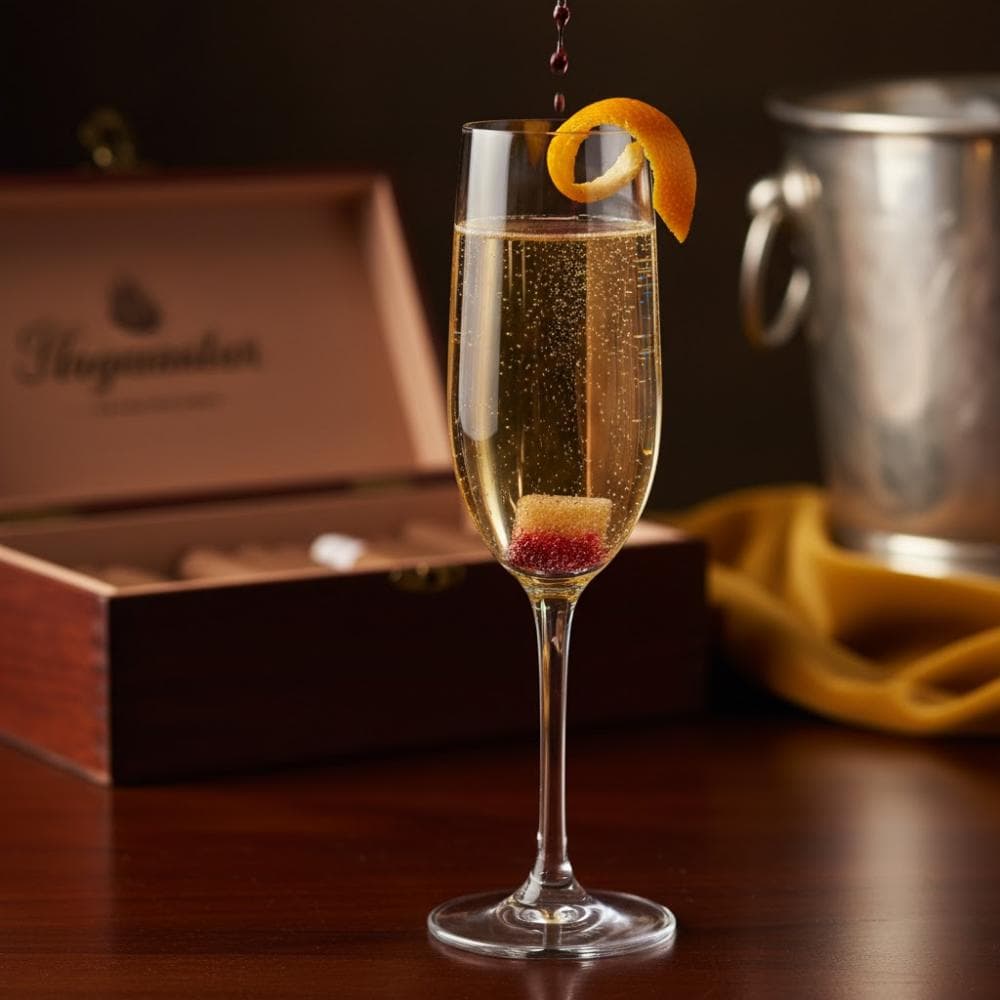
Prep Time
3 min
ABV
10-12% ABV (approx.)
Servings
Flavor Profile
The Quick Answer
This cocktail fails when the bitters-soaked sugar cube dissolves all at once or the champagne flattens from a rushed pour. Douse the cube with Angostura, pour the wine slowly over it, and serve straight away so the slow stream of bubbles keeps releasing aroma as the sugar gradually melts.
Why does the cocktail keep streaming bubbles from the bottom of the glass?
Watch a Champagne Cocktail and you will see a steady column of bubbles rising from one spot at the base, unlike plain champagne that fizzes randomly and fades. The undissolved sugar cube is the cause: its rough, porous crystalline surface is a powerful nucleation site, a place where dissolved CO2 can gather and form bubbles far more easily than against smooth glass. As the cube slowly erodes, it keeps generating fresh surfaces and a near-continuous bead. This is functional, not just pretty: each rising bubble ferries the Angostura's clove and cinnamon volatiles and the lemon oil up to your nose, so the aroma is delivered for the whole drink rather than escaping in the first thirty seconds the way it does from a flat pour.
What do the Angostura bitters do in a Champagne Cocktail?
With only sugar and champagne otherwise, two dashes of Angostura are what turn sweet fizz into a cocktail. Angostura is a high-proof tincture of gentian and aromatic botanicals, intensely bitter and spiced. Soaked into the porous sugar cube, the bitters spread as the cube dissolves, and their bitterness counters the sugar so the drink reads balanced rather than candied, while the gentian and clove notes add savoury complexity that plain champagne lacks. The bitters also tint the cube and the bubbles a faint rose. Stick to two dashes; more and the medicinal gentian overruns the wine, less and the sugar dominates and the drink loses its defining spiced edge.
Not sure what to cook next? Let the generator pick your next dish in one click.
Random Recipe GeneratorWhat is this drink?
The Champagne Cocktail is one of the oldest recorded cocktail recipes — appearing in print as early as 1862 — yet it remains one of the most elegant and satisfying ways to drink champagne. The bitters-soaked sugar cube placed in the bottom of the flute dissolves slowly, releasing bitter-aromatic compounds that interact with the champagne's yeasty complexity, while producing the mesmerizing continuous stream of bubbles that makes it visually captivating.
Why you'll love it
The Champagne Cocktail occupies a perfect middle ground between drinking champagne straight and a more complex champagne-based cocktail — the sugar and bitters add just enough character to make it feel crafted and intentional while still letting the champagne's quality speak.
When to serve
The Champagne Cocktail is perfect for New Year's Eve, weddings, milestone celebrations, elegant dinner party aperitifs, or any occasion where you want to elevate champagne from simply 'opened' to 'prepared.' It's an understated showstopper.
Pro tip
Place the bitters-soaked sugar cube at the very bottom of the flute before adding champagne — as the champagne fills the glass, the sugar cube creates a cascade of fine bubbles rising from the dissolution point, which is both beautiful to watch and improves texture.
Angostura Bitters
The aromatic transformer — just two dashes soaked into the sugar cube add a complex spice, herb, and gentian-bitter note that gives the champagne genuine depth without changing its fundamental character.
Champagne / Quality Sparkling Wine
The star that everything serves — the champagne is not a mixer here but the protagonist, so quality matters enormously and a dry, complex champagne is vastly preferable to sweet sparkling wine.
Lemon Twist
The optional but recommended aromatic finishing touch — expressed lemon oils complement both the bitters' citrus notes and the champagne's inherent freshness.
Swap Options
Use Peychaud's bitters instead of Angostura for a more floral, anise-forward aromatic profile that creates a distinctly New Orleans-influenced Champagne Cocktail. Replace the sugar cube with a vanilla bean sugar cube for a subtly richer, more fragrant sweetness. Try cognac bitters for a specifically French-influenced, more wine-appropriate bitterness character. Use Prosecco instead of champagne for an Italian Spumante Cocktail variation.
Directions
Step 1
Prepare sugar cube
Place sugar cube in a chilled flute glass and douse with bitters.
Pro Tip
- →Let sugar absorb bitters for flavor.
Step 2
Add champagne
Slowly pour champagne over sugar cube.
Pro Tip
- →Pour gently to avoid foam overflow.
Step 3
Garnish
Add lemon twist for aroma.
Pro Tip
- →Express oils over glass before adding.
Different ways to make this drink your own
Peychaud's Champagne Cocktail
Use Peychaud's bitters instead of Angostura for a more floral, anise-forward aromatic profile that creates a distinctly New Orleans-influenced variation. Peychaud's vivid red colour also tints the champagne a delicate pink, creating a visually beautiful variation with a lighter, more perfumed bitterness character.
Cognac Champagne Cocktail
Add a small measure of cognac (10–15ml) alongside the sugar and bitters before the champagne for a richer, more substantial variation known in some traditions as a French Champagne Cocktail. The cognac's grape brandy character integrates seamlessly with the champagne while adding complexity and spirit warmth.
Vanilla Champagne Cocktail
Replace the plain sugar cube with a vanilla bean sugar cube (make your own by nestling sugar cubes in a jar with split vanilla pods for a week) for a subtly richer, more fragrant sweetness. The vanilla's aromatic quality combines beautifully with the champagne and bitters in a variation that feels delicately more complex.
Tools that make this drink come together
Champagne Flute
The champagne flute is both mixing vessel and serving glass for this cocktail — the sugar cube is placed in the bottom of the flute, the bitters are dropped directly onto it, and the champagne is then poured slowly over. The cube dissolves gradually as you drink, providing a progressive sweetness and sustained bitters release.
Angostura Bitters Bottle
Standard Angostura aromatic bitters (the familiar tall bottle with the oversized label) is the traditional choice. Apply two to three drops directly to the sugar cube. The bitters' complex herbal character gradually infuses into the champagne as the sugar cube dissolves, creating an evolving flavour throughout the drink.
Long Spoon or Knife
Used to balance a sugar cube on the back of a spoon held over the flute while applying bitters, or to gently nudge a cube into the bottom of the glass. A thin cocktail knife can also be used to mark the top of the cube slightly, which helps it absorb bitters more efficiently.
Can't Find These?
A teaspoon of caster sugar with two drops of bitters stirred quickly into the bottom of the flute before adding champagne is a practical alternative to a sugar cube. The dissolving effect is less theatrical but produces a very similar flavour result. Standard Angostura bitters are available in most supermarkets and off-licences.
The right glass makes a real difference
Champagne Flute
A champagne flute is the only appropriate vessel for a Champagne Cocktail — it displays the rising bubbles and the gradual dissolution of the sugar cube to maximum effect, and its narrow form maintains carbonation longest. The drink evolves as the sugar cube dissolves, and this evolution is best experienced in a glass that allows you to observe the process.
Alternatives
A champagne coupe creates a deliberately vintage, Gatsby-era presentation. A stemless flute is practical but loses some elegance. The coupe's wider bowl means the bubbles dissipate faster, which means the Champagne Cocktail should be consumed more quickly — a consideration worth factoring into your glass choice.
Perfect food pairings to complete the experience
Oysters with Champagne Mignonette
Fresh oysters with a champagne and shallot mignonette are the most classically appropriate accompaniment for a Champagne Cocktail. Both share the same sense of occasion and both feature champagne as a central element, creating a cohesive, celebratory pairing of the highest order.
Foie Gras Canapés
A small, elegant canapé of duck foie gras parfait on brioche toast is a luxurious companion for the Champagne Cocktail. The cocktail's sweetened bitters complexity and bubbles cut through the foie gras's extraordinary richness, refreshing the palate and encouraging another bite.
Strawberries and Cream
Fresh, ripe strawberries alongside lightly whipped cream make a beautifully simple and seasonal accompaniment for the Champagne Cocktail. The strawberries' sweetness and acidity complement the champagne perfectly, and both share a sense of celebration and seasonal luxury.
Cheese Gougères
Light, airy cheese-flavoured choux pastry puffs are an excellent savoury accompaniment for the Champagne Cocktail. Their delicate, cheesy warmth and satisfying puff make them pleasant finger food for a champagne occasion, and their restraint in flavour allows the cocktail to remain the focus.
Prep in advance for effortless serving
Prepare Bitters-Soaked Sugar Cubes
Soak a tray of sugar cubes in Angostura bitters several hours ahead — apply two to three drops to each cube and allow to absorb fully. Store in a small airtight container at room temperature. Pre-soaked cubes placed in flutes at the last moment allow immediate service without any last-minute bitters application.
Chill Champagne Well in Advance
Champagne must be thoroughly chilled before service. Place bottles in the refrigerator at least four hours before the event. For large parties, use multiple ice buckets with equal parts ice and water — this chills bottles significantly faster than ice alone and maintains temperature during extended service.
Prepare Garnishes
Slice lemon twists up to two hours ahead and store in a covered container in the fridge. A properly expressed lemon twist — rubbed around the rim and dropped in the glass — adds a fresh, aromatic citrus note that complements both the bitters' herbal character and the champagne's acidity beautifully.
Arrange a Self-Service Station
For a party, arrange flutes on a tray with pre-soaked sugar cubes in each one. A server can pour champagne to order, or guests can pour from pre-opened bottles in ice buckets. This self-service approach scales well for large gatherings and gives the event a relaxed, celebratory atmosphere.
Common questions answered by our bartenders
Got Leftovers?
Turn what you already have in your fridge into delicious meals. Our AI-powered generator creates personalized recipes from your ingredients.
Browse more like this:
Please drink responsibly. All drink recipes are intended for those of legal drinking age in their country. TheRandomRecipe does not promote excessive alcohol consumption. Alcohol Responsibility Policy