Kombucha
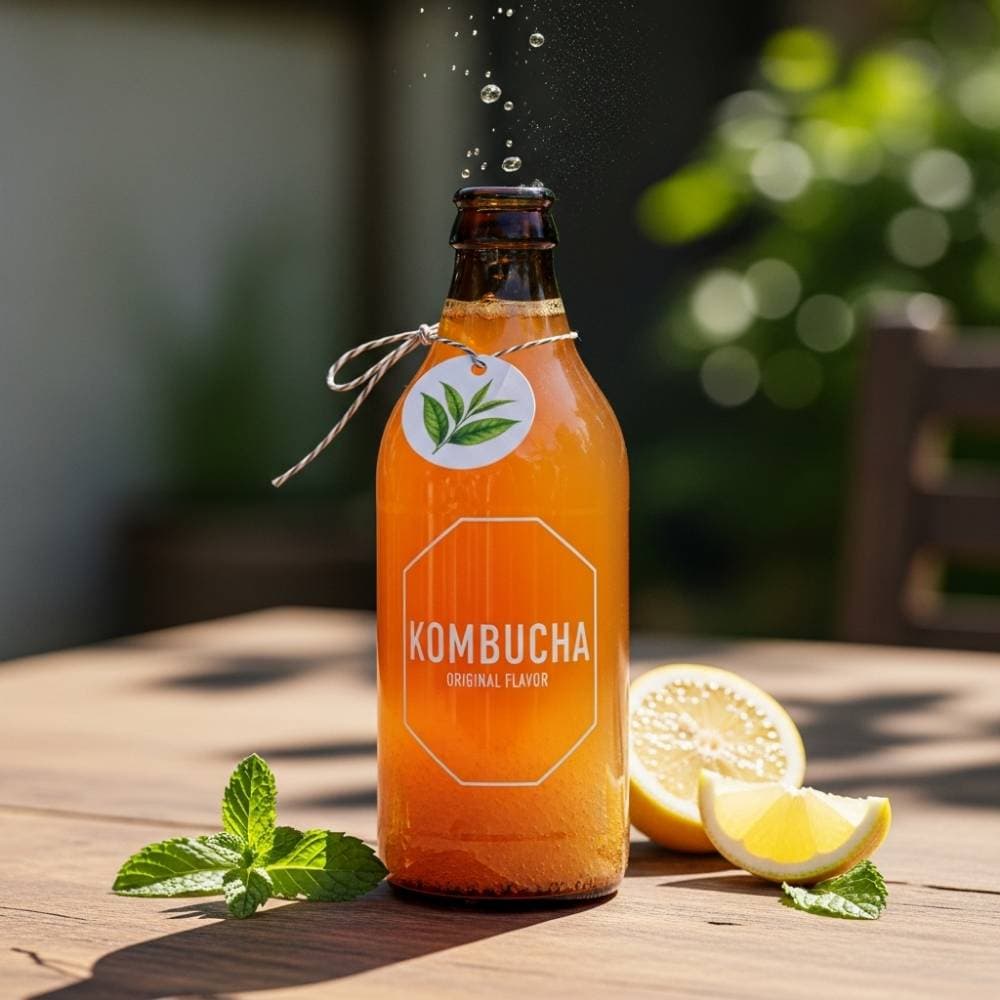
A tangy, effervescent, and subtly sweet fermented tea beverage, Kombucha is enjoyed for its refreshing qualities and unique flavor profile. This recipe focuses on preparing a single serving of plain kombucha with optional natural flavorings.
Prep Time
3 min
ABV
0% ABV
Servings
Flavor Profile
The Quick Answer
A serving of bottled kombucha goes flat and tastes harshly sour when it is poured roughly over warm ice or sits open, because carbonation escapes fast and the drink is already acidic. Keep the bottle cold until the moment you pour, tip it gently down the side of the glass, and use a splash of fruit juice to round off the vinegary edge rather than masking it with sugar.
Why does my kombucha go flat as soon as I pour it?
Kombucha's fizz is dissolved carbon dioxide, and CO2 solubility drops sharply as temperature rises and when the liquid is agitated. Pouring cold kombucha over a glass packed with ice that has begun to melt warms it and creates turbulence, both of which drive the gas out as foam in seconds. Keep the bottle refrigerated, chill the glass, and pour slowly down the inside wall rather than splashing into the center. Add ice after pouring, not before, and stir only once. The half ounce of juice should be cold too, since warm additions release a burst of bubbles on contact.
How do I balance kombucha that tastes too sour?
Kombucha is acidic by design, carrying acetic and gluconic acids from fermentation, so the goal is balance rather than neutralizing it. The half ounce of raspberry or ginger juice adds sugar and fruit aroma that our palate reads as sweetness, which offsets the perceived sourness without removing the tang that defines the drink. A few muddled berries do the same while adding pectin and color. Diluting with a little sparkling water lowers the total acid concentration per sip if it is still too sharp. Avoid simply dumping in granulated sugar, which sweetens but leaves the acidity intact and can taste cloying against the vinegar notes.
Not sure what to cook next? Let the generator pick your next dish in one click.
Random Recipe GeneratorWhat is this drink?
Kombucha is an ancient fermented tea beverage believed to originate in Manchuria around 220 BC — tea fermented with a SCOBY (symbiotic culture of bacteria and yeast) that produces a naturally effervescent, tangy, and slightly sweet drink rich in probiotics and organic acids.
Why you'll love it
It's fascinatingly complex for a non-alcoholic drink — tangy, fizzy, slightly sweet, and subtly earthy, with a depth of flavor that reflects the living culture that created it. No two batches taste exactly alike.
When to serve
Excellent as a health-conscious alternative to soda, alongside meals as a digestive aid, at wellness-focused events, or as a sophisticated non-alcoholic option that gives conversation-worthy sophistication.
Pro tip
Add a small splash of fresh fruit juice just before serving — this second fermentation method is what commercial producers use to add both natural carbonation and customized flavor to their kombucha.
Kombucha (Unflavored Base)
The fermented tea foundation — its complex tang, gentle natural effervescence, and subtle earthy sweetness come from the fermentation process and vary by brand and batch.
Fresh Fruit Juice
Added as a natural flavoring — raspberry, ginger, lemon, and berry juices are classic additions that complement kombucha's inherent tanginess.
Swap Options
Ginger kombucha is excellent with a squeeze of fresh lemon. Mix different kombucha flavors for a custom blend. Muddle fresh herbs (basil, mint) with the fruit juice before adding kombucha. For a cocktail adaptation, kombucha pairs surprisingly well with gin or vodka.
Directions
Step 1
Chill ingredients and glass
Ensure your store-bought kombucha is well-chilled. Select a clean glass (like a highball or wine glass) and, if desired, add 1 serving of ice.
Pro Tip
- →Kombucha is best enjoyed very cold for maximum refreshment and fizz.
Step 2
Add optional flavorings
Pour 0.5 ounce (15 ml) of your chosen fresh fruit juice into the glass. This step is optional and allows for customization of flavor.
Pro Tip
- →Consider what flavors complement kombucha's tanginess, such as berry, citrus, or ginger juice.
Step 3
Pour kombucha and stir
Slowly pour 10-12 ounces (300-360 ml) of chilled unflavored kombucha into the glass over the juice and ice. Stir gently once or twice to combine.
Pro Tip
- →Pouring slowly helps to preserve the natural carbonation of the kombucha.
Step 4
Garnish and serve
Garnish with 1-2 slices of fresh fruit (e.g., berries, ginger, or mint leaves) if desired. Serve immediately.
Pro Tip
- →Garnishes enhance both the visual appeal and the aroma of the drink.
Different ways to make this drink your own
Kombucha Gin Spritz
Add a 35ml measure of a good London Dry gin to a tall glass of ice, top with kombucha, and garnish with a cucumber slice and fresh herb sprig. The gin's botanicals pair remarkably well with kombucha's tartness for a sophisticated, low-sugar cocktail.
Ginger Lemon Kombucha
Add a squeeze of fresh lemon juice and several thin slices of fresh ginger to ginger-flavoured kombucha for a warming, punchy drink with a pronounced ginger kick. Particularly invigorating as a morning drink or afternoon pick-me-up.
Berry Herb Kombucha
Muddle a small handful of fresh raspberries and several basil leaves in the bottom of a glass, fill with ice, and top with plain or lightly flavoured kombucha. The berry-basil combination is sophisticated, aromatic, and beautifully coloured.
Tools that make this drink come together
Tall Glass
A tall, transparent glass showcases kombucha's natural amber or coloured hue and provides room for ice, fruit, and a garnish. Kombucha's natural effervescence is best preserved in a cold glass that you've chilled beforehand.
Muddler (Optional)
If adding fresh fruit or herbs to a flavoured kombucha variation, a muddler extracts maximum colour and aroma from the ingredients before adding the kombucha. Press gently — over-muddling produces bitterness from herb stems.
Citrus Squeezer
A small squeezer or your fingers pressed around a lemon or lime wedge adds the fresh citrus that brightens kombucha's natural tartness and adds aromatic complexity to a simple glass of the fermented drink.
Can't Find These?
Any tall glass works perfectly. A fork or the back of a spoon muddles soft fruit and herbs adequately. Squeeze citrus directly over the glass with your fingers. Kombucha needs almost no equipment beyond a glass and something to drink it from.
The right glass makes a real difference
Tall Glass or Wine Glass
Kombucha is served in a tall glass over ice for a refreshing everyday drink, or in a wine glass for a more sophisticated, dinner-party presentation. The wine glass is increasingly popular for kombucha — it's an elegant, alcohol-free alternative that feels appropriately adult at the dinner table. The wide bowl concentrates kombucha's complex aromas, enhancing the drinking experience considerably.
Alternatives
A champagne flute for a more celebratory presentation — kombucha's natural fizz behaves similarly to sparkling wine in a flute and the tall, elegant shape is a perfect match. A mason jar for casual outdoor drinking. Any glass that lets the colour and carbonation be appreciated is appropriate.
Perfect food pairings to complete the experience
Fermented Foods Platter
A sharing board of kimchi, sauerkraut, pickled vegetables, and sourdough bread creates a cohesive fermented foods experience alongside kombucha. The probiotic theme ties everything together and creates an interesting, health-conscious spread.
Smashed Avocado Toast
Well-seasoned smashed avocado on sourdough with lemon, chilli flakes, and seeds is a clean, nutritious companion for kombucha. Both are associated with mindful eating and the flavours complement each other without competition.
Asian Salad with Sesame Dressing
A crisp salad with shredded cabbage, edamame, mango, and a sesame-ginger dressing pairs beautifully with ginger or citrus kombucha. The Asian-inspired flavours and the fermented drink create a cohesive, health-conscious pairing.
Sushi Rolls
The vinegared rice and raw fish of sushi are natural companions for the tart, slightly vinegary character of kombucha. Both are clean, delicate, and naturally probiotic-rich — a genuinely complementary pairing.
Prep in advance for effortless serving
Always Buy Just Before Serving
Kombucha is a live, fermented product that continues fermenting in the bottle. While safely consumed beyond the best-before date, it becomes progressively more tart and acidic over time. Buy close to the serving date for the most balanced, pleasant-tasting result.
Keep Refrigerated at All Times
Refrigeration slows the fermentation process and maintains the best flavour balance. Room-temperature kombucha ferments faster, becoming more acidic and building more carbonation — which can lead to dramatic fizzing when opened. Always keep cold.
Open Carefully
Kombucha builds pressure in the bottle as it continues fermenting. Open very slowly over the sink, releasing pressure gradually to avoid an explosive fizz. Chilled kombucha opens much more calmly than room-temperature kombucha.
Make Your Own (Advanced)
Home-brewing kombucha using a SCOBY (symbiotic culture of bacteria and yeast) is a rewarding long-term project that produces kombucha at a fraction of the cost of bought varieties. The second fermentation stage (adding fruit juice in sealed bottles) creates natural carbonation and flavouring.
Common questions answered by our bartenders
Got Leftovers?
Turn what you already have in your fridge into delicious meals. Our AI-powered generator creates personalized recipes from your ingredients.
Browse more like this:
Please drink responsibly. All drink recipes are intended for those of legal drinking age in their country. TheRandomRecipe does not promote excessive alcohol consumption. Alcohol Responsibility Policy