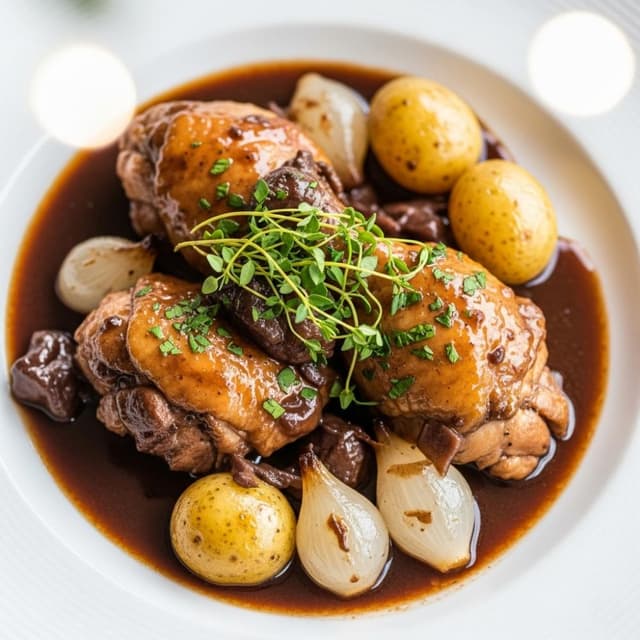
Chicken Fricassée with Tarragon
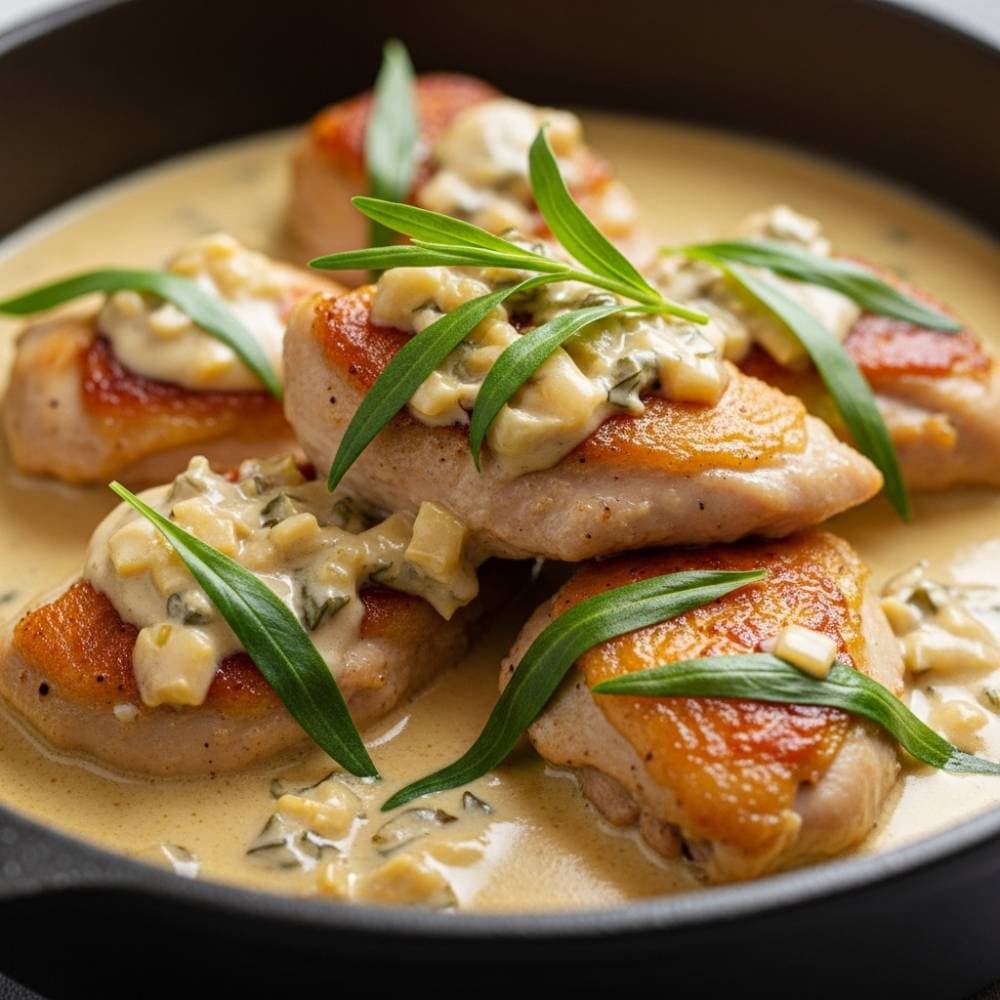
A classic French stew featuring tender chicken pieces and mushrooms in a creamy white sauce flavored with fresh tarragon. A comforting and elegant meal for two.
The Quick Answer
The classic fricassée failure is a sauce that breaks into greasy curds once the heavy cream goes in, caused by boiling the dairy or by the acidic white wine not being cooked down first. Keep the pot at a bare simmer after adding the cream, and reduce the wine fully before the broth so the finished sauce is smooth and glossy.
Why does my cream sauce curdle in chicken fricassee?
Heavy cream curdles when its milk proteins (casein) clump together, and two things in this dish push them over the edge: heat and acid. Boiling drives casein proteins to coagulate into visible specks, which is why the recipe stops you at a gentle simmer after the cream goes in. The half cup of dry white wine adds acid, and acid also destabilizes casein; that is why you simmer the wine for two to three minutes first, both concentrating flavor and burning off some sharpness. Using full-fat heavy cream rather than half-and-half helps too, because its higher fat content buffers the proteins and resists separation far better than lighter dairy.
Why dredge the chicken thighs in flour before browning?
The quarter cup of flour you dust onto the thighs does double duty. As the floured skin hits the hot butter and oil, the starch and the chicken's surface proteins brown together through the Maillard reaction, building the golden color and savory depth a fricassée needs without the deep char of a roast. More importantly, that flour coating dissolves into the wine and broth as the chicken braises, where its starch granules swell and gelatinize, thickening the liquid into a velvety sauce. This is why you can finish with just half a cup of cream rather than reducing for ages: the dredging flour has already given the sauce most of its body.
Not sure what to cook next? Let the generator pick your next dish in one click.
Random Recipe GeneratorAbout This Recipe
What is this dish?
Chicken fricassée is a classic French braised chicken dish that occupies the middle ground between a sauté and a stew — the chicken is lightly colored (not deeply browned) and braised in a creamy white wine sauce with mushrooms, finished with the distinctive anise-like flavor of fresh tarragon. It's one of the fundamental dishes of classical French cuisine, teaching the technique of creating a velouté sauce from a simple braise.
Why you'll love it
Chicken fricassée is French comfort food at its most refined — deeply satisfying, creamy, and infused with the elegant, slightly anise-sweet flavor of tarragon. The sauce is silky, the chicken is tender from the braise, and the mushrooms add earthy depth. It's sophisticated enough for a dinner party yet achievable on a weeknight with under an hour of work.
When to serve
Chicken fricassée is perfect for an autumn or winter dinner party where you want to impress without the complexity of coq au vin. It's also excellent for a special Sunday family dinner. The dish can be made partially ahead and finished before serving. Serve it over egg noodles or mashed potatoes at a proper sit-down dinner.
Quick tips
Don't deeply brown the chicken — a light golden color is traditional for fricassée. Add cream only near the end and never let it boil vigorously. Add fresh tarragon off the heat at the very end to preserve its delicate flavor. Rest the finished dish for 5 minutes before serving.
Ingredient Highlights
Bone-In, Skin-On Chicken Pieces
Thighs and drumsticks are ideal for fricassée — they stay moist through the braise and the bones add body to the sauce. The skin is browned lightly at the start for flavor, then the dish finishes as a braise with the skin softening into the sauce.
Dry White Wine
Added to deglaze the pan and form the basis of the braising liquid. A Chardonnay or Burgundy Blanc works well — use something you'd enjoy drinking. The wine reduces and concentrates its flavor, creating complexity in the final cream sauce.
Heavy Cream
Added near the end of cooking to enrich the braising liquid into a velvety white cream sauce. Never let it boil vigorously after adding — vigorous boiling can curdle cream or cause it to separate from the sauce.
Fresh Tarragon
The defining herb of this dish. Its distinctive anise-like, slightly minty flavor is the hallmark of classic French chicken fricassée. Add only at the very end of cooking to preserve its delicate flavor — dried tarragon loses this freshness and liveliness almost entirely.
Substitution Options
Bone-in chicken breast can be used but needs less braising time to avoid drying out — add it 20 minutes later than thighs. Dried tarragon can substitute for fresh — use 1 teaspoon dried for every tablespoon of fresh, adding it during cooking rather than at the end. Crème fraîche can replace heavy cream for a tangier, more authentically French sauce. Replace mushrooms with pearl onions, baby leeks, or artichoke hearts for variation. A splash of cognac or brandy before the wine adds depth and authenticity.
You'll likely need to buy
Likely in your pantry
Step-by-Step Instructions
Prepare and brown chicken
Pat the chicken pieces dry with paper towels. Season them with 1/4 teaspoon salt and 1/8 teaspoon black pepper. Dredge (coat thoroughly) each chicken piece in 1/4 cup all-purpose flour, shaking off any extra. In a large, heavy-bottomed pot or Dutch oven, heat 1 tablespoon olive oil and 1 tablespoon unsalted butter over medium-high heat. Add the floured chicken pieces, skin-side down, and cook for 6-8 minutes until the skin is golden brown and crispy. Flip and cook for another 3-4 minutes to brown the other side. Remove chicken from the pot and set aside.
Chef's Tips
- ›Dredge means to coat thoroughly. Browning the chicken adds flavor and color to the dish.
- ›Do not overcrowd the pot; cook in batches if needed.
Cook vegetables and deglaze
Reduce the heat to medium. Add the remaining 1 tablespoon olive oil and 1 tablespoon unsalted butter to the pot. Add the finely chopped 1/2 small onion or shallot and cook for 4-5 minutes, stirring occasionally, until translucent (you can see through it). Add the 2 cloves minced garlic and 1 cup quartered mushrooms. Cook for 5-7 minutes, stirring, until the mushrooms are softened and the garlic smells pleasant (fragrant). Pour in 1/2 cup dry white wine, scraping the bottom of the pot with a wooden spoon to loosen any browned bits (this is called deglazing). Let the wine simmer (cook gently just below boiling, with small bubbles) for 2-3 minutes until it has slightly reduced (cooked down and become thicker).
Chef's Tips
- ›Translucent means you can see through it, indicating it is soft.
- ›Fragrant means it smells good and aromatic.
- ›Deglazing adds rich flavor to the sauce.
- ›Simmer means to cook gently just below boiling, with small bubbles.
- ›Reduced means cooked down to be thicker and more flavorful.
Simmer chicken in sauce
Stir in 1 cup chicken broth, the remaining 1/4 teaspoon salt, and 1/8 teaspoon black pepper into the pot. Return the browned chicken pieces to the pot. Bring the liquid to a gentle simmer. Cover the pot, reduce the heat to low, and braise (cook slowly in liquid with a lid on) for 25-30 minutes, or until the chicken is very tender and cooked through. Stir occasionally to prevent sticking. Remove the bay leaf if you added one with the broth.
Chef's Tips
- ›Braising makes the chicken incredibly tender and juicy.
- ›Low and slow cooking is key for this dish.
Finish with cream and tarragon
Once the chicken is tender, uncover the pot. Stir in 1/2 cup heavy cream and 2 tablespoons chopped fresh tarragon. Cook for 2-3 minutes, stirring, until the sauce is heated through and slightly thickened. Do not let it boil after adding the cream, as this can cause the dairy to separate.
Chef's Tips
- ›Adding cream at the end ensures a smooth sauce.
- ›Do not boil after adding cream to prevent separation.
Serve
Taste and adjust salt or pepper if needed. Serve the Chicken Fricassée hot, garnished with extra fresh tarragon. It pairs wonderfully with rice, noodles, or crusty bread.
Chef's Tips
- ›Fresh tarragon provides a distinct, aromatic flavor.
- ›Serve immediately to enjoy the creamy sauce and tender chicken.
Chef's Tips
Techniques that separate good from great
Don't deeply brown the chicken — a gentle golden color is the hallmark of fricassée
Fricassée is defined by its white (blanchi) or lightly golden (blond) cooking — not the deep, dark browning of coq au vin or pan-roasted chicken. Sear the pieces skin-side down for 3-4 minutes until lightly golden, then flip briefly on the bone side. The lighter sear preserves the pale, elegant character of the dish and produces a more delicate sauce.
Add cream at the end and maintain a gentle simmer — never boil
Heavy cream and vigorously boiling liquid are incompatible. Boiling cream-enriched sauces causes the fat to separate out, creating a greasy, broken sauce rather than a velvety one. After adding cream, reduce the heat to the lowest possible setting and maintain just the occasional bubble. The sauce will thicken gently from the cream's reduction without breaking.
Add fresh tarragon off the heat at the absolute last moment
Fresh tarragon contains volatile aromatic oils that evaporate rapidly at cooking temperatures. Stir in the chopped fresh tarragon after removing the pan from the heat, just before serving. Taste the dish first — tarragon is potent and a tablespoon is typically sufficient. If added during cooking, the flavor becomes muted and slightly bitter rather than bright and anise-fresh.
Let the finished fricassée rest for 5 minutes before serving
Resting allows the cream sauce to thicken slightly from carryover heat and settle around the chicken pieces. It also gives the tarragon time to infuse the sauce gently. The difference in sauce consistency between serving immediately and resting for 5 minutes is significant — the rested version coats the chicken rather than pooling beneath it.
Nutrition Facts
Per serving · Estimated values
* Estimated per serving based on a 2,000 calorie diet.
Equipment Needed
- Large, heavy-bottomed pot or Dutch oven
- Spatula or wooden spoon
- Shallow plate (for flour)
- Measuring cups
- Measuring spoons
- Knife and cutting board
As an Amazon Associate we earn from qualifying purchases — at no extra cost to you.
Quick Tips
- For a richer flavor, use bone-in, skin-on chicken pieces. The skin can be removed after cooking if desired.
- Fresh tarragon is key to the authentic flavor of this dish; dried tarragon can be used in a pinch but in a smaller amount (1 teaspoon).
- This dish pairs beautifully with a side of steamed green beans or asparagus.
Recipe Variations
Different ways to make this dish your own
Fricassée de Veau (Veal Fricassée)
The original French version uses veal, which produces an even more delicate, elegant pale sauce. Use the same technique with bone-in veal pieces for a more refined dinner party dish.
Chicken Fricassée with Lemon
Add the zest of one lemon and a tablespoon of lemon juice to the finished sauce for a brighter, more citrus-forward version. Excellent in spring and summer and pairs beautifully with asparagus.
Normandy Fricassée (Poulet à la Normande)
Replace mushrooms with sautéed apple slices and substitute Calvados (apple brandy) for white wine. This Norman variation is simultaneously sweet, savory, and spectacular — one of the great regional French dishes.
Vegetarian Fricassée
Replace the chicken with large pieces of celeriac, fennel, and leeks braised in vegetable broth and cream with tarragon for a luxurious vegetarian version that captures all the elegance of the original.
What to Serve With
Perfect pairings to complete the meal
Over Wide Buttered Egg Noodles
Wide egg noodles tossed with butter and a pinch of salt are the classic base for chicken fricassée. The noodles soak up the cream sauce beautifully. Cook them al dente, toss with butter while still hot, and serve the fricassée directly on top, spooning extra sauce generously over everything.
With Creamy Mashed Potatoes
Silky mashed potatoes topped with chicken fricassée and its cream-tarragon sauce create a deeply comforting, French-bistro-style meal. The mashed potato absorbs the sauce from below. Add steamed green beans alongside for color and freshness.
Alongside Steamed Asparagus or Green Beans
Lightly steamed or blanched asparagus or green beans provide color, crunch, and a clean vegetable note that contrasts beautifully with the richness of the cream sauce. Dress them simply with butter and lemon just before serving.
With Crusty Bread to Soak Up the Cream Sauce
The tarragon cream sauce is extraordinary, so bread for sauce-soaking is highly recommended. A good French baguette or crusty sourdough, torn rather than sliced, is ideal. The best bites of the meal are often a piece of bread dragged through the remaining cream sauce on the plate.
Storage & Reheating
Keep it fresh and plan ahead
Refrigerator
Store in an airtight container for up to 3 days. The cream sauce thickens and the chicken continues to absorb flavor during refrigeration — the dish is arguably better the next day. Reheat gently to avoid breaking the sauce.
Freezer
The braised chicken can be frozen for up to 2 months, though cream-based sauces separate when thawed. For best results, freeze without the cream and add fresh cream when reheating.
Make-Ahead
Chicken fricassée is an excellent make-ahead dish. Cook completely up to the point before adding cream and fresh tarragon. Refrigerate for up to 2 days. Before serving, reheat gently, add cream, simmer briefly, and finish with fresh tarragon.
Reheating
Reheat gently in a covered pot over the lowest heat, adding a splash of broth if the sauce has thickened too much. Never boil during reheating — high heat will break the cream sauce. Stir in fresh tarragon after reheating, not before.
Cooking tonight?
Get a month of dinners like this — done for you
30 chef-tested dinners mapped to the month, plus 5 ready-to-shop grocery lists. One-time $8.99 — 30 dinners planned for you, zero nightly decisions.
See the 30-Day Plan →Got Leftovers?
Turn what you already have in your fridge into delicious meals. Our AI-powered generator creates personalized recipes from your ingredients.
Go Deeper
Master the Culinary Science
Every recipe is a doorway. Our 7 Mastery Guides give you the science, technique, and framework to understand why food works — not just how to follow steps.
AI-Powered
Have Ingredients? Generate a Recipe.
Tell our AI what's in your fridge and get a custom recipe with image in seconds. No waste, no boredom.
Try the AI Recipe Generator →Browse more like this:
You Might Also Like
Discover more delicious recipes similar to what you're cooking