Classic Coq au Vin
A rich and traditional French stew where chicken pieces are slowly braised in red wine with savory bacon, mushrooms, and tender vegetables. A comforting and deeply flavorful meal for two.
The Quick Answer
Coq au vin tastes harsh and thin when the Pinot Noir or Burgundy is boiled hard instead of gently reduced, leaving raw tannin and acid in place of a mellow, glossy sauce. Brown the chicken deeply for fond, then braise at a bare simmer so the wine integrates and the collagen melts into a rich gravy.
Why does my coq au vin sauce taste sharp and tannic?
Red wine carries tannins and acids that read astringent and bright when raw. They only round out with gentle, sustained heat, during which the tannins bind to proteins and fats from the chicken thighs, bacon, and broth and fold into a smoother whole. Boiling the wine hard drives off water quickly but does little to soften tannin and can even concentrate the harshness while scorching its sugars. A long, low braise gives the wine time to integrate, and the gelatin from the bone-in pieces physically coats those astringent compounds. The tomato paste contributes glutamates and the rendered bacon fat adds richness, both savory counterweights to the wine's edge. Finishing with the cornstarch slurry also gives the tannins something to cling to, smoothing the final mouthfeel.
Why are my mushrooms slimy and pale instead of browned in coq au vin?
Button and cremini mushrooms are roughly 90 percent water, and that water is the problem. Add them to a crowded or cooler pan and they dump their moisture all at once, then stew in it, turning grey and slick instead of browning. They brown only once that released liquid boils off and the surface can hit Maillard temperatures. Give them room in the pot after the onion and carrot have softened, and resist stirring constantly so each face holds contact with the hot surface. Adding salt too early pulls water out faster and worsens the sogginess, so season the mushrooms toward the end of their saute. Once browned, they hold their shape and meaty texture through the long braise rather than collapsing.
Not sure what to cook next? Let the generator pick your next dish in one click.
Random Recipe GeneratorAbout This Recipe
What is this dish?
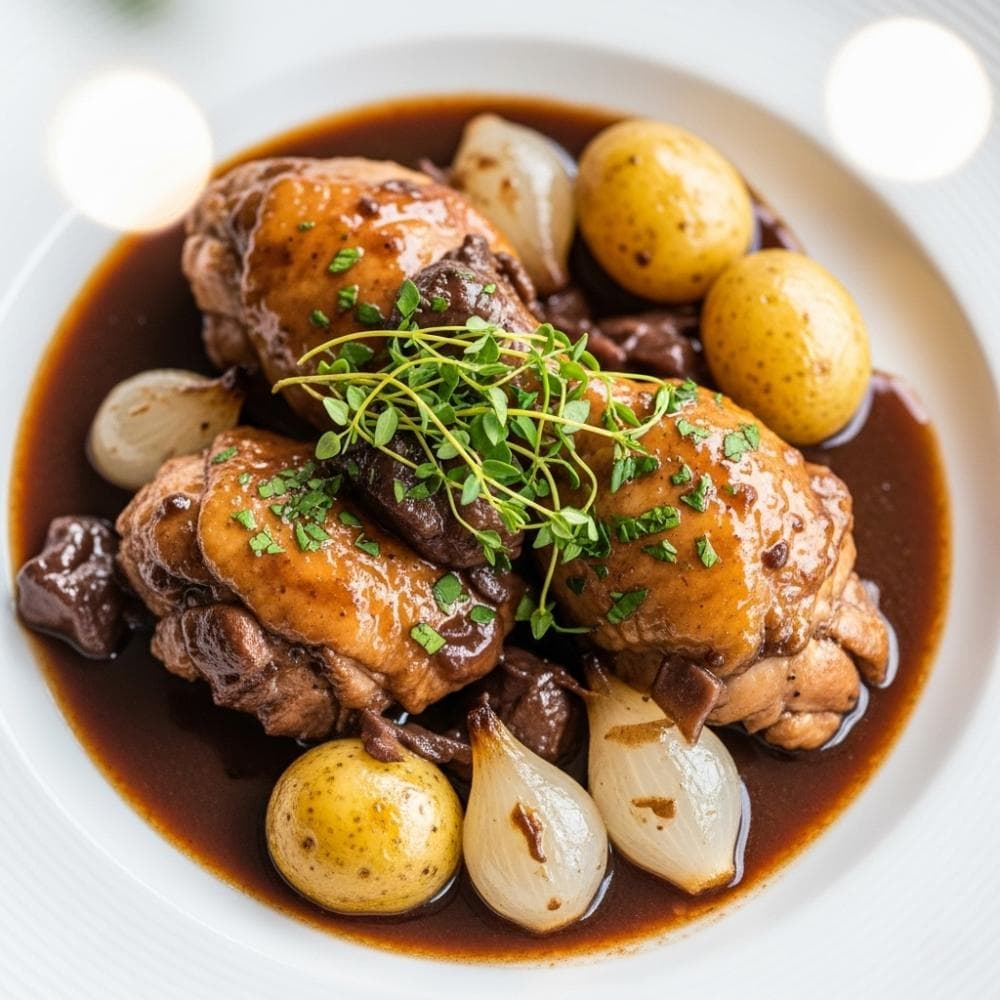
Coq au vin is a classic French braised chicken dish from Burgundy where chicken pieces are slow-cooked in red wine with mushrooms, pearl onions, and lardons. The name literally means 'rooster in wine' — originally made with tough old roosters that needed long braising to become tender. Modern versions use chicken pieces, which cook faster but deliver the same deeply savory, wine-enriched sauce.
Why you'll love it
Coq au vin transforms inexpensive chicken into a restaurant-worthy dish with extraordinary depth of flavor. The red wine braise creates a sauce that's complex, deeply savory, and impossibly silky — all from a few hours of low, gentle cooking. It's a make-ahead dream: coq au vin tastes significantly better the next day after the flavors meld overnight.
When to serve
Coq au vin is the quintessential cold-weather dinner party dish — impressive enough for guests, yet completely manageable since it can be made a day ahead and reheated. Serve it on a Friday when you have time to braise, then reheat for a Saturday dinner party. It's equally wonderful as a Sunday family dinner during the fall and winter months.
Quick tips
Use a wine you'd genuinely enjoy drinking — it becomes the backbone of the sauce. Brown the chicken deeply in batches for maximum flavor. Braise at a bare simmer, never a boil. The dish is done when the chicken is nearly falling from the bone.
Ingredient Highlights
Chicken Pieces
Bone-in, skin-on chicken thighs and drumsticks are ideal — the bones add gelatin to the sauce and the dark meat stays moist through the long braise. A whole cut-up chicken is traditional. Boneless, skinless chicken breast is not recommended as it dries out during braising.
Red Burgundy Wine
The wine is half the dish — it becomes the sauce. A dry Burgundy (Pinot Noir), Côtes du Rhône, or any medium-bodied red you'd enjoy drinking is ideal. The wine's tannins soften during cooking and its acidity brightens the rich sauce.
Lardons
Thick-cut strips of salt pork or unsmoked bacon rendered at the start. Their smoky, salty fat becomes the cooking medium for everything else and their chewy texture provides satisfying contrast in the finished dish.
Mushrooms
Brown cremini or classic button mushrooms sautéed separately in butter and added near the end of braising. Cooking them separately keeps them firm and earthy rather than waterlogged and soft from sitting in the braise.
Substitution Options
Substitute bone-in chicken thighs for a whole chicken — they're easier to portion and braise beautifully. Use a non-alcoholic red wine substitute (grape juice with a splash of red wine vinegar mixed with beef broth) for an alcohol-free version. Pancetta can replace lardons. Shallots can substitute for pearl onions. Cognac or brandy can replace the small amount used for flambéing. Thyme, bay leaves, and a small amount of tomato paste are the essential aromatics — don't omit them.
You'll likely need to buy
Likely in your pantry
Step-by-Step Instructions
Brown chicken and bacon
Pat the chicken pieces dry with paper towels. Season them with 1/4 teaspoon salt and 1/8 teaspoon black pepper. In a large, heavy-bottomed pot or Dutch oven, heat 1 tablespoon olive oil over medium-high heat. Add the chicken pieces, skin-side down, and cook for 5-7 minutes until the skin is golden brown and crispy. Flip and cook for another 3-4 minutes to brown the other side. Remove chicken from the pot and set aside. Add the diced bacon or pancetta to the pot and cook until crispy. Remove the bacon and set it aside, leaving about 1 tablespoon of rendered fat in the pot.
Chef's Tips
- ›Browning the chicken skin well adds flavor and color to the dish.
- ›Rendered fat means the fat has melted out of the bacon.
Cook vegetables
Reduce the heat to medium. Add the chopped onion and sliced carrot to the pot. Cook for 5-7 minutes, stirring occasionally, until the onion is soft and translucent (you can see through it). Add the minced garlic and halved or quartered mushrooms. Cook for 3-5 minutes more until the mushrooms are softened and have released their liquid. Stir in 1 tablespoon tomato paste and cook for 1 minute, stirring.
Chef's Tips
- ›Translucent means you can see through it, indicating it is soft.
- ›Cooking the tomato paste briefly helps deepen its flavor.
Deglaze and simmer
Pour 1 cup dry red wine into the pot, scraping the bottom with a wooden spoon to loosen any browned bits (this is called deglazing). Let the wine simmer (cook gently just below boiling, with small bubbles) for 2-3 minutes until it has slightly reduced (cooked down and become thicker). Stir in 1 cup chicken broth, 1/2 teaspoon dried thyme, and 1 bay leaf. Return the browned chicken to the pot. Add the remaining 1/4 teaspoon salt and 1/8 teaspoon black pepper.
Chef's Tips
- ›Deglazing adds rich flavor to the sauce.
- ›Simmer means to cook gently just below boiling, with small bubbles.
- ›Reduced means cooked down to be thicker and more flavorful.
Braise the chicken
Bring the liquid to a gentle simmer. Cover the pot, reduce the heat to low, and braise (cook slowly in liquid with a lid on) for 35-45 minutes, or until the chicken is very tender and cooked through. Stir occasionally to prevent sticking. Remove the bay leaf before serving.
Chef's Tips
- ›Braising makes the chicken incredibly tender and juicy.
- ›Low and slow cooking is key for this dish.
Thicken and serve
Once the chicken is tender, uncover the pot. In a small bowl, whisk together 1 tablespoon cornstarch and 2 tablespoons cold water to make a slurry. Stir the cornstarch slurry into the simmering sauce in the pot. Cook for 1-2 minutes, stirring, until the sauce has thickened to your liking. Return the crispy bacon to the pot. Taste and adjust salt or pepper if needed. Serve hot, often with mashed potatoes, noodles, or crusty bread.
Chef's Tips
- ›A slurry is a mix of starch and liquid used to thicken sauces.
- ›The sauce will thicken as it simmers with the slurry.
Chef's Tips
Techniques that separate good from great
Use a wine you'd actually drink — it defines the flavor
The wine is not a background note in coq au vin; it becomes the soul of the entire dish. Use a medium to full-bodied red like Burgundy, Pinot Noir, or Côtes du Rhône — something you'd genuinely enjoy drinking. Cheap cooking wine produces a harsh, acidic sauce that no amount of seasoning can fix. One good bottle transforms the entire dish.
Brown the chicken deeply in batches — the fond is your flavor foundation
The browned bits stuck to the bottom of the pan after searing the chicken (called fond) are pure concentrated flavor. They dissolve into the wine during braising and become the backbone of the sauce. Don't overcrowd the pan — cook chicken in 2-3 batches so each piece gets direct contact with the hot surface and browns rather than steams. Pat the chicken completely dry first.
Don't skip the lardons — they build the savory base
Rendering the lardons (thick-cut bacon or salt pork) first creates the fat in which everything else cooks. Their smoky, salty, pork richness infuses the entire dish. If you can find proper lardons cut into matchstick pieces rather than regular sliced bacon, use them — they stay meaty and chewy rather than crumbling. The lardons are not just a garnish; they're structural flavor.
Braise at a bare simmer — never boil
A gentle, barely-bubbling simmer keeps the chicken moist and tender. Vigorous boiling makes the chicken tough and stringy, and emulsifies the fat into the sauce in an unpleasant way. You should see only occasional lazy bubbles rising to the surface. If the liquid is boiling actively, reduce the heat immediately. Cover the pot partially rather than fully to allow some gentle steam to escape.
Nutrition Facts
Per serving · Estimated values
* Estimated per serving based on a 2,000 calorie diet.
Equipment Needed
- Large, heavy-bottomed pot or Dutch oven
- Tongs
- Wooden spoon or spatula
- Measuring cups
- Measuring spoons
- Knife and cutting board
- Small bowl (for slurry)
As an Amazon Associate we earn from qualifying purchases — at no extra cost to you.
Quick Tips
- For a deeper flavor, use bone-in, skin-on chicken pieces; they add more richness to the sauce.
- The choice of red wine is important; use a dry red wine that you would enjoy drinking.
- You can prepare this dish a day ahead, and it often tastes even better the next day as the flavors develop.
Recipe Variations
Different ways to make this dish your own
Coq au Vin Blanc
Replace the red wine with a dry white Burgundy or Chardonnay for a lighter, more delicate version with a golden sauce. The technique is identical — this variation pairs beautifully with tarragon added at the end.
Coq au Vin with Root Vegetables
Add parsnips, turnips, and celery root to the braise alongside the onions for a heartier, more vegetable-forward version. The root vegetables absorb the wine sauce beautifully over the long cook.
Pressure Cooker Coq au Vin
Use an Instant Pot or pressure cooker to cut the braising time from 1.5 hours to just 20 minutes. Brown everything on the sauté function first, then pressure cook. The flavors are slightly less developed but remarkably good for the time saved.
Slow Cooker Coq au Vin
Brown the chicken and vegetables on the stovetop, then transfer everything to a slow cooker for 6-8 hours on low. Perfect for a hands-off weekday version — set it up in the morning and come home to a finished dinner.
What to Serve With
Perfect pairings to complete the meal
Over Buttered Egg Noodles
Wide egg noodles tossed with butter and fresh parsley are the most comforting vehicle for coq au vin's rich wine sauce. Cook the noodles al dente so they don't turn mushy under the braised chicken. Spoon the chicken and sauce generously over the noodles and let the sauce pool around and soak into them. This is the most popular home-cooking pairing for this dish.
With Crusty French Bread for Sauce Soaking
A great loaf of sourdough or baguette alongside coq au vin is essential for anyone who wants to capture every drop of the incredible wine sauce. Slice the bread thickly, grill or toast it briefly so it doesn't turn immediately soggy, and drag it through the sauce on the plate. This simple pairing honors the French peasant origins of the dish.
Over Creamy Mashed Potatoes
Silky, butter-rich mashed potatoes topped with coq au vin and its wine-braised vegetables create a deeply satisfying cold-weather meal. The mashed potato soaks up the sauce from below while the braised chicken sits on top. Add roasted root vegetables alongside for additional color and sweetness that complements the savory wine sauce.
With a Simple Green Salad as a Counterpoint
The richness of coq au vin calls for something clean and acidic alongside. A French bistro-style salad with frisée, bitter greens, and a sharp Dijon vinaigrette cuts through the fatty braising liquid and refreshes the palate between bites. Dress the salad lightly and keep it simple — it should be a contrast to the main event, not compete with it.
Storage & Reheating
Keep it fresh and plan ahead
Refrigerator
Store in an airtight container for up to 4 days. Coq au vin is famously better the next day — the flavors meld and deepen significantly overnight. The sauce will gel when cold (from the gelatin in the chicken bones) — this is a sign of a good braise, not a problem. Reheat gently and it will loosen to a silky sauce.
Freezer
Freeze in airtight containers for up to 3 months. Freeze with the sauce covering the chicken to prevent freezer burn. The pearl onions and mushrooms soften slightly after freezing, but the overall dish holds up very well. Thaw overnight in the refrigerator for best results.
Make-Ahead
This is one of the best make-ahead dishes in French cuisine. Cook the entire recipe up to 2 days ahead, cool, and refrigerate. The flavors genuinely improve. Reheat gently on the stovetop over low heat, adding a splash of stock or wine if the sauce has thickened too much.
Reheating
Reheat in a covered pot over low heat, stirring occasionally and adding a splash of red wine or chicken stock if the sauce has thickened. Bring just to a gentle simmer — do not boil, as this can make the chicken tough. Taste and adjust seasoning before serving as refrigeration can dull the flavors.
Cooking tonight?
Get a month of dinners like this — done for you
30 chef-tested dinners mapped to the month, plus 5 ready-to-shop grocery lists. One-time $8.99 — 30 dinners planned for you, zero nightly decisions.
See the 30-Day Plan →Got Leftovers?
Turn what you already have in your fridge into delicious meals. Our AI-powered generator creates personalized recipes from your ingredients.
Go Deeper
Master the Culinary Science
Every recipe is a doorway. Our 7 Mastery Guides give you the science, technique, and framework to understand why food works — not just how to follow steps.
AI-Powered
Have Ingredients? Generate a Recipe.
Tell our AI what's in your fridge and get a custom recipe with image in seconds. No waste, no boredom.
Try the AI Recipe Generator →Browse more like this:
You Might Also Like
Discover more delicious recipes similar to what you're cooking