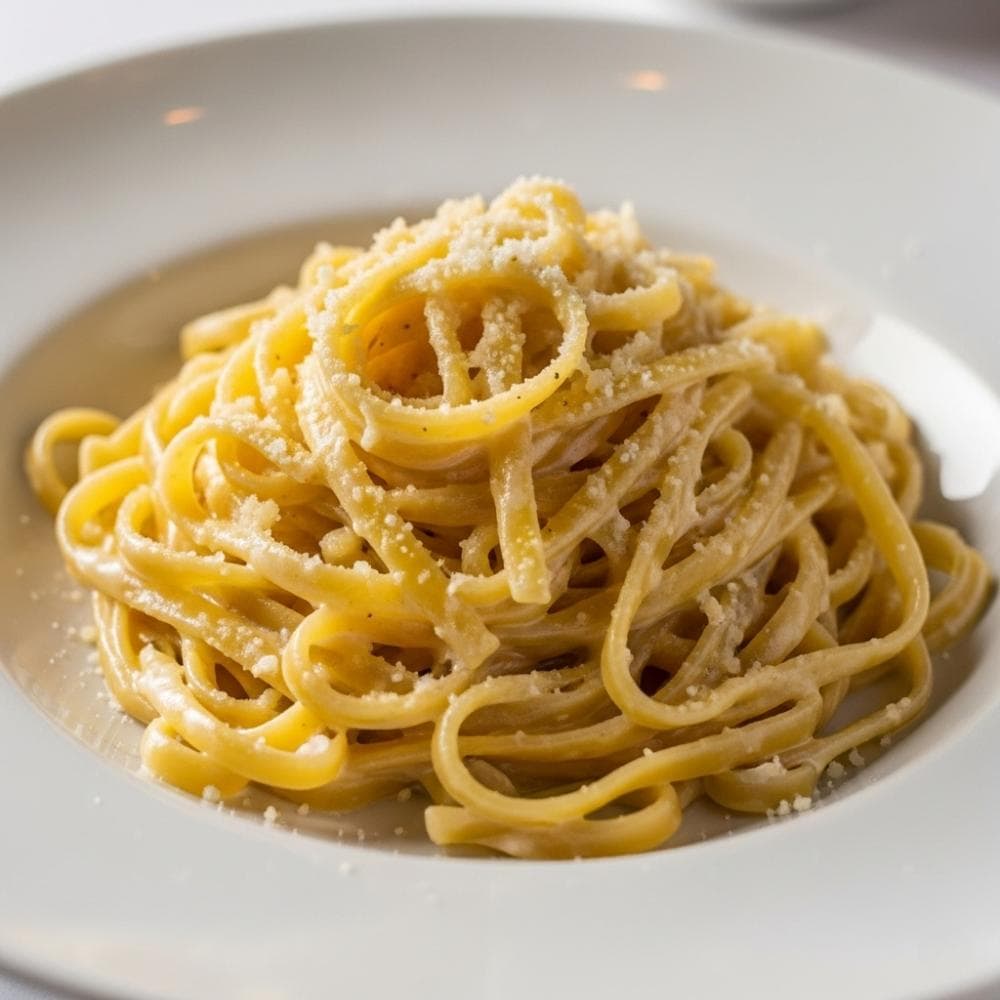
Classic Fettuccine Alfredo
A rich and creamy Italian-American pasta dish featuring tender fettuccine noodles coated in a luxurious sauce made with butter, heavy cream, and Parmesan cheese. A comforting meal for two.
The Quick Answer
With only butter, cream, Parmesan, and pasta, Alfredo is a fragile emulsion that breaks when overheated or starved of starch. The reserved pasta water and the timing of the cheese addition are what hold the fat in suspension instead of letting it pool.
Why is my Alfredo sauce greasy or split?
Alfredo is an emulsion of butterfat and cream-fat suspended in water, stabilized by Parmesan's proteins and the starch coating the fettuccine. Above roughly 180°F the milk proteins denature and clump, releasing the fat they were holding, so the sauce pools oil and turns grainy. That is why the cream is brought only to a gentle simmer and the cheese is tossed in off aggressive heat. The reserved pasta water is doing real work: its dissolved starch acts as an emulsifier, coating fat droplets so they stay dispersed. A splash while tossing both loosens the sauce and rebinds a mixture that is starting to weep oil back into a glossy coat.
Why does my Alfredo turn into a thick, gluey clump as it sits?
This is different from breaking: as the dish cools below serving temperature, the heavy cream thickens, the Parmesan firms, and the starch from the fettuccine and pasta water retrogrades, all of which seize the sauce into a paste that coats the noodles too heavily. With just six ounces of pasta and a cup of cream, the ratio is forgiving while hot but tightens fast off the heat. That is why the recipe says to toss and serve immediately in warm bowls; a cold bowl pulls heat out of the sauce and accelerates the clumping. If it stiffens, a tablespoon of hot pasta water and a quick toss reloosens the emulsion rather than more cream.
Not sure what to cook next? Let the generator pick your next dish in one click.
Random Recipe GeneratorAbout This Recipe
What is this dish?
Fettuccine Alfredo is a Roman pasta dish created by Alfredo di Lelio in Rome in the early 20th century — originally just fettuccine tossed vigorously with butter and Parmesan at the table. The American version, popularized after Hollywood stars brought it back from Rome, evolved to include heavy cream, making the sauce richer and more stable. Both versions share the same core characteristic: a silky, indulgent sauce that coats every strand of pasta.
Why you'll love it
Fettuccine Alfredo is the ultimate pasta comfort food — few dishes are as luxuriously simple. When made properly, the sauce is impossibly silky and light despite its richness. It comes together in the time it takes to boil the pasta. The challenge is technique rather than complexity — but master the technique and the reward is extraordinary.
When to serve
Fettuccine Alfredo is the perfect quick-but-impressive weeknight pasta dinner. It's excellent as a starter for a larger Italian meal, or as the main event with a simple green salad and garlic bread. The critical rule: serve it the moment it's ready. This dish does not wait well and must go directly from pan to plate.
Quick tips
Use only freshly grated Parmigiano-Reggiano — never pre-grated. Reserve a full cup of pasta water before draining. Build the sauce over the lowest possible heat, never at a boil. Toss vigorously and serve immediately without waiting.
Ingredient Highlights
Fettuccine
Wide, flat egg noodles that hold cream-based sauces beautifully. Fresh fettuccine from the refrigerator section gives superior results — its rough, porous surface clings to the buttery sauce far better than dried pasta. If using dried, cook it slightly under al dente and finish in the sauce.
Parmigiano-Reggiano
Must be freshly grated on the fine side of a box grater immediately before cooking. Pre-grated Parmesan contains anti-caking agents that prevent smooth melting and create a gritty, clumpy sauce. Buy a wedge and grate it yourself — this is non-negotiable for the right texture.
Heavy Cream
In the American version, heavy cream creates a stable, rich sauce that emulsifies more reliably than the butter-only original. Add it gradually and never let it boil vigorously — sustained boiling causes separation and a greasy, broken sauce.
Pasta Water
The starchy cooking water from the pasta is the secret emulsifier that binds fat and liquid into a silky, cohesive sauce. Add it gradually while tossing — you want a sauce that coats the noodles without pooling at the bottom of the bowl.
Substitution Options
For a lighter version, substitute half-and-half for heavy cream — the sauce will be slightly thinner but still delicious. Pecorino Romano can partially replace Parmesan, adding a sharper, saltier flavor. Fresh fettuccine can be replaced with dried — cook it 1-2 minutes less than directed. For the original Roman butter-only version, omit cream entirely and use 6 tablespoons of cold, cubed unsalted butter added gradually with pasta water while tossing vigorously over very low heat. Add grilled chicken, sautéed shrimp, or sliced prosciutto to make it a complete main course.
You'll likely need to buy
Likely in your pantry
Step-by-Step Instructions
Cook the pasta
Bring a large pot of salted water to a rolling boil. Add the fettuccine pasta and cook according to package directions until it is al dente (tender but still firm to the bite). Reserve 1/4 cup of the pasta cooking water before draining the pasta. Drain the pasta well.
Chef's Tips
- ›Al dente means cooked so that it is still firm when bitten.
- ›Reserving pasta water is important; it helps make the sauce creamy.
Make the Alfredo sauce
While the pasta is cooking, in a large skillet or saucepan, melt 1/2 cup unsalted butter over medium-low heat. Add 1 cup heavy cream and bring it to a gentle simmer (cook gently just below boiling, with small bubbles). Cook for 2-3 minutes, stirring occasionally, until it is slightly reduced (cooked down and become thicker).
Chef's Tips
- ›Simmer means to cook gently just below boiling, with small bubbles.
- ›Reduced means cooked down to be thicker and more flavorful.
Combine pasta and sauce
Add the drained fettuccine pasta to the skillet with the cream mixture. Add 1/2 cup grated Parmesan cheese, 1/2 teaspoon salt, and 1/4 teaspoon black pepper. Toss vigorously with tongs until the pasta is evenly coated and the sauce becomes thick and creamy. If the sauce is too thick, add a tablespoon or two of the reserved pasta cooking water until it reaches your desired consistency.
Chef's Tips
- ›Tossing vigorously helps the sauce emulsify (mix smoothly) and cling to the pasta.
- ›The starch from the pasta water helps thicken and bind the sauce.
Serve
Serve the Fettuccine Alfredo immediately in warm bowls. Garnish with extra grated Parmesan cheese and 2 tablespoons chopped fresh parsley.
Chef's Tips
- ›Fettuccine Alfredo is best served fresh, as the sauce can thicken considerably upon cooling.
- ›Parsley adds a fresh touch to a rich dish.
Chef's Tips
Techniques that separate good from great
Use freshly grated Parmesan — this is non-negotiable
Pre-grated Parmesan from the green can contains cellulose (anti-caking agents) that prevent it from melting smoothly, resulting in a gritty, clumpy sauce instead of the silky emulsion classic Alfredo requires. Buy a wedge of actual Parmigiano-Reggiano and grate it yourself on the fine holes of a box grater right before cooking. The difference in texture is dramatic and the flavor is incomparably better.
Reserve a full cup of pasta water before draining
Pasta water is starchy, salted liquid gold for Alfredo sauce. The dissolved starch in pasta water helps bind the fat and water in the butter-cream sauce into a cohesive emulsion rather than a greasy, broken mess. You'll likely need 1/4 to 1/2 cup. Keep it in a measuring cup next to the stove and add it gradually while tossing the pasta — you want a sauce that coats the noodles without pooling at the bottom.
Build the sauce on low heat, never boiling
High heat breaks the butter-cream emulsion in Alfredo, causing the fat to separate out and creating a greasy, curdled-looking sauce. Work over the lowest heat setting, or even turn off the burner completely and use only the residual heat of the pan. The goal is to melt the butter, warm the cream, and melt the Parmesan into a smooth sauce without any simmering or bubbling.
Toss immediately and serve without waiting
Alfredo sauce is a live thing — it continues to thicken and congeal as it cools. This is the dish you cook when everyone is already sitting at the table. Drain the pasta, immediately add it to the sauce, toss vigorously for 60 seconds while adding pasta water as needed, and serve into warmed bowls immediately. Every minute of waiting makes the sauce thicker and less elegant.
Nutrition Facts
Per serving · Estimated values
* Estimated per serving based on a 2,000 calorie diet.
Equipment Needed
- Large pot (for pasta)
- Large skillet or saucepan
- Tongs
- Whisk
- Measuring cups
- Measuring spoons
- Knife and cutting board
As an Amazon Associate we earn from qualifying purchases — at no extra cost to you.
Quick Tips
- For the creamiest sauce, use freshly grated Parmesan cheese from a block, not pre-shredded.
- Add grilled chicken or shrimp to the finished dish for a more complete meal (note this changes the vegetarian dietary tag).
- If you want a hint of garlic, you can sauté 1 minced clove of garlic in the butter before adding the cream.
Recipe Variations
Different ways to make this dish your own
Chicken Alfredo
Slice grilled or pan-seared chicken breast over the finished pasta. Season the chicken simply with salt, pepper, and garlic powder. This is the most popular American variation and turns the pasta into a satisfying complete meal.
Shrimp Alfredo
Sauté large shrimp in butter and garlic for 2 minutes per side, set aside, then make the Alfredo sauce in the same pan with all the shrimp flavors built in. Return the shrimp at the end and toss to combine.
Spinach and Mushroom Alfredo
Sauté sliced cremini mushrooms and fresh baby spinach in butter before building the sauce. The mushrooms add earthiness and umami depth while the spinach adds color, nutrients, and a slight bitterness that balances the rich sauce.
Original Roman Alfredo (Al Triplo Burro)
Use only butter, Parmesan, and pasta water — no cream at all. The technique is vigorous tossing over the lowest possible heat to create a natural emulsion. This is the dish Alfredo di Lelio actually made and served at his restaurant in Rome.
What to Serve With
Perfect pairings to complete the meal
Classic with Grilled or Pan-Seared Chicken
Slice pan-seared chicken breast (seasoned simply with salt, pepper, and garlic powder) over the top of the Alfredo pasta. The lean, lightly seasoned chicken provides protein without competing with the rich, buttery sauce. This is the most popular Alfredo variation in American restaurants — the neutral chicken lets the sauce remain the star.
With Sautéed Mushrooms and Thyme
Cook sliced cremini or mixed wild mushrooms in butter with fresh thyme and a splash of white wine until golden and slightly caramelized. Fold into the Alfredo pasta or arrange on top before serving. The earthy, meaty mushrooms provide depth and texture that elevates the dish from simple pasta to something more complex and satisfying.
Alfredo Pasta Bake with Crispy Breadcrumbs
Transfer the tossed Alfredo pasta to a baking dish, top with a mixture of panko breadcrumbs, melted butter, Parmesan, and fresh thyme, and broil for 3-4 minutes until golden and crispy. This transforms the dish into a pasta gratin that can be made ahead and served for a dinner party. The crispy topping provides essential textural contrast to the creamy pasta below.
With Garlic Bread and a Caesar Salad
The classic Italian-American restaurant trio: fettuccine Alfredo, thick-sliced garlic bread with herb butter, and a crisp Caesar salad. The crunchy croutons and sharp anchovy dressing of the Caesar cut through the richness of the Alfredo, while the garlic bread provides a vehicle for any sauce left on the plate. This combination is deliberate — each element balances the others.
Storage & Reheating
Keep it fresh and plan ahead
Refrigerator
Store leftover Alfredo pasta in an airtight container for up to 3 days. The sauce will thicken considerably and the pasta will absorb most of it — this is normal. Reheat gently with added liquid to restore the creamy texture.
Freezer
Alfredo sauce and pasta do not freeze well — the cream sauce breaks upon thawing and the pasta becomes mushy. If you must freeze, freeze only the sauce separately (without pasta) for up to 1 month. Thaw slowly in the refrigerator and reheat gently, whisking to re-emulsify.
Make-Ahead
Alfredo is best made fresh and served immediately — it's a 15-minute dish that genuinely doesn't benefit from advance preparation. If cooking for a crowd, have all ingredients ready and cook the pasta while guests are seated, then make the sauce and toss in under 10 minutes. The speed is part of the appeal.
Reheating
Reheat in a saucepan over very low heat, adding 2-3 tablespoons of milk, cream, or pasta water per serving and stirring constantly to re-emulsify the sauce. The sauce will look broken at first but comes back together with gentle heat and stirring. Microwave at 50% power in 60-second intervals, stirring between each, and add a splash of milk to restore creaminess.
Cooking tonight?
Get a month of dinners like this — done for you
30 chef-tested dinners mapped to the month, plus 5 ready-to-shop grocery lists. One-time $8.99 — 30 dinners planned for you, zero nightly decisions.
See the 30-Day Plan →Got Leftovers?
Turn what you already have in your fridge into delicious meals. Our AI-powered generator creates personalized recipes from your ingredients.
Go Deeper
Master the Culinary Science
Every recipe is a doorway. Our 7 Mastery Guides give you the science, technique, and framework to understand why food works — not just how to follow steps.
AI-Powered
Have Ingredients? Generate a Recipe.
Tell our AI what's in your fridge and get a custom recipe with image in seconds. No waste, no boredom.
Try the AI Recipe Generator →Browse more like this:
You Might Also Like
Discover more delicious recipes similar to what you're cooking