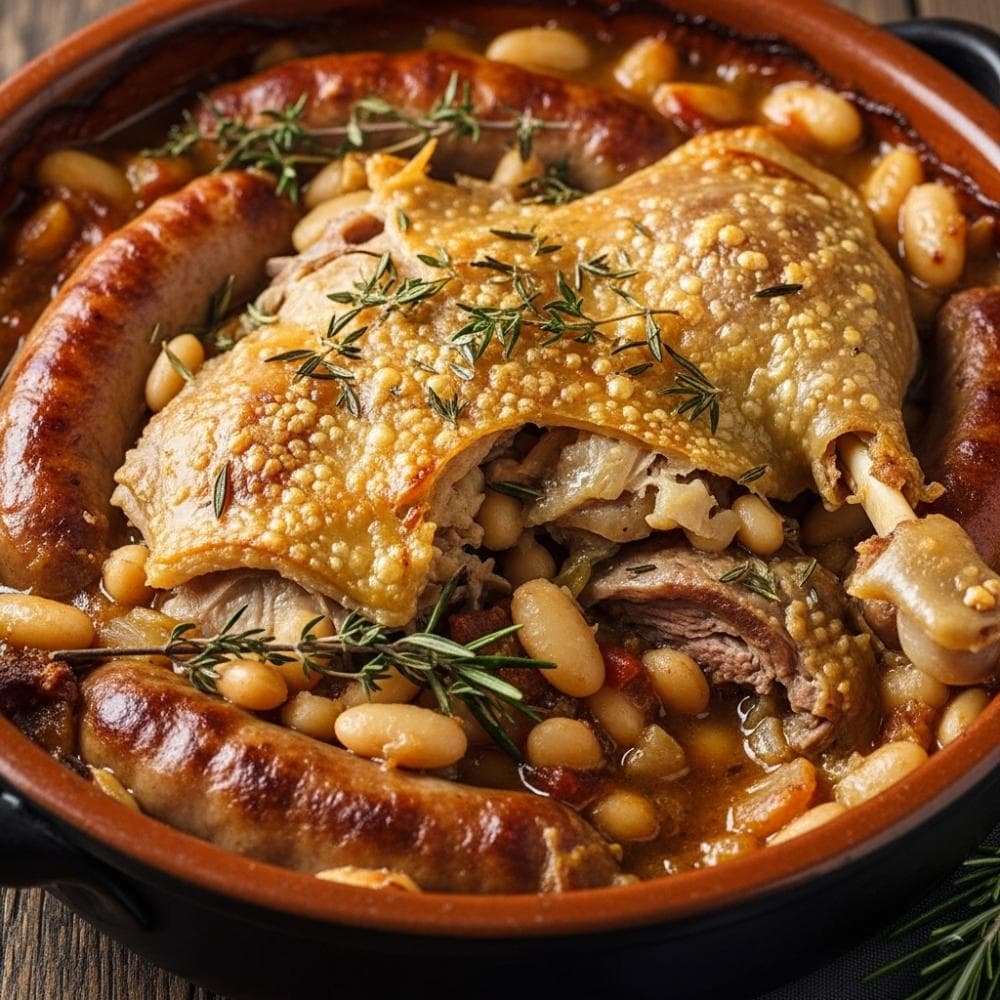
Classic French Cassoulet
A rustic and rich slow-cooked French casserole featuring tender white beans, savory pork sausages, succulent duck confit, and flavorful pork belly, all simmered in an aromatic broth until beautifully melded. A comforting and robust dish for two.
The Quick Answer
Cassoulet goes wrong in two quiet ways: the components cook at different rates so something is always over- or underdone, and the stew never develops the silky body that defines it. The fix is staging the meats by how much cooking each needs and coaxing starch and gelatin out so the braise turns unctuous rather than watery.
Why is my duck confit dry while the pork shoulder is still tough?
The proteins in this dish arrive at very different starting points. The duck confit leg is already fully cooked and tender, so prolonged braising only dries its fibers and shreds it to mush; it goes on top and just needs warming through and crisping. The raw pork shoulder cubes, by contrast, are full of collagen-rich connective tissue that needs hours at the low 300 degree Fahrenheit oven to melt into gelatin and turn fork-tender. Submerge the shoulder in the liquid where it braises gently, and perch the confit and sausage higher where they stay intact. Matching each meat to its required time and position is what keeps everything correct in the same pot.
Why is my cassoulet thin and brothy instead of rich and unctuous?
The signature texture comes from dissolved bean starch and rendered collagen, not from added thickeners. This is why the recipe has you pre-cook the beans in plain water and reserve that cloudy liquid: it is loaded with leached starch that thickens the braise as it reduces. Keep the oven low so the pork shoulder's collagen converts to gelatin, which gives the broth body and a glossy mouthfeel. Resist topping up with too much water, which dilutes both. The day-ahead rest the cooking tips recommend works through the same chemistry, as the cooled gelatin and starch set into a fuller, more cohesive stew that reheats thicker than it was the first night.
Not sure what to cook next? Let the generator pick your next dish in one click.
Random Recipe GeneratorAbout This Recipe
What is this dish?
Classic French Cassoulet is a legendary slow-cooked casserole from the Languedoc region of southern France, renowned for its rich layers of tender white beans, succulent duck confit, savory pork sausages, and melt-in-your-mouth pork belly all simmered together in an aromatic broth. This rustic peasant dish dates back centuries and represents the pinnacle of French comfort food, with each region claiming its own authentic version. The long, slow cooking process melds the flavors into a deeply satisfying one-pot meal that is both hearty and elegant, traditionally served in the earthenware dish it is cooked in.
Why you'll love it
This recipe delivers restaurant-quality cassoulet at home with layers of complex flavors that develop through hours of gentle simmering. The duck confit adds luxurious richness, while the pork belly and sausages provide meaty depth and the white beans absorb all the savory juices to become creamy and flavorful. The traditional technique of breaking and stirring in the golden crust that forms on top creates an incredibly rich, velvety texture throughout. While it requires time and patience, most of the cooking is hands-off, and the result is an unforgettable dish perfect for special occasions or when you want to impress with authentic French cuisine.
When to serve
Cassoulet is the ultimate dish for cold weather gatherings, Sunday dinners, and special occasions when you have time to let it slowly develop its flavors. It works beautifully for dinner parties since it can be made a day ahead and actually tastes better after resting overnight in the refrigerator. Serve it family-style straight from the pot with a crisp green salad and crusty French bread to soak up the rich sauce. This is also an excellent dish for holiday entertaining when you want something impressive yet comforting that feeds a crowd with minimal last-minute effort.
Quick tips
Soak your beans overnight and cook them until just tender before assembling the cassoulet — they will finish cooking in the oven and absorb all the flavorful cooking liquid. Brown all the meats thoroughly in batches to develop deep caramelization, which adds immense flavor to the final dish. Check the liquid level every 30-45 minutes during the long bake and add more stock or water as needed to keep everything moist. The traditional crust that forms on top should be gently broken and stirred back into the beans several times during cooking — this enriches the entire dish and creates the signature creamy texture of authentic cassoulet.
Ingredient Highlights
Duck Confit
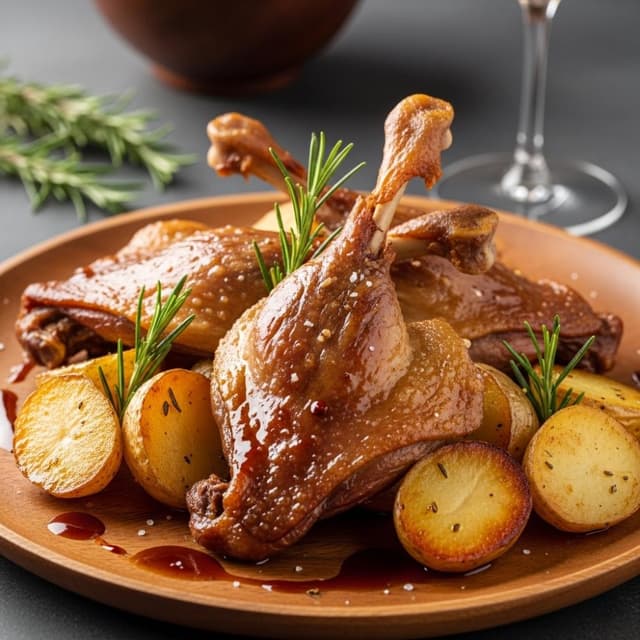
The luxurious centerpiece of cassoulet — duck legs that have been salt-cured and slowly cooked in their own fat until impossibly tender. The rich, savory duck meat and fat infuse the entire dish with deep flavor and add authentic French character. Store-bought duck confit makes this recipe accessible, though homemade is traditional.
Great Northern or Cannellini Beans
The foundation that holds the cassoulet together, these creamy white beans absorb all the flavorful cooking liquid from the meats and aromatics. They become incredibly creamy during the long, slow cooking process while maintaining their shape. Dried beans are essential for the best texture — canned beans will fall apart during the extended baking time.
Pork Belly and Salt Pork
Provide rich, fatty depth and the traditional lardons that add savory, crispy pockets of flavor throughout the dish. The rendered fat from the pork enriches the beans and creates the luxurious mouthfeel that defines cassoulet. Thick-cut bacon can substitute for salt pork in a pinch.
Toulouse or Garlic Sausage
High-quality pork sausages add meaty texture and spiced flavor that complements the other proteins. Traditional Toulouse sausage from France is coarsely ground with garlic and wine, but any good-quality garlic pork sausage works well. The sausages hold their shape during the long cooking and provide satisfying bites of seasoned meat.
Bouquet Garni
A classic French herb bundle of bay leaf and fresh thyme tied with kitchen twine that infuses the cooking liquid with subtle aromatic flavors. The herbs add depth without overwhelming the rich meat flavors, and the bundle is easy to remove before serving. Fresh herbs are far superior to dried for this slow-cooked application.
Substitution Options
Replace duck confit with bone-in chicken thighs or turkey legs for a more affordable version, though the dish will be less rich and authentic. Swap salt pork with thick-cut bacon if needed, which adds a smoky note. Use any high-quality pork or Italian sausage in place of Toulouse sausage — look for coarsely ground varieties with garlic. For the beans, navy beans or flageolet beans work as substitutes for great northern or cannellini. If you do not have a Dutch oven, use any large oven-safe pot or casserole dish with a tight-fitting lid. Lamb shoulder can replace some of the pork for a different regional variation of cassoulet.
You'll likely need to buy
Likely in your pantry
Step-by-Step Instructions
Soak and pre-cook beans
Rinse the **dried beans** thoroughly. Put them in a large bowl, cover with plenty of cold water, and let them soak overnight. If you're in a hurry, you can use the quick-soak method: bring the beans to a boil for **2 minutes**, then take them off the heat and let them soak for **1 hour**. Drain and rinse the soaked beans. In a large pot, cover the drained beans with fresh cold water (or stock) and bring them to a gentle simmer. Cook for **45-60 minutes**, or until they are just soft but still a bit firm. Drain the beans again, but save the water they cooked in (this is called the reserved cooking liquid).
Chef's Tips
- ›Soaking helps the beans cook evenly and makes them easier to digest.
- ›Don't cook the beans completely; they will finish cooking later in the oven.
Prepare and brown meats
In a large, oven-safe pot (like a Dutch oven), **cook** the **salt pork** or **bacon** over medium heat until it's crispy. This process is called rendering, which means melting out the fat. Take out the crispy pork pieces (called lardons) and set them aside. In the same pot, brown the **pork shoulder cubes** in small batches until they are golden brown on all sides. Take them out and set them aside. Brown the **pork sausages** until they are golden, then remove and set them aside. Gently warm the **duck confit leg** in the pot until some of its fat melts, then remove it and set it aside.
Chef's Tips
- ›Don't put too much meat in the pot at once when browning; this helps it get a good brown crust.
- ›The fat from the salt pork adds a lot of flavor.
Cook vegetables and build base
Add the **chopped onion**, **carrots**, and **celery** to the pot with any fat that's left. Cook them over medium heat until they become soft, about **8-10 minutes**. Add the **minced garlic** and cook for **1 minute** until it smells good (fragrant). If you're using them, stir in the **diced tomatoes** and cook for **5 minutes**, breaking them apart with your spoon. Put the browned **pork shoulder** and **salt pork pieces** back into the pot. Add enough of the **reserved bean cooking liquid** to almost cover the ingredients, and add the **bouquet garni** (a small bag of herbs tied with string). Bring the mixture to a gentle simmer.
Chef's Tips
- ›Scrape up any browned bits from the bottom of the pot; these bits have a lot of flavor!
- ›The bouquet garni adds a subtle herb taste to the liquid.
Assemble and bake
Stir the pre-cooked **beans** into the pot. Add **salt** and **pepper** to your taste. Neatly place the browned **sausages** and **duck confit leg** on top of the bean mixture. Make sure the liquid just barely covers all the ingredients. Preheat your oven to **300°F (150°C)**. Cover the pot with a lid and bake for **2-3 hours**. Every **30-45 minutes**, check the liquid level and add more of the reserved bean liquid or hot water if it looks dry. If a crust forms on top, gently break it by stirring it back into the beans – this is a traditional step that makes the stew richer.
Chef's Tips
- ›Use a heavy pot that can go in the oven for even cooking.
- ›The crust on top is a classic part of cassoulet; stirring it in adds to the richness.
Finish and serve
During the last **20-30 minutes** of baking, take off the lid. If you like, sprinkle **fresh breadcrumbs** on top for an extra golden crust. Continue baking until the top is deeply golden and bubbly. Let the **cassoulet** rest for **10-15 minutes** before serving. Take out and throw away the bouquet garni before you serve it.
Chef's Tips
- ›Letting the cassoulet rest helps the flavors settle and makes it easier to serve.
- ›Serve it straight from the pot for a traditional, rustic look.
Chef's Tips
Techniques that separate good from great
Break and reform the crust three times during baking
Traditional cassoulet develops a golden breadcrumb crust that should be gently pushed down into the dish and allowed to reform at least three times during baking. Each cycle builds another layer of flavor and thickens the dish. Skipping this step is the most common cassoulet mistake.
Render your fats before braising
Brown the sausage and duck confit skin-side down first, rendering the fat before adding any liquid. This fat becomes the cooking medium for the aromatics and the flavoring agent for the beans. Substituting oil produces a noticeably flatter, leaner result.
Use dried beans soaked overnight, not canned
Dried beans cooked from scratch hold their shape through the long braise without turning mushy, and they absorb the cooking liquid far more effectively than pre-saturated canned beans. The texture difference is substantial — this is one dish where the extra step is genuinely worth it.
Make it two days ahead for the deepest flavor
Cassoulet is one of the rare dishes that is genuinely better on day two or three. The beans continue absorbing the rendered fats and braising juices overnight, and the overall depth intensifies remarkably. Reheat covered at 160°C/325°F, adding a splash of stock if it has thickened too much.
Nutrition Facts
Per serving · Estimated values
* Estimated per serving based on a 2,000 calorie diet.
Equipment Needed
- Large Dutch oven or oven-safe pot (6-8 quart/liter capacity)
- Large bowl (for soaking beans)
- Colander
- Slotted spoon
- Knife and cutting board
- Measuring cups
- Measuring spoons
As an Amazon Associate we earn from qualifying purchases — at no extra cost to you.
Quick Tips
- Cassoulet often tastes even better if you make it a day ahead, as the flavors become deeper. Gently reheat it in the oven.
- The types of meat can change based on the region. Feel free to use other pork cuts, lamb, or even goose.
- While special Tarbais beans are traditional, great northern or cannellini beans are good replacements.
- Don't worry about the fat; it's very important for the rich flavor of cassoulet. You can skim some off before serving if you prefer.
Recipe Variations
Different ways to make this dish your own
Chicken Cassoulet
Replace duck confit and some of the pork with bone-in chicken thighs for a more accessible, budget-friendly version with similar richness.
Vegetarian Cassoulet
Omit all meat, double the beans, and add butternut squash, smoked paprika, and mushrooms for depth and a hearty, plant-based result.
Quick Cassoulet
Use rotisserie chicken, canned beans, and good-quality sausage for a weeknight-friendly version ready in about 1 hour instead of 3.
Seafood Cassoulet
A coastal variation that replaces the meat with chunks of firm white fish, mussels, and clams for a lighter, more summery take.
What to Serve With
Perfect pairings to complete the meal
Crusty Baguette
Essential for mopping up the rich, deeply flavoured sauce at the bottom of the dish. A good French baguette is non-negotiable here.
Simple Green Salad
A sharp vinaigrette-dressed salad provides acidity and freshness that cuts through the hearty, fatty cassoulet beautifully.
Dry Red Wine
A glass of Languedoc or Bordeaux red wine is the traditional accompaniment, matching the robust, meaty flavours of the dish.
Dijon Mustard
A small bowl of sharp Dijon on the table lets guests add a peppery, tangy counterpoint to the rich, slow-cooked stew.
Storage & Reheating
Keep it fresh and plan ahead
Refrigerator
Keeps extremely well — refrigerate in an airtight container for up to 4 days. The flavours deepen significantly after resting overnight.
Freezer
Freeze in portions for up to 3 months. The beans may soften slightly after thawing but the overall dish remains excellent.
Make-Ahead
Cassoulet is ideal for making 1–2 days ahead. Reheat covered in the oven, adding a little stock or water if it has thickened too much.
Reheating
Reheat covered in a 160°C/325°F oven for 30–40 minutes, or gently on the stovetop over low heat with a splash of stock stirred in.
Cooking tonight?
Get a month of dinners like this — done for you
30 chef-tested dinners mapped to the month, plus 5 ready-to-shop grocery lists. One-time $8.99 — 30 dinners planned for you, zero nightly decisions.
See the 30-Day Plan →Got Leftovers?
Turn what you already have in your fridge into delicious meals. Our AI-powered generator creates personalized recipes from your ingredients.
Go Deeper
Master the Culinary Science
Every recipe is a doorway. Our 7 Mastery Guides give you the science, technique, and framework to understand why food works — not just how to follow steps.
AI-Powered
Have Ingredients? Generate a Recipe.
Tell our AI what's in your fridge and get a custom recipe with image in seconds. No waste, no boredom.
Try the AI Recipe Generator →Browse more like this:
You Might Also Like
Discover more delicious recipes similar to what you're cooking