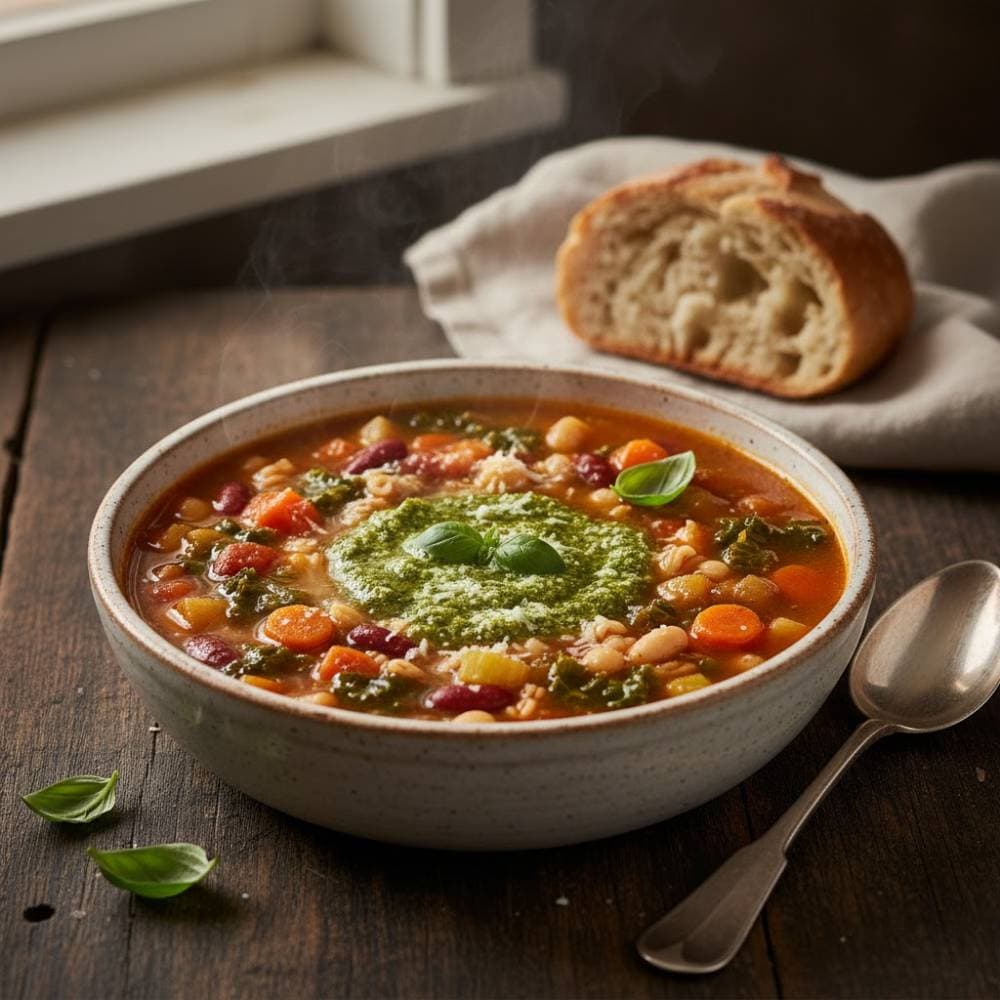
Classic Minestrone Soup (Hearty Italian Vegetable Soup)
A rustic, comforting Italian vegetable soup loaded with seasonal vegetables, beans, pasta, and a rich tomato broth. Endlessly adaptable and perfect for using up whatever vegetables you have on hand.
The Quick Answer
Minestrone most often disappoints by tasting flat and thin, because the tomato paste is never caramelised and the cannellini beans aren't allowed to break down. Brown the 2 tablespoons of paste until it darkens, and mash a ladle of the beans against the pot, so their starch thickens the broth into something that coats the spoon.
Why does my minestrone taste flat even with all the vegetables?
The flavour engine here isn't the zucchini or green beans, it's the soffritto and the tomato paste. Onion, carrot and celery sweated for 6-8 minutes release sugars and aromatic compounds that form the savoury base, while the tomato paste is a concentrated source of glutamates that read as umami. Crucially, frying that paste for a full minute until it turns brick-red drives a light Maillard browning that deepens its flavour far beyond raw stirred-in paste. Skip that caramelisation step and the broth stays sharp and one-dimensional no matter how many vegetables you add, because nothing has built the roasted, savoury backbone the dish needs.
How do I make minestrone broth thicker without cream or flour?
Reach for the cannellini beans already in the pot. Beans are packed with starch, and when you mash roughly a third of the drained can against the side of the Dutch oven before simmering, that released starch disperses into the 6 cups of broth and gently thickens it as it heats. The same effect is why a Parmesan rind helps: as it softens it sheds emulsified fat and dissolved proteins that give the liquid body. Together these turn a watery vegetable soup into one with a velvety, spoon-coating texture, no roux or dairy required, and the whole beans you leave intact still give you that creamy bite.
Not sure what to cook next? Let the generator pick your next dish in one click.
Random Recipe GeneratorAbout This Recipe
What is this dish?
Minestrone is Italy's most beloved vegetable soup — a thick, hearty broth loaded with seasonal vegetables, beans, pasta, and fragrant olive oil. The name means 'big soup' in Italian, and minestrone is exactly that: a substantial, nourishing, one-pot meal that has fed Italian families for centuries. There is no single definitive recipe — minestrone varies by region, season, and what is in the garden or pantry. It is the ultimate expression of cucina povera (peasant cooking): simple, resourceful, and extraordinarily satisfying.
Why you'll love it
Minestrone delivers deep, warm comfort from entirely wholesome, everyday ingredients. The combination of beans, pasta, and vegetables creates a soup that is simultaneously satisfying and light. A Parmesan rind simmered into the broth adds extraordinary depth, and the generous finish of extra virgin olive oil provides richness and a beautiful sheen. It is also one of the most forgiving recipes — nearly any vegetable works.
When to serve
Minestrone is perfect for cool evenings, rainy days, and any time comfort food is the priority. It works as a hearty first course at an Italian dinner or as a complete, satisfying meal on its own with crusty bread. It is excellent for meal prep since it improves with time and freezes beautifully (without the pasta).
Quick tips
Build the soffritto slowly for 8-10 minutes — the sweet, aromatic base is the foundation of the soup's flavor. Add a Parmesan rind while simmering for restaurant-level depth. Add hardy and delicate vegetables at different times based on their cooking needs. Cook pasta separately to prevent it from absorbing all the broth.
Ingredient Highlights
Soffritto (Onion, Carrot, Celery)
The essential aromatic base of Italian cooking. These three vegetables, finely diced and sweated slowly in olive oil, create the sweet, savory foundation that every other ingredient in the soup builds upon. This is the step most worth not rushing.
Cannellini Beans (White Beans)
Provide protein, creaminess, and body to the soup. Canned beans work perfectly. Some Italian cooks mash a spoonful of beans and stir them back in to naturally thicken the broth. White beans absorb the surrounding flavors while contributing their own mild, nutty taste.
Parmigiano-Reggiano Rind
One of the most valuable 'scraps' in the Italian kitchen. A piece of Parmesan rind simmered in the soup releases glutamates and salty, savory compounds that deepen the broth profoundly. Save rinds in the freezer after finishing blocks of Parmesan specifically for soups and stews.
Small Pasta (Ditalini or Elbow)
Small pasta shapes that cook quickly and fit comfortably on a spoon are traditional. Ditalini, elbow macaroni, or small shells are all ideal. The pasta soaks up the broth and adds satisfying starch — the key is keeping it separate from the soup to prevent it from swelling and turning mushy.
Substitution Options
Any seasonal vegetable can be used — summer: zucchini, corn, green beans; autumn/winter: butternut squash, kale, cabbage. Replace cannellini beans with chickpeas, kidney beans, or borlotti beans. Swap small pasta for spelt, barley, or farro for a heartier, nuttier variation. For a vegan version, omit the Parmesan rind and add 2 tablespoons of nutritional yeast and 1 teaspoon of miso paste for similar umami depth. Add diced pancetta or bacon with the soffritto for a more savory, meaty base.
You'll likely need to buy
Likely in your pantry
Step-by-Step Instructions
Sauté the aromatics
Heat 3 tablespoons olive oil in a large pot or Dutch oven over medium heat. Add 1 diced onion, 2 diced carrots, and 2 diced celery stalks (the classic Italian soffritto). Cook for 6-8 minutes, stirring occasionally, until the vegetables are softened. Add 3 cloves minced garlic and cook for 1 minute until fragrant.
Chef's Tips
- ›The soffritto creates the flavor foundation for the soup.
- ›Don't rush this step—softened vegetables add sweetness and depth.
Add tomatoes and build the base
Stir in 2 tablespoons tomato paste and cook for 1 minute to caramelize slightly. Add 1 can diced tomatoes (with their juice), 6 cups vegetable broth, 2 teaspoons dried Italian seasoning, 1 bay leaf, 1 teaspoon salt, and 1/2 teaspoon black pepper. Stir well and bring to a boil over high heat.
Chef's Tips
- ›Tomato paste adds concentrated tomato flavor.
- ›Bring to a full boil before adding vegetables so they cook evenly.
Add vegetables and simmer
Once boiling, add 1 diced zucchini, 1 cup green beans (cut into 1-inch pieces), and 1 can drained cannellini or kidney beans. Reduce heat to medium-low and simmer, partially covered, for 20 minutes until all the vegetables are tender.
Chef's Tips
- ›Add heartier vegetables first—they take longer to cook.
- ›Keep the simmer gentle so vegetables don't turn mushy.
Cook the pasta
Add 1 cup small pasta (ditalini, elbow, or small shells) to the soup. Stir well and cook for 8-10 minutes, or according to package directions, until the pasta is al dente. Stir occasionally to prevent sticking.
Chef's Tips
- ›Cooking pasta directly in the soup infuses it with flavor.
- ›If making ahead, cook pasta separately and add when reheating to prevent mushiness.
Add greens and finish
Stir in 2 cups roughly chopped fresh spinach or kale. Cook for 2-3 minutes until wilted. Remove from heat and discard the bay leaf. Stir in 1/4 cup chopped fresh basil and 2 tablespoons chopped fresh parsley. Taste and adjust seasoning with more salt and pepper if needed.
Chef's Tips
- ›Add greens at the end so they stay vibrant and don't overcook.
- ›Fresh herbs add brightness—don't skip them.
Serve
Ladle the minestrone into bowls. Drizzle with extra virgin olive oil and sprinkle with grated Parmesan cheese if desired. Serve hot with crusty Italian bread for dipping.
Chef's Tips
- ›Minestrone tastes even better the next day as the flavors meld.
- ›For vegan version, omit the Parmesan or use nutritional yeast.
Chef's Tips
Techniques that separate good from great
Build the soffritto slowly over medium-low heat — do not rush it
The soffritto (sautéed onion, carrot, and celery) is the flavor foundation of minestrone. Cooked over low heat for 8-10 minutes until the vegetables are completely soft and fragrant, the soffritto creates a sweet, aromatic base that no amount of simmering time can compensate for if skipped or rushed.
Add a Parmesan rind to the simmering soup
The rind from a block of Parmigiano-Reggiano, simmered in the soup for 20-30 minutes, dissolves its salty, umami-rich flavor throughout the broth. It is the secret ingredient that gives Italian restaurant minestrone that indefinable depth. Remove before serving.
Cook pasta separately and add per bowl at serving time
If pasta is cooked directly in the minestrone and the soup sits or is stored, the pasta swells and absorbs all the broth, turning from tender to mushy. Cook pasta separately and add a portion to each bowl when serving. This keeps both the pasta texture and the soup's proper consistency.
Add hardy and delicate vegetables in two stages
Root vegetables like carrots and potatoes need 20+ minutes to become tender. Delicate vegetables like zucchini, green beans, and spinach need only 5-8 minutes. Adding everything at the same time results in mush. Stagger the additions based on cooking time for properly textured vegetables throughout.
Nutrition Facts
Per serving · Estimated values
* Estimated per serving based on a 2,000 calorie diet.
Equipment Needed
As an Amazon Associate we earn from qualifying purchases — at no extra cost to you.
Quick Tips
- Minestrone is incredibly flexible—use whatever vegetables are in season. Summer: zucchini, green beans, tomatoes. Winter: cabbage, potatoes, squash.
- For a richer flavor, add a Parmesan rind to the soup while it simmers. Remove before serving.
- Store soup and pasta separately if meal prepping—pasta absorbs liquid and becomes mushy. Add pasta to individual portions when reheating.
Recipe Variations
Different ways to make this dish your own
Ribollita (Tuscan Bread Soup)
A famous Tuscan version of minestrone with the addition of stale bread and cavolo nero (lacinato kale). The bread thickens and absorbs the broth, and the soup is literally 'reboiled' the next day, becoming even richer. A truly iconic variation.
Minestrone alla Genovese (with Pesto)
Stir 2-3 tablespoons of basil pesto into the finished soup just before serving. The Ligurian tradition adds a burst of herbaceous freshness and richness that transforms the soup completely. Add pesto to individual bowls, not the entire pot, for the freshest flavor.
Slow Cooker Minestrone
Sauté the soffritto first, then combine everything in a slow cooker with the broth and vegetables. Cook on low for 6-8 hours. Add pasta in the last 30 minutes. The slow, gentle cooking develops extraordinary flavor depth.
Minestrone with Sausage
Brown 200g of Italian sausage (removed from the casing) with the soffritto at the start. The rendered fat enriches the broth and the sausage adds savory, fennel-spiced pockets throughout the soup.
What to Serve With
Perfect pairings to complete the meal
Crusty Bread and Olive Oil for Dipping
Thick slices of toasted ciabatta, sourdough, or a baguette drizzled with extra virgin olive oil are essential alongside minestrone. The bread soaks up the flavorful broth and provides satisfying contrast.
Freshly Grated Parmesan at the Table
A generous grating of Parmigiano-Reggiano over each bowl of minestrone adds salty depth and luxurious richness. Pass the grater at the table so each diner can customize their bowl.
Drizzle of Extra Virgin Olive Oil
A generous swirl of your best extra virgin olive oil over each bowl right before serving adds fruitiness, richness, and a beautiful sheen. This final step is what distinguishes home minestrone from restaurant quality.
Simple Bruschetta as a Starter
Begin with bruschetta of grilled bread rubbed with garlic and topped with chopped tomatoes for a light, Italian-themed starter before the hearty soup.
Storage & Reheating
Keep it fresh and plan ahead
Refrigerator
Store without pasta for up to 5-6 days. The soup improves significantly after day one as flavors continue to develop. Add freshly cooked pasta to individual portions when reheating.
Freezer
Freeze without pasta for up to 3 months in airtight containers. Thaw overnight in the refrigerator and reheat on the stovetop. The vegetables become softer after freezing but the flavor is excellent.
Make-Ahead
Minestrone is ideal for making ahead. Make the complete soup base (without pasta) up to 4 days ahead. Reheat by portion, adding freshly cooked pasta to each serving. The soup base actually improves with a day or two of resting.
Reheating
Reheat individual portions in a saucepan over medium heat with a splash of water or broth, stirring occasionally. Add freshly cooked pasta to each bowl after reheating. Finish with a drizzle of fresh olive oil and grated Parmesan after heating.
Cooking tonight?
Get a month of dinners like this — done for you
30 chef-tested dinners mapped to the month, plus 5 ready-to-shop grocery lists. One-time $8.99 — 30 dinners planned for you, zero nightly decisions.
See the 30-Day Plan →Got Leftovers?
Turn what you already have in your fridge into delicious meals. Our AI-powered generator creates personalized recipes from your ingredients.
Go Deeper
Master the Culinary Science
Every recipe is a doorway. Our 7 Mastery Guides give you the science, technique, and framework to understand why food works — not just how to follow steps.
AI-Powered
Have Ingredients? Generate a Recipe.
Tell our AI what's in your fridge and get a custom recipe with image in seconds. No waste, no boredom.
Try the AI Recipe Generator →You Might Also Like
Discover more delicious recipes similar to what you're cooking