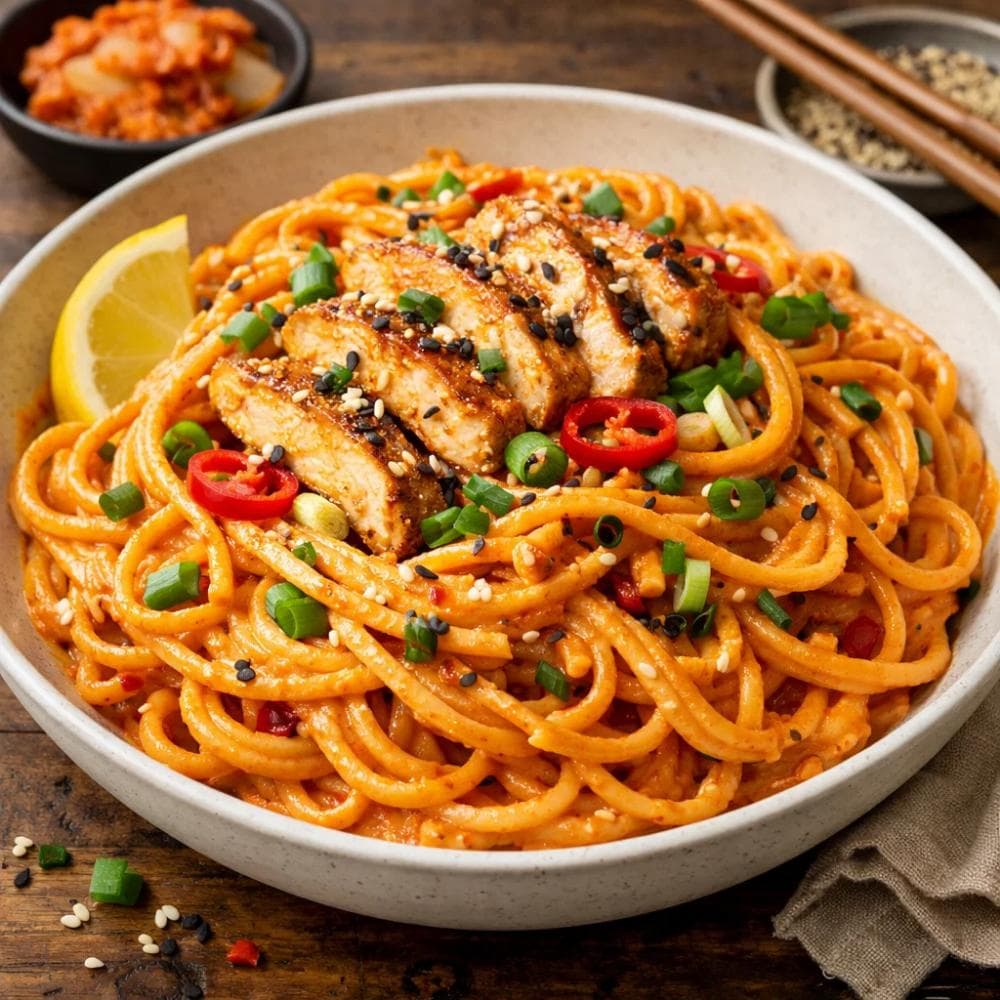
Creamy Gochujang Pasta (Spicy Korean-Inspired Pasta)
A bold, fiery, and deeply savoury pasta that comes together in under 25 minutes. Gochujang — the fermented Korean chilli paste — melts into butter and heavy cream to create a sauce that is simultaneously spicy, sweet, and umami-rich. Finished with Parmesan and a drizzle of sesame oil, this is the kind of weeknight pasta that feels genuinely exciting.
The Quick Answer
This pasta goes wrong when the cream sauce curdles into grainy specks or the finished dish dries out and dulls. Gochujang and soy are both salty and acidic, so keep the cream at a low simmer and let starchy pasta water carry the emulsion rather than reducing the sauce hard.
Why did my gochujang cream sauce turn grainy?
Heavy cream is an emulsion of fat held in water by milk proteins, and gochujang brings both salt and the lactic acidity of fermentation. Acid and salt destabilise casein proteins, and high heat tips them over the edge - they clump and the sauce looks curdled and grainy. Keeping the cream at a gentle simmer rather than a boil, and using room-temperature cream so it isn't cold-shocked, keeps the proteins relaxed. The starch in reserved pasta water is the real safeguard here: dissolved starch granules physically coat the fat droplets and stabilise the emulsion, which is why a splash of it pulls a borderline sauce back to glossy and smooth.
Why does frying gochujang change its flavour?
Raw gochujang tastes sharp and slightly harsh because it's a live fermented paste carrying volatile, acidic notes. Cooking it in the melted butter for a couple of minutes does two things food-scientifically: the fat dissolves and carries its fat-soluble chilli and umami compounds, spreading flavour evenly, while gentle heat drives off the harsh volatiles and lets the paste's sugars and amino acids brown slightly via Maillard reaction. That browning deepens it into something rounder and more savoury before any cream goes in. Butter is the right medium because its fat conducts heat steadily and its own dairy solids brown alongside the paste, reinforcing that toasted depth.
Not sure what to cook next? Let the generator pick your next dish in one click.
Random Recipe GeneratorAbout This Recipe
What is this dish?
Creamy gochujang pasta is a fusion dish that has taken hold in home kitchens everywhere — and for good reason. It takes the fiery, fermented depth of gochujang, the paste that is the backbone of so much Korean cooking, and pairs it with the richness of a cream sauce in a format that is instantly familiar and comforting. The result is a pasta dish unlike any other: deeply savoury, warmly spicy, and rich with umami, yet still light enough to feel like a weeknight dinner rather than an indulgence.
Why you'll love it
It is fast, flavourful, and completely unlike anything else in the weeknight pasta rotation. The sauce comes together while the pasta boils, meaning the whole dish is ready in under 25 minutes. The flavour is bold and complex — sweet heat from the gochujang, nuttiness from the sesame oil, richness from the cream — but it uses ingredients that are simple to keep on hand.
When to serve
This is a weeknight dinner pasta. It is also the kind of dish that impresses guests who are not expecting Korean-inspired cooking — the colour alone is striking. It serves 4 and scales easily.
Quick tips
Fry the gochujang in butter first. Reserve pasta water. Add sesame oil off the heat. Toss vigorously when combining pasta and sauce.
Ingredient Highlights
Gochujang
The star of this dish. A complex fermented chilli paste with sweet, spicy, and deeply savoury notes that no other ingredient can replicate. The fermentation process gives it a rounded depth that fresh chilli or chilli flakes simply cannot match. It is worth having a tub in the fridge — it lasts for months and works in marinades, stews, dressings, and sauces.
Heavy Cream
The cream tames the heat of the gochujang and creates the silky sauce base. Full-fat double cream is best — single cream may split or produce a thinner sauce. The fat in the cream also carries the flavour of the gochujang and distributes it evenly through the pasta.
Sesame Oil
A finishing oil, not a cooking oil. Added off the heat at the very end, it contributes a toasty, nutty fragrance that anchors the Korean character of the dish. A little goes a long way — one teaspoon is enough. Do not use it for frying; high heat destroys its flavour.
Substitution Options
Replace heavy cream with coconut cream for a dairy-free version. Swap Parmesan for nutritional yeast or vegan hard cheese. Use tamari instead of soy sauce for a gluten-free version (check that your gochujang is also gluten-free). Replace rigatoni with any short pasta shape — penne, fusilli, or farfalle all work. Butter can be replaced with olive oil.
You'll likely need to buy
Likely in your pantry
Step-by-Step Instructions
Cook the pasta
Bring a large pot of generously salted water to a rolling boil. Add the rigatoni or penne and cook according to packet instructions until just al dente — usually 10–12 minutes. Before draining, scoop out at least 240ml (1 cup) of the starchy pasta water and set aside. Drain the pasta but do not rinse it.
Chef's Tips
- ›Salt the pasta water until it tastes like mild seawater — this is the only chance to season the pasta itself
- ›Reserve more pasta water than you think you need; the starch is essential for making the sauce silky
Build the gochujang base
While the pasta cooks, melt the butter in a large, wide skillet or sauté pan over medium heat. Add the minced garlic and cook for 60–90 seconds, stirring constantly, until fragrant and just turning golden at the edges. Add the gochujang paste and stir it into the butter and garlic vigorously. Cook for 2 minutes, allowing the paste to fry slightly in the fat — this deepens its flavour and takes the raw edge off.
Chef's Tips
- ›Don't rush the gochujang — letting it fry for a minute or two in the butter transforms it from raw paste to a rounded, complex flavour base
- ›Use a wooden spoon or silicone spatula to press and move the paste around the pan
Add the cream and Parmesan
Pour the heavy cream into the pan with the gochujang butter, stirring to combine. Add the soy sauce. Bring to a gentle simmer and cook for 2 minutes until the sauce has thickened slightly and turned a deep coral-orange colour. Reduce the heat to low, then stir in the grated Parmesan. The sauce will thicken further — add a splash of pasta water now to loosen it to a silky, coating consistency.
Chef's Tips
- ›Add the Parmesan off the boil or on very low heat to prevent it from clumping
- ›The sauce should coat the back of a spoon — if it feels too thick, add pasta water a splash at a time
Toss the pasta in the sauce
Add the drained pasta directly to the pan with the sauce. Toss vigorously over low heat for 1–2 minutes, adding pasta water as needed to loosen the sauce so it coats every piece of pasta. The starch from the pasta water emulsifies with the cream and fat to create a glossy, restaurant-style finish. Remove from heat and drizzle over the sesame oil. Taste and adjust seasoning — it may not need any salt given the soy sauce and Parmesan.
Chef's Tips
- ›Toss energetically — the movement helps the sauce cling to the pasta and prevents it pooling at the bottom
- ›Add the sesame oil off the heat to preserve its fragrance; heat destroys its aroma quickly
Serve immediately
Divide between warmed bowls. Top with extra grated Parmesan, the sliced spring onions, and the toasted sesame seeds. Serve at once — the pasta is at its best the moment it leaves the pan.
Chef's Tips
- ›Warm the bowls by filling them with hot water for a minute before serving — it keeps the pasta hot longer
- ›A pinch of extra gochujang on top for heat lovers adds visual interest and a welcome kick
Chef's Tips
Techniques that separate good from great
Use room temperature cream
Cold cream added to a hot pan can split or cook unevenly. Let it sit at room temperature for 10 minutes before adding, or warm it briefly in the microwave. The sauce will come together more smoothly and be less likely to separate.
Adjust gochujang to your heat tolerance
Gochujang brands vary significantly in heat level — some are mild and sweet, others fiercely hot. Start with 2 tablespoons if you're unsure, taste the sauce, and add more. It's always easier to add heat than to remove it.
Finish with a few drops of rice vinegar
A small splash of rice vinegar (about half a teaspoon) stirred in at the end brightens the richness of the cream and cuts through the fat in a way that makes the whole dish taste more alive. It won't make it taste sour — it just adds balance.
Nutrition Facts
Per serving · Estimated values
* Estimated per serving based on a 2,000 calorie diet.
Equipment Needed
As an Amazon Associate we earn from qualifying purchases — at no extra cost to you.
Quick Tips
- Fry the gochujang paste in butter before adding liquid — this step concentrates the flavour and removes the harsh raw taste
- Always reserve pasta water before draining — the starch is what makes the sauce silky and helps it cling to the pasta
- Add sesame oil off the heat to preserve its delicate, nutty fragrance
Recipe Variations
Different ways to make this dish your own
Gochujang Pasta with Crispy Bacon
Fry 4 rashers of streaky bacon until crispy, chop roughly, and scatter over the finished pasta. The smokiness of the bacon and the fermented heat of the gochujang are a particularly good combination.
Gochujang Pasta with Soft-Boiled Egg
Top each bowl with a soft-boiled egg (6 minutes in boiling water, peeled and halved). The jammy yolk runs into the sauce and adds richness. This is a very satisfying vegetarian main.
Gochujang Pasta with Prawns
Toss 200g of peeled raw prawns into the sauce for the last 3 minutes of cooking, just before adding the pasta. The prawns cook quickly and absorb the sauce beautifully.
Lighter Gochujang Pasta
Replace half the cream with full-fat crème fraîche and reduce the butter to 1 tablespoon. The result is a slightly tangier, lighter sauce that still has all the gochujang character but with less richness.
What to Serve With
Perfect pairings to complete the meal
Simple Cucumber Salad
A quick Korean-style cucumber salad — sliced cucumbers tossed with rice vinegar, a pinch of sugar, sesame oil, and sesame seeds — cuts through the richness of the pasta and adds a cooling contrast to the heat.
Steamed Edamame
Lightly salted steamed edamame alongside adds protein and a clean, fresh flavour that balances the richness of the cream sauce.
Crusty Bread
A good sourdough or ciabatta for mopping up the sauce from the bowl. The sauce is too good to leave behind.
Pickled Vegetables
A small side of quick-pickled radishes or kimchi alongside adds acidity and crunch that offsets the creamy sauce and reinforces the Korean character of the dish.
Storage & Reheating
Keep it fresh and plan ahead
Refrigerator
Leftover pasta keeps in an airtight container in the fridge for up to 2 days. The sauce thickens considerably when cold.
Freezer
Not recommended — the cream sauce can split upon thawing and the pasta texture suffers.
Make-Ahead
The gochujang cream sauce can be made up to 2 days ahead and stored in the fridge. Reheat gently and toss with freshly cooked pasta and a splash of pasta water.
Reheating
Reheat gently in a skillet over low heat with a splash of water or cream to loosen the sauce. Stir frequently. Avoid high heat, which can cause the cream to split.
Cooking tonight?
Get a month of dinners like this — done for you
30 chef-tested dinners mapped to the month, plus 5 ready-to-shop grocery lists. One-time $8.99 — 30 dinners planned for you, zero nightly decisions.
See the 30-Day Plan →Be the first to review this recipe!
Got Leftovers?
Turn what you already have in your fridge into delicious meals. Our AI-powered generator creates personalized recipes from your ingredients.
Go Deeper
Master the Culinary Science
Every recipe is a doorway. Our 7 Mastery Guides give you the science, technique, and framework to understand why food works — not just how to follow steps.
AI-Powered
Have Ingredients? Generate a Recipe.
Tell our AI what's in your fridge and get a custom recipe with image in seconds. No waste, no boredom.
Try the AI Recipe Generator →Browse more like this:
You Might Also Like
Discover more delicious recipes similar to what you're cooking