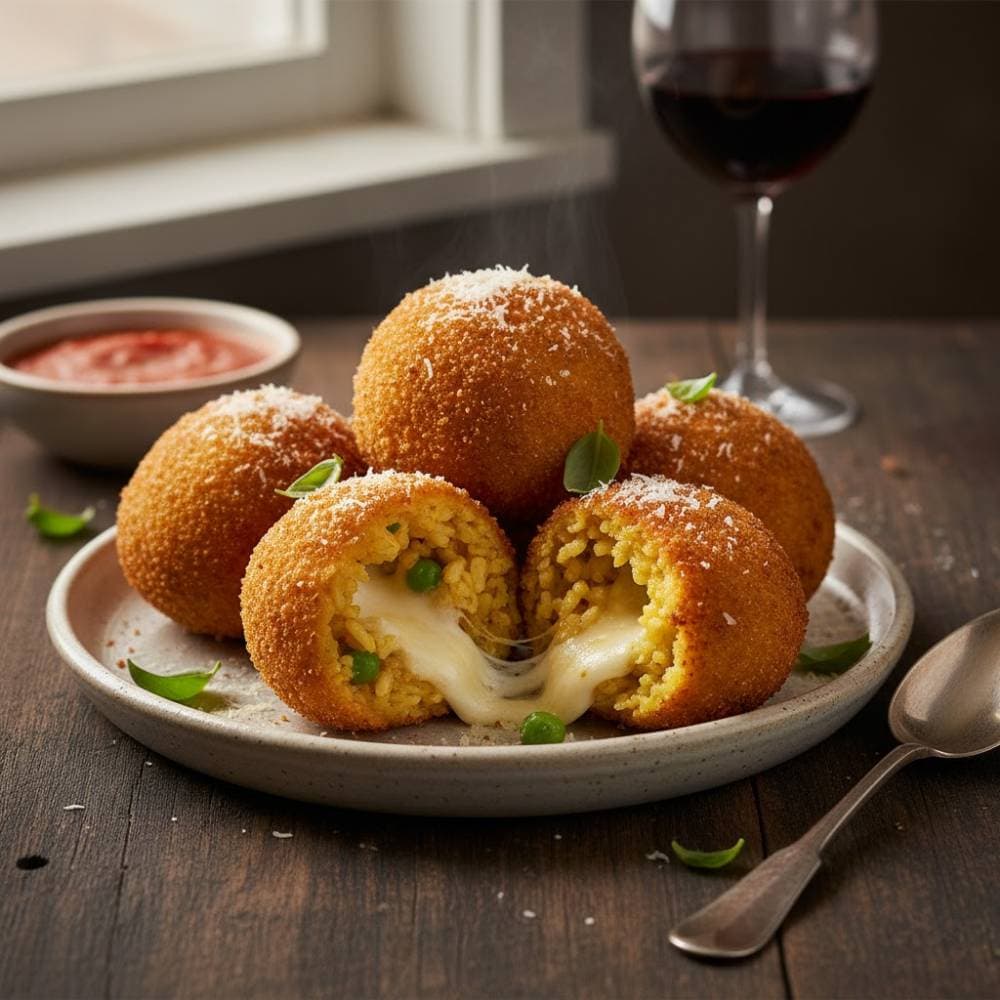
Crispy Arancini Recipe (Italian Fried Risotto Balls)
Golden, crispy-on-the-outside, creamy-on-the-inside fried risotto balls stuffed with melty mozzarella. These Sicilian street food classics are the ultimate way to transform leftover risotto into something extraordinary.
The Quick Answer
Arancini fail in two dramatic ways: the ball bursts in the oil and leaks mozzarella, or it browns outside while staying cold in the centre. Both come down to temperature management - seal the cheese inside fully chilled risotto, and hold the oil at a steady 350F so the crust sets before steam can blow it open.
Why does my arancini fall apart in the hot oil?
A risotto ball is mostly cooked rice held together by sticky surface starch and a little Parmesan, with no flour structure to bind it, so its only glue is moisture and cold. When the risotto is warm, that starch is soft and the ball can't hold its shape; chilling for at least 2 hours firms the starch so it acts like cement. The breading then matters just as much: flour dries the surface, egg is the adhesive, and breadcrumbs form a rigid shell. If any layer is skipped, hot oil rushes in, the trapped water flashes to steam, and the ball cracks open at its weakest seam.
Why is my arancini coating golden but the inside is still cold?
This is an oil-temperature problem. At a steady 350F the crust browns in 4-5 minutes, which is just long enough for heat to conduct through the rice and melt the mozzarella core. Crowd the pot with too many balls at once and the oil temperature crashes - cold risotto is a big heat sink - so the surface scorches while the interior never reaches melting point, leaving solid cheese and a cool centre. Frying only 3-4 at a time and letting the oil recover to 350F between batches keeps that conduction steady, so the breadcrumb shell and the molten mozzarella finish at the same moment.
Not sure what to cook next? Let the generator pick your next dish in one click.
Random Recipe GeneratorAbout This Recipe
What is this dish?
Arancini are Sicilian fried risotto balls — golden, crispy spheres or cones of cold risotto coated in breadcrumbs, enclosing a center of melted mozzarella (and sometimes ragù or peas), deep-fried until they are crunchy on the outside and oozing on the inside. Their name means 'little oranges' in Italian, describing their round shape and golden color. They are one of Sicily's most iconic street foods and the most beloved way to transform leftover risotto into something even better than the original.
Why you'll love it
Arancini deliver one of the most satisfying combinations in food: the shattering crunch of the golden breadcrumb exterior, the creamy, savory risotto, and the molten mozzarella center that stretches as you pull apart each ball. They are showstopping party food, an excellent starter, and the perfect use for leftover risotto. The contrast of textures and the dramatic cheese pull make them impossible to resist.
When to serve
Arancini are perfect as a party appetizer, an antipasto course before an Italian dinner, or as a casual snack. They look impressive enough to serve at gatherings and are guaranteed crowd-pleasers. They also work as a satisfying light lunch or dinner alongside a simple salad.
Quick tips
Start with well-chilled (overnight) risotto — warm risotto cannot be shaped. Form balls firmly with wet hands to prevent sticking. Chill for 30 minutes after forming before frying. Maintain the oil at exactly 350°F. Fry in small batches to maintain oil temperature.
Ingredient Highlights
Cold Leftover Risotto
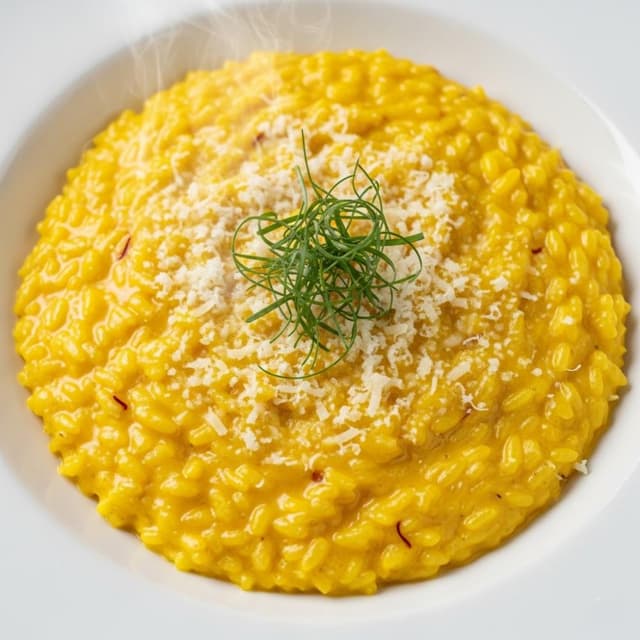
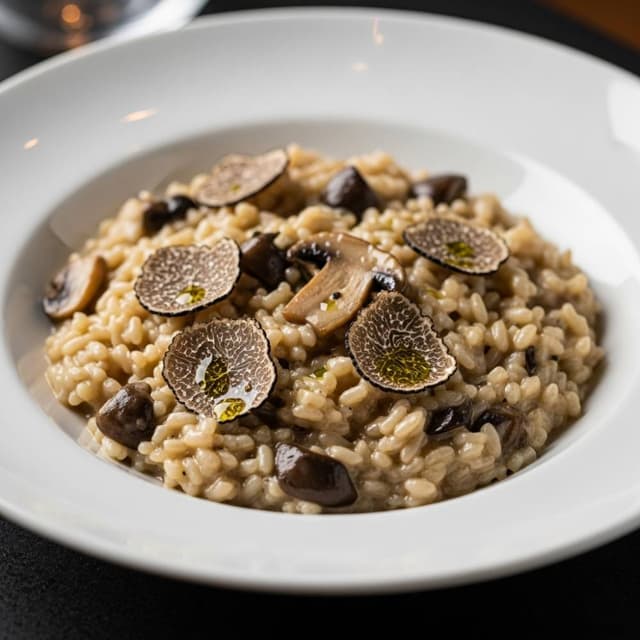
The essential base — and the entire reason arancini exist. Risotto that has been refrigerated overnight becomes firm enough to shape into balls. The starch retrogrades as it cools, creating a cohesive mass. Warm risotto is far too soft to work with. Plain mushroom risotto, saffron risotto, or any leftover risotto all work.
Fresh Mozzarella (for the Center)
Cut into 1/2-inch cubes and placed at the center of each ball. When the arancini fry, the mozzarella melts into a molten, stretchy core that creates the dramatic cheese pull. Use low-moisture mozzarella rather than fresh buffalo mozzarella (which has too much water and can make the center soggy).
Fine Dry Breadcrumbs
The crispy outer shell that creates the characteristic texture contrast. Fine, dry breadcrumbs adhere evenly and fry to a golden, shatteringly crisp coating. Panko breadcrumbs add extra crunch. The breadcrumbs should be pressed firmly onto each ball after the egg wash to ensure no gaps in coverage.
Eggs (for Binding the Coating)
The egg wash between the flour coating and the breadcrumbs acts as the adhesive that holds the breadcrumb shell together during frying. Without it, the breadcrumbs simply fall off into the oil. Beat the eggs well and ensure complete coverage of each arancino before pressing into breadcrumbs.
Substitution Options
Replace mozzarella filling with cubes of provolone, fontina, or aged cheddar. Add a teaspoon of meat ragù alongside the mozzarella for the classic Sicilian arancini al ragù. For a vegetarian filling, combine ricotta and spinach. Bake at 400°F instead of frying (spray generously with cooking oil) for a lighter version. Use gluten-free breadcrumbs and rice flour for a gluten-free adaptation.
You'll likely need to buy
Likely in your pantry
Step-by-Step Instructions
Prepare the risotto mixture
In a large bowl, combine 3 cups chilled risotto with 1/2 cup grated Parmesan cheese, 1 teaspoon salt, and 1/2 teaspoon black pepper. Mix well until thoroughly combined. The risotto should be cold and firm—this makes it easier to shape. If using freshly made risotto, spread it on a baking sheet and refrigerate for at least 2 hours or overnight until completely chilled.
Chef's Tips
- ›Cold risotto is essential—warm risotto is too soft to shape.
- ›Any leftover risotto works: plain, mushroom, or saffron risotto are all excellent.
Form the arancini
Set up your workstation with a small bowl of water for wetting your hands. Scoop about 2-3 tablespoons of risotto into your damp palm. Flatten it slightly, place 1 cube of mozzarella in the center, then wrap the risotto around the cheese, rolling it into a smooth ball about the size of a golf ball. Make sure the cheese is completely enclosed. Place on a parchment-lined baking sheet. Repeat with remaining risotto and cheese, wetting your hands as needed to prevent sticking. You should get about 12-16 arancini depending on size.
Chef's Tips
- ›Damp hands prevent the sticky risotto from clinging to your fingers.
- ›Make sure mozzarella is fully enclosed or it will leak during frying.
Set up breading station
Prepare three shallow bowls: one with 1 cup flour, one with 2 beaten eggs, and one with 2 cups Italian breadcrumbs or panko. Line them up in order: flour, egg, breadcrumbs. This is your breading station.
Chef's Tips
- ›Panko creates an extra-crispy coating.
- ›Keep one hand for dry ingredients, one for wet to avoid clumping.
Bread the arancini
Working one at a time, roll each risotto ball first in flour (coating completely and shaking off excess), then dip in beaten egg (letting excess drip off), and finally roll in breadcrumbs (pressing gently so they adhere). Place breaded arancini back on the baking sheet. Once all are breaded, refrigerate for 15-30 minutes—this helps the coating stick during frying.
Chef's Tips
- ›The three-step breading creates a crispy, golden shell.
- ›Chilling after breading helps prevent the coating from falling off.
Fry the arancini
Pour 4 cups vegetable oil into a large, heavy-bottomed pot or Dutch oven. Heat over medium-high heat until the oil reaches 350°F (175°C) on a thermometer. Carefully lower 3-4 arancini into the hot oil using a slotted spoon (don't overcrowd). Fry for 4-5 minutes, turning occasionally, until deep golden brown on all sides. Use a slotted spoon to transfer to a paper towel-lined plate. Repeat with remaining arancini, allowing the oil to return to 350°F between batches.
Chef's Tips
- ›Maintain oil temperature at 350°F—too hot and they burn, too cool and they absorb oil.
- ›Fry in small batches for even cooking.
Serve
Let the arancini cool for 2-3 minutes before serving—the molten cheese inside is extremely hot. Serve warm with marinara sauce on the side for dipping. Garnish with grated Parmesan and fresh basil if desired.
Chef's Tips
- ›The interior stays very hot—warn your guests before they bite in.
- ›Arancini are best served fresh but can be reheated in a 350°F oven for 10 minutes.
Chef's Tips
Techniques that separate good from great
Chill the formed arancini for at least 30 minutes before frying
Chilling the formed balls in the refrigerator after breading firms them up significantly, preventing the risotto from falling apart when it hits the hot oil. It also helps the breadcrumbs adhere more firmly to the surface, creating a more even, cohesive crust.
Use cold, well-chilled leftover risotto — warm risotto is impossible to shape
Arancini absolutely require cold, fully set risotto. Warm risotto is too soft and sticky to hold its shape. The risotto must be refrigerated for at least 2 hours (overnight is ideal) until it is completely firm and easy to handle. This is why arancini are the traditional way to use leftover risotto.
Fry in batches at exactly 350°F (175°C) for even cooking
Oil temperature is critical for arancini. Too hot (above 375°F) browns the breadcrumbs before the filling heats through. Too cool results in greasy arancini that absorb oil. Use a thermometer and fry in small batches (3-4 at a time) to maintain the correct oil temperature throughout.
Use both egg wash and fine dry breadcrumbs for the crispiest coating
A proper double-coating (flour → egg wash → breadcrumbs) is what gives arancini that shatteringly crispy shell. Fine, dry breadcrumbs (panko gives extra crunch) adhere better than fresh crumbs. Press the breadcrumbs firmly onto each ball to ensure even coverage with no bare patches.
Nutrition Facts
Per serving · Estimated values
* Estimated per serving based on a 2,000 calorie diet.
Equipment Needed
- Large mixing bowl
- Three shallow bowls
- Baking sheet
- Parchment paper
- Large heavy-bottomed pot or Dutch oven
- Deep-fry thermometer
- Slotted spoon
- Paper towels
- Measuring cups and spoons
As an Amazon Associate we earn from qualifying purchases — at no extra cost to you.
Quick Tips
- For classic Sicilian arancini al ragù, add a spoonful of meat sauce (ragù) inside along with the mozzarella.
- Arancini can be formed and breaded up to 1 day ahead. Store covered in the refrigerator and fry when ready to serve.
- For a lighter version, bake at 400°F for 25-30 minutes, turning once, until golden. Spray with cooking oil for crispiness.
Recipe Variations
Different ways to make this dish your own
Arancini al Ragù (Sicilian Classic)
The most traditional Sicilian version — fill the center with a combination of slow-cooked meat ragù, peas, and mozzarella. The savory meat sauce gives the arancini an entirely different, more substantial character.
Arancini with Gorgonzola and Walnut
Fill with a mixture of gorgonzola and crushed toasted walnuts for a rich, pungent, nutty version. Pair with a honey dipping sauce. An elegant variation suited for a dinner party antipasto.
Baked Arancini (Lighter Version)
Place breaded arancini on a baking sheet, spray generously with olive oil cooking spray, and bake at 400°F for 25-30 minutes, turning once halfway through, until deeply golden. Less crispy than fried but significantly lighter.
Arancine a Cono (Cone-Shaped)
In Palermo, arancini are traditionally shaped into elongated cones rather than balls. The pointed end is created by pressing the risotto into shape with cupped hands. The cone shape creates a better crust-to-filling ratio that some prefer.
What to Serve With
Perfect pairings to complete the meal
Warm Tomato Marinara Sauce for Dipping
A simple, lightly seasoned tomato sauce alongside arancini is the most classic accompaniment. The acidity of the tomato cuts through the richness of the fried risotto and provides a familiar, comforting dipping option.
As Part of an Italian Antipasti Spread
Arrange arancini alongside olives, prosciutto, marinated artichokes, and fresh mozzarella for an impressive Italian antipasto platter. The contrast of hot, crispy arancini against room-temperature antipasti is particularly appealing.
Simple Arugula Salad
A light arugula salad with lemon vinaigrette alongside the arancini provides a fresh, peppery contrast to the rich, fried risotto balls and prevents the meal from feeling too heavy.
Aperol Spritz or Prosecco
The traditional Italian aperitivo occasion pairs perfectly with arancini. An Aperol Spritz or chilled Prosecco alongside the crispy risotto balls is the ultimate Italian happy-hour combination.
Storage & Reheating
Keep it fresh and plan ahead
Refrigerator
Store formed, breaded (unfried) arancini in the refrigerator for up to 24 hours. Cooked arancini can be refrigerated for up to 2 days but lose their crispness — reheat in the oven to restore some texture.
Freezer
Freeze formed, breaded arancini (before frying) in a single layer until solid, then transfer to freezer bags for up to 3 months. Fry directly from frozen, adding 2-3 minutes to the frying time.
Make-Ahead
Form and bread the arancini up to 24 hours ahead, refrigerate covered on a baking sheet. Fry fresh just before serving for the crispiest result. The risotto for the arancini can be made 3-4 days ahead.
Reheating
Reheat cooked arancini on a wire rack in a 375°F oven for 10-12 minutes until heated through and the exterior has some crispness restored. Avoid the microwave which makes the breadcrumb coating soggy and rubbery.
Cooking tonight?
Get a month of dinners like this — done for you
30 chef-tested dinners mapped to the month, plus 5 ready-to-shop grocery lists. One-time $8.99 — 30 dinners planned for you, zero nightly decisions.
See the 30-Day Plan →Got Leftovers?
Turn what you already have in your fridge into delicious meals. Our AI-powered generator creates personalized recipes from your ingredients.
Go Deeper
Master the Culinary Science
Every recipe is a doorway. Our 7 Mastery Guides give you the science, technique, and framework to understand why food works — not just how to follow steps.
AI-Powered
Have Ingredients? Generate a Recipe.
Tell our AI what's in your fridge and get a custom recipe with image in seconds. No waste, no boredom.
Try the AI Recipe Generator →Browse more like this:
You Might Also Like
Discover more delicious recipes similar to what you're cooking