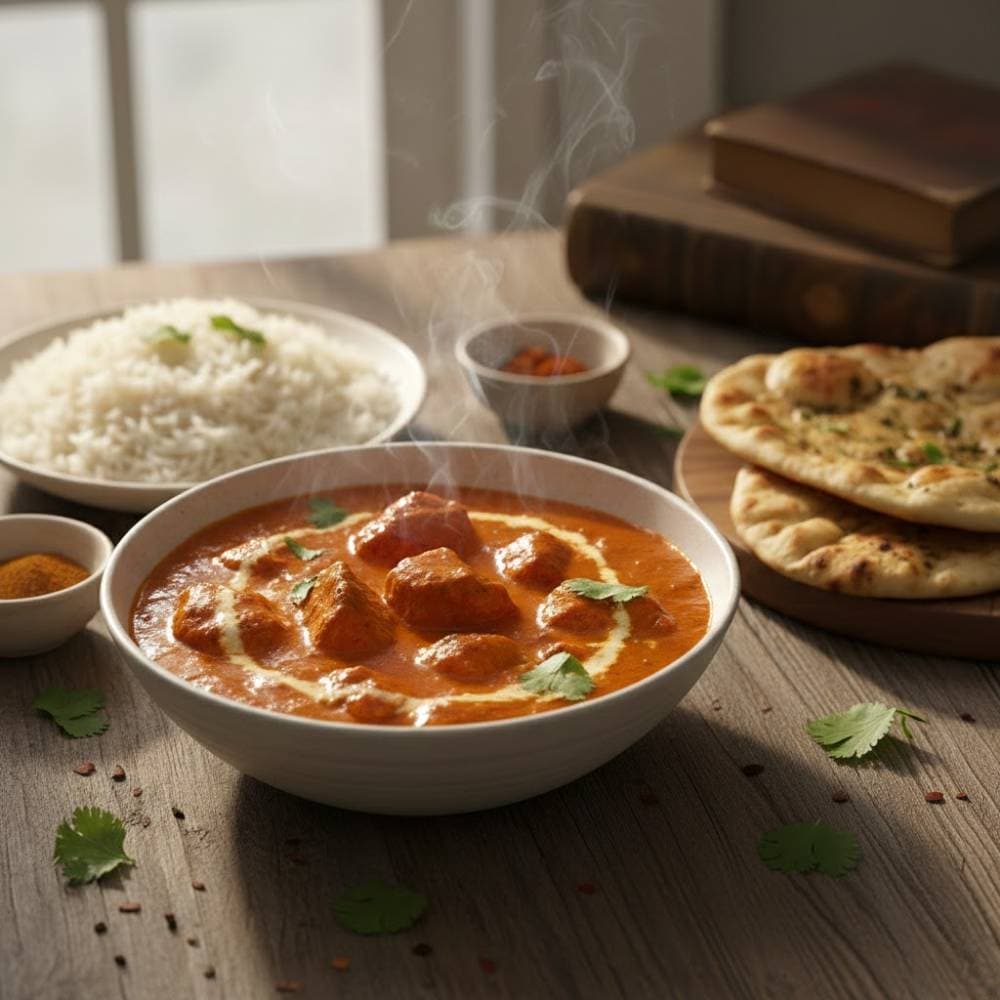
Easy Butter Chicken (Creamy Indian Chicken Curry at Home)
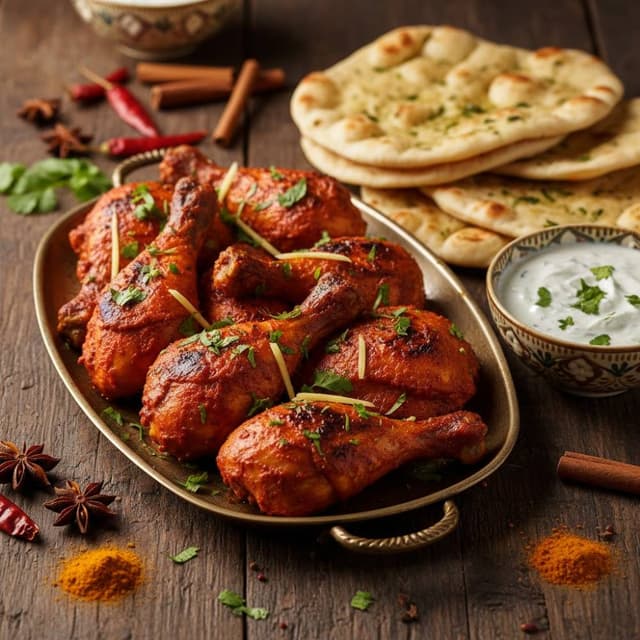
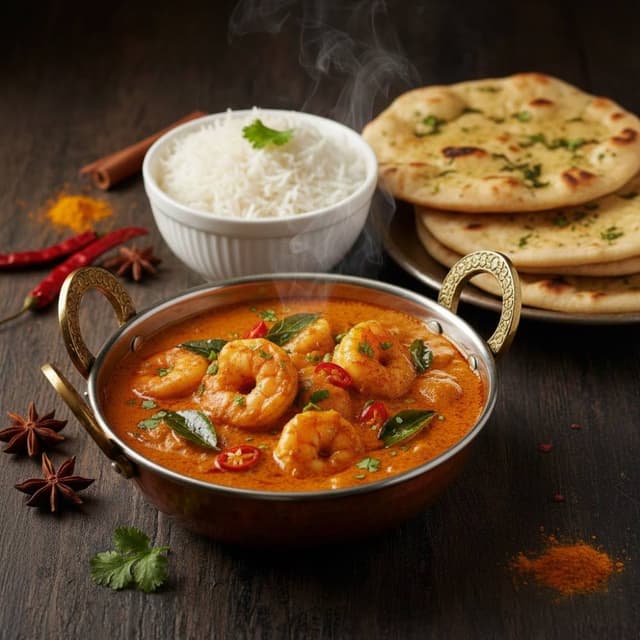
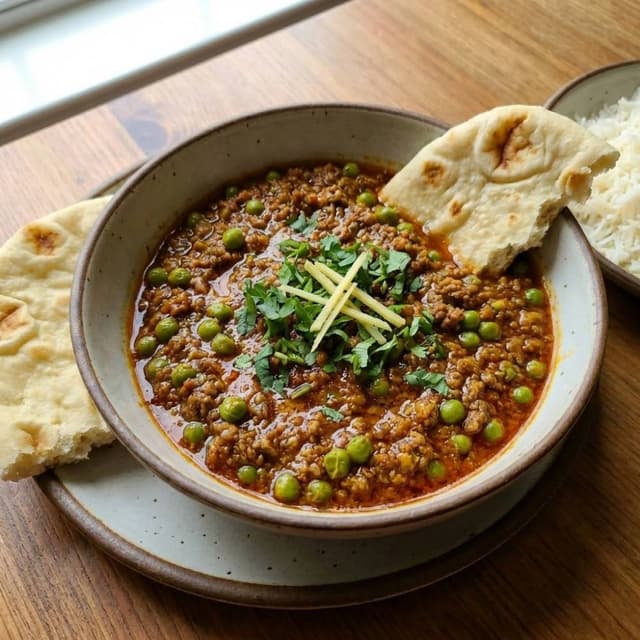
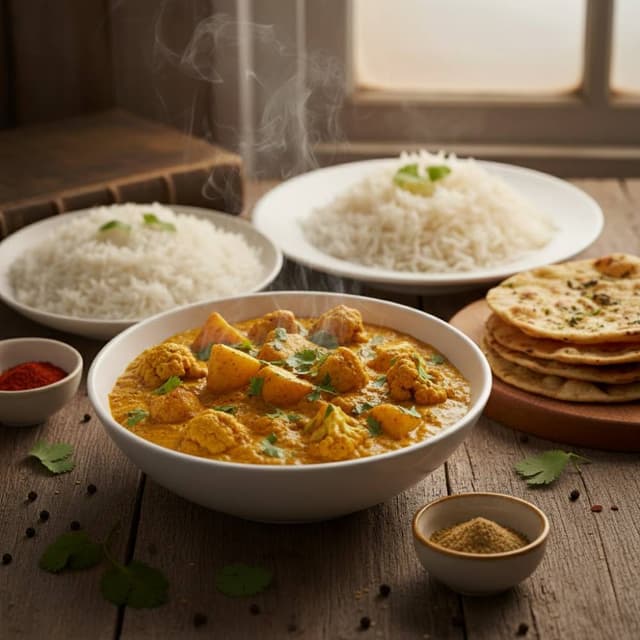
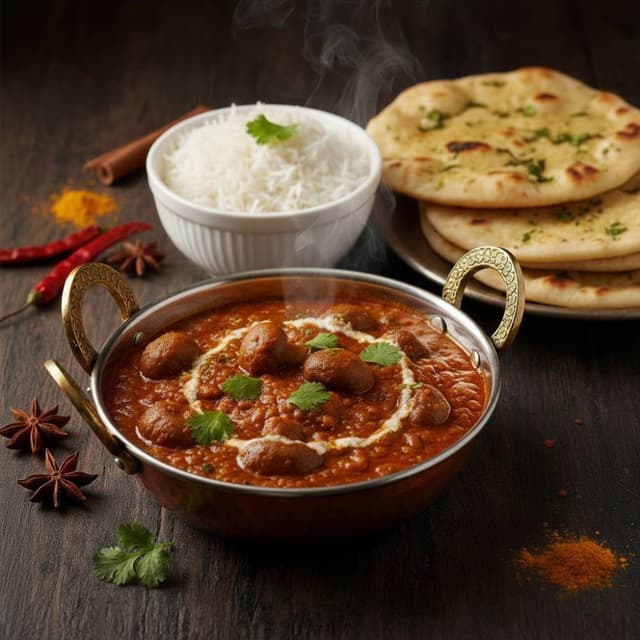
A rich and creamy Indian butter chicken featuring tender marinated chicken simmered in a velvety tomato-based sauce with aromatic spices, butter, and cream. A comforting homestyle curry for two, perfect served over basmati rice or with warm naan.
The Quick Answer
Butter chicken turns out thin and grainy when the spices are added raw to liquid and the cream hits a hard boil. Bloom the ground spices in the butter before the tomatoes go in, then keep the finished sauce at a bare simmer so the dairy stays smooth instead of curdling into specks.
Why does my butter chicken taste raw or harsh in the sauce?
Ground spices like cumin, coriander, garam masala and turmeric are full of fat-soluble aromatic compounds that only release into a dish when they hit hot fat, not water. The recipe has you cook them in the melted butter for 30 seconds before the crushed tomatoes go in for exactly this reason: that brief sizzle, called blooming, toasts off the dusty raw-spice edge and dissolves the flavor into the butterfat so it coats everything evenly. Skip it and dump spices straight into the tomatoes, and they stay gritty and one-dimensional, tasting like raw powder. Keep the spices moving for the full 30 seconds and stop the moment they smell fragrant, since turmeric and the chili powder scorch and turn bitter fast.
Why did my butter chicken sauce turn grainy or split?
The 1/2 cup of heavy cream is an emulsion of fat in water stabilized by milk proteins, and those proteins curdle when overheated or shocked by the acidity of the crushed tomatoes. Stirring cream into a sauce that is at a rolling boil, or boiling hard afterward, makes the proteins clump into tiny grains and the fat weep out, giving that broken, speckled look. Blend the tomato base smooth and let it cool from a boil to a gentle simmer first, then stir the cream in and keep the heat at medium-low. The honey helps too: a touch of sugar tempers the tomato acid that would otherwise destabilize the dairy, keeping the sauce glossy.
Not sure what to cook next? Let the generator pick your next dish in one click.
Random Recipe GeneratorAbout This Recipe
What is this dish?
Butter chicken, known in India as murgh makhani, is one of the world's most recognized Indian curries — a creamy, mildly spiced tomato and butter sauce enveloping tender pieces of marinated chicken. Originating in Delhi in the 1950s at Moti Mahal restaurant, the dish was famously created to use leftover tandoor chicken in a velvety tomato and cream sauce. Today it is served in Indian restaurants across every continent and beloved for its comforting, approachable flavors.
Why you'll love it
This butter chicken delivers the full, rich depth of a restaurant version in about 45 minutes at a fraction of the cost. The yogurt marinade tenderizes the chicken beautifully, blending the sauce creates that silky smooth texture, and the cream and butter finish gives every bite that indulgent, luscious quality. The spice level is completely customizable — mild enough for kids, bold enough for spice lovers.
When to serve
Butter chicken is the perfect Friday night takeout alternative — rich and satisfying enough to feel special without being difficult. It works equally well for casual weeknight dinners and dinner parties alike. Leftovers reheat beautifully the next day when the flavors have had time to deepen further.
Quick tips
Marinate the chicken for at least 30 minutes — overnight gives the most flavorful, tender result. Brown the chicken in a very hot pan before adding to the sauce to build extra depth. Blend the sauce completely smooth before adding cream. Always add cream off the heat or at low heat to prevent separation.
Ingredient Highlights
Chicken Thighs
The ideal cut for butter chicken — the higher fat content keeps them moist and tender through both the marinade and sauce-simmering process. Thighs also release fat into the sauce as they cook, enriching and deepening its flavor. Breast meat can be used but is more prone to drying out.
Garam Masala
The warming spice blend that defines North Indian cooking — typically a combination of cinnamon, cardamom, cloves, cumin, and black pepper. It appears twice in this recipe (marinade and sauce) to layer aromatic, warming notes throughout. Quality garam masala from an Indian grocery store is significantly more fragrant than supermarket versions.
Heavy Cream
The element that transforms the spiced tomato sauce into signature butter chicken. Added off the heat to prevent separation, the cream creates the dish's iconic pale orange color and velvety mouthfeel. Full-fat cream works best — lighter cream or milk can cause the sauce to break.
Unsalted Butter
Gives butter chicken its name and characteristic richness. Used to sauté the aromatics and sometimes stirred in at the end, butter adds a silky coating to the sauce and rounds out any sharp acidic notes from the tomatoes.
Substitution Options
Use boneless chicken breast instead of thighs but reduce the final simmering time by 2-3 minutes to prevent dryness. For a dairy-free version, substitute the yogurt with coconut yogurt in the marinade, use coconut oil instead of butter, and replace heavy cream with full-fat coconut cream. Crushed canned tomatoes can replace fresh tomatoes. Coconut sugar can substitute for honey. For extra smokiness, add 1/2 teaspoon smoked paprika. Kashmiri chili powder can replace standard chili powder for vibrant color without extra heat.
You'll likely need to buy
Likely in your pantry
Step-by-Step Instructions
Marinate the chicken
In a medium bowl, combine 1 pound bite-sized chicken thigh pieces with 1/4 cup plain yogurt, 1 tablespoon lemon juice, 1 teaspoon ground turmeric, 1 teaspoon ground cumin, 1 teaspoon garam masala, 1/2 teaspoon chili powder, and 1/2 teaspoon salt. Mix well until the chicken is evenly coated. Cover and refrigerate for at least 30 minutes (or up to overnight for best results). Marinating means soaking the chicken in a seasoned mixture to add flavor and tenderness.
Chef's Tips
- ›Marinating for longer results in more flavorful and tender chicken.
- ›Yogurt helps tenderize the chicken while adding a slight tang.
Cook the chicken
Heat 1 tablespoon vegetable oil in a large skillet or heavy-bottomed pot over medium-high heat. Remove the chicken pieces from the marinade, shaking off any excess. Add the chicken to the hot pan and cook for 5-7 minutes, turning occasionally, until the pieces are browned on all sides. The chicken does not need to be fully cooked through at this stage. Remove the chicken from the pan and set aside.
Chef's Tips
- ›Browning the chicken adds a caramelized flavor to the dish.
- ›Do not overcrowd the pan; cook in batches if needed for better browning.
Make the sauce
In the same pan, reduce the heat to medium. Add 2 tablespoons unsalted butter and let it melt. Add the finely diced small onion and cook for 5-7 minutes, stirring occasionally, until soft and translucent (you can see through it). Add 3 cloves minced garlic and 1 tablespoon grated fresh ginger. Cook for 1 minute until fragrant (smells pleasant and aromatic). Stir in 1 teaspoon ground cumin, 1 teaspoon garam masala, 1/2 teaspoon ground coriander, 1/2 teaspoon paprika, 1/4 teaspoon ground turmeric, and 1/4 teaspoon chili powder. Cook the spices for 30 seconds, stirring constantly. Pour in 1 can crushed tomatoes. Stir well and bring to a gentle simmer (cook gently just below boiling, with small bubbles). Cook for 10 minutes, stirring occasionally, until the sauce has thickened slightly.
Chef's Tips
- ›Translucent means you can see through it, indicating it is soft.
- ›Fragrant means it smells good and aromatic.
- ›Cooking the spices briefly in fat (blooming) releases their full aroma and flavor.
Blend and finish the sauce
For a smooth sauce, use an immersion blender to blend the sauce directly in the pan until smooth. Alternatively, carefully transfer the sauce to a regular blender, blend until smooth, and pour it back into the pan. If you prefer a chunkier sauce, you can skip blending. Stir in 1/2 cup heavy cream and 1 tablespoon honey or sugar. Mix well until the sauce is a uniform creamy orange color.
Chef's Tips
- ›Blending creates the signature silky-smooth butter chicken sauce.
- ›Be careful when blending hot liquids; allow to cool slightly or use an immersion blender.
Simmer chicken in sauce and serve
Return the browned chicken pieces to the sauce. Stir gently to coat all the chicken evenly. Simmer over medium-low heat for 8-10 minutes, or until the chicken is fully cooked through (internal temperature of 165°F / 74°C) and the sauce is rich and creamy. Taste and adjust salt or chili powder as needed. Garnish with 2 tablespoons chopped fresh cilantro. Serve immediately over steamed basmati rice or with warm naan bread.
Chef's Tips
- ›Simmering the chicken in the sauce allows it to absorb all the flavors.
- ›Do not boil vigorously, as this can cause the cream to separate.
Chef's Tips
Techniques that separate good from great
Brown the chicken in a very hot pan before adding to the sauce
Most butter chicken recipes skip browning, but searing the marinated chicken in a screaming hot pan first builds caramelized fond — browned bits that dissolve into the sauce and add depth no amount of simmering can replicate. Work in batches so the pan stays hot and the chicken browns rather than steams.
Blend the sauce completely smooth before adding cream
The signature silky texture of butter chicken comes from a fully blended sauce. Use an immersion blender or stand blender to process until perfectly smooth before adding the cream. Leaving chunks of onion or tomato prevents the sauce from achieving that restaurant-quality creaminess.
Add cream off the heat to prevent separation
Stirring cream into a vigorously boiling sauce causes it to separate and look grainy. Reduce heat to low or remove the pan from heat entirely before adding cream. Stir it in slowly and the sauce will incorporate into a beautiful, smooth pale orange.
Use chicken thighs, not breast
Chicken thighs contain more fat and collagen than breast, keeping them juicy and tender even if slightly overcooked. Breast meat dries out quickly in a simmering sauce. The extra fat from thighs also enriches the sauce as they cook.
Finish with a cold pat of butter off the heat
Right before serving, stir in one extra tablespoon of cold unsalted butter off the heat. This technique — called mounting — adds gloss, richness, and a silky finish to the sauce that makes it taste distinctly restaurant-quality.
Nutrition Facts
Per serving · Estimated values
* Estimated per serving based on a 2,000 calorie diet.
Equipment Needed
- Large skillet or heavy-bottomed pot
- Medium bowl (for marinating)
- Immersion blender or regular blender
- Spatula or wooden spoon
- Measuring cups
- Measuring spoons
- Knife and cutting board
As an Amazon Associate we earn from qualifying purchases — at no extra cost to you.
Quick Tips
- For an even richer sauce, add an extra tablespoon of butter at the very end and stir until melted.
- Substitute heavy cream with coconut cream for a dairy-free version (this will change the dietary tags).
- Butter chicken tastes even better the next day as the flavors continue to develop. Store leftovers in an airtight container in the refrigerator for up to 3 days.
Recipe Variations
Different ways to make this dish your own
Paneer Butter Masala
Replace chicken with 400g cubed paneer (Indian fresh cheese). Pan-fry the paneer in butter until golden before adding to the sauce. The process is identical but creates a satisfying vegetarian version with a firm, creamy texture.
Vegan Butter 'Chicken' with Tofu
Use extra-firm tofu (pressed and cubed) in place of chicken. Press for 30 minutes, marinate in the spice-coconut yogurt mixture, and pan-fry until crispy before adding to the sauce. Use coconut oil and coconut cream for a fully vegan version.
Lamb Butter Masala
Substitute boneless leg of lamb cut into 1-inch cubes for the chicken. Marinate identically but extend the final simmering time to 30-35 minutes until the lamb is fork-tender. The result is richer and more intensely flavored.
Extra-Spicy Butter Chicken
Double the chili powder, add 1-2 diced fresh green chilies to the sauce, and include 1/4 teaspoon cayenne pepper. The cream still softens the heat, but this version brings much more fire to the classic comfort dish.
What to Serve With
Perfect pairings to complete the meal
Steamed Basmati Rice
The most traditional and satisfying pairing. Long-grain basmati soaks up the creamy sauce perfectly and provides a neutral base that lets the butter chicken's flavors shine. Add a bay leaf and a small knob of butter when cooking the rice for extra fragrance.
Garlic Naan
Warm, puffy naan is ideal for scooping up every last drop of sauce. Store-bought naan warmed in a dry pan or over a gas flame works beautifully. The bread's slight chewiness and sweetness pair perfectly with the rich, aromatic curry.
Jeera Rice (Cumin Rice)
A step up from plain rice — basmati cooked with toasted cumin seeds, bay leaf, and ghee. The subtle cumin flavor complements the spiced butter chicken without competing, and the nutty aroma enhances the whole meal.
Cooling Cucumber Raita
A cold yogurt dip with grated cucumber, cumin, and fresh mint provides a refreshing contrast to the warm, rich curry. The cooling raita is especially welcome when the spice level is on the higher side.
Storage & Reheating
Keep it fresh and plan ahead
Refrigerator
Store leftover butter chicken in an airtight container in the refrigerator for up to 3 days. The flavors actually improve and deepen overnight as the spices continue to meld. Store separately from any rice or naan.
Freezer
Butter chicken freezes exceptionally well for up to 3 months. The cream-based sauce holds up well after freezing, though it may look slightly separated when thawed — stir well while reheating and it will come back together smoothly.
Make-Ahead
The butter chicken sauce (without chicken) can be made up to 3 days ahead and refrigerated. Store the cooked, browned chicken pieces separately and combine when ready to serve, simmering together for 10 minutes.
Reheating
Reheat gently in a saucepan over medium-low heat, adding a splash of water or broth to loosen the sauce as it thickens when cold. Avoid boiling vigorously, which can cause the cream to separate. Stir occasionally until heated through.
Cooking tonight?
Get a month of dinners like this — done for you
30 chef-tested dinners mapped to the month, plus 5 ready-to-shop grocery lists. One-time $8.99 — 30 dinners planned for you, zero nightly decisions.
See the 30-Day Plan →Got Leftovers?
Turn what you already have in your fridge into delicious meals. Our AI-powered generator creates personalized recipes from your ingredients.
Go Deeper
Master the Culinary Science
Every recipe is a doorway. Our 7 Mastery Guides give you the science, technique, and framework to understand why food works — not just how to follow steps.
AI-Powered
Have Ingredients? Generate a Recipe.
Tell our AI what's in your fridge and get a custom recipe with image in seconds. No waste, no boredom.
Try the AI Recipe Generator →Browse more like this:
You Might Also Like
Discover more delicious recipes similar to what you're cooking