Easy Homemade Tiramisu (No Bake, Classic Italian Dessert)
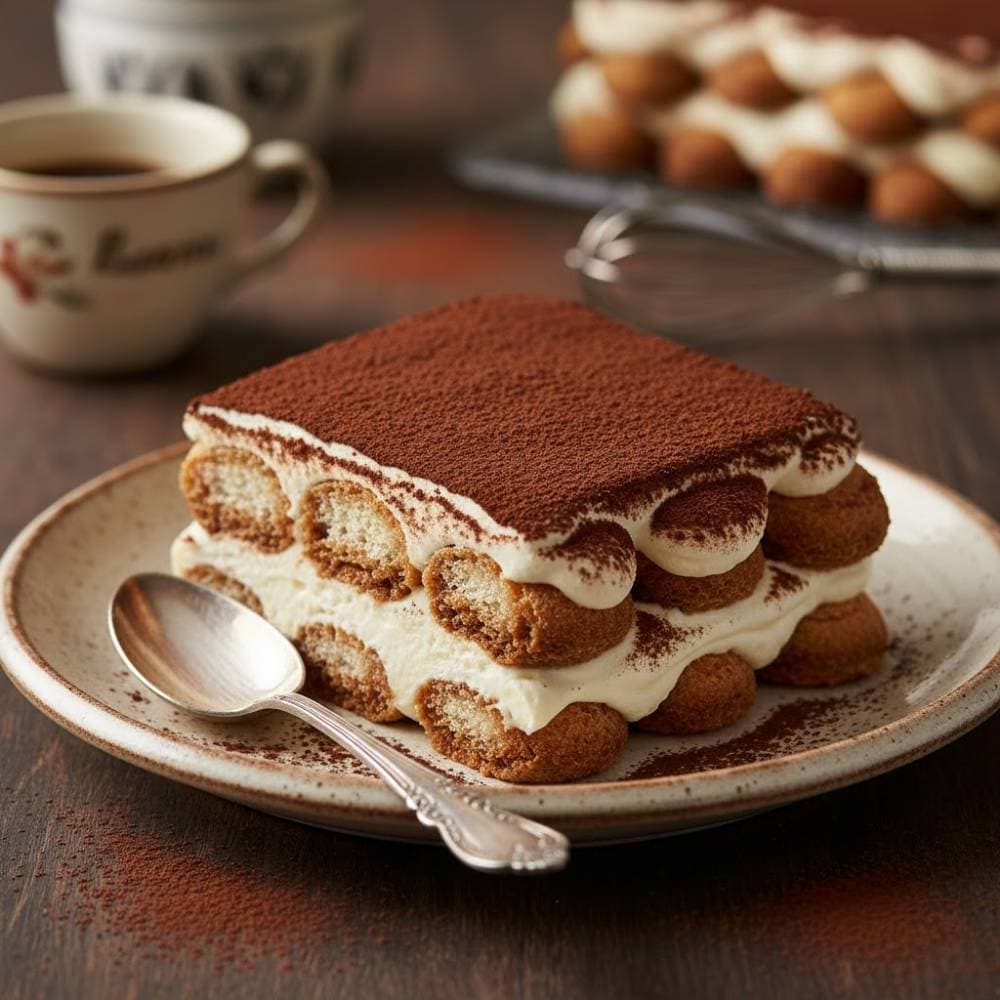
The iconic Italian dessert featuring espresso-soaked ladyfinger cookies layered with a luscious mascarpone cream and dusted with cocoa. Rich, decadent, and no oven required—this make-ahead dessert is perfect for entertaining.
The Quick Answer
Soggy, collapsing tiramisu and a runny mascarpone cream are the two failures that ruin this dessert. Dip the ladyfingers for only a second or two so they absorb flavor without disintegrating, and stop whipping the mascarpone-and-cream mixture at stiff peaks because overbeating breaks the structure into a grainy soup.
Why is my tiramisu soggy and falling apart?
Ladyfingers are dry, porous sponge cookies designed to drink liquid fast. Submerge them for more than a second or two per side and they soak past saturation, turning to mush that cannot support the cream layers, so the whole dessert slumps. Dip each one quickly, one or two seconds per side, letting it absorb just enough coffee to flavor and soften without dissolving. The coffee must also be cooled to room temperature, since hot liquid penetrates the porous crumb far faster and oversaturates it. Done right, the cookies firm up overnight in the fridge as they absorb moisture evenly from the cream, giving clean, sliceable layers.
Why is my mascarpone cream runny instead of holding its shape?
Mascarpone is a high-fat cheese with a delicate structure that breaks easily when overworked. Whipping the heavy cream to stiff peaks builds the air structure that gives the filling body, but once you fold in the mascarpone, continued beating shears the fat and collapses everything into a loose, grainy liquid. Fold the whipped cream into the mascarpone gently and stop the moment it is combined. Starting with room-temperature mascarpone helps it blend smoothly without overmixing. The pasteurized egg-yolk-and-sugar base, cooked to 160°F over a bain-marie, also thickens as it cools and contributes structure, so do not pour it in while still hot or it will slacken the cream.
Not sure what to cook next? Let the generator pick your next dish in one click.
Random Recipe GeneratorAbout This Recipe
What is this dish?
Tiramisu is Italy's most beloved dessert — a no-bake layered creation of espresso-soaked ladyfinger cookies beneath a luscious mascarpone cream made from egg yolks, sugar, and whipped cream, finished with a generous dusting of cocoa powder. The name means 'pick me up' in Italian, a nod to the energizing espresso and egg yolk combination. Originating in the Veneto region in the 1960s-70s, it has become one of the most recognized Italian desserts worldwide.
Why you'll love it
Tiramisu combines everything a great dessert should be — it is rich without being heavy, deeply coffee-flavored, creamy, and has a gorgeous bittersweet quality from the cocoa dusting. It requires no oven and actually improves the longer it chills, making it genuinely better when made a day or two ahead. It is impressively elegant yet accessible enough for home cooking.
When to serve
Tiramisu is the ideal make-ahead dinner party dessert. Prepare it 1-2 days before a gathering and it will be at its absolute best. Serve it as the centerpiece dessert after an Italian main course, at holiday gatherings, or whenever you want something that feels celebratory without requiring last-minute work.
Quick tips
Pasteurize egg yolks by heating with sugar over a bain-marie to 160°F for food safety. Dip ladyfingers for only 1-2 seconds — too long creates mushiness. Whip mascarpone carefully to avoid graininess. Refrigerate overnight for the best possible texture and flavor.
Ingredient Highlights
Mascarpone Cheese
The essential ingredient that cannot be substituted — a fresh Italian cream cheese with 60-75% fat that is mild, slightly sweet, and extraordinarily creamy. Mascarpone creates the signature cloud-like filling when combined with whipped egg yolks and cream. Store-bought cream cheese is far too tangy and has a completely different texture.
Savoiardi Ladyfinger Cookies
Light, crisp, finger-shaped Italian sponge cookies that are the structural element of tiramisu. They absorb the espresso soaking liquid and soften into a cake-like layer between the cream. The quality of ladyfingers matters — fresh, crispy savoiardi absorb better than stale ones.
Strong Espresso (or Moka Pot Coffee)
The soaking liquid that gives tiramisu its coffee character. Use the strongest coffee you can make — espresso is ideal. Regular drip coffee is too weak and watery. Cool the coffee before dipping the ladyfingers. Many recipes add a splash of Marsala wine, rum, or coffee liqueur to the espresso.
High-Quality Cocoa Powder
The finishing dusting that provides the bittersweet counterpoint to the sweet cream. Use unsweetened Dutch-processed cocoa for the deepest, most sophisticated flavor. Apply with a fine-mesh sieve for an even, elegant layer. Add it just before serving for the freshest appearance.
Substitution Options
Replace Marsala wine with dark rum, Kahlúa, Amaretto, or simply omit for a family-friendly version. Strong drip coffee or instant espresso powder (dissolved in hot water) can replace espresso. For a slightly different but acceptable cream, mix equal parts cream cheese and heavy cream (whipped stiff). Chocolate shavings can be used instead of cocoa powder for a different finish. For individual servings, use stemless wine glasses or mason jars for an elegant presentation.
You'll likely need to buy
Likely in your pantry
Step-by-Step Instructions
Make the mascarpone cream
In a large heatproof bowl, whisk together 6 egg yolks and 1/2 cup (100g) sugar. Place the bowl over a pot of simmering water (double boiler method), making sure the bottom doesn't touch the water. Whisk constantly for 5-7 minutes until the mixture thickens, becomes pale yellow, and reaches 160°F (71°C) on a thermometer to pasteurize the eggs. Remove from heat and let cool for 5 minutes. Add 16 oz room temperature mascarpone cheese and whisk until smooth and well combined. Set aside.
Chef's Tips
- ›Whisking constantly prevents the eggs from scrambling.
- ›Room temperature mascarpone blends more smoothly and prevents lumps.
Whip the cream
In a separate large bowl, using an electric mixer or whisk, beat 1 cup cold heavy cream with the remaining 1/4 cup (50g) sugar on medium-high speed until stiff peaks form, about 3-4 minutes. The cream should hold its shape when you lift the beaters.
Chef's Tips
- ›Cold cream whips faster and holds its shape better.
- ›Don't overbeat or you'll end up with butter.
Fold in the whipped cream
Gently fold the whipped cream into the mascarpone mixture using a rubber spatula. Fold in thirds: add 1/3 of the whipped cream and fold gently until just combined. Add the remaining whipped cream in two additions, folding gently after each. The mixture should be light, fluffy, and smooth with no streaks. Be gentle to maintain the airy texture.
Chef's Tips
- ›Folding, not stirring, preserves the airiness of the whipped cream.
- ›Use a rubber spatula and cut through the center, then fold over.
Prepare the coffee mixture
In a shallow dish or bowl, combine 1 3/4 cups cooled espresso or strong coffee with 3 tablespoons coffee liqueur or dark rum (if using). Stir to combine. The mixture should be at room temperature—hot coffee will make the ladyfingers too soggy.
Chef's Tips
- ›Use strong coffee or espresso for the best flavor.
- ›The alcohol is optional but adds depth and authentic flavor.
Assemble the first layer
Working one at a time, quickly dip 20-24 ladyfinger cookies into the coffee mixture for 1-2 seconds per side—just enough to soak them, but not so long that they fall apart. Arrange them in a single layer in the bottom of a 9x13-inch baking dish or similarly sized serving dish, breaking cookies as needed to fit.
Chef's Tips
- ›Quick dipping is key—soggy ladyfingers will make the tiramisu mushy.
- ›Work quickly so the cookies don't absorb too much liquid.
Add cream and repeat layers
Spread half of the mascarpone cream mixture evenly over the layer of ladyfingers, smoothing it with a spatula. Repeat the process with another layer: dip the remaining 20-24 ladyfingers in the coffee mixture and arrange them on top of the cream. Spread the remaining mascarpone cream evenly over the second layer of ladyfingers, smoothing the top.
Chef's Tips
- ›Spread the cream gently to avoid disturbing the soaked ladyfingers.
- ›Make sure the top layer is smooth for the best presentation.
Chill and dust with cocoa
Cover the tiramisu tightly with plastic wrap. Refrigerate for at least 4 hours, but preferably overnight (8-12 hours), to allow the flavors to meld and the dessert to set properly. Just before serving, use a fine-mesh sieve to generously dust the top with 2-3 tablespoons unsweetened cocoa powder. Garnish with dark chocolate shavings if desired.
Chef's Tips
- ›The longer it chills, the better the flavors develop.
- ›Dust with cocoa right before serving to prevent it from getting soggy.
Serve
Slice the tiramisu into squares and serve chilled. Use a sharp knife and wipe it clean between cuts for neat slices. Store any leftovers covered in the refrigerator for up to 3 days.
Chef's Tips
- ›Serve with a small cup of espresso for the full Italian experience.
- ›Individual servings can be made in glasses or small bowls for an elegant presentation.
Chef's Tips
Techniques that separate good from great
Pasteurize egg yolks by heating with sugar over a bain-marie to 160°F
Raw egg yolks carry a small but real risk of Salmonella. Whisking the yolks with sugar over a bain-marie (bowl set over barely simmering water) until they reach 160°F fully pasteurizes them while creating the pale, thick, ribbon-stage mixture that gives tiramisu its structure and richness.
Dip ladyfingers very briefly — 1 to 2 seconds per side only
Ladyfingers that are soaked too long become a soggy, waterlogged mush that disintegrates when the tiramisu is cut and served. A quick, one-to-two-second dip per side is all that is needed. The biscuit will absorb more moisture from the cream as the tiramisu chills.
Whip the mascarpone and cream mixture until just stiff peaks — stop there
Over-whipping mascarpone causes it to separate and become grainy. Whip the cream to stiff peaks separately, then fold the mascarpone in gently rather than whipping them together. The finished cream should be thick and cloud-like, not grainy or slightly yellow.
Refrigerate for at least 6 hours — overnight is essential for best results
The minimum 4 hours will give a functional tiramisu, but 6-8 hours (or overnight) allows the espresso to saturate the ladyfingers completely, the flavors to meld, and the cream to set into a firm, sliceable layer. There is no shortcut — tiramisu genuinely needs time.
Nutrition Facts
Per serving · Estimated values
* Estimated per serving based on a 2,000 calorie diet.
Equipment Needed
- Large heatproof bowl
- Medium pot (for double boiler)
- Electric mixer or whisk
- Rubber spatula
- 9x13-inch baking dish or serving dish
- Shallow dish (for coffee mixture)
- Fine-mesh sieve (for dusting cocoa)
- Plastic wrap
- Instant-read thermometer (optional but recommended)
As an Amazon Associate we earn from qualifying purchases — at no extra cost to you.
Quick Tips
- Mascarpone can be expensive—look for it near the specialty cheeses. Cream cheese is not a good substitute as it's too tangy.
- For individual servings, assemble tiramisu in wine glasses or mason jars, layering the coffee-soaked ladyfingers and cream.
- If you're concerned about raw eggs, use pasteurized eggs or heat the egg-sugar mixture to 160°F as directed in the recipe.
Recipe Variations
Different ways to make this dish your own
Strawberry Tiramisu
Replace the espresso with a mixture of strawberry juice and a splash of Limoncello. Layer macerated fresh strawberries between the cream layers. The pink, fruity version is lighter and especially popular in spring and summer.
Matcha Tiramisu
Dissolve 2 tablespoons of matcha powder in hot water and use as the dipping liquid instead of espresso. The grassy, slightly bitter matcha creates a Japanese-Italian fusion that is visually striking with its green color.
Chocolate Tiramisu
Add 2 tablespoons of cocoa powder to the mascarpone cream mixture and fold in gently. Dip the ladyfingers in a mix of espresso and melted dark chocolate. Finish with extra cocoa and chocolate shavings.
Individual Tiramisu in Glasses
Layer the espresso-dipped ladyfingers and mascarpone cream in individual wine glasses or glass tumblers for a beautiful presentation. Each guest receives their own perfectly constructed personal tiramisu.
What to Serve With
Perfect pairings to complete the meal
With a Doppio Espresso
The most traditional Italian way to serve tiramisu — alongside a small, strong shot of espresso. The coffee in the cup echoes the coffee in the dessert and provides a warm contrast to the cold cream.
After a Rich Italian Main Course
Tiramisu's bittersweet coffee flavor and light texture make it the ideal dessert after a heavy pasta or meat-based Italian meal. Its no-bake nature means it can be prepared before the main course without adding kitchen stress.
With Dessert Wine (Vin Santo)
A small glass of Vin Santo, the traditional Tuscan dessert wine, alongside tiramisu creates a classic Italian sweet course. The honey and dried fruit notes of Vin Santo pair beautifully with both mascarpone and espresso.
With Cantucci (Biscotti) for Texture Contrast
Serve crispy almond cantucci or biscotti alongside the tiramisu for a textural contrast between the firm, crunchy biscuit and the silky, yielding cream.
Storage & Reheating
Keep it fresh and plan ahead
Refrigerator
Cover tightly with plastic wrap and store for up to 3-4 days. The tiramisu actually improves on day 2 and 3 as the espresso continues to penetrate and the flavors meld. The cocoa topping absorbs moisture over time — add fresh cocoa just before serving if needed.
Freezer
Not recommended. The mascarpone cream can separate and become grainy when thawed, and the ladyfingers become mushy. Always make fresh and refrigerate.
Make-Ahead
Tiramisu is purpose-built for making ahead. Make it 1-2 days before serving for the best flavor and texture. Hold off on dusting with cocoa until just before serving for the freshest presentation. This is the ideal dinner party dessert specifically because of its make-ahead nature.
Reheating
Tiramisu is served cold — never reheated. Remove from the refrigerator 5-10 minutes before serving to slightly soften and bring out the full aroma of the mascarpone and coffee.
Cooking tonight?
Get a month of dinners like this — done for you
30 chef-tested dinners mapped to the month, plus 5 ready-to-shop grocery lists. One-time $8.99 — 30 dinners planned for you, zero nightly decisions.
See the 30-Day Plan →Got Leftovers?
Turn what you already have in your fridge into delicious meals. Our AI-powered generator creates personalized recipes from your ingredients.
Go Deeper
Master the Culinary Science
Every recipe is a doorway. Our 7 Mastery Guides give you the science, technique, and framework to understand why food works — not just how to follow steps.
AI-Powered
Have Ingredients? Generate a Recipe.
Tell our AI what's in your fridge and get a custom recipe with image in seconds. No waste, no boredom.
Try the AI Recipe Generator →Browse more like this:
You Might Also Like
Discover more delicious recipes similar to what you're cooking