Filipino Chicken Adobo (Authentic and Easy Recipe)
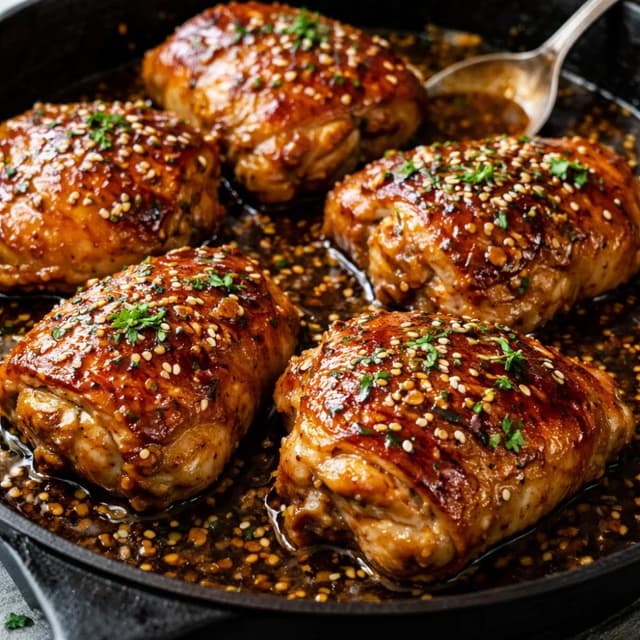
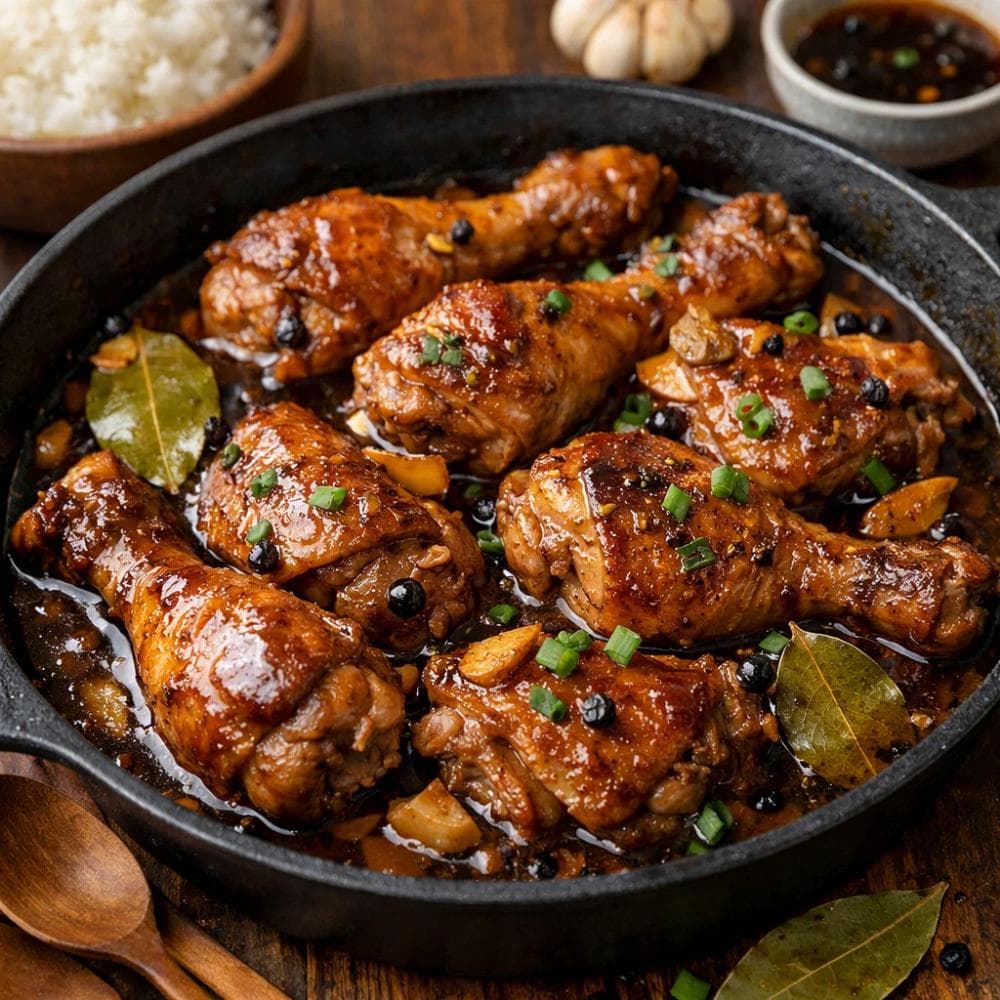
The national dish of the Philippines — and one of the great braises of the world. Chicken thighs are simmered low and slow in a deeply savoury mixture of vinegar, soy sauce, garlic, bay leaves, and whole peppercorns until the meat is fall-apart tender and the sauce has reduced to a glossy, intensely flavoured coating. The vinegar tenderises and preserves the chicken while the soy sauce provides depth. The result is something remarkable in its simplicity.
The Quick Answer
Adobo goes wrong when the sauce tastes harshly sour and raw or turns out thin and watery instead of glossy. Let the vinegar cook off its sharp edge before stirring, and reduce uncovered until the braising liquid concentrates into a syrupy glaze.
Why does my chicken adobo taste harshly sour?
The 120ml of vinegar carries acetic acid, which is volatile and tastes raw and aggressive while it is still raw. A common instinct is to stir the pot constantly as it comes up to the boil, but agitating it early actually keeps the sharp acetic vapour churning back into the liquid. Traditional adobo wisdom is to let the vinegar come to a boil undisturbed for a few minutes before stirring: this lets the most volatile acid escape as vapour, mellowing the bite while the remaining acidity still brightens and tenderises. The soy sauce and the long simmer then round it out, and the final uncovered reduction concentrates savoury depth that balances whatever tang remains.
Why is my adobo sauce thin instead of thick and glossy?
Adobo has no flour or starch thickener - its glossy sauce comes purely from reduction and from gelatin and rendered fat released by the bone-in, skin-on thighs. The braise starts with roughly 320ml of combined marinade and water, which must boil down by more than half to coat the chicken. Keeping the lid on the whole time traps steam and prevents that evaporation, leaving a watery puddle. Braise covered just long enough to cook the meat through, then take the lid off and simmer hard: as water leaves, dissolved collagen turned to gelatin thickens the liquid and the emulsified chicken fat gives it shine. Turn the pieces in the reducing sauce so they glaze evenly.
Not sure what to cook next? Let the generator pick your next dish in one click.
Random Recipe GeneratorAbout This Recipe
What is this dish?
Chicken adobo is the unofficial national dish of the Philippines and one of the most ingeniously practical cooking techniques in Southeast Asian cuisine. At its core, it is a braise — chicken cooked slowly in a mixture of vinegar and soy sauce with garlic, bay leaves, and peppercorns — but the result is something far greater than the sum of its parts. The vinegar acts as a natural preservative (adobo was originally a way of keeping meat in a hot tropical climate), the soy sauce adds savoury depth, and the slow braise reduces everything to a thick, glossy, deeply flavoured sauce that coats each piece of chicken.
Why you'll love it
It requires minimal preparation, uses inexpensive pantry ingredients, and produces a dish that is genuinely extraordinary — complex, layered, and unlike anything in Western cooking. It is also one of the great leftover dishes: the chicken and sauce improve dramatically overnight as the flavours continue to develop.
When to serve
A reliable weeknight dinner for 4 that serves as well at a dinner party. Serve over plain white rice. The dish holds and reheats beautifully.
Quick tips
Brown the chicken well. Keep the braise at a gentle simmer. Reduce the sauce until thick and glossy. The leftovers the next day are even better.
Ingredient Highlights
White Cane Vinegar
The traditional vinegar of Filipino cooking. Milder, cleaner, and less sharp than distilled white vinegar, it provides acidity without harshness. It is available in Filipino and Asian supermarkets. White wine vinegar is the best everyday substitute. The vinegar is not just for flavour — it tenderises the chicken and was historically used as a preservative in the tropical Philippine climate.
Bone-In, Skin-On Chicken Thighs
The correct cut for adobo. The bones add depth to the braising liquid, and the skin provides fat and texture. During the long braise the skin softens, but a brief blast in a hot oven after braising crisps it back up beautifully. Chicken thighs are also more forgiving of longer cooking times than breast meat, which dries out.
Whole Black Peppercorns
Used whole rather than ground, the peppercorns soften during the braise and can be eaten whole — they become mild and almost nutty after prolonged cooking. They add a gentle, warming heat throughout the sauce. This is the traditional preparation; do not substitute ground black pepper, which makes the sauce gritty.
Substitution Options
Use pork belly or shoulder cut into chunks in place of chicken — pork adobo is equally classic and requires a slightly longer braise (45–50 minutes). Replace white vinegar with apple cider vinegar or rice vinegar. Use tamari for a gluten-free version. Add coconut milk for the Gata variation.
You'll likely need to buy
Likely in your pantry
Step-by-Step Instructions
Marinate the chicken (optional but recommended)
Place the chicken thighs in a large bowl or zip-lock bag. Pour over the vinegar and soy sauce, add the crushed garlic, bay leaves, and peppercorns. Toss to coat. For the best result, marinate in the fridge for at least 30 minutes or up to overnight. If you are short on time, proceed directly to cooking — the long braise will still develop excellent flavour.
Chef's Tips
- ›Overnight marinating produces noticeably more flavourful chicken — the vinegar penetrates the meat and the soy infuses more deeply
- ›Even 30 minutes of marinating makes a difference to the final flavour — plan ahead if you can
Brown the chicken
Remove the chicken from the marinade and pat dry with kitchen paper. Reserve the marinade. Heat the oil in a large heavy-based saucepan or Dutch oven over medium-high heat. Brown the chicken skin-side down for 4–5 minutes without moving until the skin is golden. Flip and brown for 2 minutes on the other side. Work in batches if needed.
Chef's Tips
- ›Pat the chicken dry before browning — surface moisture prevents browning and causes the oil to spit
- ›Don't rush the skin-side browning — crispy, golden skin provides flavour and texture that carries through the braise
Braise in the adobo sauce
Return all the chicken to the pan skin-side up. Pour over the reserved marinade and the water. Bring to a boil over medium-high heat, then reduce to a gentle simmer. Cover the pan and cook for 20 minutes, turning the chicken halfway through.
Chef's Tips
- ›Keep the simmer gentle — a rolling boil toughens the chicken and produces a cloudy sauce
- ›The chicken should be half-submerged in the liquid; add a small splash of water if the pan looks dry
Reduce the sauce
Remove the lid and increase the heat to medium. Continue to simmer uncovered for a further 10–15 minutes until the sauce reduces significantly and becomes thick, glossy, and deeply concentrated. It should coat the chicken generously. Turn the chicken pieces in the reducing sauce periodically to ensure even glazing.
Chef's Tips
- ›Don't stop the reduction too early — a thin, watery adobo sauce is the most common mistake; it should be thick and intensely flavoured
- ›The sauce will continue to thicken slightly off the heat, so remove it when it is just a touch thinner than you want it
Serve over rice
Taste the sauce for seasoning — it should be savoury, tangy, garlicky, and deeply fragrant. Serve the chicken pieces over plain white rice, spooning the concentrated sauce over and around. Garnish with sliced spring onions. Some cooks return the chicken to a hot oven for 5 minutes at this point to re-crisp the skin — this is worth doing.
Chef's Tips
- ›A brief blast in a hot oven (220°C / 425°F) crisps the skin beautifully after the braise
- ›The sauce is intensely flavoured — a little goes a long way over the rice
Chef's Tips
Techniques that separate good from great
Use coconut vinegar for a more authentic flavour
Filipino adobo is traditionally made with coconut vinegar (sukang tuba) or cane vinegar — both have a softer, slightly fruity acidity compared to distilled white vinegar or white wine vinegar. If you live near a Filipino or Asian grocery, look for these — they make a noticeable difference to the authenticity of the finished dish.
Add a splash of coconut milk for Adobo sa Gata
One of the most popular regional variations involves stirring 100ml of coconut milk into the sauce for the last 10 minutes of simmering. It adds richness and a slight sweetness that rounds out the vinegar and soy sauce, creating a more indulgent, mellow version.
Let the chicken sit in the sauce overnight
Like many braises, chicken adobo is significantly better the day after it is made. The chicken continues to absorb the concentrated sauce as it cools, and the flavour deepens overnight. Reheat gently and serve — the difference is remarkable.
Nutrition Facts
Per serving · Estimated values
* Estimated per serving based on a 2,000 calorie diet.
Equipment Needed
As an Amazon Associate we earn from qualifying purchases — at no extra cost to you.
Quick Tips
- Pat the chicken dry before browning to ensure golden, crispy skin rather than a pale, steamed surface
- Don't rush the sauce reduction — the concentrated, glossy sauce is the heart of a great adobo
- Use white cane vinegar (sukang maasim) if you can find it — it has a milder, cleaner flavour than distilled white vinegar
Recipe Variations
Different ways to make this dish your own
Adobo sa Gata (Coconut Milk Adobo)
Stir 100ml of full-fat coconut milk into the sauce for the last 10 minutes of cooking. The coconut adds richness and a subtle sweetness that tempers the vinegar and creates a more mellow, creamy sauce. A popular variation from the Bicol region.
Pork Adobo
Use 1kg of pork belly or shoulder cut into 3–4cm chunks instead of chicken. Pork adobo needs slightly longer braising — 45–55 minutes — but the fat from the pork enriches the sauce even further.
Adobo with Potatoes
Add 2 medium potatoes, peeled and cut into large chunks, to the braising liquid with the chicken. The potatoes absorb the adobo sauce and become intensely flavoured. They also add substance and make the dish more filling.
Dry Adobo
After the braise, remove the chicken and reduce the sauce completely until almost dry. Return the chicken to the pan and fry in the remaining oil and residue over high heat until the skin is crispy and the chicken is lightly caramelised all over. This produces a more intensely flavoured, drier preparation.
What to Serve With
Perfect pairings to complete the meal
Steamed White Rice
The essential accompaniment. The salty, tangy sauce is too intense to eat on its own — it needs the neutral backdrop of plain, slightly sticky white rice to balance it. Japanese short-grain or Filipino-style jasmine rice are both appropriate.
Garlic Fried Rice (Sinangag)
Leftover adobo served with garlic fried rice (sinangag) is a classic Filipino breakfast or next-day meal. Fry cold cooked rice with plenty of sliced garlic in a little oil until golden and fragrant, then serve alongside reheated adobo.
Steamed or Blanched Greens
Pak choi, Chinese broccoli (gai lan), or regular broccoli steamed or blanched and placed alongside the chicken provides a fresh, clean counterpoint to the intense, rich sauce.
Pickled Green Papaya (Atchara)
The traditional Filipino pickle alongside adobo. The sweet-sour papaya relish cuts through the richness of the chicken and sauce and is a classic pairing. Available in Filipino supermarkets.
Storage & Reheating
Keep it fresh and plan ahead
Refrigerator
Chicken adobo keeps exceptionally well. Store in an airtight container in the fridge for up to 4 days — the flavour improves overnight.
Freezer
Freezes well for up to 3 months. Defrost overnight in the fridge and reheat gently on the hob.
Make-Ahead
Ideal for making ahead — make the full dish a day before serving for noticeably better flavour. Reheat gently in the pan over low heat.
Reheating
Reheat in the pan over low heat with the lid on, adding a small splash of water if the sauce has thickened too much. The chicken reheats gently and the sauce loosens back to a glossy coating.
Cooking tonight?
Get a month of dinners like this — done for you
30 chef-tested dinners mapped to the month, plus 5 ready-to-shop grocery lists. One-time $8.99 — 30 dinners planned for you, zero nightly decisions.
See the 30-Day Plan →Be the first to review this recipe!
Got Leftovers?
Turn what you already have in your fridge into delicious meals. Our AI-powered generator creates personalized recipes from your ingredients.
Go Deeper
Master the Culinary Science
Every recipe is a doorway. Our 7 Mastery Guides give you the science, technique, and framework to understand why food works — not just how to follow steps.
AI-Powered
Have Ingredients? Generate a Recipe.
Tell our AI what's in your fridge and get a custom recipe with image in seconds. No waste, no boredom.
Try the AI Recipe Generator →Browse more like this:
You Might Also Like
Discover more delicious recipes similar to what you're cooking